Beauty Unstructured Dad Hats Material Sample Buying Guide
The beauty Unstructured Dad Hats material sample guide matters because a soft-crown cap can read polished, approachable, or expensive depending on the fabric alone. The same silhouette can look elevated in brushed cotton and oddly unfinished in a thin twill. For beauty brands, salons, and merch programs, the issue is rarely just color. Hand feel, drape, logo clarity, and the way the cap settles after wear all shape the final impression.
A material sample is not a courtesy swatch. It is a working preview of the cap’s behavior once it is cut, sewn, pressed, packed, and worn. A buyer is not only judging the cloth. They are judging whether the fabric supports the brand story or works against it. That distinction matters more with unstructured hats than with rigid caps because softness magnifies every decision.
One thing experienced buyers learn quickly: a hat can pass a Pantone check and still fail the room. If the fabric is too shiny, too limp, too dense, or too rough, the whole piece shifts character. A beauty audience tends to notice that immediately. The cap should look easy, but not accidental.
What follows is the practical version of a beauty Unstructured Dad Hats Material Sample guide. It focuses on the parts that affect production, pricing, and approval, not the polished sales copy that tends to blur important differences.
Beauty Unstructured Dad Hats Material Sample Guide: What Buyers Miss
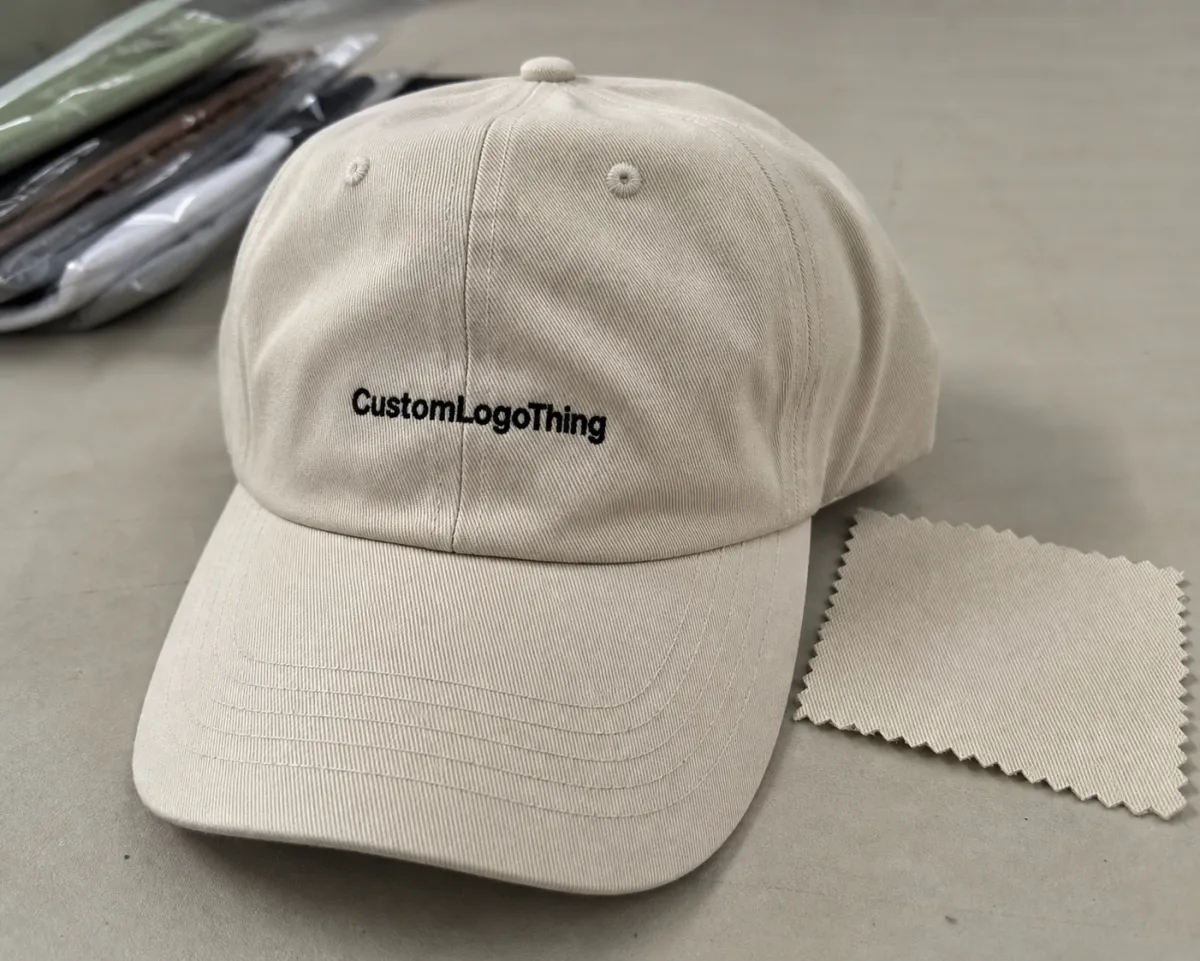
Most sample reviews start with color because color is visible and easy to discuss. That is useful, but incomplete. Fabric weight, weave, finishing, and recovery often matter more once the cap is sewn. A beige cap in the wrong construction can look tired. A deeper-toned cap in the right cloth can look expensive even before the logo goes on.
Beauty buyers usually want a cap that feels relaxed without becoming sloppy. That balance is harder than it sounds. The front panels need enough body to support embroidery or a patch, yet the crown still has to collapse naturally. If the fabric is too rigid, the hat starts looking like a trucker cap without mesh. If it is too soft, the cap loses shape after one fold in a shipping carton.
Sampling helps answer practical questions that a photo cannot. Does the bill curve hold? Does the front panel pucker around a dense logo? Does the sweatband sit flat against the forehead or create bulk? Does the closure make the cap feel retail-ready or promotional? Those details influence whether the hat fits a beauty launch, a salon retail wall, or a staff kit.
A good sample proves more than color. It shows whether the cap will still look intentional after sewing tension, packing pressure, and a few real wears.
There is also a difference between approval for appearance and approval for production. A cap may look excellent as a one-off and still be difficult to reproduce consistently. That is especially true with soft crowns, where stitch density, panel alignment, and fabric lot variation can change the drape in subtle but important ways. The sample stage is where those problems should surface, not after the bulk order ships.
For beauty and lifestyle programs, the best result is usually a soft cap with a clean outline, moderate recovery, and a logo that sits naturally rather than fighting the fabric. That is the real job of the sample: reduce surprises before the order moves into scale.
How Material Sampling Works Before You Commit
Good sampling usually happens in layers. The first layer is the fabric swatch. It shows weave, finish, color depth, and hand feel. The second layer is the blank cap sample, which reveals how that fabric behaves once it has been cut and blocked into a crown. The third layer is the decorated sample, where stitch pull, patch placement, and logo distortion finally become visible.
Those stages answer different questions. A swatch can confirm a fabric is cotton twill, brushed cotton, canvas, denim, or a blend. It cannot show how the crown collapses at a seam or how a sweatband changes the fit. A finished cap can look beautiful while hiding inconsistent fabric behavior across lots. The buyer needs both views, because neither one is enough on its own.
At minimum, request a spec sheet with the sample. A useful one includes:
- Fabric content and weight
- Crown depth and panel construction
- Bill shape and stiffness
- Closure type, such as self-fabric strap, tuck closure, or metal buckle
- Decoration method and stitch count
- Label type, sweatband style, and seam finish
That list may sound basic, but it prevents a common problem: buyers approving a sample they like visually without knowing what was actually built. Two hats can look similar in a photo and behave very differently on the head if one uses a shallow crown with light cotton and the other uses a deeper pattern with heavier cloth. Small changes add up quickly in an unstructured silhouette.
Physical handling reveals more than photography. Fold the cap. Release it. Press the front panel with your thumb. Check whether the fabric springs back or stays creased. Sit it on a flat surface and see whether the crown falls neatly or slumps. Those are simple checks, but they tell you a great deal about how the hat will perform in transit and on retail display.
If the sample is being shipped for internal review, packaging matters too. A cap sent in a loose polybag often arrives flattened in a way that hides the true shape. Corrugated cardboard mailers, kraft paper wraps, and simple inserts do a better job of protecting the crown. For buyers who want a lower-impact presentation, recycled paperboard and FSC certified paper inserts are sensible requests. They will not fix a weak cap, but they do improve the sample experience and reduce transit damage.
Package testing is also worth a little attention. A sample that survives the bench but arrives crushed has not really been approved. Basic parcel protection thinking helps here, and many teams borrow guidance from packaging standards such as those published by ISTA. The point is not certification theater. It is reducing the chance that the approval sample misrepresents the actual product.
Fabric Weight, Crown Shape, and Stitch Behavior
Fabric choice drives most of the visual outcome. Cotton twill is the safest starting point because it is breathable, familiar, and usually easy to finish cleanly. Brushed cotton gives a softer, more matte appearance. Canvas adds body and helps the crown hold shape. Denim introduces texture and a slightly fashion-forward feel. Performance blends can work if quick-dry or athletic properties matter, though they can also look less natural under strong light.
Weight matters as much as fiber content. A lighter fabric may collapse too easily and make the front panel look worn out before the cap has even left the box. A heavier fabric can support embroidery better, but if it is too dense, the hat loses the easy drape that defines the category. Most buyers end up somewhere in the middle, where the cap feels soft but not flimsy.
Crown shape changes the result as much as cloth choice does. A shallow crown often reads casual and easy, while a deeper crown can feel more substantial and more retail-friendly. The visor matters too. A soft crown paired with a firmer bill usually looks more finished than a cap where both elements are equally soft. Closure choice also shifts the impression. Self-fabric straps tend to feel relaxed and clean. Metal buckles add a more polished finish. Neither is universally better.
Decoration behavior deserves its own review. Dense embroidery can stiffen the front panel and flatten a soft crown around the logo area. Thin script can disappear if the stitch density is too low. Woven patches usually sit flatter than heavy embroidery, while heat transfer can work for small graphics but needs careful placement so the cap does not look over-decorated. If the logo uses fine lines or gradients, ask for a stitched test piece rather than relying on a digital mockup.
A simple way to compare fabric behavior is to handle the sample after creasing it lightly for a few seconds. Then release it and watch how quickly it recovers. That test is small, but it tells you whether the cap can survive shipping, shelf display, and repeated handling without looking tired. For soft hats, recovery is often more revealing than stiffness.
| Sample Type | What It Shows | Typical Use | Usual Cost Range |
|---|---|---|---|
| Fabric swatch | Weave, weight, color, hand feel | Early material selection | $0-$15, often plus freight |
| Blank cap sample | Crown shape, seam bulk, visor, closure | Fit and construction review | $25-$60 |
| Decorated test sample | Logo behavior, stitch pull, finish quality | Final approval before bulk | $40-$120 |
The table is a rough guide, not a fixed quote. A sample with a simple logo can sit near the lower end, while a piece with custom fabric, special trim, or multiple revisions can climb quickly. Buyers often underestimate that spread because they compare sample costs to bulk prices, which are not built on the same labor logic.
Cost, Pricing, and MOQ: What Affects the Sample Budget
Sample pricing usually reflects several layers. First is the cap itself: fabric, panels, visor, and closure. Next is setup, which may include embroidery digitizing, patch tooling, label placement, thread matching, and artwork prep. Then comes labor, which is higher on a one-off because the maker is pausing to verify details that would be repetitive in bulk. Shipping is the last piece, and it can matter more than expected if the sample needs to be protected from crushing.
Many buyers assume a sample should cost the same as a single unit in production. It usually does not. A sample often costs more per piece because it is built with more attention and fewer efficiencies. The good news is that some suppliers credit the sample fee against the bulk order. The bad news is that many do not, and that needs to be clear before work starts.
MOQ is another point where expectations and reality separate. A project may seem modest from the brand side but still require fabric minimums, dye lot commitments, or trim minimums that push the order higher than planned. Custom color work, specialty closures, private labels, and unusual packaging all raise the floor. The more the design deviates from stock construction, the more likely the minimum changes.
For budgeting, buyers often see these patterns:
| Program Type | Typical MOQ Pressure | Sample Complexity | Best Fit |
|---|---|---|---|
| Stock fabric, simple embroidery | Lower | Moderate | Fast brand merch tests |
| Custom fabric or custom color | Higher | Higher | Retail programs with strict brand color control |
| Private label, patch, and specialty trim | Higher | Highest | Premium launches and beauty collections |
Broadly speaking, sample fees often fall somewhere between $25 and $120 depending on complexity, while bulk pricing for a custom unstructured dad hat can land around $4.50 to $9.00 per unit at 1,000 to 5,000 pieces. That is a practical range, not a promise. Fabric choice, stitch count, packaging, and decoration can shift the quote more than most buyers expect.
Ask what is included in every quote. Is the number for a blank cap only, or does it cover embroidery, woven label, hangtag, and packing? Is the approval sample a true pre-production match, or just a visual reference? Those questions are boring in the moment and expensive to skip.
Process and Timeline: From Swatches to Production Approval
The sampling process usually starts with the basics: logo file, target color, intended use, and any notes about packaging or labels. After that comes fabric sourcing or swatch selection. Stock fabric moves faster. Custom colors and unusual hand-feel requests take longer, especially if the supplier has to search across several mills or dye options.
Once the material is set, a blank sample or proto sample is built. That is the stage where the crown shape, seam finish, and bill curve start to reveal whether the hat really works. If decoration is part of the design, embroidery or patch placement is added next. Even a small logo can change the front panel more than expected, particularly on a relaxed crown with light fabric.
A straightforward sample often takes 7 to 14 business days after artwork and fabric are confirmed. Add custom material, multiple colors, or a revision round, and 2 to 4 weeks becomes more realistic. Bulk production after approval commonly takes another 12 to 20 business days. Larger orders, specialty trims, or busy seasonal windows can extend that.
It helps to have more than one reviewer. Marketing tends to care about brand expression. Merchandising often focuses on shelf appeal. Operations watches pack-out and consistency. If all of those concerns are compressed into one quick glance at a screen, important defects can slip through. The better approach is to compare the cap in daylight, on a head form, and on a real wearer before the final sign-off.
Packaging is part of the process, not an afterthought. A cap intended for internal review should travel in a package that protects the crown. Corrugated cardboard mailers with kraft paper wrap do a better job than a loose bag. If the sample kit includes paper inserts, cards, or presentation sleeves, FSC certified stock or recycled materials can be a clean choice. That kind of detail is small, but it improves the overall read of the product.
Rush approvals are possible, but only if the non-negotiables are clear. If the logo size, fabric, or closure cannot change, say so early. Rebuilding a sample because of an assumption is slower and more expensive than locking one or two constraints from the start. Tight direction usually saves time, not the other way around.
Common Mistakes That Make Sample Reviews Misleading
The first mistake is treating a swatch like a completed hat. A swatch only shows surface information. It does not show drape, seam bulk, sweatband feel, or how decoration changes the crown. Buyers sometimes approve the cloth and then dislike the finished cap because the construction altered the behavior more than they expected.
The second mistake is reviewing under bad lighting. Office lights can flatten muted tones, make off-whites look cleaner than they are, and hide sheen in the fabric. Indirect daylight is usually the better baseline. If the cap will appear in retail, event, or social content settings, test it under more than one light source before approval.
The third mistake is ignoring decoration. Stitch count, underlay, and backing all affect how a soft crown behaves. A dense embroidered logo can pull the front panel flatter than the mockup suggested. A lighter build may preserve softness but lose visual weight. The logo cannot be judged separately from the cloth because the two change one another.
The fourth mistake is forgetting comfort. A beauty cap is worn, not just displayed. The sweatband, adjustment range, and panel height all matter. If the cap sits too high, feels scratchy at the seam, or binds at the closure, it will fail in daily use even if it looks good in a photo.
The fifth mistake is reviewing only one sample at a time. Side-by-side comparison is much more revealing. Two caps can both look acceptable in isolation, but one may hold shape better after handling while the other shows seam bulk around the front panel. Comparing them together usually makes the choice obvious.
There is also a packaging-related mistake worth mentioning. If the sample arrives crushed, some buyers assume the hat is flawed. Sometimes the cap is fine and the transit method is the problem. A poor delivery method can distort the approval process as much as a poor fabric choice. Good samples deserve decent shipping.
Expert Tips and Next Steps for a Cleaner Production Sign-Off
Request three things whenever the design matters: a fabric swatch, a blank cap sample, and one decorated test piece. That combination gives the clearest read on material, shape, and logo behavior. If a supplier can only provide one of the three, be explicit about what stage of approval you are actually in.
Check the sample in daylight, on a head form, and on a real wearer. Each view catches a different problem. The head form shows silhouette. The wearer shows comfort and movement. Daylight reveals the true color and finish. Relying on only one view tends to produce a false sense of certainty.
Document the approved specification in one place and keep it short enough to use. Include fabric content, weight, color reference, closure, logo method, label type, and any acceptable tolerances. If the cap ships with inserts or a presentation mailer, write that down too. Packaging choices matter, especially if the program uses corrugated cardboard, kraft paper, or recycled paperboard in the final kit.
If two fabrics are close, the safer option is usually the one that behaves better after handling. Unstructured caps live or die on recovery. A cloth that folds without becoming permanently creased is often more useful than a slightly prettier fabric that cannot hold a neat relaxed shape. That tradeoff shows up often in beauty programs, where the hat needs to feel easy but still composed.
A simple approval checklist helps keep the handoff clean:
- Confirm fabric, color, and weight against the approved sample
- Check logo size, placement, stitch density, and backing
- Review crown depth, bill curve, and closure adjustment range
- Approve packaging details, including insert cards and mailers
- Lock one reference sample for production comparison
That last point gets skipped more often than it should. Keep one signed-off sample on file, photograph it in daylight, and label it with the final spec. Production questions always come back later, and memory is a poor substitute for a physical reference. A marked sample settles disputes quickly.
Beauty buyers usually do not need more optimism in the approval process. They need fewer surprises. If the sample is treated as a material test, construction test, and packaging test all at once, the final hat tends to feel more expensive, more consistent, and more aligned with the brand. That is the practical value of a careful beauty Unstructured Dad Hats Material Sample guide: fewer compromises at bulk stage and a cleaner final decision.
FAQ
What should I request in a beauty unstructured dad hat sample?
Ask for a fabric swatch, a blank cap sample, the closure detail, and a decorated test piece if the logo matters. Check crown softness, brim shape, stitch quality, and how the cap looks both flat and worn.
How is a material swatch different from a full cap sample?
A swatch shows the fabric hand, weave, and color, while a full cap sample shows fit, drape, seam bulk, and decoration behavior. Use both if you need to judge the finished product rather than the raw cloth alone.
What drives the cost of custom dad hat samples?
Pricing changes with fabric sourcing, decoration complexity, setup labor, and shipping. Ask whether the sample fee is credited to production and whether revisions will add extra charges.
How long does the sampling and approval process usually take?
Simple swatch review can move quickly, but a finished sample often takes longer because of sourcing, sewing, and decoration setup. Add time for revisions, multiple colorways, or a second approval round.
What is the best way to compare two fabrics for unstructured dad hats?
Compare them under the same light, with the same logo size, and on the same crown shape. Judge weight, breathability, color depth, and how the cap recovers after handling or wear.