Searching for a Chocolate Unstructured Dad Hats Unit Cost Review usually means the style is already approved. The real question is whether the cap price, decoration method, and order size make sense together. Chocolate looks premium on paper, but the better buying question is simpler: does it hold retail value without forcing you into a risky inventory position?
That is where this category earns attention. A chocolate unstructured dad hat has the relaxed shape buyers expect from a dad cap, but the darker brown tone adds enough depth to feel deliberate. It works with cream, black, olive, tan, and denim, which is one reason the color keeps showing up in merch programs that need broad appeal and modest markdown risk. Loud colors can sell fast and then sit. Chocolate tends to age more gracefully.
The other advantage is practical. On brushed cotton, washed twill, or chino fabric, brown shows texture better than black and usually hides handling marks better than light colors. That matters in product photography, but it matters even more once cartons are opened, re-packed, and handled by several people before the customer sees them.
Why chocolate unstructured dad hats sell better than loud colors
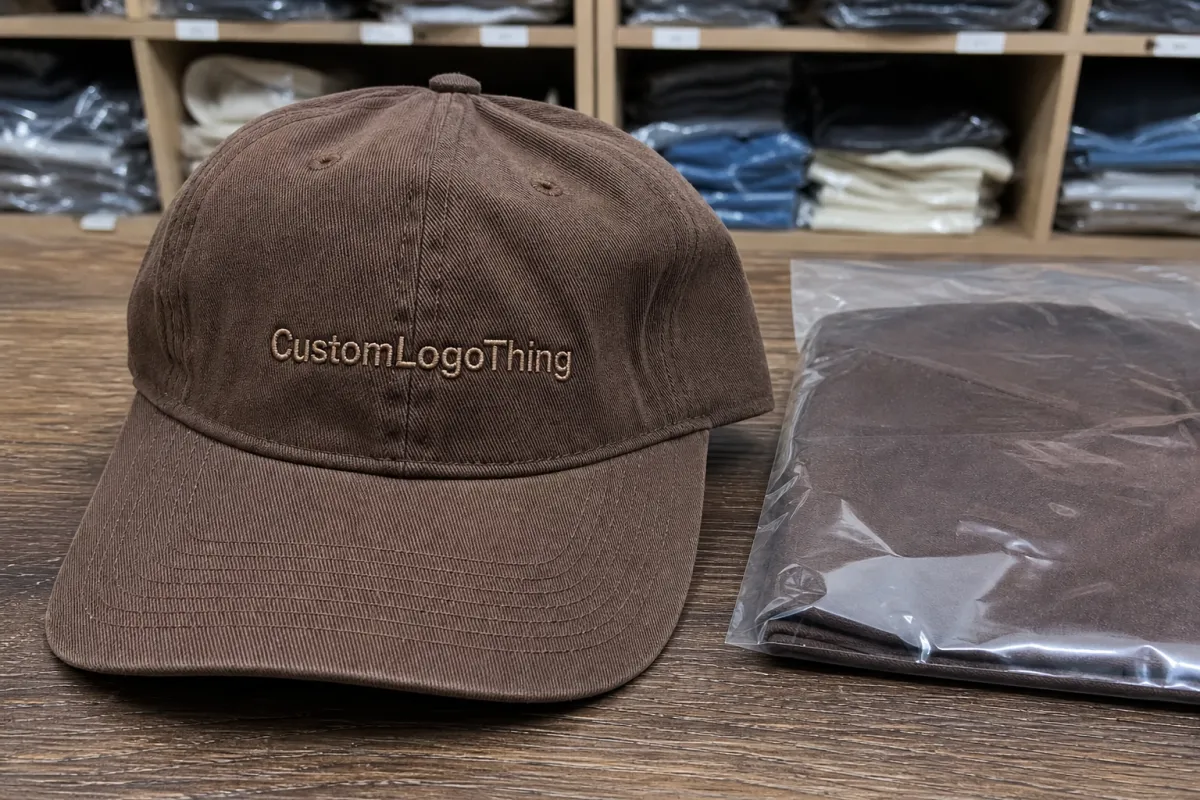
Chocolate is a neutral with enough character to feel chosen. That sounds minor until you compare it with the colors that usually create inventory headaches. Bright red, neon green, and saturated royal blue can work for a launch, yet they narrow the buyer pool and make every return pile look more obvious. Chocolate is closer to a default favorite: not flashy, not boring, and rarely out of season.
It also photographs differently from black. Pure black can flatten panel seams, stitch detail, and logo edges, especially under soft lighting. Chocolate leaves more room for contrast, so embroidery reads cleaner and the cap body looks less like a silhouette. For brands that rely on ecommerce images, that difference can influence conversion more than a fancy description ever will.
Chocolate is the safer premium color. Black can look severe, bright colors can date quickly, and brown sits in the useful middle: distinctive enough to feel intentional, restrained enough to keep selling.
The unstructured part matters just as much. Without stiff front buckram, the crown sits lower and breaks in faster. That softer profile tends to suit more head shapes and makes the cap feel more wearable out of the box. Buyers who sell to hospitality staff, lifestyle customers, cafe audiences, or event attendees often prefer this because fewer people reject the cap for feeling boxy or tall.
There is also a simple merchandising pattern behind the category. Chocolate pairs well with earth-tone apparel and natural packaging, so it fits brands that want a quieter, more mature palette. It can still be decorated with a bold logo, but the base color keeps the product from feeling over-designed. That balance is useful. It gives you enough style to justify retail pricing without locking the hat into a very specific trend cycle.
One caveat: brown is not one color. Chocolate can lean cocoa, espresso, chestnut, or tobacco depending on dye lot and fabric base. Buyers who only approve a screen mockup sometimes discover the actual sample looks warmer or darker than expected. A physical swatch, lab dip, or previous production sample is a better reference than a monitor.
What comes in a chocolate unstructured dad hat order
A standard order starts with a low-profile, six-panel cap and an adjustable closure. From there, the details split fast. Closure type, lining, labeling, and packaging can all shift the final unit cost. A supplier who cannot explain those pieces clearly is not giving you a useful quote.
The base construction is usually straightforward: soft front panels, curved brim, embroidered eyelets or sewn vents, and a strap-back or buckle closure. The cap may look simple, but every part affects how it wears, how it ships, and how it photographs. An unstructured hat is less forgiving of sloppy stitching than a stiff cap because the fabric does not hide mistakes as well.
- Closure: self-fabric strap, metal buckle, tri-glide, or snapback
- Decoration area: front embroidery, side hit, back text, patch, or woven label
- Internal finish: printed label, woven label, seam taping, or private-label interior build
- Packaging: bulk packed, individual polybag, hangtag, or retail insert
Buyers often focus on the logo and ignore the parts that change the customer experience. That is where avoidable problems start. A cheap snap closure can make a decent cap feel promotional. A thin sweatband can make it uncomfortable after a few hours. A brittle brim insert can crack in transit if cartons are overfilled or handled roughly. None of that is dramatic, but it shows up in returns and review photos.
For a chocolate dad hat, restraint usually works best. Small front embroidery, a woven side label, or a modest patch keeps the product feeling elevated. Oversized art can fight the relaxed silhouette and turn a clean cap into something closer to giveaway merch. The color can carry a lot, but not everything.
Fabric, stitching, and finish specs buyers should compare
Fabric choice affects shade depth, hand feel, wash behavior, and final cost. The three most common bases are washed cotton, brushed twill, and chino cotton. Washed cotton gives the softest, most worn-in look, which works well for lifestyle brands and music merch. Brushed twill feels cleaner and slightly more refined, so it often suits retail programs that want a tidier surface for embroidery. Chino cotton sits in the middle: durable, smooth, and predictable.
The surface matters because chocolate reveals subtle texture. On a washed finish, the color can look slightly lighter at the seams and folds. On a dense twill, the brown reads deeper and more even. That means the same Pantone reference can produce two very different retail impressions depending on the cloth underneath. Fabric is not just a comfort choice; it is a color decision.
Stitching deserves more attention than it usually gets. Even on a relaxed cap, seam consistency affects the way the crown settles. Uneven topstitching can make one panel sit higher than the others, and that becomes obvious on a dark brown hat. The embroidery itself also needs scrutiny. A front logo around 5,000 to 8,500 stitches is common for clean retail work. Once designs become dense, use more thread changes, or include tiny text, the cost climbs and the risk of distorted detail rises with it.
Decoration method should match the use case, not just the artwork. Flat embroidery is the safest choice for clarity and durability. Woven patches are useful when the design needs edge definition or a vintage feel. Leather and faux-leather patches add texture, but they need tighter art preparation and more consistency in die cut shape. Puff embroidery can work on chocolate fabric if the logo is bold and spaced correctly, though it is less forgiving on small lettering.
A practical spec review should include the following checks before approval:
- Shade target: confirm the brown tone against a sample, not a screen image
- Panel symmetry: check seam alignment and logo centering on the front crown
- Brim insert: confirm PE board, cardboard, or softer reinforcement depending on stiffness
- Closure hardware: review buckle finish, strap width, and adjustment range
- Label format: printed, woven, woven plus size tab, or private-label interior build
- Sample approval: verify embroidery density and overall fit before bulk production
Packaging should not be an afterthought. Bulk packing reduces cost, but retail or ecommerce fulfillment may require individual polybags, size stickers, or barcodes. If the carton spec is weak, the cap can arrive with a flattened crown or bent brim. Standards used in transit testing, including common ISTA methods, are useful because they force the packing plan to reflect real shipping conditions instead of ideal ones.
Unit cost, MOQ, and quote math for bulk orders
This is the part buyers usually want first, and for good reason. A chocolate Unstructured Dad Hats unit cost review is really a review of all the small charges hiding inside a quote. The base cap price matters, but so do decoration, labels, cartons, inspection, and freight. If you only compare the body cost, the landed number will surprise you later.
For stock-base hats with standard embroidery, the unit cost often falls around $4.40 to $7.80 per piece before freight at moderate bulk volumes. Small runs can sit above that range, especially if the logo is dense or the packaging is retail-ready. Add custom labels, patches, or special inserts, and the price moves again. None of that is unusual. It is simply how soft goods pricing behaves when labor, material, and setup are all involved.
| Order type | Typical MOQ | Unit cost range | Setup charges | Best fit |
|---|---|---|---|---|
| Stock cap + flat embroidery | 100-150 pcs | $5.20-$8.20 | $40-$120 | First retail run, staff use, low-risk merch test |
| Stock cap + woven or leather patch | 150-300 pcs | $6.10-$9.40 | $75-$180 | Retail drops, hospitality, premium gifting |
| Custom label + custom packaging | 300-500 pcs | $6.80-$11.50 | $120-$260 | Private label, brand launches, resale programs |
The first quantity jump matters most. Moving from 100 to 300 units often lowers the effective price faster than any later increase because setup costs spread across more hats. The jump from 300 to 500 still helps, but the savings usually flatten. In many cases, the real gain is not just cheaper production; it is more stable packing, easier carton allocation, and better freight efficiency.
MOQ depends on how custom the cap becomes. A stock body with a standard logo can often start around 100 pieces. Custom dye work, custom closures, embroidery plus patch combinations, or full private-label interior specs usually push the minimum higher. That is not a supplier trying to complicate the order. Tooling, fabric procurement, and testing all cost time, and a tiny run does not absorb those costs well.
Freight changes the picture more than many buyers expect. Air shipping is faster, but at 300 pieces it can add roughly $1 to $3 per hat depending on carton weight and route. Sea freight lowers that pressure, though it stretches the timeline. If the order is seasonal, the cheaper ship method can become expensive in another way: missed sell-through.
Every quote should include four numbers: landed unit cost, sample fees, setup charges, and re-order pricing. If a supplier only gives one price, the quote is incomplete. You may still be able to work with it, but you are missing the structure that shows where the margin goes. The cleanest comparison is the one that shows 100, 300, and 500 pieces side by side.
A quote that only looks good at one quantity is a warning sign. Real pricing should show where setup costs fall, where freight starts to matter, and how much the next production step actually buys you.
For paper inserts, hangtags, or packaging cards, FSC-certified stock is a practical baseline. It does not change the cap itself, but it gives brands a cleaner way to think about printed components without guessing at paper sourcing or recycling claims.
Production steps and lead time from artwork to delivery
A stable production flow should feel ordinary. That is a good sign. The less drama between artwork approval and shipment, the less likely the order will go sideways. For most chocolate hat orders, the sequence is inquiry, spec check, artwork proof, sample or photo proof, bulk production, inspection, packing, and shipping. If any of those steps are missing, the process is probably moving too fast or not being documented well enough.
- Inquiry: quantity, deadline, logo file, and intended use are submitted
- Spec check: cap style, fabric, closure, and decoration method are confirmed
- Artwork proof: placement, size, thread count, and color notes are reviewed
- Sample or photo proof: the first physical or visual reference is approved
- Bulk production: cutting, sewing, decoration, finishing, and packing take place
- Inspection: color, stitching, alignment, and carton counts are checked
- Shipping: cartons move by air or sea according to timing and budget
Delays usually come from the predictable places. Vague logo files. Late changes to packaging. Pantone debates after the sample is already approved. Last-minute requests for extra labels. If the goal is a faster run, the easiest fix is to lock the spec early and keep the art file in vector format. That sounds basic because it is basic, and basic is what saves time.
Realistic lead times depend on how custom the order is. A stock-base chocolate cap with standard embroidery can often move in 12 to 18 business days after proof approval. Add patch applications, private-label labels, or special packaging and the range is more likely 15 to 25 business days. A first sample adds its own clock before bulk production starts, and custom color matching can stretch that further.
There is a small but useful production habit that reduces errors: keep the spec simple on the first run. Existing fabric is easier than custom dye. One embroidery placement is easier than several. Bulk-packed cartons are easier than retail-ready kits. Those decisions do not make the product less valuable; they make it more likely to arrive on schedule and within tolerance.
Before sign-off, confirm these items:
- Destination: exact ship-to address and receiving contact
- Shipping method: air, sea, or split shipment
- Carton count: packed for storage, retail, or distribution
- Ticketing: hangtags, size stickers, or barcode labels
- Delivery window: the real deadline, not the ideal one
What makes repeat orders easier to manage
Repeat orders should become simpler, not more fragile. Once the approved shade, decoration file, and internal spec are saved, the next run should move with fewer questions. The same chocolate tone, the same logo placement, the same closure, the same label notes. That consistency is what turns a one-off order into something predictable.
Documentation is the biggest difference between a smooth reorder and a messy one. Saved spec sheets keep shade drift under control. Archived embroidery files prevent stitch mapping from being rebuilt every time. Approved packaging notes keep carton counts, barcode placement, and hangtag instructions from changing by accident. It is not glamorous work, but it is what protects margins.
Quality control still matters on repeat runs, sometimes more than on the first sample. A batch can drift slightly in color if the dye lot changes. A label can shift a few millimeters. Thread tension can create a darker or flatter finish on the logo. The basic checks are straightforward: compare the production shade against the approved sample, inspect stitch density, verify placement, and review carton counts before shipment. If those controls are absent, the order may be technically complete and still be wrong.
There is also a pricing advantage to reorders. Keeping the cap shape, closure, and decoration method consistent reduces setup cost and makes quoting faster. That helps Brands That Sell private-label hats, cafe merch, hospitality uniforms, or seasonal collections. You are not paying to rediscover the same product every time.
One point of contact helps too. Not because it sounds efficient in a sales deck, but because it reduces the chance of contradictory instructions. A single person who understands whether a change affects MOQ, tooling, or unit cost can prevent needless revisions and keep the order aligned with the original approval.
What to send for a fast quote and first sample
If the goal is an accurate quote, send the whole spec in one message. Quantity, deadline, artwork, decoration method, closure, packaging, and ship-to address are enough to build a real estimate instead of a rough guess. The faster a supplier gets those details, the less back-and-forth you need later.
For meaningful pricing comparison, ask for 100, 300, and 500 piece tiers. Those quantities usually show where the pricing curve settles. A 100-piece order tells you whether the cap is viable as a test. A 300-piece order shows whether the margin starts to work. A 500-piece order often reveals whether freight and setup become manageable enough for ongoing sales.
It also helps to specify the use case. A cafe merch cap, a team store item, and a retail drop all have different expectations for finish and durability. If you want the hat to feel premium, say so. If it needs to tolerate daily wear and repeated cleaning, say that instead. The quote should reflect the job, not the generic category.
Before bulk production, request a sample or at least a detailed photo proof. Chocolate can read differently under natural light, indoor light, and flash. If the brown has to match a product line already in market, do not depend on the mockup alone. A physical swatch is still the cleanest reference.
- Send: quantity, artwork, target date, and destination
- Specify: closure, decoration, packaging, and label requirements
- Ask for: landed unit cost, setup charges, sample cost, and re-order pricing
- Confirm: whether the brown shade is stock, matched, or custom
If you are comparing options for a chocolate unstructured dad hats unit cost review, the cleanest method is still the same: compare 100, 300, and 500 pieces, then check what changes in decoration, packaging, and freight. That is the shortest path to a price that makes sense and a cap that arrives looking like the one you approved.
Frequently Asked Questions
What drives chocolate unstructured dad hat unit cost up the fastest?
Decoration method is usually the first driver, followed by stitch count and packaging. Small orders spread setup costs across fewer hats, so the unit price rises quickly. Custom labels, hangtags, and retail packing add smaller charges that still matter at scale.
What MOQ should I expect for chocolate unstructured dad hats?
Stock-base decorated hats can sometimes start around 100 pieces. Once you move into custom labels, special fabric, or custom closure hardware, the MOQ usually climbs. Tiered pricing is the easiest way to see where the order starts making financial sense.
How long does a chocolate unstructured dad hat sample take?
Simple embroidery samples are usually faster than patch or multi-label versions. Color approval can take longer than sewing. A first sample often depends on how quickly the artwork is approved and whether the shade needs a physical match.
Which logo method looks best on chocolate dad hats?
Flat embroidery is the most reliable choice for a clean retail finish. Woven or leather patches work well if the logo needs more contrast. Puff embroidery can look strong on chocolate fabric, but only if the artwork is bold and spaced enough to stay legible.
Can I reorder the same chocolate dad hat without starting over?
Yes, if the approved sample, artwork, and spec sheet are saved. Repeat orders move faster when the shade, closure, labels, and packaging stay consistent. That is how the second run avoids becoming a new project.

