A Twisted Handle Paper bag can make a gift feel considered instead of improvised. It sounds small. It is not. For a corporate gifting twisted handle paper Bags Unit Cost review, the useful question is not just what each bag costs at the factory. It is what the bag saves in damage, rework, freight waste, and presentation cleanup once the order leaves production.
From a buyer’s angle, this format keeps earning its place because it stores flat, opens cleanly, and handles more weight than many low-cost carry bags. That matters for welcome kits, conference handoffs, holiday packs, internal awards, and client gifts that include boxed items, bottles, apparel, or mixed contents. The bag is part of the experience. If it collapses, wrinkles badly, or fails at the handle, the whole package feels cheaper than it should.
A good gift bag has to do three things at once: protect the contents, look intentional, and stay within budget when the order scales.
That tradeoff is why Twisted Handle Paper Bags stay popular. The build is simple, but the spec can shift a lot. A plain kraft bag with paper handles may be ideal for a high-volume mailing program. A heavier white bag with stronger reinforcement and a cleaner print face may suit executive gifting. A buyer does not need the fanciest version. They need the version that supports the brand and survives real use without eating the budget alive.
Why twisted handle bags can lower gifting damage and waste
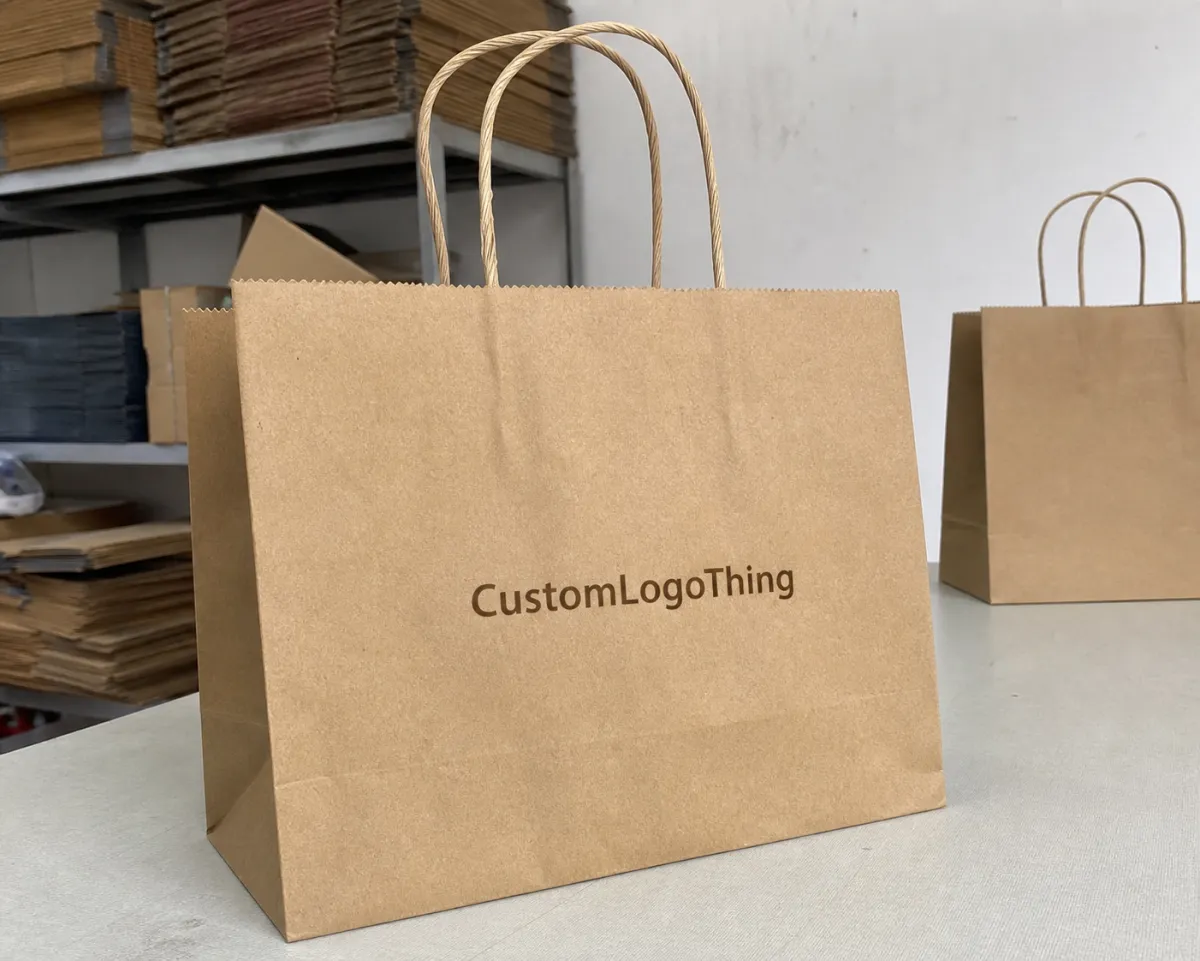
Twisted handle paper bags work because the structure is practical, not decorative. The handle is usually paper cord or paper-twisted rope, anchored into the bag wall with glued pads or reinforcement patches. That matters more than it sounds. A handle that is simply attached, rather than properly anchored, is one hard pull away from becoming a problem at the exact moment someone is walking through a lobby, loading a car, or carrying several items at once.
The reinforced top edge helps the bag keep its shape. That improves appearance, but it also reduces the risk of the opening collapsing while staff are loading gifts. The flat-fold format is another reason buyers keep coming back to it. Flat-packed bags ship more efficiently, take up less storage space, and arrive in better shape than bulky alternatives. That translates into lower warehouse clutter and fewer damaged units before distribution even starts.
For gifting programs, first impression matters more than people admit. A bag that feels solid communicates care before the recipient sees the contents. A weak bag does the opposite. It makes a decent gift look like an afterthought. That is why a proper corporate gifting twisted handle paper bags Unit Cost Review should look past unit price and ask what the format prevents: split bottoms, handle failures, crushed corners, and presentation issues that lead to replacements or complaints.
There is also a labor angle. A stable bag reduces the time staff spend checking, restaging, or re-bagging gifts. That matters in event settings, where the assembly line is usually moving faster than anyone planned. If the bag stands properly and the handle is secure, the team can load faster and with fewer pauses. Small efficiency gains add up fast when the run is hundreds or thousands of pieces.
Paper grades, handle build, and finish options that matter
Paper stock is where the bag starts to define itself. Natural kraft gives a more grounded look and usually suits sustainability-led brands, wellness kits, hospitality programs, and neutral corporate gifts. White stock gives a cleaner print surface and usually makes logos, gradients, and brand colors read more sharply. Neither is automatically better. The right choice depends on the contents, the visual direction, and how much of the design needs to do the heavy lifting.
Paper weight matters as soon as the contents get dense. Lighter programs can work around the 170gsm to 200gsm range, while heavier or more premium bags often move into 210gsm to 230gsm or above. If the gift includes a bottle, hardbound item, or awkwardly shaped set, ask for stronger paper and a reinforced base board. A bag can look fine in a proof and still feel flimsy once loaded. Production paper is practical like that. It does not care about the mood board.
Handles deserve equal attention. Paper-twisted handles are usually the most economical and the easiest to scale. Braided cord or textile-style handles feel more premium, but they also add cost and may create extra sourcing complexity. The important part is not style for its own sake. It is load behavior. Handle anchoring, glue coverage, and reinforcement patches are the details that keep a bag from failing under normal use.
Finish changes both the look and the bill. Uncoated stock feels more tactile and less polished, which can be a good thing for natural or minimal branding. Matte coating softens the appearance and usually reads more refined. Gloss boosts contrast and can make colors pop, though it is not always right for a restrained corporate gift. Spot varnish, foil, and special textures can raise visual value, but they also add setup complexity and usually move the project out of the simple price tier.
If the order is meant to feel premium, the finish should support the paper, not fight it. Too many buyers add extra effects because they feel obligated to justify the spend. That is backwards. A clean, well-proportioned bag with a crisp logo and proper handle build usually looks better than a crowded design with every available embellishment stacked on top of one another.
As a working rule, kraft is the safer choice for high-volume, cost-sensitive programs, while white stock works better when the print has to carry more brand weight. For executive kits or awards, a refined finish can be justified if the order volume supports it. That is the real packaging decision: presentation gain versus production simplicity. A good supplier should make those tradeoffs visible instead of pushing every project into the same build.
Sizes, print specs, and branding details for consistent results
Bag size should start with the contents, not the artwork. A notebook-and-pen set needs a different footprint than a bottle with an insert tray, and a mixed welcome kit often needs more depth than buyers expect on the first pass. Common corporate gift bags usually fall into small, medium, and tall configurations. That is not glamorous, but it works. Small handles compact items. Medium handles apparel and boxed sets. Tall bags handle bottles, tumblers, and layered kits without crushing the top edge.
Leave enough room to load items comfortably, but not so much room that they slide around. Excess void space looks cheap and makes the contents feel unorganized. A bag that is slightly too large can be almost as bad as one that is too small. The right fit keeps the presentation tidy and the carry profile predictable.
Print specs need just as much discipline. Ask for the dieline before final artwork is locked, then check bleed, safe area, and handle placement carefully. Logos near folds can distort once the bag is formed. Fine text near the edge can disappear. If the design wraps across both sides, confirm registration so the layout does not drift from panel to panel. These sound like small issues until the run is already in motion.
Color behaves differently on kraft and white stock. That is normal. A brand color that looks crisp on coated white paper can mute on natural kraft, and fine linework can disappear in low-contrast layouts. If the bag will be seen from a distance, simplify the design. Bigger marks, stronger contrast, and fewer delicate details usually read better in conference halls, client receptions, and event queues. People are not standing there admiring ink density. They are walking past it.
One practical check: compare the print layout against the actual gift size, not just the bag size. A wide box can rub against a side panel. A bottle can force the top opening open too far. A kit with irregular pieces may shift during carry. If the contents are heavy, ask about bottom reinforcement and whether the handle anchors have been used on similar loads before. That is the kind of question that prevents a cheap-looking failure later.
Do not overbuild the design just because the budget allows it. Extra colors, double-sided print, foil, and specialty coatings all increase cost and production risk. A restrained one-color or two-color layout often looks stronger than a cluttered print, especially when the paper stock and proportions are well chosen. The bag should support the gift, not compete with it.
Corporate gifting twisted handle paper bag unit cost factors
The price structure is more predictable than the quote sheet makes it look. Paper grade, size, print coverage, number of colors, handle style, finish, and quantity drive most of the cost. Quantity usually matters the most because setup work gets spread across more units. That is why a small run can feel oddly expensive while a larger run quickly improves the per-bag number.
MOQ has real teeth here. A lower MOQ is useful for pilot programs or one-off events, but the unit cost usually rises because the factory still has to pay for setup, proofing, line preparation, and run management. That is not a penalty. It is the math of short production runs. Larger quantities usually bring better pricing, but only if the spec stays stable. Changing the bag size, artwork, or finish after quoting usually cancels some of that gain.
Setup charges can appear as plate fees, die fees, proof fees, or special handling charges depending on the production method. Buyers should ask for them early. A quote that looks attractive on the line item can shift once finishing, cartonization, or special print requirements are added. The same goes for freight. Factory price and landed price are not the same thing, and anyone comparing those as if they were identical is setting themselves up for a bad read.
| Spec Tier | Typical Build | Typical MOQ | Indicative Unit Cost | Best Fit |
|---|---|---|---|---|
| Value kraft | Light-to-mid kraft, 1-color print, paper twisted handle | 1,000-3,000 | $0.18-$0.32 | High-volume mailers, basic event handouts, simple kits |
| Standard branded | Heavier kraft or white stock, 1-2 colors, reinforced top edge | 3,000-5,000 | $0.28-$0.55 | Corporate gifting, onboarding packs, client appreciation sets |
| Premium presentation | Higher GSM stock, matte or gloss finish, double-side print | 5,000+ | $0.52-$1.10 | Executive gifting, awards, retail-style branded handoffs |
Those numbers are directional. They are useful for budgeting, not for pretending every quote should match them exactly. Freight, carton count, inserts, and packing method can move landed cost more than the factory quote suggests. Flat-packed bags usually travel efficiently. Bags that need extra protection, split shipments, or custom packing instructions do not. A proper corporate gifting twisted handle paper bags Unit Cost Review has to compare landed cost, not just sticker price.
When comparing suppliers, put the same variables side by side: paper weight, handle type, print colors, finish, MOQ, setup fees, and carton quantity. Confirm whether freight is included. Confirm whether samples are charged. Confirm whether the quoted finish is real production finish or just a visual estimate. That sounds tedious because it is. It is also the difference between an accurate buying decision and a pleasant-looking quote that turns into a headache later.
Production steps, lead time, and delivery planning
A smooth order starts with artwork review and dieline confirmation. After that, the supplier prepares a proof for approval, then moves into print setup, production, folding, handle attachment, packing, and shipment. Each step can surface a different issue. That is why rushing the proof stage is such an expensive habit. It saves a day and can cost a week.
Lead time depends on the spec. Simple runs with standard paper and one-color print usually move faster than bags with foil, multiple panels, or special coatings. A common production window after proof approval is roughly 12 to 15 business days for straightforward work, though complex jobs can take longer. If the bags are tied to a launch, event, or seasonal program, leave margin for transit, receiving, and any corrections that may be needed after sample review.
A physical sample is worth the time on higher-value programs. A digital proof shows placement. It does not show how the paper feels, how the handle sits, or whether the bag stands correctly once assembled. A sample can reveal weak glue lines, awkward proportions, or a color shift that looked fine on screen and wrong on paper. For critical programs, that check is cheap insurance.
Shipping should be planned like an operations job, not a design approval. If the bags are going to a warehouse first, account for receiving and counting. If they will be distributed to multiple sites, build in time for sorting and relabeling. If the calendar is tight, a small buffer can keep the program from slipping because of one delayed carton. Packaging work is annoyingly physical that way. The final mile matters.
For programs where handling abuse is possible, some buyers reference ISTA for transit expectations. For paper sourcing claims, FSC documentation is often requested. Those references do not replace supplier accountability, but they do create a clearer standard for performance and sourcing. That is useful when the order is supposed to support brand claims, not just fill a bag.
Delivery timing should follow the event calendar, not the factory calendar. That sounds obvious until the shipment arrives at the wrong place, two days before a venue change. Build time for internal moves, split drops, and any last-minute reallocation across teams. The best bag spec in the world does nothing if it lands after the gifts have already gone out.
Quality checks, packing methods, and order reliability
Quality control on paper bags is not complicated, but it has to be consistent. The main checks are print alignment, handle adhesion, fold consistency, bottom strength, and carton count accuracy. If the print is shifted, the brand looks sloppy. If the handle bond is weak, the bag becomes a liability. If the bottom crease is uneven, the bag will not stand properly, which slows down event assembly and makes packing feel messy.
Flat packing is standard because it saves space and keeps distribution easier. The cartons should still be protected from moisture and rough handling, especially if they will sit in storage before use. Clear carton labels help more than people expect. Mixed sizes, mixed print versions, or multi-event shipments can turn into a mess quickly if the label is vague. Nobody wants to open the wrong box at receiving and discover the mistake after the trucks have left.
Simple field checks are useful too. A buyer or operations lead can open a bag, check the handle feel with a controlled pull, and load it with a representative item. Does it stand square? Does the top edge stay clean? Do the handles cut into the hand? Those small tests tell you a lot about whether the bag matches the intended use. A bag that passes artwork review but fails basic carry testing is not a bargain.
Reliability has a cost, and usually a lower one than poor quality. Fewer damaged bags means fewer replacements. Better carton control means fewer missing units. Consistent folding means less time spent correcting inventory on the receiving dock. That is why reliability belongs in any corporate gifting twisted handle paper bags unit cost review. The cheapest quote is not cheap if half the order needs attention after arrival.
Next steps to quote and order without delays
Before requesting a quote, gather the essentials: target quantity, finished size, artwork files, handle preference, delivery location, and required in-hand date. If the gift contents are already known, include dimensions or a sample photo. That helps the supplier recommend the right opening width and gusset depth instead of guessing. Guessing is how people end up with bags that are almost right, which is a polite way to say wrong.
Decide early whether the project needs a digital proof, a physical sample, or a production mockup. Each one solves a different problem. Digital proofs are good for confirming layout. Physical samples are better for structure, finish, and color on the chosen stock. Mockups make sense when the bag itself is part of the presentation, not just a container. High-visibility gifting usually deserves that extra check.
If the order may repeat, build in a small reorder buffer. It is easier to repeat a proven spec than to rebuild it under pressure later. That buffer does not need to be large. It just needs to be enough to cover a second drop, a headcount bump, or an unexpected extension of the program. In practice, that is one of the cleanest ways to keep future unit cost stable.
For a clearer decision, compare three versions: a standard spec, an upgraded spec, and a premium option. Put them side by side with paper weight, handle build, finish, MOQ, setup fees, and freight. Then choose the one that gives the best balance of presentation, durability, and landed cost. If you approach the corporate gifting twisted handle paper bags unit cost review that way, you usually end up with a bag that looks right, carries well, and does not sneak extra cost into the program later.
What affects the unit cost of corporate gifting twisted handle paper bags most?
Paper grade, bag size, print coverage, finish, handle style, and order quantity drive most of the price. Freight, carton configuration, and packing method can change the landed cost too, so quotes should be compared on the same basis.
What MOQ should I expect for custom twisted handle paper bags?
MOQ depends on size, print complexity, and finish requirements. Smaller runs usually cost more per bag because setup fees are spread over fewer units. Larger runs usually improve pricing, but only if the spec stays stable.
How long is the turnaround after artwork approval?
Simple orders often take about 12 to 15 business days after proof approval. Special finishes, multiple print areas, or tighter QC requirements can add time, so confirm the schedule before the event date is locked.
Which paper stock is best for heavier corporate gift sets?
Use a stronger kraft or reinforced paper build for dense or rigid contents. Ask for a stronger bottom board and reinforced handle points if the bag will carry bottles, boxed merchandise, or mixed kits.
Can I print logos on both sides of the bag?
Yes. Most custom programs can print on one side or both sides, depending on the artwork and budget. Double-sided print increases visibility, but it also raises unit cost, so it makes more sense for high-touch gifting than for plain volume use.