Beer ribbed winter beanies Bulk Order Planning sounds simple until the first quote comes back with a different cuff height, a tighter stitch, and a delivery date that misses the event by a week. In practice, the best orders are the ones that treat the cap like a real product, not a generic giveaway. Ribbed knits stretch more than flat-structured caps, which helps with mixed head sizes and lowers the odds of fit complaints. That matters whether the order is for staff, retail bundles, or a seasonal promotion with a hard in-hands date.
The business case is straightforward. A winter beanie is low-cost per impression, easy to distribute, and visible every time the temperature drops. A decent knit cap can stay in rotation for months, sometimes years, especially if the logo is stitched cleanly and the yarn holds its shape. That is why beer ribbed winter Beanies Bulk Order Planning deserves a specs-first approach: quantity bands, logo placement, decoration method, and delivery date should be set before anyone debates shade names or mockup styling.
Beer ribbed winter beanies bulk order planning pays off
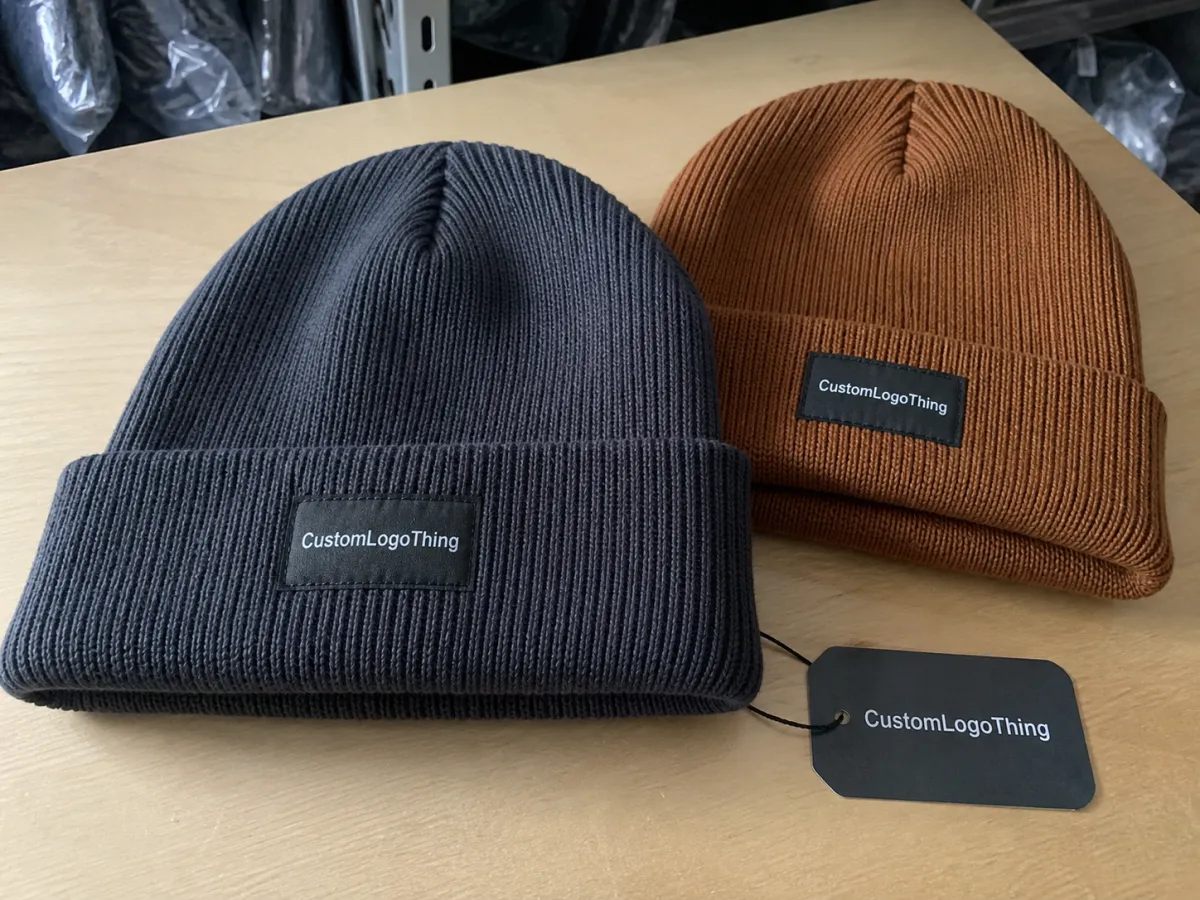
Ribbed beanies tend to forgive more head-size variation than a rigid cap body. The knit expands, then comes back, which is exactly what buyers want when the order goes to a team with different fit preferences. A 1x1 rib usually feels tighter and sleeker; a 2x2 rib often looks a little fuller and gives the hat more visual texture. Neither is automatically better. The right choice depends on whether you want a close fit, a softer slouch, or a thicker hand that feels more winter-ready.
From a packaging buyer’s point of view, the order only works if the product and the delivery plan are aligned. A beanie that costs a few dollars per unit can still create expensive problems if the logo is unreadable, the shade drifts across the run, or the cartons arrive after the event. That is why beer ribbed winter Beanies Bulk Order Planning should start with the use case: staff uniform, trade-show handout, retail add-on, donor gift, or seasonal incentive program. Each one has a different tolerance for price, turnaround, and presentation.
A good bulk order does not start with color charts. It starts with a spec sheet, a deadline, and one clear answer to the question: what does “right” actually look like?
That answer affects everything downstream. If the order is for a winter staff program, buyers usually want reliable fit and a clean logo more than a fashion-forward shape. If it is a retail bundle, visual detail matters more, and a woven label or patch may justify a higher unit cost. If it is for a one-time event, speed often outranks every other variable. The smartest buyers build the plan around that priority before they ask for samples.
- Mixed head sizes: ribbed construction reduces fit complaints compared with more structured knit shapes.
- Lower cost per impression: one cap can carry the logo through an entire cold season.
- Fast distribution: cartons of beanies are easier to hand out than many bulk apparel items.
- Better planning discipline: quantity, decoration, and delivery date can be locked before artwork debates start.
If you want a fast starting point, the Wholesale Programs page is useful for buyers comparing volume tiers before they request a formal quote.
Product details that change fit, warmth, and decoration
Three things change a ribbed winter beanie more than most buyers expect: knit structure, yarn blend, and cuff height. A deeper cuff gives more space for a logo and more forehead coverage. A shallower cuff can feel lighter and sit cleaner on smaller heads. Yarn blend changes the hand feel immediately. Acrylic is common because it is cost-effective and keeps color well. Acrylic-poly blends can improve softness and recovery. Recycled fibers matter to some programs, but the hand feel and color range should be checked sample-first, not assumed.
Decoration is the other decision that changes the entire look. Embroidery is still the workhorse for durability, and it usually survives repeated wear well. Woven labels give a flatter, cleaner finish and are often better when the logo has thin lines or small text. Patches push the branding harder and can feel more premium, especially on thick knit caps. Sewn badges add texture and help the piece stand out in retail or premium gift programs. The right call depends on where the beanie will be worn and how close people will inspect it.
| Decoration method | Look and feel | Durability | Typical use case | Cost impact |
|---|---|---|---|---|
| Embroidery | Classic, raised stitch | High | Uniforms, giveaways, general branding | Usually moderate |
| Woven label | Flat, crisp detail | High | Retail, logos with fine lines | Often efficient at scale |
| Patch | Bold and visible | High | Premium promotions, winter events | Can raise cost and setup time |
| Sewn badge | Textured, branded finish | High | Higher-end merchandise programs | Usually the highest of the four |
Use case should decide the build. Staff uniforms usually need a practical, repeatable cap that does not distract from the logo. Retail bundles need a little more polish because customers judge the item as a finished product, not a throw-in. Event handouts sit in the middle: they need to look good in photos, but they also have to survive a wide range of wear styles. For a broader reference on how our programs are organized, the FAQ page answers the common questions buyers ask before they approve artwork.
There is also a hidden link between product choice and packaging. If the beanie will ship folded with a hang tag, a flatter label can protect the look of the front panel. If the program uses a retail insert card or recycled paper belly band, the label style should be checked against the final packout. FSC-certified paper components can matter in those programs; see the FSC guidance for paper packaging if your brand has a paper sourcing requirement.
Specs to lock in before you request a quote
If a buyer sends only “need beanies, 500 pieces” the quote will be fuzzy. A usable request needs the core specs up front. Start with fiber blend, knit gauge, cuff style, crown shape, and size tolerance. Then add color count and whether all pieces must match the same lot. For most bulk runs, a 2x2 rib or similar structure is common, but the actual gauge matters because it affects warmth, stretch, and the final hand feel. A tighter knit usually looks sharper. A looser knit can feel warmer and more relaxed, but it may not hold a small logo as cleanly.
Decoration details should be just as specific. Write down logo placement, approximate size in inches, stitch count if embroidery is used, and whether the artwork needs Pantone matching. If there is a back mark, a side mark, or a woven label on the cuff, state that too. Ambiguity here creates the most rework. A supplier can only quote accurately when the artwork and placement rules are clear.
Packaging details deserve a line of their own. Some buyers want each beanie polybagged. Others want bulk pack only. That sounds minor, but it changes carton count, labor, and freight. Add size stickers, barcodes, carton labeling rules, and whether samples must match final packaging exactly. If the beanies will be stored before distribution, ask for carton dimensions and packed weight. Those numbers affect warehouse planning more than most people expect.
- Fiber blend: acrylic, acrylic-poly, recycled blend, or a custom yarn spec.
- Knit gauge: tighter for a cleaner face, looser for a softer winter hand.
- Cuff style: folded, single-layer, or extended for more decoration space.
- Color count: one solid color, heather effect, or multi-color yarn.
- Artwork: file type, placement, stitch count, and Pantone references.
- Packout: polybag, size sticker, carton label, and sample match requirements.
For buyers doing beer ribbed winter beanies Bulk Order Planning at scale, a simple spec sheet prevents a surprising amount of friction. The cleaner the brief, the fewer rounds of revision. That is not theory; it is usually the difference between a tidy approval cycle and a week of back-and-forth over details that should have been fixed on day one.
Pricing, MOQ, and unit cost: what moves the number
Bulk pricing for ribbed winter beanies is not random. It follows a familiar set of drivers: quantity, yarn choice, decoration complexity, color matching, rush work, and split shipping. A plain cuffed beanie in a standard acrylic blend can be relatively economical, while a patch, custom-dyed yarn, or precise color matching pushes the price upward. In real quotes, the difference between “simple” and “custom” is often several dollars per unit, not pennies.
As a rough planning band, a decorated ribbed beanie might land around $4.25-$7.80 per unit at 300-499 pieces, $3.10-$5.90 at 500-999 pieces, and $2.20-$4.10 at 1,000-2,499 pieces, depending on materials and decoration. Larger programs often improve the unit cost, but only if the spec stays stable. Add rush production, split shipments, or multiple logo placements, and the savings shrink fast. That is why buyers should ask for a total landed cost, not just a factory unit price.
MOQ tradeoffs matter as much as price. A single-color run with one logo is usually the easiest route to approval. Multi-color assortments sound attractive, but they can increase setup and packing complexity. If the program needs men’s and women’s assortments, or color-coded departments, ask whether the minimum applies per color or across the full order. That one question can save a budget discussion later.
| Order band | Planning focus | Typical unit cost pressure | Buyer risk if specs are vague |
|---|---|---|---|
| 300-499 | Proof accuracy and setup efficiency | High | Large pricing swings from small changes |
| 500-999 | Best balance of cost and flexibility | Moderate | Decoration and packaging can still move the quote |
| 1,000-2,499 | Lock specs before artwork approval | Lower | Late changes can affect production timing |
| 2,500+ | Freight, carton count, and repeat-order planning | Usually lower per unit | Inventory mismatch if demand is overestimated |
Buyers sometimes focus too hard on unit cost and ignore freight, sample fees, remake risk, and carton labor. That is a mistake. A quote that looks cheaper by twenty cents can cost more once packaging changes, a revised proof, or a split ship is added. The cleanest comparison is a written quote that separates each cost driver. That way, the team can see where the money is actually going instead of arguing over a headline number.
If you are comparing volume tiers, our Wholesale Programs page is a useful reference point before you request a line-by-line quote.
Process and timeline from artwork to shipment
The production path is usually predictable, but only if each step is approved quickly. It starts with the request for quote, then moves to spec confirmation, mockup, sample approval, production, quality check, and freight booking. The more precise the brief, the faster the early steps move. If artwork is missing or the logo file is low-resolution, everything slows down before production even starts.
For stocked yarn and standard decoration, production often takes 12-15 business days after proof approval. That is not universal. Custom-dyed yarn, special patches, or large mixed-color programs can push the lead time longer. Shipping adds another layer. Domestic ground freight might be manageable in a few days, while air freight or overseas transit needs more buffer. If the goods must arrive for a holiday market, a customer launch, or a staff kickoff, the calendar should include at least one cushion week. More if the weather is a factor.
Testing matters too. Shipping cartons and bundled packs do not always behave well in transit, especially when they are stacked, dropped, or exposed to moisture. If the order is large enough to justify transit testing, ask whether the supplier follows ISTA shipping test standards or can show how the packed cartons were evaluated. That is not a luxury on larger runs; it is part of risk control.
- Quote request: quantity, artwork, delivery ZIP, and in-hands date go in the first email.
- Spec confirmation: yarn, cuff, decoration, and packaging are written down before sampling.
- Digital proof: the buyer checks logo placement, size, and spelling on the mockup.
- Sample approval: pre-production sample is matched against the agreed spec.
- Production: knitting, decoration, finishing, and packout happen in sequence.
- Quality check: color, stitch consistency, and count accuracy are verified before shipment.
Winter demand spikes are real. Holiday carrier cutoffs, year-end inventory pulls, and event calendars all compress the schedule. For beer ribbed winter beanies Bulk Order Planning, the smart move is simple: build more time than you think you need. Late approvals are the most common cause of emergency freight, and emergency freight is expensive in a way that standard production is not.
How to evaluate a bulk beanie supplier
Suppliers vary more than their websites suggest. The strong ones show exact specs, state exceptions in writing, and share photo proof before production begins. The weak ones talk in generalities. They promise “premium quality” and leave out the details that actually matter. Look for a partner that can tell you stitch type, material blend, decoration method, and packing rules without making you chase answers.
Quality control is easy to talk about and harder to execute. Ask how they check color consistency across the run. Ask whether stitch uniformity is inspected under light, not just by eye from across the room. Ask how defects are handled, whether remakes are produced, and who pays when something misses the approved spec. Honest suppliers answer these questions directly because they know they are part of the process, not a side issue.
Repeat ordering capability also matters. Seasonal programs often come back in waves. If the supplier has to restart the entire process from zero every time, your team loses momentum. A better partner keeps approved artwork, spec history, and production notes on file so replenishment is faster. That is especially useful for winter promotions, because the re-order window can be short and demand rarely behaves politely.
- Written specs: clear material, size, and decoration details.
- Photo proof: visual confirmation before bulk production starts.
- Defect policy: who replaces what, and under which conditions.
- Repeat-order memory: saved artwork and approved specs for future runs.
- Packout control: carton labeling, barcode rules, and count accuracy.
Buying from a supplier that can support FSC-aligned paper components, proper carton labeling, and repeatable packout discipline is often worth more than shaving a few cents off the first quote. The same logic applies to operational maturity. A supplier that handles one order well usually handles the next one well too, which is why process quality is a better predictor than a polished sales pitch.
Next steps to turn the quote into an order
To move from quote to purchase order, gather the pieces that shorten the approval cycle: quantity by color, logo file, decoration method, delivery ZIP, and the date the goods must be in hand. Decide whether you need a sample, a digital proof, or a pre-production confirmation before release. Then verify the packout. These small steps are what make beer ribbed winter beanies bulk order planning feel controlled instead of reactive.
It also helps to decide who signs off internally. A marketer may care most about the logo size. Procurement may care most about landed cost. An event manager may care only about timing. Those priorities can coexist, but only if they are named early. Otherwise the project gets delayed by approvals that should have been aligned from the start.
Here is the practical version: confirm the specs, approve the proof, and release the order before peak season starts. Once the winter calendar tightens, every day matters. If the order is large or tied to a fixed event, keep the final review short and specific. The faster the approval, the less likely it is that the production slot disappears into the queue.
For teams that want a cleaner path, the FAQ answers the most common planning questions, and it is worth checking before you lock the quote. That small step can cut down on revision cycles and help keep beer ribbed winter beanies bulk order planning on schedule, on spec, and within budget.
How do I start beer ribbed winter beanies bulk order planning for a team order?
Start with quantity by color, decoration method, and in-hands date so the quote reflects the real production path. Lock the logo file and packaging details early; those two items usually cause the most delay when they are missing.
What affects the unit price on ribbed winter beanies in bulk?
Quantity, yarn blend, knit complexity, and decoration type are the main drivers of unit cost. Rush timelines, custom color matching, and special packaging can raise the price even if the beanie itself is simple.
What MOQ should I expect for custom beer ribbed winter beanies?
MOQ usually depends on color count and decoration method, not just the beanie style. Single-color runs are often easier to approve than mixed-color assortments, especially when embroidery or patches are involved.
How long does production usually take after approval?
Timing depends on sample approval speed, stock yarn availability, and the factory queue at the time you order. Build extra time if you need freight shipping, holiday delivery, or a date that cannot slip.
Can I mix colors or logo placements in one bulk beanie order?
Yes, but mix-and-match orders can change MOQ, pricing, and packing complexity. Ask for a written quote that separates each color or placement option so you can compare the cost impact clearly.