Electronics woven label beanies bulk order planning: where the money goes
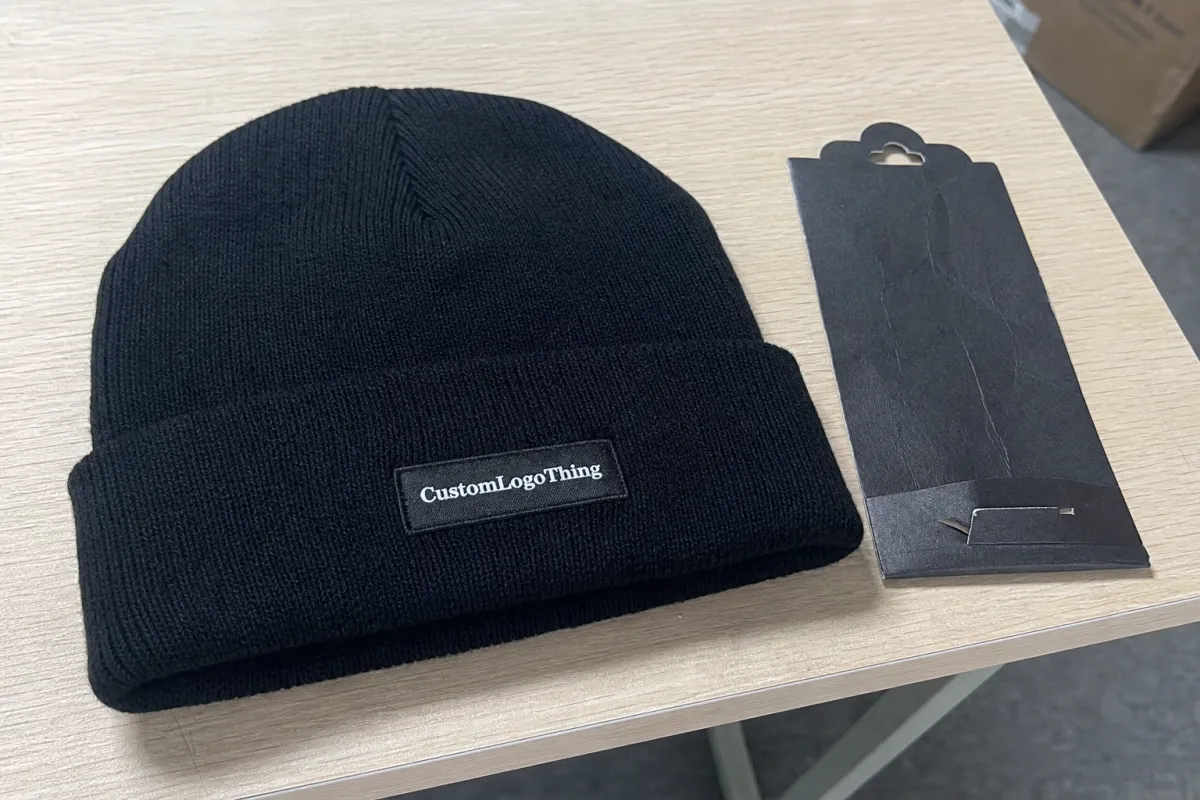
Electronics woven label Beanies Bulk Order Planning looks deceptively simple until the logo has to live in thread instead of pixels. On a screen, a product icon can carry gradients, hairline outlines, tiny type, and enough geometry to satisfy a design team. On a woven label, those same details become a test of how much information the loom can actually hold.
The label is usually the smallest line item in the order and the first one buyers inspect. That is not a contradiction. A 50 mm badge can decide whether the whole beanie reads as retail-ready or like leftover event stock. Headwear has a strange hierarchy: the blank gets worn, but the label gets judged.
For electronics brands, the pressure point is detail density. Circuit marks, signal bars, device outlines, port icons, and compact wordmarks all sound clean in a deck. They only stay clean if the weave count, label size, and contrast are chosen with discipline. Push the art too far and the label turns muddy. Make it too large and the beanie starts looking overdesigned, which is its own kind of failure.
The practical rule is to start with decoration constraints, not just the hat color or the campaign theme. The beanie is the platform. The label is the technical problem. If the artwork demands more detail than the weave can support, the factory will simplify it later or price you into a higher-cost construction. Either way, the schedule bends.
Most good orders are not built on the fanciest yarn or the thickest label. They are built on restraint. Clear branding, soft hand-feel, and a unit cost that still leaves room for margin matter more than chasing a spec sheet that sounds impressive on paper but behaves badly in production.
What a woven label beanie should look and feel like
Beanie style changes the branding math. A cuffed rib knit gives a predictable placement zone on the front or side. A slouchy beanie gives more drape and less structure, which means the same label can sit neatly on one style and drift visually on another. A fine-gauge acrylic body usually holds shape more reliably than a loose knit. Wool blends can feel richer, but they also make poor label choices more obvious because scratchiness shows up quickly in wear.
Label format matters just as much as the hat itself. A woven sew-on label is the most common option because it is flexible and cost-effective. A fold label works well when the brand mark needs to tuck into a seam or cuff edge. A center-patch label pushes the beanie toward a more retail-facing look, while an exterior branding patch reads louder and more promotional. None of those is universally better. The right answer depends on how much visual impact you want and how soft the finished product needs to feel against skin.
Placement is not a minor decision. On the cuff, the label gets the most visibility. On the side seam, it can feel quieter and more premium. On the front panel, it photographs well but can look oversized if the beanie is narrow or the logo is dense. Buyers often describe the goal as a “clean look,” which usually means three things in practice: soft backing, neat stitch edges, and a label thickness that does not fight the knit.
Construction details change the experience more than most people expect. Damask-style woven labels carry fine detail better than basic weave structures. Satin can give a softer surface but may sacrifice crispness on micro text. Merrowed edges can look finished, yet they add bulk. Heat-cut edges are flatter, though they need careful control so they do not curl after packing. If the beanie is meant for daily wear, these small choices matter far more than a polished mockup suggests.
There is also a comfort tradeoff that gets ignored until the first wear test. A thick patch, stiff backing, or rough stitch line can make a decent blank feel cheap. Electronics branding tends to lean minimal and precise; the label should support that, not fight it.
For buyers who need a practical spec anchor, Custom Labels & Tags is the right planning category, not an afterthought. Once the decoration spec is loose, the rest of the order becomes guesswork. Guesswork is expensive.
Specs to lock before you request samples
Do not request Samples Before You know the basics. That sounds obvious, and it is exactly why it gets skipped. A sample round should verify a real spec, not teach the factory what the spec was supposed to be in the first place.
Lock these decisions early: label size, weave density, thread count, stitch type, beanie fabric, and target hand-feel. A 40 x 20 mm label behaves very differently from a 60 x 25 mm label. The larger version can show more detail, but it can also dominate a narrow cuff. A denser weave sharpens edges, yet it may raise cost without rescuing artwork that is already too fine.
Artwork needs discipline. Thick line weights beat delicate lines. Fewer tiny words beat a paragraph in six-point type. High-contrast logos beat low-contrast logos every time, especially on dark yarns. If the design depends on a gradient, a metallic sheen, or a subtle fade, stop and simplify. Woven labels are thread, not Photoshop.
For electronics brands, the logo often includes symbols that were never designed for woven construction. Tiny port icons, segmented arcs, and thin circuit traces can collapse once translated into yarn. A practical rule is to keep the most critical detail visible at arm’s length, not just on a design file zoomed to 400 percent. If the brand mark loses its identity when reduced, it was too detailed to begin with.
Color control deserves a frank conversation too. Pantone matching tolerance, yarn availability, and the base color of the beanie all affect the result. A supplier may hit a close match, but not every yarn family behaves the same way. Dark knit can swallow low-contrast labels. Heathered fabric can distort color perception. If the palette matters for retail, ask for a physical strike-off or a clear photo proof under neutral light rather than relying on a monitor image.
One more detail gets missed all the time: label backing. A soft woven label with no backing feels different from one laminated or lightly stabilized for shape. If the beanie is meant for direct skin contact, ask what the backing does after washing and repeated folding. A backing that starts neat and ends stiff is not a bargain.
Packaging belongs in the spec sheet too. Individual polybags, size stickers, carton marks, and retail-ready presentation all change labor time and packing cost. If the beanies are going into a launch kit, fulfillment center, or store display, say so early. Loose bulk packing and retail-prepped packing are not the same job. Pretending they are is how budgets wander off.
For buyers who want a benchmark on production language and sourcing expectations, the Wholesale Programs page is a useful starting point. It is much easier to quote a real order than a vague mood board.
Cost, pricing, MOQ, and quote drivers
The cleanest way to think about pricing is to break it into what you are actually buying: the beanie blank, woven label setup, stitching, sampling, packing, and freight. That sequence matters. Everything else is noise unless it changes one of those buckets.
For small to mid-size bulk runs, a simple woven label beanie often lands in a rough range of $2.20-$4.80 per unit before freight, depending on blank quality, label complexity, and packing. Premium yarns, multiple thread colors, or retail-ready packing move the number upward quickly. Ask for landed cost, not just factory price. A cheap unit price can hide a high minimum or expensive shipping.
| Option | Typical MOQ | Relative unit cost | Best for |
|---|---|---|---|
| Single-color woven label on standard acrylic beanie | 200-500 pcs | Lowest | Fast promo runs and team drops |
| Two- to four-color label with cuff placement | 300-800 pcs | Mid | Retail-style brand merch |
| Detailed label, custom yarn, retail packing | 500-1,500 pcs | Higher | Launches and premium resale |
MOQ changes with the details. A one-color label is easier to weave and usually has the lowest minimum. Add more thread colors, special backing, mixed beanie colors, or multiple placement options, and the MOQ climbs because setup and sorting time climb with it. There is nothing mysterious about that. It is labor, plus the risk of mistakes.
The biggest quote drivers are usually artwork revisions, special yarns, rush production, split shipments, mixed sizes, extra labeling, and custom packaging. One more revision on the artwork might sound harmless. In a real production run, it can mean another proof cycle, another approval delay, and another chance for the factory to pause while the order waits. Waiting costs money even when the quote does not spell it out.
Thread count also changes the economics in a less obvious way. A dense weave can make a logo sharper, but once the design crosses a certain detail threshold, the cost rises for very little visual gain. That is why it helps to ask for two versions of the same quote: one optimized for the lowest practical unit cost, and one optimized for a cleaner premium finish. The difference is often larger than buyers expect, and the right answer depends on where the beanie sits in the line.
My advice is simple: ask for two pricing tiers every time. One at the smallest practical quantity, one at a healthier bulk break. Then ask for the sample cost separately and the landed cost including freight. That gives you the actual tradeoff instead of a polished estimate. If you are ordering through FAQ support first, check the minimums there and save everyone a few back-and-forth emails.
Process and lead time for bulk orders
The process is not complicated, but it punishes sloppy approvals. A normal run starts with artwork review, then proof approval, then sample production, then bulk weaving, stitching, final QC, packing, and shipment. Skip one step and the bill usually shows up later in revisions or rework.
For timing, a realistic sample window is often 5-10 business days after the artwork is approved. Bulk production commonly takes 15-30 days, depending on quantity, weave complexity, and packing requirements. Bigger orders, special yarns, and mixed-color runs can stretch that further. Freight is its own schedule, and no, the factory cannot make a vessel depart sooner because the launch calendar is anxious.
The delays that cause the most damage are rarely dramatic. Slow artwork approval. Color changes after sampling. Missing shipping details. Late payment clearance. A buyer will spend three days debating whether the thread should be “a little brighter,” then panic when the shipment does not move. That is not a production problem. That is a decision problem.
A milestone-based schedule keeps the order sane:
- Day 1-2: send vector artwork, quantity, beanie style, and target ship date.
- Day 3-5: review proof, placement, label size, and construction notes.
- Day 6-10: approve sample or request one correction round.
- After approval: lock the purchase order, packing spec, and freight method.
Lead time can also change with seasonality. Orders that hit holiday retail windows, back-to-school timing, or year-end promotion cycles often face longer queues even when the factory is saying yes. The production calendar is not personal; it is simply crowded. Buyers who assume a straight-line timeline are usually the ones who end up paying for rushed freight or accepting weaker packaging choices.
If the order is heading to a warehouse, distribution center, or retail route, carton durability is worth checking. The testing language at ISTA is a useful reference point. It is not overkill when cartons are stacked, dropped, or handled more than once. If the carton fails, the label spec stops mattering very quickly.
How to choose a supplier that will not botch the run
A supplier should not sound vague. If they do, that is your warning sign. Ask for real sample photos, stitch consistency, label edge quality, and whether they control weaving in-house or outsource it. In-house control usually means fewer handoffs, which usually means fewer chances for the details to drift.
Communication matters more than buyers admit. Fast proof revisions are good, but clear tolerance notes are better. A solid supplier will tell you what can be matched closely, what needs simplification, and what will not survive the weave. That honesty is worth paying for. Vendors who say yes to everything often create the expensive surprises later.
QC should be boring and specific. Ask for inspection points, defect thresholds, label placement accuracy, carton counts, and replacement policy for failed batches. If the buyer wants a tolerance of +/-2 mm on label placement, say it. If the acceptable defect rate is under 2%, write it down. If carton count matters for warehouse intake, include it. Ambiguity is a hidden surcharge.
There is also a simple trust filter: good suppliers ask detailed questions. Weak suppliers ask for a deposit and a compliment. That is the whole difference in one sentence.
Construction transparency helps, too. You want to know whether the label is woven as a separate piece and then sewn on, or woven with a structure that is integrated into the garment flow. You want to know how they handle trim ends, whether stitch tension is checked across the run, and whether reorders can match the same label file without redoing setup. A supplier that keeps files clean makes repeat orders much easier; a supplier that loses specifications turns the second order into a fresh negotiation.
For material standards, packaging materials, and sourcing expectations, the overview at FSC helps when buyers want verified paper and carton inputs. It is not about the beanie itself, but it matters once the order includes retail boxes, hangtags, or shipping cartons made from certified board. If sustainability claims are part of the product story, the paperwork has to hold up.
A clean supplier checklist:
- Ask for one finished sample and one close-up photo of the weave.
- Confirm the exact label size before artwork is approved.
- Request a packing spec for each carton.
- Agree on defect thresholds and remake terms in writing.
- Verify whether the supplier can support a re-order without restarting setup.
Next steps to turn a spreadsheet into a purchase order
By the time the order is real, the checklist should be short and boring. Send vector artwork, target quantity, preferred beanie style, label size, color count, and required ship date. That is enough to Get a Quote That actually means something.
Ask for two versions of the quote: one optimized for the lowest unit cost, and one optimized for faster lead time. The cheaper version is not always the smarter one if it pushes delivery past the launch date. The faster version is not always the better one if it quietly raises packing or freight costs. Put both on the table and the tradeoff becomes obvious instead of theatrical.
If the logo has fine detail, small text, or tight color matching, approve a physical sample or at least a close photo proof before bulk production starts. That extra check is cheap compared with remaking hundreds of beanies because the icon looks blurred from three feet away. Buyers hate that lesson. So do production teams.
It also helps to think about reorder behavior before the first purchase order is signed. If the beanie is likely to become a repeat item, keep the label file stable, store the approved color references, and avoid unnecessary custom flourishes that make the second run harder to match. A brand can spend more on the first order and still lose money if every reorder becomes a fresh artwork project.
If you need a final sanity check, use this rule: the beanie should feel comfortable, the label should read clearly, and the cost should still leave room for margin. That is how electronics woven label beanies Bulk Order Planning stays on spec, on budget, and on schedule.
What MOQ should I expect for electronics woven label beanies bulk orders?
Most suppliers set MOQ by beanie style, label size, and color count, so a simple one-color label usually has the lowest minimum. Ask for MOQ at two tiers - a test run and a full bulk run - because the best pricing often starts only after the first threshold. The split tells you whether the order is truly efficient or just superficially cheap.
How do I keep the woven label readable on small beanies?
Use a simpler logo, thicker line weights, and fewer tiny text elements so the weave can actually hold the artwork. Choose a label size that matches the cuff or placement area, because oversized labels look awkward and undersized labels lose detail. If the mark relies on fine circuit-like geometry, ask for a simplified production version before sampling.
How long does production usually take for woven label beanies?
Sampling often takes about 5-10 business days, and bulk production commonly takes 15-30 days after approval. Add buffer time for artwork changes, color corrections, and shipping, because those are the usual schedule killers. Large runs, winter peak seasons, and custom packing can push the timeline further.
Can I mix colors or styles in one bulk order?
Yes, but mixed colors or mixed beanie styles can raise MOQ, change unit cost, and add sorting or packing fees. If you want variety without chaos, ask for a split quote by color and compare it against the cost of a single-color run. Sometimes the mixed order looks flexible on paper and messy in the warehouse.
What should I approve before the bulk run starts?
Approve the artwork, woven label proof, placement, yarn color, packaging spec, and final quantity breakdown before production. If the logo is detailed or the order is large, request a sample first so you are not fixing problems after hundreds of units are already made. That extra checkpoint is usually cheaper than one correction cycle.


