Ceramic embroidered beanies bulk order planning that holds up in production
Ceramic embroidered beanies Bulk Order Planning sounds narrow until the first spec sheet lands on a buyer's desk. Then the details start multiplying. Blank choice changes the hand feel. Knit structure changes how the logo sits. Thread count changes price. Packaging changes freight weight. Even a modest shift from a small cuff mark to a larger front placement can turn a tidy order into one that needs more proofing, more lead time, and a different cost model.
That is why experienced buyers treat beanie orders less like a fashion purchase and more like a controlled production run. The best outcomes usually come from locking the blank, embroidery size, and carton plan before anyone starts talking about unit cost. If those pieces are still floating, the quote will be soft too. It may look attractive on paper, but it will not tell you much about the real order.
There is also a practical wrinkle that gets missed: a beanie is a stretch item, not a flat panel. That means the same logo can look crisp on one knit and slightly distorted on another. A dense design may read well on a cuffed acrylic hat and look overworked on a looser slouch knit. Buyers who understand those limits make better calls, especially when the order is tied to a launch date, a staff uniform, or a retail floor set that cannot move.
The most expensive beanie order is usually the one that looked cheap because the hidden variables were never locked.
Ceramic embroidered beanies bulk order planning: what to lock first
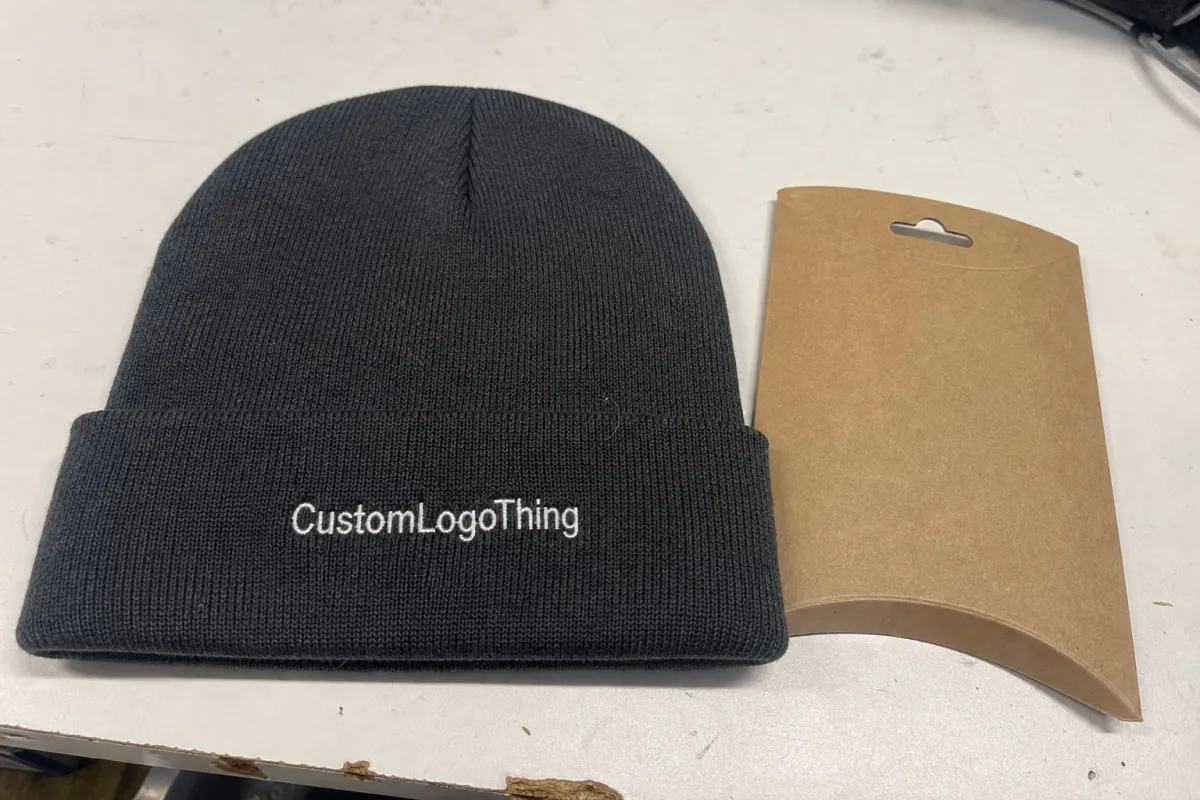
Start with the blank beanie, the logo placement, and the decoration method. Those three choices shape almost everything else in ceramic embroidered beanies Bulk Order Planning. A cuffed rib knit with a small embroidered mark is a very different job from a slouch beanie with a wide front design. The art file can be identical and the production path still changes completely.
The blank determines stretch, thickness, and how much support the knit offers under the thread. A tighter rib usually gives a cleaner embroidery surface. A softer knit may feel nicer on the rack, but it can move under the needle and need more stabilization. That matters because embroidery is not printed decoration; it sits on top of a moving textile, and the textile decides how much of the design survives the process.
Placement is the second big decision. A cuff front mark is the safest option for readability and consistency. Side placement is more lifestyle-driven and can look better on a casual knit, but the available space is smaller. Large front embroidery can create stronger shelf presence, yet it also increases stitch count and can make the hat feel stiffer at the decoration point. For a retail program, that tradeoff needs to be visible before approval, not after production starts.
Decoration method comes next. Direct embroidery is common because it is durable and economical at scale, but it is not the only path. Patches can give a cleaner edge on textured knits. Woven labels work when the brand wants a quieter finish. Mixed decoration can add dimension, although it also adds setup, approval time, and extra touchpoints in production. The right choice depends on the visual goal and the schedule, not just the lowest quote.
A useful first checklist looks like this:
- Blank type: acrylic, cotton blend, wool blend, or recycled yarn.
- Decoration style: direct embroidery, patch, woven label, or a combination.
- Placement: cuff front, side, back, or panel-based layout.
- Logo size: exact width and height in inches or millimeters.
- Delivery need: event date, retail launch, or replenishment window.
If those five items are decided early, the rest of the order moves with far less friction.
Beanie materials, knit structure, and embroidery build choices
Material selection affects more than warmth. Acrylic remains common because it stretches well, keeps its shape, and usually stays on the lower end of the price range. Cotton feels softer and breathes better, but it can be less forgiving under heavy stitching. Wool blends bring a more premium hand and better cold-weather performance, though they tend to cost more and can be more sensitive to thread density. Recycled yarns are a solid fit for brands that want a sustainability story, yet they can narrow the color palette and make shade matching more complicated.
Knit structure matters just as much. Rib knits usually give embroidery the most stable surface. They compress under the thread without collapsing completely, which helps the logo stay readable. Cuffed beanies are often the safest choice for bulk programs because the cuff creates a natural placement zone and gives the decoration a flatter surface. Slouch beanies can look better for lifestyle retail, but their softer drape makes logo placement less predictable and can reduce visibility when the hat is worn loosely.
Embroidery build is where buyers often underestimate the difference between a good sample and a production headache. A clean, moderate-density logo can run efficiently and hold up well over time. A wide fill or a design with tiny internal detail can force the machine to slow down, increase the chance of puckering, and add more thread changes than the quote originally assumed. If a logo has thin lines or very small type, the digitizer may need to simplify it before it can be stitched cleanly. That is not a flaw in the factory; it is a basic limit of embroidery on a knit surface.
Patch construction can be a smarter answer when the logo is too detailed for the knit. A woven patch is often sharper for fine text. An embroidered patch can add texture and visual weight, especially on a simple blank. Either option can help the design read better, but both require more setup than direct stitching. The right choice depends on whether the priority is precision, texture, or price.
Sample review should be physical, not just visual. Check the front face, the reverse side, and the way the knit rebounds after being stretched. Look for puckering around dense edges, loose threads at color changes, and any stiffness that feels out of line with the blank. A neat back side usually signals good tension control and a healthier production process overall.
For buyers who care about downstream handling, folded presentation and pack-out matter too. A beanie that looks fine on the sewing table can arrive with crushed embroidery if it was packed too tightly or stored under uneven pressure. Packaging School resources at Packaging School are useful for general material and presentation references, especially if the order will be displayed, shipped, or stored before use.
Fit, size runs, thread colors, and artwork specs to confirm
Beanies are often sold as one size fits most, but that label should not end the conversation. Stretch recovery, cuff depth, and crown height all affect where the logo lands after the hat is worn. A shallow cuff leaves little flat space for decoration. A loose knit may grow during wear and pull the logo lower than expected. A tighter knit can sit better under embroidery, but it may also feel warmer and less relaxed on the head. That is the kind of tradeoff that only shows up when the sample is on an actual person, not on a spec sheet.
Thread color is another place where screen assumptions break down. PMS and hex references help, but thread charts never match the monitor perfectly. A charcoal thread can shift between warm gray and near black depending on lighting. Navy may look saturated under office lighting and flatter under daylight. The practical move is to compare the blank color and the thread swatch in the same light, then approve from there. If the logo has more than one color, ask for the thread sequence too. Some combinations look fine separately but clash once they are stitched next to each other.
Artwork should arrive as vector art whenever possible. AI, EPS, and clean PDF files give the digitizer a better starting point than a flattened image. Include the intended size, the placement location, and any spacing rules around the logo. If the logo has small type, a fine line, or a tight crest shape, mention that upfront. Those features often need simplification to stitch cleanly on a knit cap. The earlier the revision happens, the less likely the order is to stall later.
Quantity splits and pack-out instructions matter more than many buyers expect. A 3-color assortment with equal quantity across each shade is a different job from a mixed case pack with a fixed SKU ratio. The same is true for retail hang tags, barcode labels, or region-specific carton markings. If the goods need to move through a warehouse, a store system, or a fulfillment center, say so before approval. The order can usually absorb those requirements. It just cannot absorb them quietly.
For broader sourcing context, the Wholesale Programs page can help align volume expectations with the kind of production load you are planning. That matters because a larger run with multiple pack-out rules behaves differently than a smaller promotional shipment, even if the decoration is identical.
Transit handling deserves a quick check as well. Distribution testing standards such as ISTA are commonly used to judge how packaged goods respond to vibration, stacking, and rough handling. Beanies are not fragile in the way glass is fragile, but embroidery can still crush, cartons can still deform, and polybags can still trap moisture if the packing plan is careless. The order should be designed for the journey, not just the sewing room.
Pricing, MOQ, and unit cost drivers for bulk beanie orders
Bulk pricing is driven by a small set of variables: blank style, stitch count, number of embroidery locations, thread changes, digitizing, labeling, and carton requirements. The blank sets the baseline. Every additional stitch row adds time. Every new color adds machine complexity. Every extra placement raises the chance of alignment issues. A beanie that looks straightforward from a distance can be much more demanding once the art is fully broken into stitches.
MOQ usually reflects setup efficiency, not an arbitrary gate. If the run needs digitizing, blank sourcing, test stitching, and packaging configuration, the order has to be large enough to spread those costs across the batch. A simple single-location design can usually support a lower MOQ than a multi-color patch build or a run that requires fixed carton assortments. That is why two suppliers can quote very different minimums even when they are quoting the same general product category.
The table below gives a rough working range buyers can use when they are comparing quotes. Actual numbers move with blank quality, stitch density, and packaging instructions, but the spread is useful for spotting outliers.
| Option | Typical setup | Added unit cost | Best use |
|---|---|---|---|
| Single-location direct embroidery | $25-$75 digitizing/setup | $0.85-$1.60 per unit | Uniforms, clean retail branding |
| Multi-color direct embroidery | $35-$90 digitizing/setup | $1.10-$2.10 per unit | Detailed logos, stronger visual contrast |
| Woven or embroidered patch | $40-$100 setup | $0.95-$2.25 per unit | Textured knits, premium presentation |
| Mixed decoration with label or patch | $60-$120 setup | $1.25-$2.75 per unit | Retail programs, brand-heavy assortments |
Larger quantities can lower unit cost, but they also increase the cost of a bad assumption. A 5,000-piece order with unclear artwork can be more expensive to correct than a 2,000-piece order with a fully locked spec sheet. The lesson is not to avoid scale. It is to make sure scale is built on certainty. Ask for line-item quotes so you can compare blank grade, stitch load, labeling, and pack-out separately instead of accepting one blended number that hides the real cost drivers.
Pricing also shifts with freight style. Packed loose in polybags, nested in pairs, or carton-packed by SKU, the order will move through the warehouse differently and may ship at a different weight. Those little differences matter on a large run. A few cents on packing can become a meaningful line item across thousands of units.
Process and timeline from proof approval to shipment
The cleanest orders usually follow the same path: request for quote, art review, proof, sample or mockup, approval, production, inspection, and shipment. It sounds linear. In practice, it only stays linear when the buyer answers the obvious questions early. Missing vector art, vague placement notes, and late thread changes are the fastest way to lose a week.
Timelines depend on quantity, decoration load, and blank availability. A single-location embroidery job can move quickly if the art is ready and the blank is in stock. A larger run with several thread colors, special labels, or mixed cartons will need more time. Proofing is where most delays begin. If the proof is rushed, the production line may still finish on time, but the risk of rework rises sharply.
Packaging instructions should be decided with the artwork. If the order needs polybags, size stickers, hang tags, barcode labels, or carton marks, they all need to be on the approval sheet. Leaving them for later creates avoidable backtracking. The same applies to store distribution or event fulfillment. If cartons need to be opened and sorted downstream, the pack structure should support that from the start.
A realistic working timeline often looks like this:
- Day 1-2: quote, art check, and spec confirmation.
- Day 2-4: digital proof and one revision round.
- Day 4-7: sample approval or mockup signoff.
- Day 7-15: production, depending on order size and decoration load.
- Final step: inspection, packing, and shipping documentation.
That timeline can compress for repeat orders and stretch for complicated first runs. The biggest variable is usually not the embroidery itself. It is the amount of waiting between approvals.
If a deadline is fixed, say so immediately. A supplier can often tell you whether the order fits the current schedule or needs a different production lane. That is a much more useful conversation than trying to rescue a rushed order after the proof has already drifted beyond the original plan. The FAQ page can help with common scheduling questions before the final spec is locked.
What a production-focused partner should verify before stitching
A production-focused partner does not wait for a bad sample to point out a problem. The better habit is to check stitch stability, logo size versus available cuff space, and knit compatibility before the first full run. That early review protects both sides. It keeps the buyer from approving a design that cannot hold up on the blank, and it keeps the factory from discovering the issue after labor has already been spent.
Plain feedback matters more than polished reassurance. If the logo is too wide for the flat area, that should be stated directly. If the blank is too soft for dense stitching, the supplier should flag it. If the thread color will read differently on a heathered knit, that needs to be part of the proof conversation. Good production control usually looks ordinary from the outside. It is a chain of small checks that prevent a much larger cleanup later.
The same logic applies to communication. Buyers usually do better with one team that can handle artwork, proof revisions, schedule updates, and shipping notes than with a fragmented chain of handoffs. Every transfer point creates room for a missed instruction. Fewer handoffs usually means fewer surprises.
Before stitching begins, a capable partner should be checking for:
- Stitch stability: no obvious puckering, tunneling, or edge pull.
- Logo fit: the design sits comfortably within the cuff or panel area.
- Thread match: approved colors remain close on the actual blank.
- Packaging plan: folding, labeling, and carton marks are defined.
- Transit protection: cartons fit the route and handling method.
Material sourcing can also reflect production discipline. FSC-certified paperboard for inserts or cartons, documented at FSC, may not be required for every order, but it is a useful indicator that the supplier thinks about the full package, not only the embroidered face. That level of attention often shows up elsewhere too, especially in how the goods are packed and labeled.
None of this is glamorous. It is how a decorated knit order avoids the usual problems: distorted logos, mismatched colors, late cartons, and packaging that looks fine until it reaches the warehouse.
What to send for a fast quote and a clean production start
The fastest quotes come from complete briefs. If the supplier has to ask basic questions one by one, the timeline stretches. Gather the logo file, quantity, color list, placement notes, and delivery date before requesting pricing. If packaging is already decided, include that too. The more complete the brief, the less room there is for assumptions that later turn into rework.
Ask for a proof that shows embroidery size, placement, thread colors, and any labeling or packing notes. Treat that proof like a production map. If a detail is absent on the proof, it is likely absent in the finished run. That matters even more on larger orders, because a small misunderstanding can become a sorting problem across dozens of cartons.
Comparing suppliers only works if the spec is identical across quotes. One quote may be based on a heavier blank, another on a looser knit, and a third may include polybags or barcode stickers while the others do not. If the numbers do not line up, the comparison is not meaningful. Matching the spec is the only way to judge MOQ, lead time, and unit cost fairly.
A clean order file usually includes:
- Artwork: vector file plus one reference image.
- Color callouts: blank color and thread color preferences.
- Dimensions: logo width, height, and placement notes.
- Quantity: total units and any color split.
- Packaging: polybag, label, carton mark, or retail pack-out.
Once the file is approved, hold the line on late changes unless they are truly necessary. That discipline is what keeps ceramic embroidered Beanies Bulk Order Planning from slipping into constant revision. The difference shows up in delivery, in finished appearance, and in how much time the order consumes from quote to carton.
What should I confirm before placing a ceramic embroidered beanies bulk order?
Confirm the blank beanie style, logo placement, and thread colors before asking for a final quote. Send vector artwork and a target quantity so digitizing, MOQ, and pricing can be reviewed together. Ask for a proof that shows size and placement clearly before production starts.
How does embroidery affect bulk beanie pricing?
Pricing usually rises with stitch count, extra logo locations, and multiple thread color changes. Digitizing and setup are common one-time costs that matter more on smaller orders than on larger runs. Packaging, labeling, and carton requirements can also move the final unit cost.
What MOQ should I expect for embroidered beanies in bulk?
MOQ depends on the beanie style, decoration method, and how efficiently the run can be set up. Simple single-location embroidery often supports lower minimums than multi-location or high-stitch designs. Ask for the MOQ on the exact spec sheet you want, not on a generic beanie listing.
How long does the process usually take after proof approval?
Simple orders can move faster, but most bulk beanie runs still need time for production, inspection, and packing. Missing artwork or late approval feedback is the most common reason timelines slip. Share your event date early if the deadline is fixed.
Can I split one bulk order across colors or size runs?
Yes, but mixed colors or size breakdowns can affect MOQ, pricing, and packing complexity. Some suppliers can combine colors in one production run if the artwork and thread setup stay the same. Ceramic embroidered Beanies Bulk Order planning works best when the same spec sheet covers quantity, placement, and carton instructions from the start.

