book embroidered baseball caps Bulk Order Planning usually goes sideways for one predictable reason: the spec is still moving after the quote. The embroidery rarely causes the real trouble. The cap body, crown shape, stitch count, placement, and approval chain do most of the damage. If the order needs to land on a launch date, it should be treated like a production job, not a casual promo add-on.
Book merch works especially well in cap form because it travels well, fits into preorder bundles, and keeps the title visible long after an event ends. Readers actually wear caps. Staff wear them. Volunteers wear them. That makes them one of the few pieces of merch that stays in public view instead of disappearing into a drawer. The better the fit and finish, the longer the branding lasts.
The catch is that caps are less forgiving than flat printed items. Thread color changes the contrast. A shallow front panel changes how the mark sits. Closure style changes the way the cap reads on a head. Small details are easy to miss on a screen, then obvious the moment the box is opened. That is why buyers who plan carefully usually end up with cleaner product and fewer price surprises.
A good order flow is simple: pick the cap style, lock the decoration method, confirm quantity, and request the quote against a final spec sheet. Anything looser invites revisions, and revisions are where budgets get chewed up one small change at a time.
Why Book Merch Needs Caps That Ship Cleanly
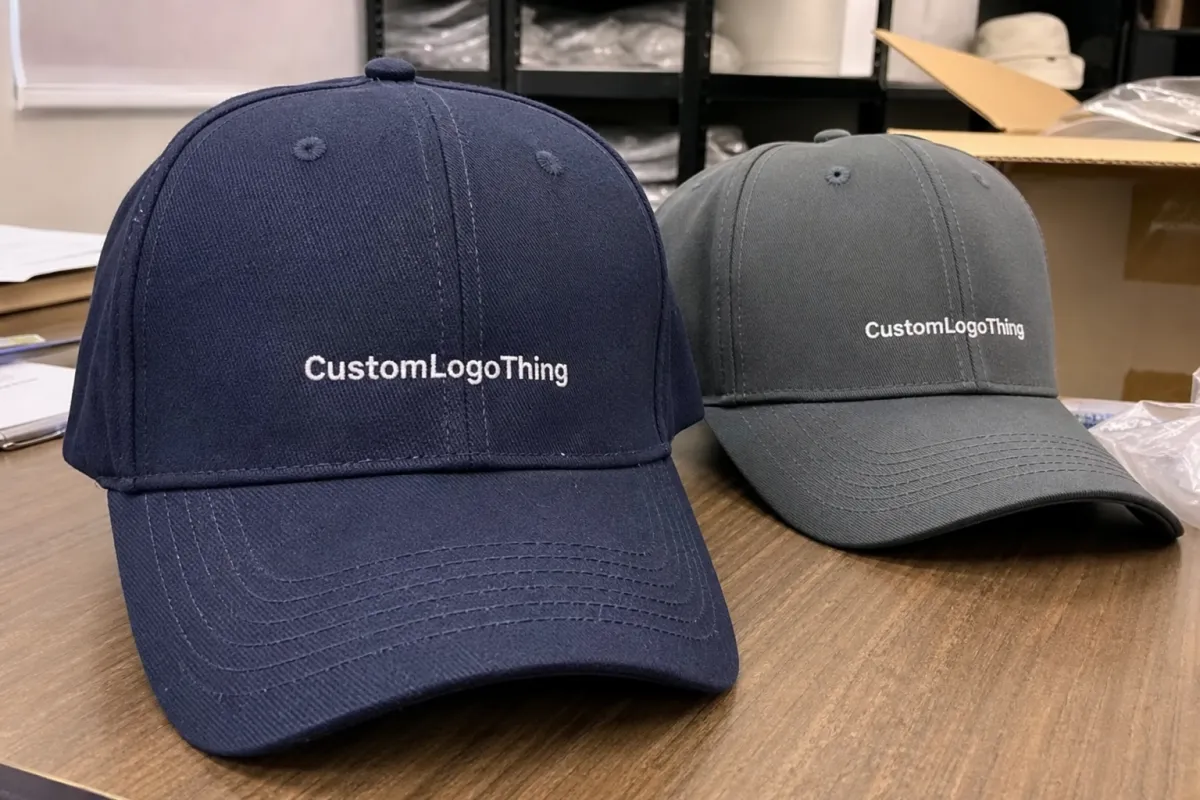
For book merch, the cap has to do three jobs at once: it has to look good in photos, survive shipping, and stay wearable after launch week is over. That is why book embroidered baseball caps Bulk Order Planning matters more than many buyers expect. A cap order feels small. It is not. The curve of the crown, the front seam, and the thread density make it far more sensitive than posters or stickers.
Most budget problems come from avoidable revision loops. A buyer approves a flat mockup, then asks for a wider logo, a different thread shade, and a new placement after production has already started. Each change adds setup time and introduces another chance for mismatch. The embroidery itself is usually not the expensive part; the back-and-forth around it is.
Think about the use case. A poster can be reprinted if the color drifts a little. A cap cannot hide a crooked mark or a logo that crowds the seam. If the front panel is too shallow, the artwork gets squeezed. If the thread is too fine, small lettering fills in. If the cap shape does not suit the audience, the item looks like leftover promo stock instead of intentional merch.
A cap order is not difficult. It is unforgiving. The flaws show up fast on curved panels.
From a buyer's point of view, caps earn their place because they stay visible. People wear them to signings, to bookstores, to the gym, and to casual events months later. That is a stronger return than handing out paper inserts that never leave the bag. It also means the decoration has to hold up at arm's length, not just on a proof screen.
For launches tied to preorder bundles or event kits, the schedule should start with the delivery date and move backward from there. If the production plan is built around the quote instead of the deadline, the most expensive part of the order becomes the delay. That is usually when a project stops being profitable without warning.
Cap Styles, Fabrics, and Embroidery Choices That Matter
Most bulk book cap orders fall into five bodies: structured dad caps, Unstructured Dad Hats, truckers, snapbacks, and performance caps. Each one changes the final look more than the product photos suggest. A structured front panel gives the embroidery a cleaner face. An unstructured crown reads softer and more relaxed. A trucker cap feels casual and breathable. Performance styles handle heat better, but they look more technical than retail.
Fabric choice matters just as much. Cotton twill gives a familiar everyday feel and works well for retail-style book merch. Polyester blends tend to hold shape better and resist wear in transit. Mesh-backed truckers breathe well in hot weather, but the front panel still needs enough structure to support the decoration. If the cap body feels flimsy in hand, stitched artwork will expose it immediately.
| Cap style | Best use | Decoration notes | Typical bulk range |
|---|---|---|---|
| Structured dad cap | Retail-style book launches | Best for flat embroidery and simple front logos | $4.20-$7.50 decorated |
| Unstructured dad hat | Casual reader merch | Softer look; avoid tiny text near the seam | $4.00-$7.00 decorated |
| Trucker cap | Outdoor events and wide-audience drops | Mesh back helps breathability; keep the front panel simple | $3.80-$6.80 decorated |
| Snapback | Younger audience or streetwear styling | Works well with bold marks and stronger contrast | $4.50-$8.20 decorated |
| Performance cap | Active promos and hot climates | Best with clean, low-detail embroidery | $4.60-$8.50 decorated |
Decoration method changes the result almost as much as cap style. Flat embroidery is the safest choice for most logos because it keeps edges clean and costs less to set up. 3D puff adds height and a stronger retail look, but only works when the artwork is bold and the lettering is large enough to read. Patch applications are useful when the art has too much detail for direct stitching, though they add labor and another quality-control step.
Small text is where many designs fall apart. Thin strokes close up on curved panels. Fine outlines can blur after digitizing. Too many thread colors can make a book logo look busy rather than premium. If the artwork depends on tiny details, simplify it before the order moves forward. A cap is not a poster, and it does not reward complexity.
Practical rule: if the logo uses more than about five colors or includes text under 0.2 inch tall, ask for a simplified version before quoting. That one decision can prevent a second round of artwork revisions later.
Sizing, Placement, and Decoration Specs Buyers Should Lock In
Adjustable sizing is usually the smartest choice for bulk orders because the recipient mix is broader than most people plan for. A book launch can include staff, reviewers, volunteers, customers, and bookstore teams. They do not all need the same fit. Fitted caps can look sharper for retail, but they create leftover inventory and turn a simple order into a sizing puzzle.
Placement should be decided before the quote is approved. Center front is the default and usually the lowest-cost option. Side embroidery works for campaign marks or bookstore names when the front panel needs to stay clean. Back embroidery can carry a date, sponsor, or short web address, but it should stay short and readable. Every extra position adds setup work, and that cost lands somewhere in the final price.
Good artwork prep saves time. Send a final vector file, not a screenshot. Confirm Pantone references or thread matches if the brand color needs to stay exact. Keep the text legible at cap scale. And specify the decoration size, because a 3-inch mark and a 4.5-inch mark do not behave the same way on a curved crown.
- Final logo in AI, EPS, or clean PDF format
- Approved thread colors or Pantone references
- Exact embroidery size in inches
- Placement callout: center front, side, back, or combination
- Any text that must remain readable from a few feet away
Seams and panel limits matter more than first-time buyers usually expect. The front of the cap is curved, the seam may cut into the design, and the crown depth controls how much room is available. A logo that looks balanced on a flat screen can become awkward once it is stitched onto a wearable shape. That is why a digital mockup helps, but a physical sample is better when the design includes small type, fine outlines, or tight spacing.
For larger launches, ask for a sample or a pre-production proof before the bulk run starts. Approval is cheaper than discovering a problem after 500 caps are already stitched. A one-day delay for proofing is easier to absorb than a full remake because the mark sits 1/4 inch too low on every hat.
If the caps are going into packaged kits, think about the rest of the presentation too. Paper inserts or hang tags can be sourced in FSC-certified stock, which keeps the packaging tidy without pretending the paper does all the branding work. For cartons that need to survive multiple shipping hubs, ISTA-style handling standards are a useful benchmark because crushed crowns and bent brims are avoidable damage, not bad luck.
Pricing, MOQ, and Unit Cost Variables Buyers Should Ask For
MOQ usually depends on the cap body, color, and decoration method. A simple single-location embroidered run can often start lower than a patch-heavy build, but there is no universal minimum that applies to every style. In practice, buyers commonly see minimums in the 100 to 300 piece range, then better pricing once quantities move into 500, 1,000, and beyond.
The biggest price drivers are fairly predictable: blank cap quality, stitch count, thread colors, decoration locations, special finishes, and rush handling. A heavier cap body with better stitching costs more, but it also tends to look more intentional on retail shelves and hold shape better during shipping. If the quote is cheap because the blank is thin and the logo has been stripped down until it barely resembles the original art, that is not a bargain. It is a compromise with a nice invoice.
| Cost driver | Typical impact | What buyers should ask |
|---|---|---|
| Blank cap quality | Can move unit cost by $0.60-$2.00 | What fabric, crown shape, and closure are included? |
| Stitch count | Higher stitch counts raise labor and digitizing time | How many stitches are in the final embroidery file? |
| Thread colors | More colors increase setup complexity | Can the logo be reduced to 1-3 thread colors? |
| Decoration locations | Each extra position adds setup and labor | Is one front location enough for the campaign? |
| Packaging and freight | Can change landed cost more than buyers expect | Does the quote include packing, cartons, and delivery? |
Ask for a quote that covers decoration, setup, sampling, packaging, and freight. Otherwise you are comparing half-prices instead of real prices. Cheap quotes often look fine until shipping, repacking, or color correction gets added later. Then the low number turns into the expensive order.
If the design and schedule are flexible, savings usually come from standard cap bodies and one embroidery location. That combination keeps setup simple and reduces the chance of mismatch. If the order needs a more premium feel, spend the money on better blank quality and a cleaner front panel before adding extra effects. Buyers notice hand feel and shape much faster than they notice thread jargon.
For reference, a straightforward bulk order with a standard cap, one embroidery position, and simple thread use often prices better than a patch-heavy build by $1.00-$2.50 per unit. That gap becomes meaningful very quickly once the quantity reaches 500 pieces or more.
Process and Timeline: From Artwork Approval to Delivery
A clean workflow saves more time than a rush order ever will. The usual sequence is straightforward: brief, quote, digitizing, mockup approval, sample or proof, bulk production, inspection, packing, and shipping. If one step gets skipped, the next one usually inherits the problem.
Timelines are easier to manage when everyone separates approval time from production time. A quote can come back in 1 to 2 business days if the brief is complete. Digitizing often takes 1 to 3 business days. Mockup approval may happen the same day or take several rounds if the logo is under-specified. A sample can add 5 to 10 business days, and bulk production often lands in the 10 to 20 business day range depending on quantity and complexity. Freight is separate, because transit time is not production time.
- Quote: 1-2 business days for a complete brief
- Digitizing: 1-3 business days for a clean logo
- Mockup approval: same day to 2 business days
- Sample or proof: 5-10 business days if requested
- Bulk production: 10-20 business days, depending on setup and quantity
- Shipping: plan domestic and international transit separately
The usual delay points are easy to spot. Late artwork files slow digitizing. Color changes after approval reset the schedule. Stock shortages can push the order back. And indecision on placement or size is especially costly because everyone ends up waiting for someone else to decide. One final decision maker, one approved file, one confirmed spec sheet. That is the cleanest version of the job.
For book launches and event merch, the buffer should protect the table date, not the shipping date. If the caps are meant to be on display at an author event, they need to arrive before setup day, not sometime during lunch. That sounds obvious until a buyer is explaining why the boxes arrived after the signing was already over.
Most of the pressure in book Embroidered Baseball Caps Bulk Order planning comes from calendars, not stitches. Once the spec is locked, the physical production is usually the easy part. The hard part is getting the approvals out of the way early enough that the order can move without avoidable pauses.
Supplier Workflow and QC Checks Buyers Should Expect
A supplier handling bulk cap orders well should have a boring, repeatable process. That is a good sign. The order should pass through artwork review, digitizing, sample approval, production, inspection, packing, and shipment tracking without the buyer having to guess what happened next. If the workflow is fuzzy, mistakes tend to show up in the finished goods.
Quality control on embroidered caps is mostly about small, practical checks. Thread tension needs to be consistent so the stitches do not pucker the panel. The logo should be centered against the seam, not merely centered on the file. Loose thread tails should be trimmed. Color matching should be checked against the approved thread chart, not a monitor. And every carton should be counted before shipping so shortages do not become a delivery dispute.
It also helps to look at the worst-case defects before the order starts. Common problems include a front panel that collapses under too much stitch density, curved lettering that tightens after digitizing, and crown crush from poor packing. None of those issues are mysterious. They are the result of skipping a check that should have been done earlier.
For large quantities, a first-article sample and a mid-run check are worth asking for. The first hat confirms placement and size. The mid-run sample confirms the machine is still producing the same result after the first few dozen pieces. That matters because embroidery machines can drift if tension changes or if a thread spool is swapped without proper reset. The problem is small until it shows up on 200 caps.
There is a practical buyer lesson here: the cheapest quote often leaves out the parts that keep the order stable. A clear proofing step, a consistent thread reference, and a counted pack-out save more money than they cost. That is especially true for book merch, where the product is usually tied to a fixed launch date and there is no room for a second production round.
A good supplier should also be able to explain the limits of the process without dressing them up. Tiny text may need to be simplified. 3D puff is not right for every logo. Light-colored thread on textured fabric can disappear in photos. Those caveats are not problems to hide; they are the boundaries that keep an order from drifting into rework.
Next Steps to Lock the Order Before You Request Quotes
Before sending quote requests, make four decisions: cap style, decoration method, target quantity, and delivery window. That trims the noise out of the process and forces every supplier to quote the same job. If those points are still floating, you will get three different prices for three different products and spend time comparing things that cannot be compared.
Then gather the final logo file, preferred thread colors, and any brand rules that matter. If the logo is intricate, say so. If the event date is fixed, say that too. A complete brief is not bureaucracy. It is how you keep vendors from guessing. Guessing is expensive.
Compare suppliers on matched specs, not on the lowest number in the inbox. Check whether the quote includes setup, sampling, packaging, freight, and any extra decoration positions. Ask whether the blank cap is the same style across quotes. A low price on the wrong cap body does not help anyone.
If the order is large enough to hurt if it goes wrong, ask for a mockup approval step and, if needed, a sample. That matters most for detailed artwork, mixed color plans, and launch dates that cannot move. One extra approval can prevent a long apology later.
How do I start book embroidered baseball caps bulk order planning for a launch?
Start with quantity, cap style, and delivery date before discussing decoration. Send the final logo file and any brand color references with the first quote request. If the artwork is detailed or the launch date is fixed, ask for a mockup or sample right away.
What cap style is best for a bulk embroidered book promotion?
Structured dad caps work well when the goal is a clean retail-style front panel. Trucker caps are better when breathability matters and the audience is casual. Adjustable sizing is usually the safest choice for bulk orders unless the recipient mix is already known.
What affects pricing and MOQ the most on embroidered cap orders?
Cap body style, stitch count, and decoration complexity usually drive the biggest price swings. MOQ often changes by style and color because setup and sourcing costs are fixed. Rush handling and extra decoration positions add cost quickly.
How long does the process and timeline usually take for bulk cap production?
Artwork approval and digitizing can be quick if the file is clean, or slow if revisions pile up. Bulk production is usually faster than the approval stage once the spec is locked. Shipping time should be planned separately so the delivery date is not a guess.
Can I mix colors or sizes in one bulk embroidered cap order?
Yes, but mixed colors and mixed sizes can affect pricing and MOQ depending on the cap style. Simple orders with one decoration setup are easier to quote and faster to produce. Ask for the exact split before confirming the order so there are no surprises later.