Book Logo Patch Beanies Bulk Order Planning for Teams
Plan a smarter book Logo Patch Beanies Bulk Order with clear Specs, Pricing, Lead Times, and approval steps so your team avoids costly rework before launch.
book logo patch beanies Bulk Order Planning gets expensive fast when the proof is vague. A patch that looks fine on screen can shift once it lands on rib knit, and a tiny miss in size or placement gets repeated across the full run. That is how a simple merch order turns into a budget problem with a box label on it.
The better approach is plain and unglamorous: decide the beanie style, patch build, and approval rules before the quote is accepted. That matters even more for team orders, launch merch, campus programs, and retail bundles, where the beanie needs to look clean from a few feet away and still hold up after wear. The cheapest unit price is rarely the cheapest order.
A digital proof is not the finished product. Knit texture changes the way a logo reads, and sometimes not in a flattering way.
Why the Proof Stage Decides the Real Cost
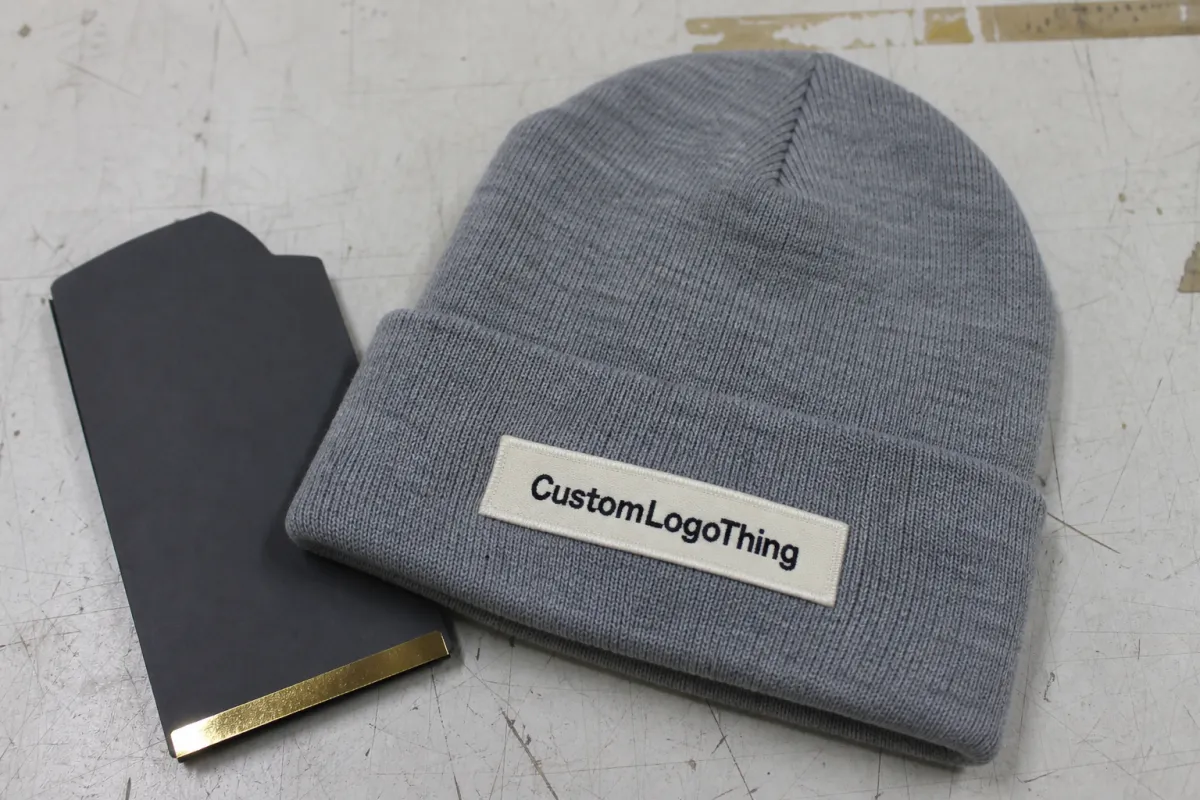
The proof stage is where most of the money is won or lost. Not because the mockup looks bad, but because small details are easy to ignore until production starts. A patch that is off by a quarter inch may not look alarming in a PDF. On the hat, though, that same mistake can make the logo feel cramped, crooked, or too small to read from normal viewing distance.
That is why Book Logo Patch Beanies bulk order planning should start with the finished look, not just the artwork file. Patch applications work well for compact logos, fine lines, and small text that would blur if stitched directly into a stretchy knit. Direct embroidery is still the better answer for bold wordmarks or simple icons. Different art needs different treatment. Surprising, I know.
The point is not to pick the fanciest decoration method. The point is to choose the one that survives scale. If the logo has thin lettering, multiple colors, or a detailed outline, a woven patch or embroidered patch often gives cleaner edges than embroidery on the beanie itself. If the art is heavy, simple, and built for distance, direct embroidery can be faster and cheaper.
Buyers also need to think about how the beanies will be judged. A campus store order has a different standard than an internal staff giveaway. For staff, the item needs to look polished in photos and on the first day of wear. For retail, it needs enough finish detail that a customer would not call it promo trash. That distinction is not dramatic, but it matters.
A good proof process does one thing well: it shows the risks before the factory runs the full quantity. A bad proof process does the opposite. It confirms the art, but not the build.
Patch Placement, Knit Base, and Readability
Patch placement is not a cosmetic afterthought. It changes how the hat wears, how the logo sits on the cuff, and whether the brand mark actually gets seen. Front-center cuff placement is the safest default because it gives the best visibility. But even that can go wrong if the patch is too low on the fold or too tall for the cuff height.
Slouch beanies are trickier. The drape can hide a patch lower on the crown, and a logo that looks centered in the mockup may disappear once the hat is on a head. If the beanie is meant for everyday use, it is worth asking where the patch lands after the fabric settles. A few millimeters do matter. On knit, they matter annoyingly much.
There are four common options buyers usually compare:
Cuff embroidery is efficient for short text and simple icons. It usually keeps setup simpler, but fine detail can suffer if the knit is loose.
Woven patches are good for small type and clean lines. They are a solid option if the logo has detail that needs to stay legible without looking puffed up.
Embroidered patches add texture and depth. They work well for bolder branding and can feel more premium than direct embroidery on a soft knit.
Leather-style badges create a stronger retail look, but they are not magic. If the artwork is too detailed, the mark can turn muddy fast.
The knit base matters just as much as the patch. A tighter gauge creates a more stable surface and usually supports cleaner application. A looser rib knit feels softer and more casual, but it moves more under tension. That means the same patch can sit flatter on one style and buckle on another. Good buyers check this before approving the final decoration size.
Material mix also changes the result. Acrylic holds shape well and tends to be forgiving on bulk orders. Wool blends usually feel warmer and can add a more substantial hand, but they may also introduce more variation in texture. Recycled yarn blends are common now, though they should be checked for knit consistency and dye behavior before color-sensitive logos are approved.
Visibility is a practical issue, not an artistic one. If the beanie will be worn in team photos, on staff floors, or at events, the logo should stay readable from a few feet away. If the patch is too small, the item reads as generic. If it is too large, the hat starts to look stiff and forced. That balance is where decent merch becomes good merch.
Size Specs, Materials, and Decoration Limits
Before any quote is useful, the spec has to be complete. The order needs the fabric content, knit gauge, sizing, cuff style, color target, and decoration method. Missing one of those is how buyers end up comparing prices for two different products that only look similar in the mockup.
Typical bulk beanies often use 100% acrylic, a wool blend, or a recycled synthetic blend. Acrylic is usually the most price-friendly and easiest to standardize at volume. Wool blends feel more substantial, but they can bring more cost and a slightly less predictable surface. Recycled yarn is common for brands that want a sustainability story, although the exact hand-feel and color consistency can vary more than people expect.
Decoration limits are real. A 2-inch patch may be plenty for a clean mark on a narrow cuff. A 3-inch patch can overwhelm a small hat body or bend too far around the curve. Stitch count also matters. More stitches can sharpen an embroidered patch, but they add machine time and raise cost. The same goes for border type, backing choice, and edge finish. Small changes add up fast in bulk production.
Text is another trap. Tiny type that looks readable in an art file can disappear once it is woven, stitched, or heat-applied. If the logo includes a subtitle, tagline, or small registration mark, it should be checked at actual size before approval. A lot of rework comes from people assuming small text will "probably be fine." It usually is not.
Color matching deserves a realistic plan. Pantone references help, but yarn dye lot, knit texture, and fiber blend can all shift how the color reads. A deep navy cuff can look warmer under indoor light and cooler in daylight. A bright patch on dark knit can also appear slightly less saturated once it is sewn in place. That is normal. Exact matches are possible in some cases, but close matches are often the honest answer.
Package requirements belong in the spec too. Individual polybags, size stickers, folded inserts, and hang tags all change the packing workflow. If the order is going into retail or event distribution, those details need to be locked before the proof is approved. Otherwise, the packing step becomes a second order hidden inside the first one.
Pricing, MOQ, and Quote Drivers
Pricing for custom beanies is not a single line item. It is a stack of choices. The blank cap, decoration method, patch build, packaging, and shipping method all affect landed cost. Buyers who compare only the base beanie cost usually miss the expensive part, which is the finishing.
For rough planning, a plain acrylic cuff beanie in bulk often lands around $2.10 to $3.60 per unit before decoration at common volumes. A patch add-on might add $0.35 to $1.10, depending on stitch density, color count, backing, and edge finish. A leather-style badge can push the decoration cost higher, often $0.55 to $1.25 on its own. Retail-ready folding, tagging, or bagging may add $0.15 to $0.40 per piece.
MOQ is tied to setup friction. Simple one-color patches are easier to run than multi-color art. Mixed sizes or mixed color runs can increase handling. A beanie with multiple decoration zones, or a patch that requires an extra application step, may carry a higher minimum because the factory has to absorb the prep time somewhere. That is why the low quote and the low MOQ do not always travel together.
Rush fees also deserve a hard look. A rushed order can move the schedule, but it can also push labor into a more expensive window. Sample rounds add time and money. Freight can become a bigger part of the total than the product itself, especially for low-priced beanies with bulky packaging. That is the part people forget while staring at a unit price on a spreadsheet like it is a verdict.
| Decoration Option | Typical Price Effect | MOQ Pressure | Best Fit |
|---|---|---|---|
| Woven patch | Moderate add-on, efficient for fine text | Lower to medium | Small logos, clean edges, detailed marks |
| Embroidered patch | Moderate to higher, depending on stitch count | Medium | Bold logos, texture, team branding |
| Leather-style badge | Usually higher due to material and finish | Medium to higher | Premium retail look, simple iconography |
| Direct cuff embroidery | Often lower on simple art, higher on complex art | Lower to medium | Simple wordmarks and short runs |
There is also a hidden cost that only shows up once production starts: rework. If the logo is approved too quickly, or the patch size is guessed instead of measured, any fix becomes expensive because it has to be repeated across the whole order. A quote that looks a little higher but includes a better proof process can save money the first time you miss a detail. And the second time. Usually the first time is enough.
Production Steps and Lead Time From Art File to Delivery
Lead time is easier to manage when it is broken into stages. First comes artwork intake. Then the digital proof. Then sample or pre-production approval if needed. After that, bulk production, finishing, packing, and shipment. Manufacturing and transit are separate clocks. Treating them as one number causes schedule trouble.
For a clean bulk order, a digital proof can take 1 to 3 business days if the artwork is ready and the instructions are specific. A sample or pre-production unit can add several more days if patch size, placement, or color need adjustment. Bulk production commonly falls in the 12 to 20 business day range after approval, though the exact window depends on quantity, season, decoration complexity, and current factory load.
Most schedule slips come from the same few problems. The file is not vector. The patch dimensions are not confirmed. Someone wants to shift the logo after approval. Color changes are requested after the sample is built. None of those are unusual, but each one adds time. The tighter the launch date, the less room there is for casual decisions.
Shipping should be priced separately from production. Air freight can save time but raise landed cost sharply. Ground or ocean methods may lower freight cost, but they need more buffer. If the beanies must arrive for a team event, store reset, or seasonal launch, the order should be planned backward from the in-hand date, not forward from the day the quote was sent.
Lead time also depends on whether the supplier starts counting at proof approval or at deposit receipt. That detail sounds small until a schedule is already tight. It is one of those things that seems boring right up until it ruins the calendar.
How to Compare Suppliers Before You Place the Order
A low quote is only helpful if the supplier can actually deliver the spec. Start by asking who handles the patch build, application, inspection, and packing. If the work gets handed off several times, there is more room for drift in color, placement, and finishing. Fewer handoffs usually mean fewer surprises.
Sample photos are more useful than polished sales language. Ask for close-ups of the actual beanie style, not just a flat patch sample. Look at edge finish, stitch density, and how the patch sits against the knit. If the supplier can show several angles, even better. That is the difference between a designed product and a mockup that lied to everyone politely.
Defect standards matter too. What counts as acceptable tilt? How much thread cleanup is expected? Are loose fibers trimmed before packing, or are they left for the buyer to sort out? Good suppliers define tolerances before production starts. Weak ones wait until the first complaint and call it normal variance.
Ask about replacement policy before the order is approved. If units miss inspection, what happens? Is there a remake process? Is credit offered, or do you need to push for it? The answer says a lot more than the quote sheet ever will. A supplier that explains its QC process clearly is usually easier to work with than one that only talks about price.
Order comparison should end on landed cost, not base cost. Freight, inspection, packaging, and rework risk all belong in the math. A vendor that charges a little more but handles proofing properly can still be the cheaper option. Buying bulk hats is weird that way. The lowest line item often isn’t the lowest total.
Order Prep Checklist Before You Request a Quote
The cleanest way to handle book Logo Patch Beanies bulk order planning is to send a complete request up front. A supplier can quote faster and more accurately if the order details are already decided. It also cuts down on the back-and-forth that burns time for no good reason.
- Send the logo in vector format such as AI, EPS, or PDF.
- State the target quantity and any split by color or size.
- Confirm the beanie style, knit type, and cuff or slouch preference.
- Specify patch dimensions, placement, and whether small text must stay readable.
- Provide Pantone references or clear brand color notes.
- Choose packaging needs in advance: folded, bagged, tagged, labeled, or retail-ready.
- Confirm the in-hand date, not just the order date.
Two more details are worth locking early. First, decide whether the order needs individual polybags or custom insert cards before the proof is issued. Second, confirm whether the supplier needs a pre-production sample for final signoff. Those decisions affect timing, cost, and packing flow more than people expect. They also tend to surface late, which is the least helpful time for them to appear.
If the order is for a book club, campus group, staff launch, or retail drop, the safest plan is the same: set the exact logo size, patch type, and delivery window before anyone starts building the proof. That keeps the quote aligned with the final product and avoids the classic trap of approving the wrong version because it was the cheapest one.
Good bulk planning is not about squeezing every possible cent out of the order. It is about making sure the beanies arrive on time, look intentional, and do not need a second round of corrections. That is the real win.
How do I plan a book logo patch beanies bulk order for a team?
Start with quantity, in-hand date, logo file, and the exact beanie style before asking for pricing. Confirm patch size and placement early so the quote matches the final build and does not need a second round of changes.
What changes the unit cost most on custom logo patch beanies?
Patch type, decoration method, packaging, and color count usually affect unit cost more than the blank beanie itself. Rush timing, sample rounds, and small-order setup fees can raise the final number even when the base hat looks inexpensive.
Can I mix colors or sizes in one bulk beanie run?
Yes, if the supplier supports mixed colorways or size splits without forcing a second setup. Ask whether mixed runs change MOQ, production time, or packaging charges before approving the order.
How long does patch beanie production usually take?
Lead time depends on artwork approval, patch confirmation, and the factory schedule, not just the sewing stage. Shipping time should be counted separately so the delivery window is realistic.
What artwork should I send for a logo patch beanie quote?
Send a vector file such as AI, EPS, or PDF whenever possible so the patch can be scaled cleanly. Include Pantone references, placement notes, and any small text that must remain readable after production.