Book Subscription Paper Shopping Bags Cost: Buyer's Guide
When you price a recurring book box, the bag is not just a line item. It affects pack-out speed, damage risk, and how the shipment feels when the customer opens it. A low quote can still be expensive if the bag crushes under a hardcover, tears at the handle, or forces extra hand packing.
The right spec depends on the real load, not the mockup. A single paperback is easy; a monthly bundle with a hardback, inserts, and a packing slip is not. That is why buyers should judge the bag by structure, paper grade, handle type, and lead time, not by the lowest starting price alone.
Why Cheap Bags Fail Fast for Book Subscriptions
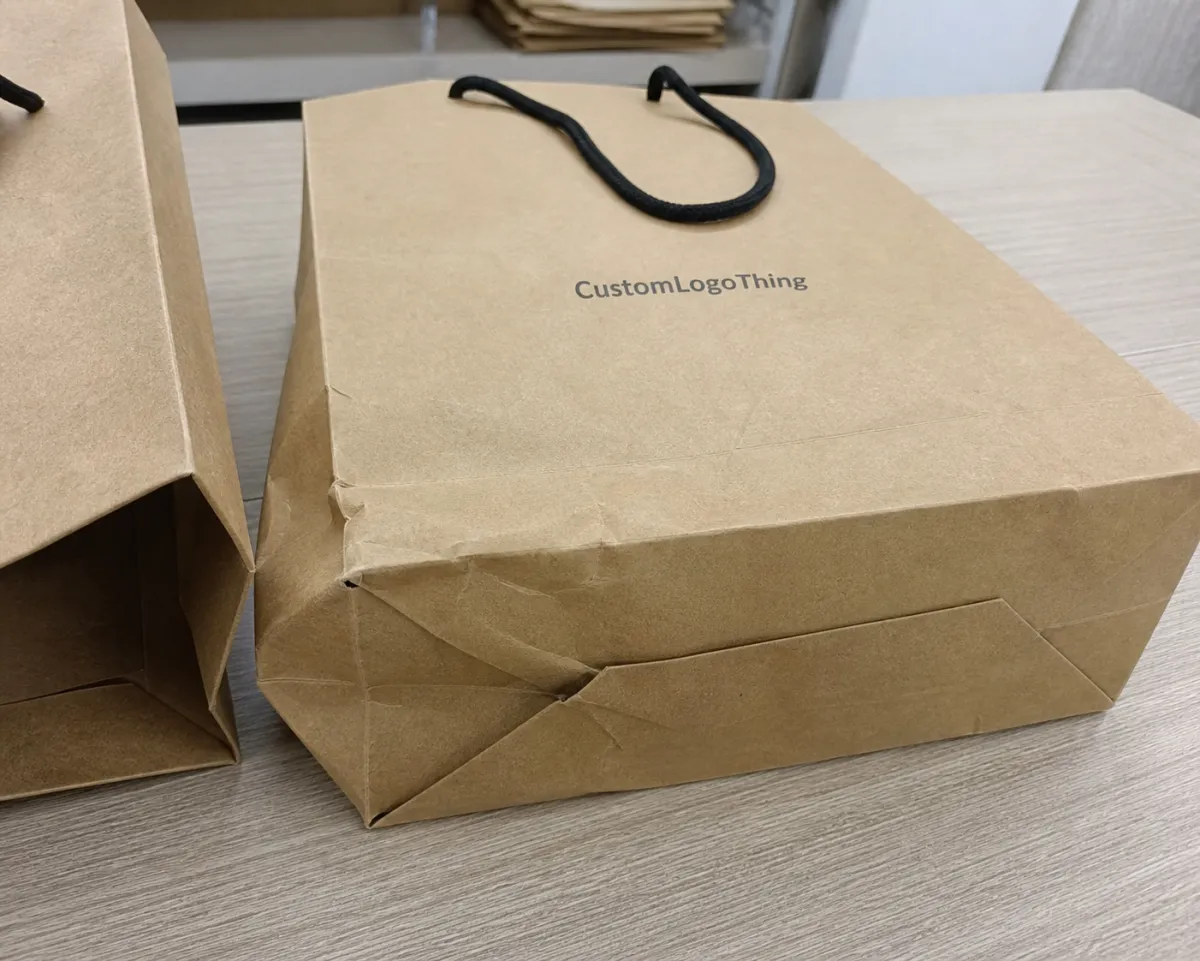
Paper bags usually fail in the same few places. Handles tear where reinforcement is too small, bottoms bow under weight, and side gussets pinch when the bag is built for a lighter load than the actual pack-out. Sometimes the bag does not fail outright, but it still looks warped or scuffed by the time it reaches the customer.
Cheap bags are often cheap because the factory reduced paper weight, simplified the build, or cut back on reinforcement. Those tradeoffs can work for light retail carryout, but they become risky when the bag has to hold dense book bundles month after month. Subscription packaging is a repeat-use problem, not a one-time handout.
The real issue is that books are heavy for their footprint. They press against the sidewalls, stress the base, and expose weak handle patches quickly. If a supplier quotes a bag that works only when it is empty, it is not doing the job.
That is why the first comparison should be about failure risk, not only unit price. A bag that saves a few cents but causes damage, complaints, or rework is usually more expensive over the life of the program.
What a Book-Ready Paper Shopping Bag Needs
A book-ready paper shopping bag should carry one to three books securely, keep the stack flat, and still look intentional when it is handed over. The spec should start with the real monthly pack-out, not the largest title in the catalog and not the prettiest artwork layout.
Measure the finished bundle with all inserts included, then add a little tolerance so the books slide in without forcing the gussets open. That small adjustment affects packer speed, bag life, and the chance of corner damage. Overspecifying the size is wasteful; underspecifying it causes handling problems.
- Gusset depth: deep enough for the packed stack to sit flat without pinching the sides.
- Bottom support: a reinforced base board keeps the bag from sagging under hardcovers.
- Handle style: twisted paper handles control cost; rope handles usually feel sturdier.
- Top fold: a clean fold adds stiffness and improves the visible finish.
- Print space: enough room for a logo or simple graphic without crowding the panel.
Use case matters. A bag used only inside the packing area does not need the same finish as one visible in a pickup line or gift-style unboxing. If the bag is hidden inside a shipper, a heavy laminate may be unnecessary. If customers see it, the surface, handle feel, and print clarity matter more.
For sourcing claims, check documentation early. FSC certification does not guarantee performance, but it does support cleaner procurement language and avoids vague sustainability claims. The current program details are at fsc.org. If you want general packaging terminology before comparing quotes, packaging.org is a useful reference.
Paper, Handles, and Reinforcement Specs That Matter
Material choice drives most of the cost variation. Kraft paper usually gives the best value for standard subscription runs because it balances stiffness, durability, and printability. Coated or art paper prints more sharply and can make the bag feel more polished. Recycled stock can support a sustainability position, but the fiber mix still has to carry weight cleanly.
- Kraft paper: often 170-250 gsm for everyday durability.
- Coated or art paper: often 157-210 gsm when print quality matters more than raw utility.
- Bottom board: commonly 300-400 gsm for added support under stacked books.
- Handle reinforcement: paper patches or folded tops help reduce tear risk.
- Finish: matte varnish, aqueous coating, or lamination based on scuff resistance and budget.
Handle choice affects both price and perceived quality. Paper twist handles are popular because they keep unit cost under control and work well on medium-weight bags. Rope handles usually feel more premium and can improve the first impression. Flat paper handles are functional, but they do not always signal the same level of care.
Finishes should be chosen with restraint. Soft-touch lamination looks refined, but on a transport carrier it can add cost without much practical gain. Aqueous coating or a simple varnish may be enough if the goal is print protection rather than a luxury effect. In this category, balance matters more than decoration.
A bag with balanced structure will usually outperform one with flashy print and weak reinforcement. Buyers often remember the finish they paid for; customers remember the handle that tore. If you need a baseline on materials or terminology, the two references above are enough to keep supplier conversations grounded.
Size Mistakes That Inflate Unit Cost and Waste
Oversizing is one of the easiest ways to raise cost. Bigger bags use more paper, increase print area, take more warehouse space, and ship in more cubic volume. They also look loose when the contents move inside them, which can make a premium program feel careless.
Undersizing creates a different problem. The packer has to force the books in, the sidewalls bow, and the handle stress rises before the shipment leaves the facility. That is how a small measurement mistake becomes a recurring quality issue. A bad fit is expensive even when the quote looks attractive.
The right approach is to size from the actual packed stack, including inserts, tissue, cards, and any protective material. Then decide how much extra tolerance the packing team needs. In most programs, the best bag is only slightly taller and wider than the stack, not dramatically oversized.
That discipline also keeps the program cost under control because it reduces material use, freight volume, and storage waste. A properly sized bag can cost a little more on paper but still cost less across the whole operation because it packs faster and wastes less space.
| Bag Approach | Typical MOQ | Cost Per Piece | Best Use | Tradeoff |
|---|---|---|---|---|
| Standard kraft, one-color print | 1,000-3,000 | $0.28-$0.48 | Practical subscription packing | Lower visual impact, solid value |
| Coated paper, two-color print | 3,000-5,000 | $0.24-$0.42 | Cleaner retail presentation | Better print, slightly higher setup |
| Laminated or specialty finish | 3,000-10,000 | $0.38-$0.75 | Premium launch or gift programs | Higher cost, more lead time |
Those ranges are starting points, not promises. They move with paper markets, freight method, country of origin, and the exact build. Still, they are more useful than a single low number with no context.
Book Subscription Paper Shopping Bags Cost, MOQ, and Quote Drivers
The main cost drivers are straightforward: bag dimensions, paper weight, handle type, print colors, finish, and packing method. If a supplier gives you a quote without asking about those basics, the estimate is too thin to trust.
Volume matters just as much as the spec. A small run with custom dimensions and two-color print will usually carry a higher unit price than a larger repeat order with a locked spec. Setup work has to be paid for somewhere, and on smaller runs it gets spread across fewer bags.
- Size: more material, more print area, and more freight volume.
- Paper weight: heavier stock improves stiffness but raises raw material cost.
- Handles: rope and reinforced options cost more than simple paper twists.
- Print complexity: extra colors and broad ink coverage increase labor and waste risk.
- Finish: lamination, specialty coating, and spot effects add cost and often add lead time.
- Packing method: flat-packed bundles, carton counts, and insert choices affect freight and handling.
MOQ often starts around 1,000 to 3,000 pieces for Custom Paper Bags, but the minimum rises when the build needs a special handle, a tighter size, or a more involved finish. Die cutting, handle assembly, and print setup all take time to prepare, so small quantities are less efficient.
Expect sample charges, plate fees, and freight to appear somewhere in the process. The meaningful number is landed cost, not ex-factory price. A bag quoted at $0.24 at the factory can become $0.31 or more after samples, cartons, inland transport, and export shipping.
For mid-volume subscription programs, a practical landed range is often around $0.18-$0.35 per unit for simpler Custom Kraft Bags and $0.30-$0.65 per unit for more finished presentation bags. Oversizing, complex artwork, and specialty finishes can push those numbers higher fast.
The warehouse also matters. A bag that packs flat, stacks neatly, and ships in efficient cartons can lower total program cost even if its base price is not the cheapest. Packaging cost is not only a purchase number; it is also a storage and handling number.
Production Steps and Lead Time from Proof to Delivery
Production moves faster when the brief is complete. If the supplier has to guess the book dimensions, bag use case, print placement, or handle style, the project slows down before anything is made. A clear spec sheet is one of the cheapest forms of risk control.
The usual sequence is brief, dieline, artwork proof, sample approval, mass production, quality control, and shipping. The slowest part is often approval, not machinery. A missed revision on the dieline or a late color correction can easily add a week.
- Brief and specs: confirm book size, bag dimensions, print method, quantity, and finish.
- Dieline and proof: check handle placement, fold areas, and artwork boundaries.
- Sample approval: test fit, color, handle strength, and bottom support.
- Mass production: straightforward runs often take 12-20 business days after approval.
- QC and packing: inspect glue lines, carton count, bundle consistency, and print registration.
- Transit: add shipping time separately; ocean and air timelines are very different.
For a standard bag with common materials, planning a few weeks from approval to shipment is reasonable. Specialty finishes, structural changes, and peak-season demand lengthen the schedule. International freight can shift the timeline again, so buyers should work backward from the launch date rather than assume factory time is the whole lead time.
Quality checks should be concrete. Pull-test a few handles by hand, check whether glue lines stay flat after the first lift, confirm that printed panels do not rub off in the carton, and inspect carton counts against the order. If the bag is meant for heavier books, ask for a simulated load check using the actual pack-out weight.
For some programs, it is sensible to ask whether the packaging should align with common distribution tests such as ISTA 3A or ASTM D4169. That does not mean every paper bag needs a lab report. It means the design should be informed by real handling conditions instead of being judged only on a sample table.
Why Direct Manufacturing Beats Reseller Markups
Resellers can help when quantities are tiny or when a buyer wants sourcing support and does not want to manage factory communication. For repeat subscription programs, though, direct manufacturing usually gives better control over consistency, issue resolution, and reorder stability.
That matters because the bag has to behave the same way every month. A small drift in handle length, print tone, or board thickness can change how the product packs and how the brand is perceived. Direct factory communication reduces that drift because the people making the bag are the ones answering the spec questions.
Reorders also improve the economics. The first order pays for discovery; the second and third orders usually pay for repetition. Once the dieline and artwork are approved, direct manufacturing avoids extra translation steps and often shortens the correction cycle when something needs to change.
From a cost-control standpoint, the most valuable supplier is the one that can repeat the same spec without drift. That is how the book subscription Paper Shopping Bags cost stays predictable across reorders instead of changing every time the program comes back around.
Next Steps to Lock Your Bag Spec and Reorder Plan
If you want a quote that means something, gather the basic inputs before you ask for it: finished book size, monthly pack count, logo files, target launch date, and preferred finish. Once those five items are ready, the conversation gets practical quickly.
- Measure the real pack-out: include books, inserts, tissue, and any protective material.
- Choose the use case: retail carrier, inner carrier, or visible presentation bag.
- Pick the structure: paper type, handle, gusset, and bottom reinforcement.
- Ask for landed pricing: include samples, setup charges, cartons, and freight.
- Approve one sample: fit and handle strength matter more than polished promises.
- Plan reorders early: stockouts are usually more expensive than a disciplined reorder.
A simple reorder plan beats a last-minute scramble. If the bag works, keep the spec steady. If it does not, fix the weak point and avoid changing unrelated details at the same time. When buyers alter size, finish, and handle all at once, the root cause gets buried and the next quote becomes harder to compare.
The practical test is whether the bag holds the books, protects the stack, and packs cleanly every month. If it does, the program usually costs less over time than a flimsy alternative with a prettier starting quote.
What affects book subscription paper shopping bags cost the most?
Size, paper weight, handle type, and print complexity usually move the price more than the base paper alone. Freight, carton configuration, and setup or plate charges can change the landed cost enough to matter on smaller runs.
What MOQ should I expect for custom book subscription paper bags?
Many factories start around 1,000 to 3,000 pieces, but the exact MOQ depends on dimensions, print count, and structure. If you need a specific finish or reinforced handle build, expect the MOQ to rise because setup work gets spread across fewer bags.
Which paper spec works best for a monthly book box bag?
A sturdy kraft or coated paper with reinforced handles and bottom support is usually the safest choice for books. The right weight depends on the book count and handling method, but thin decorative paper is a poor fit for repeated use.
How long does production take after artwork approval?
After sample approval, mass production usually takes a few weeks depending on structure and print complexity. Shipping time is separate, so buyers should plan backward from launch date instead of assuming factory time is the full timeline.
Can I lower book subscription paper shopping bags cost without making the bag look cheap?
Yes. Reduce the number of print colors, simplify the finish, and size the bag to the actual product stack instead of oversizing it. Keeping the structure clean and the artwork focused often saves more money than shaving paper thickness to the point where the bag feels flimsy.

