A premium vitamin bottle can look polished in a rigid carton and still feel undercooked the moment it moves into a thin carry bag. That is why vitamin brand Paper Shopping Bags moq should be treated as a packaging specification, not a side request. The bag sits on the same path as the carton, the label, and the receipt. It shapes the unboxing experience, but more importantly it shapes whether the brand feels careful or improvised.
Buyers usually notice the problem after a sample run, not before. The bottle fits. The print looks clean. Then the handles start to dig into the hand, the base bows under weight, or the side seam gives just enough to make a premium supplement feel ordinary. That gap affects customer perception fast. In retail, the bag is often the last visible packaging surface, and it can travel farther than the display it came from. If you want to compare how packaging choices affect finished presentation, the Case Studies page shows real structure and finish combinations, and the FAQ covers the questions buyers tend to ask before requesting a quote.
Why supplement bags fail when the carton looks perfect
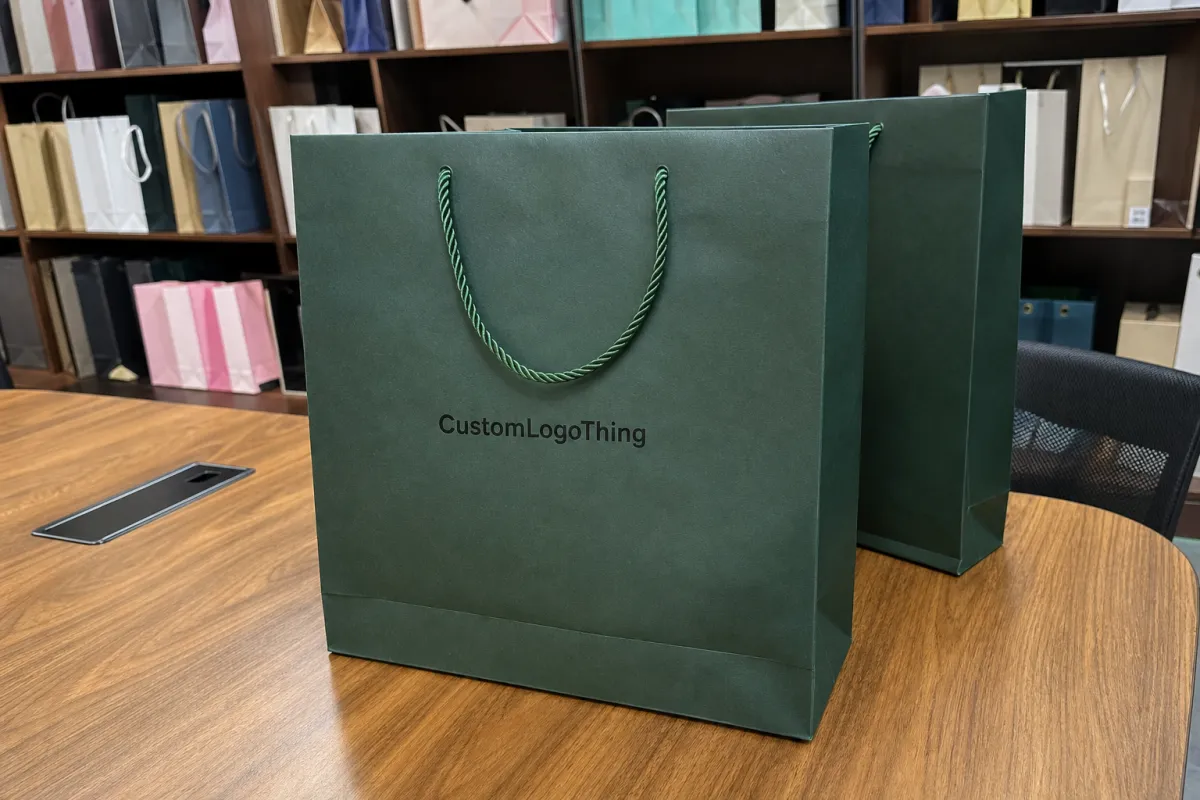
Supplements are unforgiving on the retail floor. A vitamin bottle may weigh only a few ounces, but the package is rarely just one bottle. Add a glass jar, a boxed duo, a leaflet, or a starter kit with inserts, and the loading pattern changes quickly. That is the first mistake many buyers make: they judge the bag by appearance instead of by how the packed set behaves in the hand. A stylish carton can hide a weak bag, but it cannot hide a carry bag that wrinkles, tips, or stretches at the handles.
There is also a brand reason to care. The bag is not just a carrier; it extends brand identity beyond the shelf and into the customer’s hand, car, and home. If the carton signals clinical and premium, but the bag feels floppy or overprinted, the message breaks. The product may still be good, yet the packaging no longer supports brand recognition. That mismatch matters most in pharmacy, wellness, and counter service, where buyers notice finish and structure more than they admit.
The weak points are usually not where buyers expect them. Handles, bottom boards, glue lines, and side seams take the load; artwork does not. A single bottle and a two-bottle bundle behave differently. A lightweight paper bag can be fine for a sample size and fail completely on a bundle with a rigid insert. The bag has to survive lift, carry, and handoff without looking stressed.
That is why the most useful buying question is simple: does the bag fit the product mix that will actually ship, not the idealized version of the pack? If the answer is unclear, the design is not ready.
A weak bag saves pennies and costs trust. For vitamin retail, that trade is rarely worth it.
In practice, the correct paper shopping bag is the one that protects the product, preserves the shelf story, and avoids paying for unnecessary features. That is the real framework behind vitamin brand Paper Shopping Bags moq: the minimum should support the pack, not just lower the first invoice.
Paper stock, handles, and print finishes that match vitamin packs
The right stock depends on what the brand wants to communicate and what the bag must carry. Kraft paper reads natural, grounded, and practical. That works well for herbal blends, clean-label supplements, and wellness lines that want a less clinical feel. White board does the opposite. It sharpens color, supports a pharmacy-style look, and gives premium vitamin packaging a cleaner surface for logos and dosage marks. Coated stock sits in the middle when artwork needs stronger color density and a smoother print face.
Handle choice matters just as much. Twisted paper handles are common because they hold up well and keep costs controlled. Flat paper handles feel more utilitarian and suit higher-volume retail programs. Ribbon and cotton handles improve presentation, but they raise cost and are easier to justify on premium gift packs, limited launches, or elevated wellness kits. If the bag must survive heavier glass jars, ask about the handle attachment method, not just the handle style. That attachment is where many failures start.
Finish changes customer perception more than many buyers expect. Matte coatings support restrained health branding and reduce glare under store lighting. Gloss can help artwork pop, but it can also push the bag toward a promotional look if the design is crowded. Foil, embossing, and spot UV all add polish, yet each one changes the order structure, proofing time, and unit cost. For brand consistency, the finish should echo the carton and label system rather than compete with it.
Practical buyers usually narrow the choice with three questions: how heavy is the pack, how visible will the bag be at checkout, and how often will it be reused after purchase? A bag that is mostly seen once, at the counter, does not need the same finish as a boutique retail tote that stays in circulation for days.
| Stock / Handle | Best Use | Presentation | Typical Cost Impact |
|---|---|---|---|
| Natural kraft + twisted paper handle | Earthy wellness lines, lighter bottle sets | Practical, low-gloss, organic feel | Lowest of the common custom options |
| White board + flat paper handle | Pharmacy-style vitamins, multi-SKU retail | Clean, bright, more retail-forward | Moderate |
| Coated board + cotton or ribbon handle | Premium launches, gift bundles, influencer kits | Upscale and tactile | Higher due to materials and assembly |
| Special finish with foil or spot UV | Launch events, flagship programs | Strong shelf presence, more contrast | Highest because of tooling and extra steps |
Size, reinforcement, and insert specs for bottles, jars, and kits
Size is not just width, height, and gusset. It is a fit problem. A single bottle order may only need a compact bag with a 90-110 mm gusset, while a two-bottle bundle or a jar plus insert card may need more breathing room so the contents do not jam during packing. If the bag is too tight, retail staff slow down. If it is too loose, the product shifts and the bag looks cheap. The best result is enough headroom for a clean fill without rattling space around the pack.
Reinforcement should be chosen by load, not habit. A bottom board is often the first upgrade for glass jars or bundled kits because it spreads weight more evenly. Handle patches help where the top fold takes repeated stress. Side seam strength matters more on bags that will be reused or carried home with other items. On vitamin Brand Paper Shopping Bags moq orders, this is where low-cost assumptions can become expensive. A structure that looks fine on paper may fail after a few dozen lifts at checkout.
Buyers should ask for a spec sheet that lists paper weight, bag thickness, handle break test, bottom reinforcement, and whether the bag will fit inserts or tissue without forcing the top open. If the supplement line uses multiple bottle diameters or carton shapes, request a fit check with the largest pack in the range. That avoids the common mistake of approving a size based on the smallest unit and discovering later that the premium kit no longer fits.
Use this simple fit logic:
- Single bottle - allow a little extra height for easy pickup at the counter.
- Two-pack or bundle - widen the gusset so the pack stands upright without pinching.
- Glass jar or heavy kit - prioritize bottom board strength and handle patch quality.
- Retail gift set - leave room for tissue, leaflet inserts, or a coupon card.
That is how a paper bag moves from a generic carrier to a controlled part of the packaging system. It stops being an afterthought. It starts doing a job.
vitamin brand paper shopping bags moq and unit cost drivers
MOQ is rarely set by one variable. It usually moves with stock choice, size, print complexity, and finish. A simple kraft bag with one-color print may open at a lower MOQ than a coated, full-color bag with foil and ribbon handles. That matters because vitamin buyers often assume the minimum is tied to bag count alone. It is not. The supplier is looking at setup time, waste allowance, tooling, and how many production steps the order requires.
For launch planning, the most useful question is not “What is the lowest MOQ?” but “What is the lowest MOQ that still protects the product and looks right on shelf?” That distinction saves a lot of back-and-forth. A lower MOQ helps with a pilot run, but the unit cost usually rises until volume improves. On a 5,000-piece order, a basic custom bag might sit around $0.35-$0.75 per unit, while a more elaborate bag with special finish, stronger handle, or reinforcement can move higher. Exact pricing depends on artwork coverage, paper grade, and shipping method.
Here is the trade-off buyers should keep in view:
- Lower MOQ - useful for first launches, seasonal runs, and product tests, but unit cost is usually higher.
- Higher MOQ - better pricing and more consistent supply, but it ties up cash and storage space.
- Standard structure - usually the best path if you need repeat orders across multiple SKUs.
- Fully custom structure - best for brand fit, but it adds tooling and reduces flexibility.
The biggest cost drivers are custom dies, color count, foil, embossing, handle type, reinforcement inserts, and the way bags are packed for shipment. If the artwork can be simplified without weakening visual branding, the order often becomes easier to approve and cheaper to repeat. One structure across several product lines can also lower long-run unit cost because the supplier does not need to reset the whole job for every SKU.
There is a practical ceiling to customization at low volumes. Once the order is small enough, every extra finish step competes with the margin on the product inside the bag. That is not an argument against custom work. It is an argument for matching the bag to the business stage. A startup launch, a seasonal vitamin bundle, and a national pharmacy rollout do not need the same packaging economics.
The best vitamin brand Paper Shopping Bags moq is the one that aligns with launch volume, shelf plans, and reorder expectations. A very low minimum is useful only if the bag still performs and still matches the brand story.
Artwork review, proofing, and production steps from file to carton
A clean ordering process reduces risk. First, Request a Quote with exact dimensions, stock, handle, print colors, finish, quantity, and delivery date. Then send artwork on a dieline. The supplier should return a digital proof showing placement, bleed, and the final print area. If the order is structural only, a plain sample can confirm fit before print. If the order uses color-sensitive branding, a printed sample is worth the extra step.
Delays usually come from avoidable mistakes: low-resolution logos, missing fonts, color references that were never approved, and revisions made after proof signoff. Once the proof is in motion, each change costs time. That is especially true on vitamin brand paper shopping bags moq orders where the production slot is already sized for a specific run. If the buyer keeps changing handle style or finish, the supplier may need to adjust tooling, re-estimate waste, or push the job behind another order.
Good quality control should include four checkpoints:
- Pre-production signoff - confirm the dieline, spec sheet, and final artwork.
- Sample approval - verify fit, color, and finish before bulk runs.
- In-line inspection - check print registration, handle attachment, and glue application.
- Final carton count - confirm quantities, labeling, and packing method before shipping.
That process sounds basic, but it is where many packaging buyers save themselves from reprints. A good supplier will not rush through these steps. They document them because repeatability matters more than one attractive sample.
For color, the practical rule is to approve under the lighting conditions that matter. A matte white bag can shift warmer under warehouse lights. Kraft can darken once a heavy ink layer is added. Foil can look sharp in a proof and too loud in a store aisle. Those are not defects; they are the normal side effects of moving from screen to paper.
Lead time, turnaround, and shipping windows for launch dates
Timing starts after final proof approval, not when the first email lands in the inbox. That sounds obvious, but launch calendars often fail because teams count from the quote date instead of from signoff. A plain structural sample can arrive faster than a printed sample, and both should be planned ahead of the retail launch window. If the campaign has a hard date, the bag order needs its own schedule, not a “we will fit it in” approach.
For many custom paper bag orders, bulk production often lands in the 12-20 business day range after approval, depending on print complexity and order size. Shipping adds another layer. Air freight is fast and costly. Sea freight is cheaper but needs more calendar room. Domestic or regional delivery still deserves buffer time because receiving, inspection, and storage take longer than people expect. If the bags are going straight into a fulfillment center or a retail launch pallet, add a few days for intake.
Three timing risks deserve attention:
- Holiday closures - production and freight both slow down.
- Late design edits - even a small color change can reset approval.
- Quantity increases - a bigger run may improve pricing, but it can also move the ship date.
Most launch misses are not caused by one dramatic delay. They are caused by three small delays stacked together: sample wait, proof revision, and freight congestion. That is why a buyer should lock the bag spec early and keep the artwork stable once the schedule is set. For vitamin brand paper shopping bags moq orders, that discipline protects both the launch date and the budget.
One more practical point: shipping bags flat is usually cheaper and easier than shipping assembled inserts or highly structured hybrids. If a bag can be folded without creasing the finish, the freight math is better. If the structure requires careful packing, that cost belongs in the quote from the start.
How to compare suppliers on compliance, consistency, and risk
Price matters, but it is not the whole story. Ask where the paper comes from, what adhesive is used, whether the inks are suited to retail packaging, and whether the supplier can support FSC documentation if your brand requires it. If shipments need distribution testing, review the basics from ISTA. For responsible sourcing of forest-based materials, the chain-of-custody guidance from FSC is worth keeping on hand. These standards do not make a bag better by themselves, but they do tell you whether the supplier is operating with process control.
Consistency is usually the more practical question. A strong supplier keeps color stable from batch to batch, maintains handle attachment strength, and packs cartons consistently so receiving teams can count and store product without rework. That is not flashy, but it matters more than a low headline quote. A bag that shifts in size by a few millimeters can create a problem if the bottle pack is already snug.
Communication is the last filter. Good suppliers confirm specs in writing, explain cost changes before the order is placed, and do not hide MOQ or lead time until the buyer is already committed. Bad suppliers talk only in generalities. They are vague about stock, vague about testing, and vague about what happens if artwork changes. That is how a cheap quote becomes an expensive launch delay.
If you want a quick sorting rule, use this:
- Lowest price only - high risk if the job is complex.
- Price plus spec clarity - usually the best balance for repeat orders.
- Price plus written controls - best for brands that cannot miss launch dates.
In supplement packaging, the cheapest option can cost more once defects, reprints, or missed retail windows are counted. That is a simple comparison, but it is the one that matters. Buyers who spend five minutes on proof clarity often save weeks later.
What to send for an accurate quote and how to place the order
If you want a clean quote on the first pass, send the supplier a complete spec sheet. Include bag dimensions, product weight, paper stock preference, handle type, print colors, finish, quantity, and target delivery date. Then attach the actual pack data: bottle diameter, jar height, carton dimensions, and whether the bag must fit tissue, leaflets, or a bundled kit. That level of detail removes guesswork and gives you a quote that reflects the real job.
For vitamin brand paper shopping bags moq, the fastest orders are the ones with locked artwork and stable measurements. If the bag needs to fit several SKUs, say so early. A single structure may cover the whole line, which often lowers unit cost and keeps reorders simple. If the line is still changing, ask for the lowest viable MOQ first and compare that to the cost of a larger run. That gives you room to plan inventory without overcommitting cash.
A sensible order path looks like this:
- Step 1: Send size, weight, quantity, stock, finish, and delivery target.
- Step 2: Request a structural sample if fit is still uncertain.
- Step 3: Approve the digital proof and confirm any color references.
- Step 4: Lock the production slot before changing artwork again.
Most suppliers can work quickly once the input is complete. They slow down when they have to infer the product weight, guess the pack size, or rework the dieline after approval. The buyer can prevent most of that friction. A few clean measurements are worth more than a long email thread.
If the bag is meant for more than one retail context, define the priority. A pharmacy counter bag can favor structure and speed. A gift-style wellness tote can favor finish and reuse. A launch bag for trade shows may need both. The right order starts with that decision, not with the logo file.
If the aim is a balanced result, send the spec sheet and artwork together so the supplier can quote the right vitamin brand paper shopping bags moq on the first pass. That approach usually saves time, reduces revisions, and gives the brand a better chance of hitting launch without packaging noise.
For buyers balancing shelf presentation, shipping practicality, and launch timing, the right bag is rarely the fanciest one on the table. It is the one that fits the product, the budget, and the calendar with the fewest surprises.
What MOQ should I expect for supplement paper shopping bags?
MOQ usually depends on size, paper stock, print complexity, and finishing, so the same supplier may quote different minimums for two bag styles. Standard constructions are often easier to order at a lower MOQ than highly customized bags with foil, embossing, or special handles. If you are launching a new product, ask for the lowest viable MOQ first and compare that against the per-bag cost at a higher run. For many buyers, that is the cleanest way to judge vitamin brand paper shopping bags moq.
Which paper stock works best for vitamin retail shopping bags?
Kraft works well for natural or wellness branding, while white board or coated stock supports a cleaner pharmacy-style presentation. If the bag must carry heavier bottles, ask about paper weight and reinforcement rather than choosing stock by appearance alone. Choose the stock that fits both the brand story and the load requirement, because those two factors should be aligned from the start.
Can I order custom sizes for bottles, jars, and bundle kits?
Yes, custom sizing is common when the product shape or bundle configuration does not fit a standard bag. Provide exact product dimensions and weight so the supplier can set width, gusset, and height with enough room for packing. If you sell multiple SKUs, ask whether one bag size can cover the full line to reduce cost and simplify reorders.
How long do proofing and production usually take?
Timing depends on how quickly you approve the proof, whether you need a sample, and how complex the print and finish are. Printed samples usually take longer than plain structural samples, so build that into the calendar before launch planning starts. After approval, bulk production and freight should both be scheduled with buffer time so the bags arrive before the retail date.
What should I include to get an accurate quote fast?
Send the bag size, product weight, quantity, print colors, finish, handle choice, and destination zip or port so the quote is complete. Attach artwork files and, if possible, the product carton dimensions to reduce back-and-forth during the proof stage. The more precise the spec sheet, the faster the supplier can quote and lock the right production plan.


