Custom Logo Things
Wedding Favor Paper Shopping Bags Cost: Buyer's Guide
Wedding favor Paper Shopping Bags cost less than many couples expect, but only if the spec stays disciplined. Size, stock, handle construction, print coverage, and freight all move the number. Once those pieces start drifting upward, a simple favor bag can reach the price of a much heavier package.
That is why the buying decision should start with the gift itself. A bag is not decoration first and container second; it is a shipping surface for the favor, a display piece for the table, and a handling aid for guests. If it does those jobs well, it earns its place. If it needs extra inserts, oversized dimensions, or decorative add-ons just to function, the quote is already telling you something.
In practice, bags are often the smarter choice for light favors and compact gift sets. They are easier to size than rigid boxes, faster to decorate, and usually cheaper to ship because they fold flat. A well-made paper bag with a clean handle and restrained print can look polished without carrying the labor burden of a fold-and-glue box. That difference shows up most clearly in medium quantities, where setup costs matter but the order is not large enough to dilute them heavily.
The short version: if you want a refined presentation without paying for structure you do not need, Paper Shopping Bags usually give you more control. The long version is below.
Why Paper Shopping Bags Can Beat Boxes at the Table
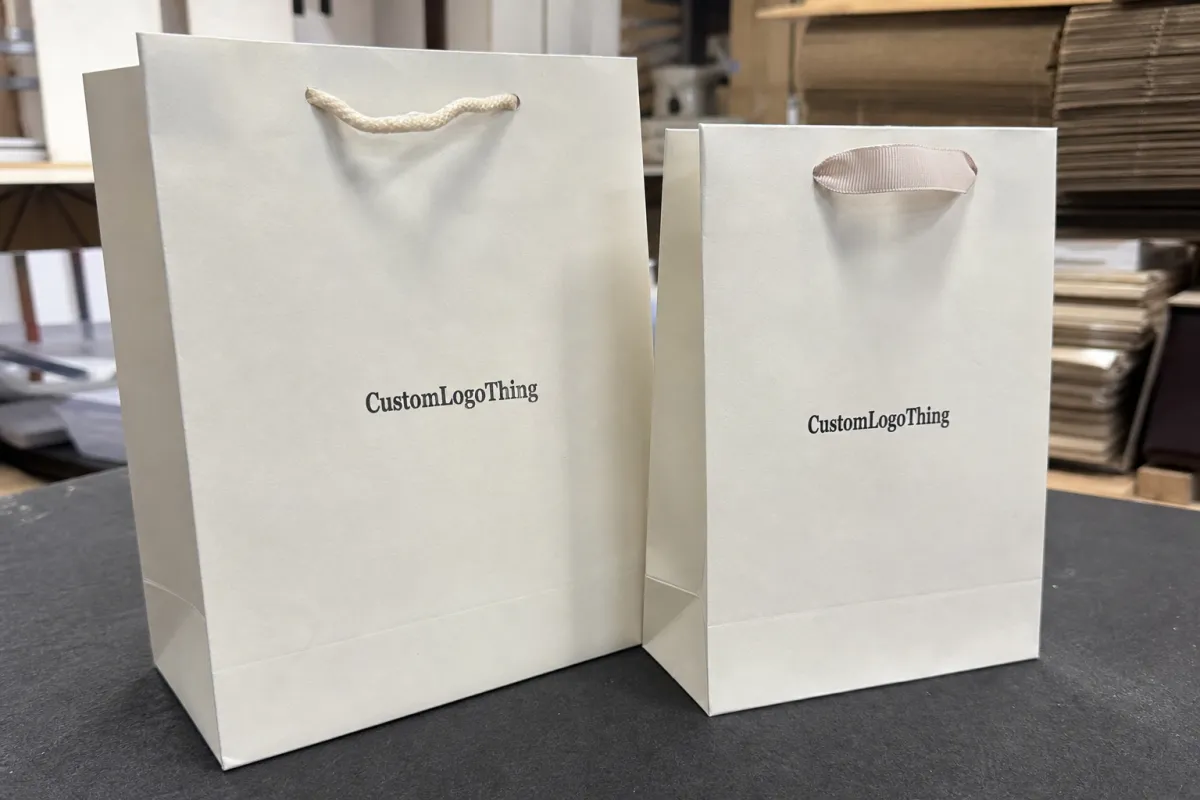
Boxes create a certain expectation. Guests assume thicker board, insert trays, lid alignment, and more hand finishing. That can be worth it for fragile or high-value favors, but it is rarely the most efficient route for macarons, candles, tea tins, soaps, or small bottles. A shopping bag with a fitted bottom and a decent handle can hold those items cleanly, then disappear into the background of the tablescape.
Cost follows structure. Rigid cartons need more board, more die cutting, and more folding or gluing steps. A paper bag is simpler. The material use is lighter, the production path is shorter, and the finished carton usually packs flatter. If the wedding favors are not fragile, that simplicity is exactly what keeps the quote sensible.
There is also a presentation issue that buyers sometimes miss. Oversized boxes can look luxurious in photos and clumsy in person if they contain too much void space. A right-sized bag looks intentional because it does not pretend to be more than it is. That can be a good thing. Guests care less about the packaging category than about whether the item feels neat, sturdy, and easy to carry away.
For planning, one practical rule works better than guesswork: allow roughly 10% to 15% clearance around the favor set so the contents sit naturally without bulging the sides. If the item needs to be compressed, the bag is too small. If the bag swallows the favor and leaves a wide empty cavity, it is too large. Both mistakes cost money, just in different ways.
A bag also reduces labor on the event side. It does not require lid alignment or tray insertion, and in many cases it needs only tissue paper and a simple seal. That matters for weddings where the packing stage happens close to the event date and there is no appetite for a complicated assembly line. A cleaner production path lowers the chance of last-minute corrections.
Sizes, Paper Weights, and Handle Styles That Affect Cost
Most wedding favor bags live in a compact range. Small sweets or jewelry usually fit a 4 x 2 x 6 inch format. Candles, mini jars, and similarly shaped favors often sit better in 6 x 3 x 8 inch bags. Larger gift sets may need 8 x 4 x 10 inches or a custom size if the contents include multiple pieces. The exact dimensions matter more than buyers expect because even a modest change in gusset width changes capacity, material use, and carton count.
Paper stock is another major cost driver. A lightweight kraft bag in the 120-150gsm range is suitable for dry, light contents and keeps the bill down. Heavier coated art paper in the 170-230gsm range gives a smoother print surface and a more polished appearance, which is useful if the wedding design calls for fine artwork or crisp color blocks. Specialty papers and board-heavy constructions move the product into premium territory quickly. That is not a problem if the favor itself justifies it. It becomes waste if the packaging is carrying more status than the gift inside.
Handle style changes both the look and the production math. Twisted paper handles are usually the lowest-cost choice because they are straightforward to source and attach. Rope handles cost more but feel stronger and read as more finished in the hand. Ribbon handles tend to be the most expensive of the common options because they require extra material and, depending on the build, more manual work. Color matching the handle to the artwork or wedding palette can raise the price again.
Here is the decision filter that saves the most money: choose the smallest size that fits the favor safely, then upgrade only where the guest will actually notice the difference. A larger bag is not automatically better. Often it is just more paper and more freight.
| Bag type | Typical MOQ | Typical unit cost at 1,000 pcs | Typical unit cost at 5,000 pcs | Best use |
|---|---|---|---|---|
| Twisted-handle kraft bag, one-color print | 500-1,000 | $0.22-$0.42 | $0.14-$0.26 | Light favors, simple logo work |
| Coated art paper bag, rope handle, 1-2 color print | 1,000 | $0.38-$0.78 | $0.24-$0.48 | Cleaner finish, stronger presentation |
| Specialty paper bag, ribbon handle, hot stamping | 1,000-2,000 | $0.80-$1.80 | $0.50-$1.20 | Premium wedding favor setup |
| Custom full-color bag with both-side print | 1,000+ | $0.55-$1.10 | $0.32-$0.68 | Brand-forward design or photo-heavy artwork |
Those ranges are not fixed quotes. They are market-style reference points for common custom runs. A supplier with a lower MOQ may charge more per unit, while a larger factory can drop the price on bigger orders but ask for more setup discipline. Shipping destination, carton loading, and the calendar season all shift the total.
One more cost trap: buyers often focus on bag width alone and forget height and gusset depth. A narrow bag that is too tall or too shallow may look elegant on paper but fail in real use. If the contents sit too high above the edge, the top loses its clean line. If the gusset is too tight, the sides bow outward and the print area distorts. Those defects are cheap to avoid and expensive to fix.
Print Options, Inserts, and Finishes for Wedding Favor Bags
Decoration is where the budget starts to move faster. A single-color logo on kraft stock is usually the least expensive custom route. Once the design becomes full color, foil stamped, embossed, or printed on both sides, the supplier has to manage more setup, more inspection, and often more waste during production. The bag still looks like a bag, but the process behind it becomes much more involved.
One-color printing is efficient because the registration is simpler and proofing is easier. That makes it a good fit for monograms, initials, a small emblem, or a short wedding mark. Full-color printing is better for floral artwork, venue illustrations, or a design that depends on tone and detail. It costs more, but it can be worth it if the wedding visual language is already built around those elements. The trick is to avoid full-bleed decoration just because it appears premium. Coverage should follow the design, not the impulse to fill every blank area.
Foil stamping and embossing are attractive in wedding settings because they catch light and photograph well. They also raise production cost quickly. Foil usually needs tooling, and embossed or debossed areas demand tighter quality control because the pressure has to be consistent across the run. If the paper stock is too soft, the effect can flatten out or look uneven. If the stock is too thin, the finish can telegraph through the bag in a way that looks cheap instead of elevated.
Spot UV is useful on darker printed panels or logos that need a reflective accent. It is much less useful when the artwork is already visually busy. Buyers sometimes choose finishes based on the sample page instead of the actual table environment. That is a mistake. Reception lighting, photography style, and tablecloth color all affect how a finish reads in real life. A finish that looks dramatic in a studio can disappear under warm venue light.
Inserts and accessories should be treated the same way. A cardboard bottom insert helps with heavier favors or bottles. Tissue paper adds volume and softens the top opening, but it also adds labor if the bags are packed by hand. Custom stickers, hang tags, and ribbon closures can improve the final look, yet every extra component introduces another line item and another point of failure. Good packaging is often the result of removing one unnecessary add-on, not piling on three more.
For buyers comparing options, the most reliable approach is to decide what the bag must do and cut everything else. A favor bag does not need to be a miniature luxury box. It needs to hold the item, match the wedding design, and arrive in one piece. That is a narrower brief, and a cheaper one.
"The cheapest bag is not the cheapest order if it needs rework, replacement, or last-minute shipping."
If you need a neutral benchmark for material and print vocabulary, the packaging industry explains the core terms in a straightforward way at packaging.org. That matters because many budget disputes come from unclear terminology. A buyer says one thing, a supplier hears another, and the final proof reveals the gap.
Wedding Favor Paper Shopping Bags Cost: Pricing, MOQ, and Unit Cost
MOQ shapes the quote because custom production has fixed setup work. If a printer has to prepare plates, dies, or finish tooling, the smallest order absorbs a bigger share of those costs. The per-piece price falls as the run grows, but not always at a clean line. One quantity break may help, while another barely moves the needle. That is why it pays to ask for pricing at three levels: a small run, a mid-size run, and a larger run.
The main variables are predictable: bag dimensions, paper weight, handle type, print colors, finish choices, and shipping method. Those factors often matter more than the bag style itself. A simple kraft bag with a single logo might sit near the bottom of the market range. A specialty paper bag with foil and a ribbon handle can climb several times higher. Both can be correct for different weddings.
Setup charges are normal. For simple print work, they may sit around $25 to $150, though the number can rise with the complexity of the artwork, the number of colors, or the finish method. Tooling fees for custom dies, plates, or embossing devices may be separate. Buyers dislike those charges because they are easy to forget during early budgeting, but they are part of how the product is made. A quote that hides them is not more affordable; it is just less transparent.
Freight matters more than people expect. Paper bags are light, but they are bulky. A low unit cost can turn into a less attractive delivered cost once the cartons are packed and dimensional weight is calculated. Flat-packed bags ship better than assembled ones. Wide handles, inserts, and nonstandard packing all increase carton size. If a supplier cannot show packed carton dimensions, the freight number is hard to trust.
Another useful buyer habit is to compare delivered price, not just factory price. A bag that is a few cents cheaper can become more expensive once inspection fees, sample charges, and shipping are included. The quote should make clear whether plates, dies, and samples are included or billed separately. Either method is fine if it is stated upfront.
| Cost driver | Lower-cost choice | Higher-cost choice | Why it changes price |
|---|---|---|---|
| Bag size | Small favor bag | Large gift bag | More paper and larger cartons |
| Paper stock | Light kraft | Thicker coated or specialty paper | Material weight and finish quality |
| Decoration | One-color logo | Foil, embossing, full-bleed print | Extra setup, plates, and press time |
| Handle | Twisted paper | Ribbon or rope | Material cost and assembly labor |
If the order is close to a quantity break, request quotes at both levels. Sometimes moving from 500 to 1,000 pieces drops the unit cost enough to cover the extra inventory. Sometimes it does not. The point is to see the real curve, not the headline number. That decision matters more than a small discount that looks impressive on paper and weak in total spend.
Order Process and Turnaround Timeline
The order process is usually straightforward if the artwork is ready. The supplier confirms the bag size, checks or creates the dieline, reviews handle placement and print area, then sends a proof. If the design includes foil, embossing, or unusual paper, a sample is often worth the extra time. A sample reveals issues that a PDF proof cannot: handle strength, stock feel, fold memory, and how the print actually sits on the paper.
For simple custom bags, production often takes around 12 to 18 business days after proof approval. More complex finishes or heavy seasonal demand can stretch that timeline. Add transit time on top of that. If the wedding is during a busy period, the safe move is to add a cushion rather than assume the first estimate will hold. Packaging schedules are rarely improved by optimism.
Speed depends on three things more than most buyers admit: final artwork, file quality, and decision speed. Vector files reduce back-and-forth. Clear Pantone targets reduce color disputes. One decision-maker reduces approval delays. If the design has to pass through a committee, the schedule expands whether anyone likes it or not.
There are also a few production constraints worth checking before you approve the run. Handle attachment must suit the likely weight of the favor, not just the empty bag. The glue area needs enough cure time to hold through transport. The print registration should stay centered, especially on small bags where a millimeter error is noticeable. A good supplier will explain these tolerances plainly.
Ask how the bags are packed. Flat-packed cartons are usually easier to store and cheaper to ship. Assembled bags may look tidier in the warehouse, but they take up more space and can be more vulnerable to scuffing. If the event team will pack favors by hand, flat-packed inventory may actually be the safer choice because it gives more control at the final stage.
For fragile favors or assembled packs, transit testing matters. The outer carton protects the appearance of the bag as much as the bag protects the favor. The International Safe Transit Association outlines common package testing methods at ista.org. That reference is useful even for small wedding orders, because a bag with crushed corners or rubbed print does not photograph well and does not feel premium on arrival.
What Makes a Reliable Supplier Worth the Quote
The lowest quote is not always the best value. A reliable supplier controls the boring details: color consistency, handle attachment, paper tension, finish alignment, and packing quality. Those are the parts that keep a custom bag from turning into a replacement order. A cheap unit price does not compensate for a run that arrives with bent tops, weak handles, or print drift.
Factory-direct production usually gives buyers a clearer path because the same team handles the material, printing, and packing. That does not guarantee perfection, but it reduces the number of handoffs. Resellers can still work if they are specific and responsive, though the buyer is then relying on an extra layer to interpret the brief. The more complex the design, the less attractive that extra layer becomes.
Good suppliers can answer practical questions without drama. What paper weight supports the planned contents? Which finish works on that stock? Does the chosen handle hold the projected weight? How are color checks handled before bulk production? Those are ordinary questions. If the answers are vague, the risk moves up.
Quality control should begin before production and continue after packing. Buyers should ask for proof review, material confirmation, and a production sample if the order is premium. On the line, the checks that matter most are print alignment, handle bond strength, fold accuracy, and carton condition. After packing, the final inspection should look for scuff marks, crushed corners, and color variation between cartons. Those defects are not glamorous, but they are the ones guests notice first.
Paper source can matter as well. If the buyer wants certified fiber, ask for documentation that can be verified rather than accepted on faith. FSC-related claims are useful when traceability is part of the brief. The source at fsc.org explains what those labels are meant to represent. Certification will not make a bag stronger, but it may matter for procurement requirements or brand standards.
A supplier is worth more when they reduce uncertainty. That includes telling you what is not possible. If a thin kraft stock will not carry a heavy candle safely, the honest answer protects the order. If a foil effect will not read cleanly at your selected size, the honest answer saves money. Silence is expensive in packaging.
What to Lock Down Before You Request a Quote
A clean brief gets a cleaner price. If you want a quote that means something, send the supplier the facts that actually change the build. Quantity, bag dimensions, paper type, paper weight, handle style, print colors, artwork files, finish requests, shipping date, and destination all belong in the first message. If any of those remain fuzzy, the price is more of a placeholder than a quote.
Use this checklist:
- Exact bag size or the favor dimensions.
- Paper type and weight.
- Handle style and color.
- Print coverage, artwork file, and number of colors.
- Finish requests such as foil, embossing, or spot UV.
- Target quantity and shipping deadline.
If the favor is heavy, fragile, or oddly shaped, order a sample before committing. Candles, glass jars, and mixed gift sets are the most common cases where a prototype pays for itself. The sample answers a basic but decisive question: does the bag still look polished once the item is inside?
Compare quotes by checking what is included. Some suppliers roll setup charges into the unit price. Others separate them. Some include sample freight and then exclude bulk freight later. None of that is automatically suspicious. What matters is whether the quote makes the full cost visible enough to compare with another vendor on equal terms.
The best budgeting habit is simple. Ask for two or three quantity tiers, then compare delivered cost, not just unit price. If a larger run lowers the price enough to justify the extra stock, take the savings. If not, keep the order tight and spend the difference on better stock or cleaner print. That is the most practical way to manage wedding favor Paper Shopping Bags cost without drifting into avoidable waste.
How much do wedding favor paper shopping bags cost in bulk?
Bulk pricing usually drops as quantity increases, but the exact number depends on size, paper weight, handle type, print coverage, and finish. A simple kraft bag can sit near the low end of the market, while specialty stock with foil or ribbon handles can cost several times more.
What is the minimum order for custom wedding favor paper shopping bags?
MOQ varies by supplier and decoration method. Simple one-color bags can start lower, while foil stamping, embossing, and premium handle builds usually require higher quantities. The more complex the decoration, the more likely the supplier will set a firmer minimum.
Which bag size is best for small wedding favors?
Choose the smallest size that allows the favor to sit naturally without crowding tissue, tags, or inserts. Small sweets may fit a 4 x 2 x 6 inch bag, while candles and small gifts often need a slightly larger gusseted format.
How long does custom printing take before the wedding date?
Simple production can be relatively quick, but proofing, sample review, and seasonal demand all add time. A safe schedule includes extra weeks for revision and transit, especially if the event date is fixed and shipping delays would be difficult to absorb.
What artwork do I need to get an accurate quote?
Send a vector logo if possible, plus the desired print colors, placement, and finish. A better quote also depends on quantity, size, handle style, and delivery deadline. The less the supplier has to guess, the more reliable the number.
Are flat-packed bags cheaper to ship than assembled ones?
Usually, yes. Flat-packed bags take up less carton space and are easier to palletize. Assembled bags can be useful for some events, but they often increase freight cost because of their bulk.
The most useful buying rule is the least dramatic one: define the bag around the favor, not around the mood board. Once the size, stock, handle, and print are fixed, wedding favor Paper Shopping Bags cost becomes a manageable line item instead of an open-ended surprise. That discipline tends to produce better packaging anyway.

