If you need to book unstructured dad hats Unit Cost Review for a launch, staff program, or retail test, focus on the landed number, not just the blank-body price. A relaxed crown can be a smart low-risk starting point, but only if the supplier quotes the same spec, decoration, packaging, and freight that will actually ship.
The common mistake is comparing incomplete quotes. A cap can look cheap until embroidery, setup, packing, and transport are added. For a buyer, the useful quote separates body cost, decoration, packaging, and delivery terms so the final unit cost can be judged on the same basis.
"A cheap cap is not cheap if it arrives with a warped brim and a second invoice."
Why unstructured dad hats lower risk on first orders
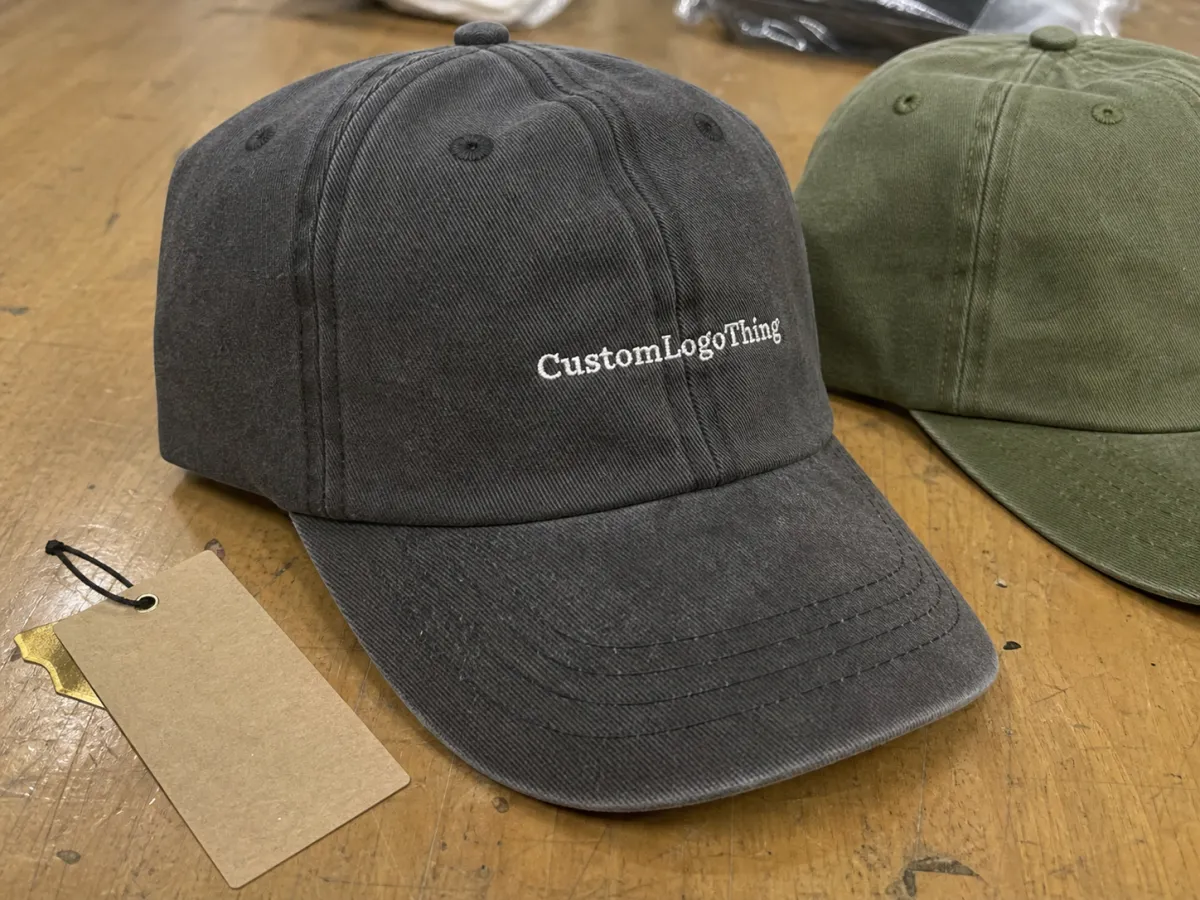
An unstructured dad hat gives buyers more tolerance on fit and appearance. The soft front crown does not rely on a stiff insert, so minor differences in seam tension, head size, or panel shaping are less visible. That makes it useful for first runs where the goal is to learn demand before committing to deeper inventory.
These hats also sit well between casual and polished. A six-panel low-profile cap in cotton twill can work for staff wear, event merch, and retail trials without feeling overly formal. It is easy to photograph, comfortable enough for long wear, and familiar to most buyers.
The forgiveness of the silhouette is helpful, but it does not hide bad artwork. Dense embroidery, tiny text, or logos placed too close to a seam can still pucker or distort. For a first order, clean logo shapes usually perform better than thin linework or highly detailed marks.
Relaxed caps also reduce inventory risk. A small test order can confirm whether the color, logo scale, and closure style are viable before a larger buy. Runs in the 100 to 300 piece range are often enough to test the market without overcommitting.
They can also pack efficiently. Compared with heavily built caps, they compress flatter and often use less carton space, which can help freight efficiency on mixed-SKU shipments. That does not sound dramatic, but it changes the landed cost more than many buyers expect.
Construction details that change the look and feel
Panel count, crown depth, brim curve, closure hardware, and fabric treatment all affect how the cap looks, how it wears, and how much it costs. A standard starting point is a 6-panel cotton twill cap with a pre-curved visor and a self-fabric strap. It usually balances comfort, stability, and price.
A 5-panel version reads more modern and gives more uninterrupted front space, but it is not a direct substitute. The fit and logo placement behave differently, so buyers should not treat the two styles as interchangeable just because both are called dad hats.
Decoration is where soft fronts often fail. A crown that is too relaxed can show distortion if the stitch count is too high or the logo is too small. A good supplier should tell you whether the art needs to be widened, simplified, or moved. For detailed logos, woven patches, woven labels, or applique can be safer than dense embroidery.
Closure style changes both price and presentation. A self-fabric strap with a metal slider is usually the most cost-controlled option. A brass or matte buckle can support a more finished retail look. Hook-and-loop is functional, but it tends to feel less premium unless the program is utility-focused.
Fabric choice also matters. Washed cotton gives a broken-in feel from day one. Brushed twill feels softer. Pigment-dyed or garment-dyed fabrics add character but make shade control harder across lots. If repeatability matters, a cleaner stock twill is usually the safer call.
Hidden details matter too: seam tape, sweatband finish, inside stitching, and visor edge control. A cap can look fine from the front and still fail inspection if those details are loose or uneven. Ask for close-up photos, not just polished hero shots.
For transit expectations on packed goods, it helps to think like a packaging engineer. If the hats are shipping Direct to Consumers or retail stores, carton strength and pack-out should be part of the conversation, and the transit-test library at ISTA is a sensible reference point.
Fabric, panel, brim, and closure specs to lock before quoting
Before anyone prices the job, lock the core spec. Quotes are only useful when every vendor is working from the same assumptions: same fabric, same decoration, same packaging, and same delivery term. If one quote is ex-factory and another is delivered, the comparison is already broken.
Fabric should be decided first. Cotton twill is still the baseline for many dad hats because it is durable, familiar, and easy to decorate. Brushed cotton softens the handfeel, while blends can improve durability or lower cost. The tradeoff is that they may change how embroidery sits on the crown.
- Fit profile: low profile, relaxed crown, or slightly deeper front coverage.
- Brim shape: pre-curved, lightly curved, or flatter retail look.
- Brim details: row count, edge stitching, under-brim color, and stiffness.
- Closure: self-fabric strap, buckle, or hook-and-loop.
- Branding: embroidery, woven patch, applique, woven label, or back-strap mark.
Panel and brim choices affect price more than buyers expect. A six-panel cap with clean seam alignment takes a different production path than a five-panel style. A pre-curved visor can reduce shaping labor. Contrast under-brim colors or contrast stitching add materials and handling, so they should be specified up front.
Decoration placement should be fixed before the quote is accepted. Front logos around 90 to 110 mm wide are easier to evaluate than vague "medium size" artwork. Side marks, back-strap branding, and woven tabs should be called out separately, because changing them later can trigger new proofs or setup fees.
Color control deserves the same discipline. If exact Pantone matching matters, say so. If a small shade range is acceptable, define it clearly. Reorders often fail on color drift before they fail on stitching quality, and that problem is easier to miss until the second run lands.
Packaging should be part of the spec, not an afterthought. A blank cap in a master carton is very different from a polybagged, hangtagged, carton-packed retail unit. If FSC paper inserts or hangtags are required, make that clear at the quote stage so the supplier is not guessing later.
Book unstructured dad hats unit cost review: pricing, MOQ, and quote drivers
A serious book unstructured dad hats Unit Cost Review breaks the order into separate lines: blank body, decoration, packaging, freight, and setup. That split matters because a cap that looks inexpensive on the body line can end up average once artwork, handling, and shipping are added.
Quantity is the biggest driver. At 100 pieces, setup is spread across too few units to look elegant. At 250, the pricing usually stabilizes. By 500, bulk pricing becomes more visible if the cap body is stock fabric and the decoration is straightforward.
| Order Quantity | Blank Cap Body | Embroidered Version | Packaged Version | What Usually Drives the Price |
|---|---|---|---|---|
| 100 pcs | $3.80-$6.20 | $5.10-$8.40 | $5.60-$9.20 | Setup charges and small-run decoration spread |
| 250 pcs | $3.10-$4.90 | $4.30-$7.10 | $4.85-$8.00 | Better spread on embroidery, packaging, and carton handling |
| 500 pcs | $2.40-$3.90 | $3.55-$6.20 | $4.05-$7.10 | Body cost softens and freight efficiency improves |
Those ranges are typical for standard production, not a promise. Fabric quality, logo complexity, patch type, closure style, and delivery term all move the number. The same cap can price very differently if one supplier is quoting stock fabric and another is sourcing custom dye or special trim.
The cleanest comparison is to ask for three views: blank, decorated, and packaged. Blank pricing shows the body. Decorated pricing shows the art cost. Packaged pricing shows the shelf-ready number. If freight is excluded in one quote and included in another, normalize that before comparing.
MOQ should be asked by decoration method and colorway, not just as one headline number. Simple embroidery may allow a lower minimum than patch work or custom hardware. If the vendor is sourcing nonstandard materials, the minimum can rise quickly.
Setup fees also affect the real unit cost. Embroidery digitizing is often modest, but patches, woven labels, and custom hardware can add more. Sample fees are common when a pre-production version or strike-off is needed. The issue is not that these charges exist; it is whether they are disclosed early.
Packaging and freight can shift the effective cost more than many buyers expect. A plain cap body can become expensive once every piece is bagged, tagged, and shipped in a smaller-than-expected carton. For parcel-heavy programs, dimensional weight matters as much as the cap itself.
Process and timeline: proofs, samples, and production steps
If the brief is complete, quote turnaround can be fast. One to two business days is reasonable for a standard cap with clear artwork and a defined quantity. The request should include cap color, fabric type, closure style, logo file, decoration method, packaging needs, and target in-hand date.
The production path is usually straightforward. First comes spec review. Then artwork proofing. Then sample approval if the logo is detailed or the color is specific. After that, the supplier books materials, runs decoration, performs QC, packs cartons, and hands the order to freight.
- Brief intake: send logo files, quantity tiers, color targets, packaging needs, and ship-to details.
- Proofing: confirm placement, stitch direction, patch size, hardware finish, and artwork cleanup.
- Sample stage: review a pre-production sample or strike-off if the logo is detailed or the fabric is new.
- Bulk run: move into production once the sample is approved.
- QC and pack-out: check stitch density, seam alignment, color consistency, and carton count.
- Freight: ship by the agreed term and confirm the delivery window.
Sampling usually takes longer than quoting. Five to ten business days is common for a straightforward piece, and longer if artwork changes are needed or the fabric is not already in stock. Production lead time varies by season and complexity, but stock-body runs often fall in the 15 to 30 working day range after approval.
QC should be visible at both the sample and bulk stages. A useful checklist includes embroidery registration, crown symmetry, visor curve consistency, color uniformity, loose-thread control, and closure hardware finish. For repeat orders, the second run has to match the first closely enough that the customer cannot tell the difference.
Parcel shipments need extra scrutiny. If the hats are going to stores or directly to consumers, ask whether the pack-out has been tested against normal transit abuse. Bent brims, crushed cartons, scuffed polybags, and damaged hangtags are packaging problems that still land on the buyer.
What a dependable cap supplier should prove before you order
A dependable cap supplier should prove capability, not just send polished catalog photos. Close-up sample images matter because they show the things that decide acceptance: embroidery density, seam alignment, visor edge finish, strap hardware, and inside cleanliness.
Ask how QC is handled. That includes acceptable stitch variation, seam symmetry, color tolerance, and hardware consistency. If the supplier cannot explain the inspection points clearly, the quote is too early. A lower price means little if the bulk run needs rework or fails inspection.
Recent sample runs are more useful than old galleries because they show what the supplier is making now. For repeat orders, the real test is whether the same cap can be produced again with the same shade, stitch behavior, and closure finish. Repeatability is harder than one-off sampling, which is exactly why it matters.
Good service is visible in the unglamorous parts: clear revision notes, direct answers about MOQ, honest limits on decoration size, and a willingness to say a logo is too small for a soft crown. That kind of restraint saves money and prevents avoidable claims later.
For paper inserts, hangtags, or retail sleeves, ask for material traceability and packaging clarity as part of the review. A supplier that can explain carton pack, transit protection, and optional FSC paper inserts is usually thinking beyond the unit price.
Next steps to confirm quantity, artwork, and in-hand date
If you want to book unstructured dad hats Unit Cost Review without spending time correcting bad assumptions, send one clean brief and keep every vendor on the same spec. Different fabrics, logo sizes, or shipping terms make the numbers look comparable when they are not.
Start with the essentials. The quote should reflect the real order, not a generic estimate.
- Quantity tiers: list 100, 250, 500, or the volumes you may actually buy.
- Artwork: send vector files, logo width, placement, and any color limits.
- Cap spec: fabric, panel count, brim shape, closure style, and any wash treatment.
- Packaging: blank, retail-ready, polybagged, or carton-packed.
- Delivery: ship-to address and the date the hats must be in hand.
Then ask for three pricing views: blank, decorated, and packaged. That gives finance a clean approval path and gives marketing a clearer view of shelf-ready cost. It also exposes whether the quote is built on a real production plan or on a rough guess.
Ask for a sample photo, a production schedule, and a landed delivery window before sign-off. If you are comparing two or three vendors, keep the spec sheet identical: same fabric, same logo size, same closure, and same shipping term. Only then do the numbers mean anything.
For a launch, leave room for proof corrections. A few millimeters of logo movement can be normal. Missing the approval window is not. Tight planning protects the calendar more effectively than a fast promise.
The cleanest approach is to ask for a book unstructured dad hats Unit Cost Review with blank, decorated, and packaged options on one sheet. That gives you a defensible cost per piece, a clearer MOQ, and a date you can actually plan against.
FAQ
What affects unstructured dad hat unit cost the most?
Quantity usually has the biggest effect because setup gets spread across more pieces. After that, decoration complexity, packaging, and freight terms move the landed cost more than the cap body itself. Custom dye, special hardware, and patch work can push the price up quickly.
What MOQ should I expect for custom unstructured dad hats?
MOQ depends on decoration method, color count, and whether the cap uses stock or custom materials. Simple embroidered runs can often start lower than patch-heavy or specialty hardware builds. For custom fabric or nonstandard closures, the minimum usually rises.
How fast can I get a quote and sample for dad hats?
A complete spec sheet can often turn into a quote within one to two business days. Samples take longer, and a straightforward pre-production sample commonly needs five to ten business days. Complex artwork or custom materials can extend that window.
Can unstructured dad hats work for retail packaging and display?
Yes. The relaxed crown packs well and can be merchandised with hangtags, insert cards, or polybags. Ask for carton-packed or flat-pack options if lower freight volume and cleaner shelf presentation matter to the program.
How do I compare blank vs decorated dad hat pricing?
Keep quantity, fabric, closure, and shipping term identical, then separate the blank body from decoration and setup fees. Use landed cost per unit, not just ex-factory price, or the comparison will miss freight and handling.

