A Chocolate Ribbed Winter Beanies Unit Cost Review only makes sense once the spec is pinned down. The color looks simple, but the price is shaped by the knit, the cuff, the fiber blend, the decoration method, and how much finishing the order needs after production. A dark brown beanie can feel basic in a mockup and still behave like a premium item once the fabric is tightened, the cuff is doubled, and the logo is stitched with enough density to hold up in wear.
That is why two suppliers can quote very different numbers for what appears to be the same product. One may be pricing a heavyweight acrylic rib with embroidery and retail folding. Another may be quoting a lighter blank cap in bulk packing. Those are not comparable orders, even if the photos look close. Procurement teams see this every winter: the unit price looks attractive until the hidden variables show up in the packing sheet, the decoration line, or the freight bill.
For Buyers Who Need a fast but honest read, the right way to approach the quote is to separate the garment cost, the decoration cost, and the logistics cost. Once those are broken out, the real question becomes whether the beanie is built for staff gifting, resale, a sports program, or a fashion-forward retail shelf. Each use case tolerates a different balance of warmth, hand feel, finish, and cost.
A beanie quote only means something once the yarn, knit density, decoration, and pack-out are fixed. If any one of those is vague, the lowest number is usually the least useful number.
Chocolate Ribbed Winter Beanies Unit Cost Review
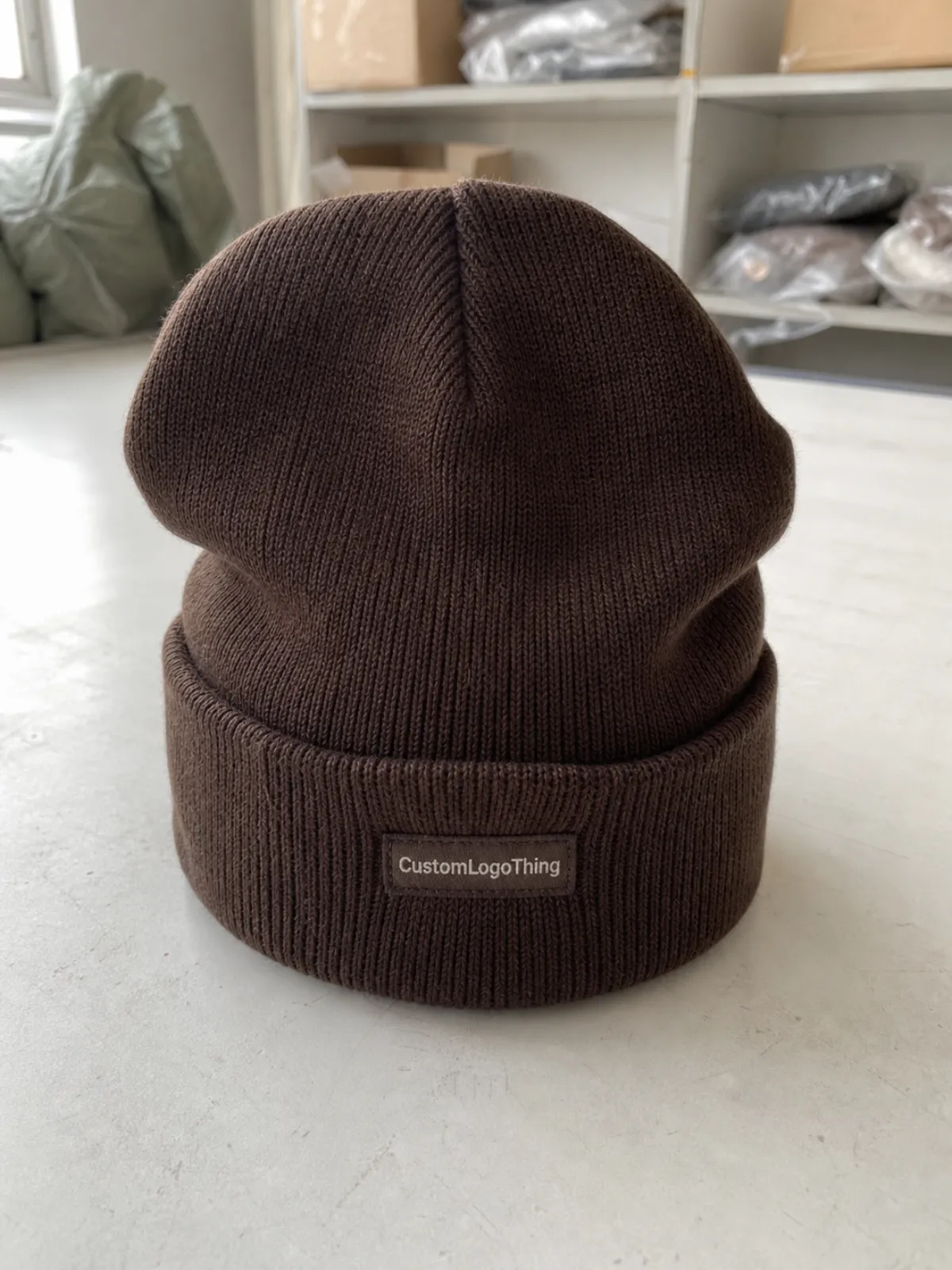
The most useful way to read a chocolate ribbed winter Beanies Unit Cost Review is to treat it like a landed-cost exercise, not a headline-price exercise. The base beanie matters, but so do setup charges, artwork preparation, labeling, cartons, and shipping. A supplier can quote a low per-piece number and still end up more expensive once the order is packed for retail or shipped across a long distance.
Chocolate brown itself usually does not add much cost. What changes the number is the knit specification behind it. A tighter rib count tends to feel more substantial and can hold shape better after repeated wear. A looser rib can be softer and a little cheaper, but it may not sit as cleanly on a shelf or keep the same profile after a season of use. That difference shows up more clearly in dark colors because the surface texture is part of the visual appeal.
For practical buying, ask for five details before judging any quote: fabric blend, rib gauge, MOQ, decoration method, and sample availability. If the supplier cannot state those clearly, the number is premature. A proper quote should also indicate whether the price includes packaging, whether the freight is domestic or international, and whether labels or hang tags are part of the base offer or add-ons.
There is also a category problem that catches buyers off guard. A retail-ready ribbed beanie with a folded cuff, woven label, and individual bag is not the same product as a blank promotional cap shipped in bulk cartons. The first supports shelf presentation and unboxing. The second supports low-cost distribution. Comparing the two on unit price alone gives a false signal.
From a buying perspective, the cleanest breakdown is simple:
- Blank garment cost: yarn, knit weight, cuff structure, and finishing.
- Decoration cost: embroidery, woven patch, label application, or heat-applied branding.
- Logistics cost: packing format, carton count, and freight method.
Once those three layers are separated, the quote becomes easier to sanity-check. A difference of $0.80 to $1.50 per piece can be completely reasonable if one offer includes a heavier knit, more precise logo work, and retail packing. Without that context, the numbers invite the wrong comparison.
Fit, Rib Structure, and Decoration Choices That Change Value
Fit is not cosmetic. On a ribbed winter beanie, the cuff height, crown depth, and stretch recovery decide whether the item looks structured or sloppy after a few wears. A higher cuff gives more decoration space and usually reads as more premium. A lower cuff feels lighter and can work well for a cleaner, understated look, but it leaves less room for a logo that needs breathing room.
The rib structure deserves equal attention. Tight ribbing usually gives a firmer hand feel and better shape retention. Looser ribbing can look relaxed and slightly more casual, which may be useful for fashion-led retail, but it tends to feel less engineered. In a chocolate colorway, that matters because the knit texture is doing a lot of the visual work. Dark brown can disappear into a flat surface; ribbing gives it dimension.
Decoration choice has a direct effect on both price and performance. Embroidery is usually the most durable option for simple logos and text. It handles abrasion well and can sit neatly on a folded cuff. Woven patches or woven labels allow finer detail and can look sharper for small marks or multiple colors. Heat-applied decoration can work for speed, but it is not always the best answer for a winter item expected to be worn hard.
Placement matters more than many briefs admit. A logo stitched too low on the cuff can get lost when the beanie is worn slouched. A logo placed too high can look disconnected from the fold. Small changes in position can alter how the product photographs, how it sits on a shelf, and how likely the mark is to survive regular use. That is one reason sample approval is worth the delay on higher-visibility orders.
There is also a contrast issue. Chocolate fabric can swallow dark threads, and even medium-tone logos can look flatter than expected under indoor lighting. Buyers often assume the artwork itself is the problem, when the real issue is color contrast against the base knit. A slightly brighter thread, a woven patch with a lighter border, or a larger logo area can solve what looks like a design problem on paper.
Material Specs, Color Consistency, and Packaging Options
Material choice is one of the few levers that can reduce cost without making the beanie feel cheaper in the hand. Acrylic is common because it is warm, soft enough for everyday wear, and usually price-friendly. Acrylic-poly blends can improve recovery and reduce the sag that sometimes appears after repeated use. Recycled blends often carry a modest premium, but they can help with sustainability targets and marketing claims if the sourcing is documented properly. Wool blends feel warmer and more natural, though they are often harder to keep at a low price and may require more careful handling in production and washing.
Construction changes matter just as much as fiber content. A single-layer beanie is lighter and usually less expensive. A double-layer knit feels warmer and more substantial, which is often what buyers want for winter retail or cold-weather staff use. A folded cuff adds structure and gives the decoration zone a cleaner surface. None of those details are merely aesthetic. They influence shipping weight, labor time, and the consistency of the final shape.
Color control is where many chocolate-colored orders live or die. Dark brown is not one fixed shade. It can tilt red, warm, cool, or nearly espresso depending on the yarn lot and the dye house. If a brand uses brown as part of its identity, lock the reference early and request a lab dip, strike-off, or physical yarn approval where possible. A beanie that looks acceptable in isolation can still fail alongside the rest of the apparel range if the brown is off by just enough to be noticed.
Packaging deserves more attention than it usually gets. Bulk-packed cartons are efficient and low-cost, but they leave the buyer to handle folding, tagging, and presentation later. Individual polybags, tear-away labels, sewn-in labels, and hang tags all change the labor profile. Retail-ready packing costs more, yet it can save time at receiving and reduce handling damage. If the order is going straight to stores or fulfillment, that extra cost may be justified. If it is for a one-time event, it may not be.
For paper-based packaging targets, documented sourcing matters. If FSC-certified materials are required, say that before the quote is finalized so the supplier can price the correct stock and printing method. The same applies to kitting and assortment packing. A basic carton quote is not the same as a job that needs size sorting, barcode placement, or retail folding. Those requirements are straightforward, but they are not free.
Drop-ship programs and mixed-case packing need even more precision. If the supplier has to pack by destination, store, or assortment, the labor line will change. That is normal. Hidden cost appears only when those instructions are added late and no one revises the unit price. Clear pack-out instructions prevent that problem.
Buyers sometimes focus too much on the knit itself and too little on how the finished product is handled after knitting. In practice, packaging is part of the unit cost. It affects damage rates, shelf readiness, and the number of touchpoints between production and the end user. That is true whether the order is 200 pieces or 20,000.
Pricing, MOQ, and What Moves the Per-Unit Number
Moq is the multiplier that most clearly changes the per-unit number. Small runs spread setup over fewer pieces, so the cost per beanie rises fast. Larger runs usually improve price, but only if the specification stays stable. The moment the order adds a new yarn blend, a second logo position, or premium packaging, the comparison shifts again.
Directional pricing helps buyers frame expectations, though it should never replace an actual spec-based quote. For a standard ribbed beanie, a blank version can fall roughly in the $1.90 to $3.10 range depending on knit weight, cuff build, and order size. Add embroidery, and the number often moves to about $3.25 to $5.40. A woven patch or woven label can land in a similar band, sometimes a little higher if the artwork is detailed or the attachment method is more involved. A recycled blend with retail pack-out can climb to around $4.10 to $6.50.
Those numbers are directional because the setup behind them changes quickly. A low MOQ with custom decoration can cost more than a larger blank order even if the product looks simpler. A basic logo stitched with a standard digitized file will usually cost less than a multi-color patch with fine edges and a specific placement instruction. The decoration method often moves the price as much as the garment itself.
Here is the part many buyers learn the hard way: setup fees are small on a large run and large on a small one. Digitizing, thread color changes, label setup, carton marking, and proof revisions all matter more when the order is lean. Tooling becomes a bigger issue once molded badges, silicone patches, or special trims enter the brief. If those items are hidden inside the unit price, ask for a line-by-line breakdown before comparing suppliers.
| Option | Typical Cost Per Piece | What Usually Drives It | Best Fit |
|---|---|---|---|
| Blank ribbed beanie | $1.90-$3.10 | Yarn blend, rib density, cuff build | Simple stock and lower-touch programs |
| Embroidered logo beanie | $3.25-$5.40 | Digitizing, stitch count, placement | Durable branding and team use |
| Woven patch or label beanie | $3.60-$5.90 | Patch setup, attachment method, detail level | Sharper artwork and retail presentation |
| Recycled blend with retail pack-out | $4.10-$6.50 | Yarn source, hang tag, individual bag, carton spec | Premium promotions and store programs |
Reorders are where the economics get interesting. Once the original setup exists, the second run often improves on price, sometimes materially, if the yarn, color, decoration, and pack method stay the same. That is one reason good buyers preserve the approved spec rather than rebuilding the project from scratch every season. Consistency is cheaper than reinvention.
One more practical rule: only compare suppliers on equal specs. Same yarn weight, same rib gauge, same logo placement, same pack-out, same delivery target. If one quote includes better finishing or a more precise logo placement and another does not, the difference may be entirely justified. A fair comparison depends on documentation, not assumptions.
Production Process, Timeline, and Lead Time Expectations
Production is usually straightforward, but the schedule can still stretch if approvals lag. The common sequence is artwork review, proof approval, sampling or strike-off, bulk knitting, decoration, quality control, packing, and shipment. Each stage is manageable. The delays usually come from late changes, not from the knitting itself.
For a simple run, production often takes about 12 to 15 business days after final approval. That estimate assumes the spec is already locked, the logo is ready, and no unusual packaging is required. If the project needs custom color matching, a new patch, multiple decoration points, or retail-ready folding and bagging, the timeline can move to 15 to 25 business days. Seasonal demand can extend that further, especially in the lead-up to winter promotions.
Sampling changes the clock. A strike-off or sample may add a few days before bulk production starts, but that time can save an entire order from being redone. For a high-visibility retail program, it is usually cheaper to spend a little longer on proofing than to correct a bad run after production is underway.
Approval speed matters as much as factory speed. Buyers often think the calendar starts with the purchase order, but in practice it starts when the artwork, quantity, size mix, delivery address, and decoration method are all confirmed. If those details are still moving, the date is still moving too.
- Faster jobs: finalized artwork, one delivery address, quick proof responses, standard packing.
- Slower jobs: sample revisions, color matching, multi-location branding, late size changes.
- Lower-risk jobs: approved strike-off before bulk on retail or gifting orders.
Shipping method also matters. Air freight shortens delivery time but can erase the savings from a low unit price. Ocean freight is easier on budget for larger orders, but it needs more lead time and better planning. A strong chocolate ribbed winter Beanies Unit Cost Review should always sit beside a realistic shipping schedule; otherwise, the cost comparison is incomplete.
Proofing, QC, and Reorder Consistency for Repeat Buyers
Repeat buyers care about consistency more than novelty. A reorder that looks slightly different from the first run can create real problems in retail, team distribution, or gifting. On dark brown knit, small shade shifts are easy to see next to the original stock. Stitch tension, cuff depth, and finish quality also show up more clearly than people expect once the items are packed together.
Proofing is the place to catch the expensive mistakes. Placement marks, thread colors, patch dimensions, and attachment method should be written into the proof, not left to memory. If a logo needs to sit 12 mm from the cuff seam, say that. If the patch should be centered on the front panel rather than slightly above the fold, that should be visible in the approved artwork and the production note.
Quality control should focus on the checks that affect the end user: color consistency, logo placement, seam integrity, stretch recovery, and packing accuracy. A beanie can look fine in a single photograph and still fail in a carton if the fold is uneven or the labels are mixed. Good QC is not about chasing perfection. It is about avoiding the kind of error that triggers returns, replacements, or awkward internal sorting.
For repeat programs, documentation is a real asset. Keep the original art file, approved proof, yarn reference, label specification, and packing instruction together. That record makes a reorder much easier to manage and reduces the risk of a spec drifting over time. It also makes supplier communication cleaner, because everyone is referring to the same version of the product.
Suppliers that answer reorder questions quickly and clearly tend to be worth more than suppliers that only look cheaper on the first quote. A slightly lower price can vanish if the second order has to be rebuilt, re-approved, or corrected. Reliable execution is part of unit cost, even if it is not always visible on the first line of the quote.
Best Next Steps for a Clean Quote and Order
A clean quote starts with a clean brief. Send quantity, delivery address, target date, logo file, decoration preference, size mix, and packing instructions in one note. If the beanies need retail folding, individual polybags, hang tags, or barcode labels, include those details before pricing starts. Late additions are where a lot of budget confusion begins.
It also helps to ask for two versions of the quote. One can be the simplest acceptable spec, usually a standard embroidered beanie in bulk packing. The other can include upgraded yarn, a woven label, or retail presentation. That side-by-side view shows which extras truly matter and which ones only sound persuasive in a sales email.
If the project depends on a specific chocolate shade, exact logo size, or a shelf-ready finish, request a sample or strike-off before bulk production. That small step is often the cheapest form of insurance in the entire order. It is particularly useful for retail, team merchandising, and branded winter giveaways where the item will be seen in quantity.
A useful chocolate ribbed winter beanies unit cost review does not chase the lowest number in isolation. It narrows the spec, checks the real drivers, and exposes where the budget is being spent. That is what gives the quote meaning. The best order is the one that matches the brief, ships on time, and arrives looking like the approval that was signed off in the first place.
What affects chocolate ribbed winter beanie unit cost the most?
Yarn blend, rib gauge, decoration method, and MOQ usually move the price the most. Packaging and freight become more important on smaller orders. The safest comparison is one built on the same spec across suppliers.
What is a practical MOQ for ribbed winter beanies with a logo?
MOQ depends on the decoration and the level of customization. Smaller runs often carry a higher cost per piece because setup is spread across fewer units. Ask whether the minimum applies per color, per artwork version, or per size run.
Which decoration method works best on chocolate rib-knit beanies?
Embroidery is usually the most durable choice for simple logos and text. Woven patches and woven labels can show finer detail, especially on dark fabric where small elements need more clarity. The right method depends on logo size, contrast, and wear expectations.
How long does production usually take after approval?
Simple orders often take about 12 to 15 business days after final approval. Custom color matching, samples, special labels, or retail pack-out can push the schedule closer to 15 to 25 business days. Shipping method adds another layer to the timeline.
What should I include in a quote request for accurate pricing?
Include quantity, delivery address, target date, artwork, decoration type, color target, and packing requirements. If budget matters, state the target unit cost or the maximum acceptable range. Clear input usually produces a cleaner and more usable quote.


