Supplement embroidered Beanies Unit Cost Review is really a buying exercise, not just a pricing exercise. The useful question is whether the hat will stay in use long enough to justify the blank, the embroidery, and the operational time it takes to approve and receive it. A beanie that is warm, wearable, and easy to reorder can outperform a cheaper option that looks fine on a quote but weak in the field.
The spread in cost usually comes from a handful of variables: blank quality, stitch count, digitizing, setup, and how much handholding the supplier requires before production starts. On small runs, fixed costs are obvious. On larger runs, they are spread out, so the same decoration can look much cheaper per piece if the order is planned cleanly.
Why embroidered beanies punch above their weight
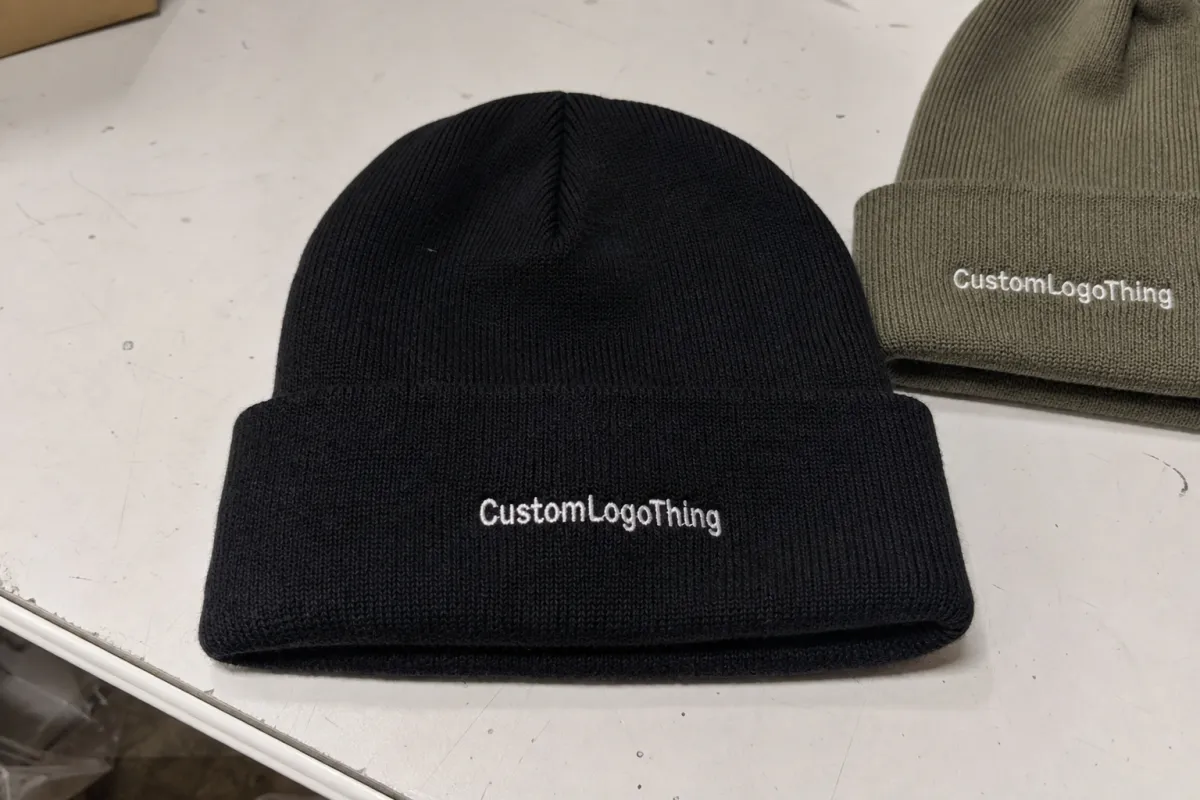
Beanies are one of the few promotional items that people keep wearing after the initial handoff. That matters because the value is not just in the item itself but in the number of times it gets seen. A single winter hat can produce far more impressions than a short-lived giveaway, especially when it is comfortable enough to stay in regular rotation.
That is why buyers should think in terms of actual use, not only unit price. A staff program, a field team, or a retail gift all create different expectations, but the economics improve when the hat is worn often and replaced rarely. If the beanie fits well and the branding remains readable, the cost is easier to justify.
This also changes how procurement should evaluate a Supplement Embroidered Beanies Unit Cost Review. The lowest quote is not always the best value if it comes with thin fabric, weak stitching, or a decoration method that makes the logo hard to read after a few wears. Wearability is part of the budget decision.
Beanie styles, yarns, and decoration choices
Style is the first major cost lever because it affects both the blank and the decoration area. A cuffed beanie is usually the safest option for embroidery because the cuff gives a flat, stable surface and better logo visibility. Slouchy styles are more casual and can work well, but they often reduce the usable area and make small logos look undersized.
Material choice matters just as much. Acrylic is still the standard for budget-conscious orders because it is consistent, warm, and generally the least expensive. Acrylic blends can improve softness or shape retention. Wool and wool blends usually increase perceived value, but they also raise cost and may bring more care concerns.
Decoration should match the artwork, not the other way around. Standard embroidery is best for simple logos and shorter wordmarks. Patches can handle finer detail and give a cleaner edge. Woven labels are useful when the branding needs to be subtle or secondary. A restrained combination of embroidery and a small label can look more polished without adding much complexity.
Color and placement are part of the cost conversation too. A white logo on a dark cuff reads differently from tonal embroidery on a heather knit, even if the stitch count is the same. Cuff placement is usually the easiest to control and the easiest to see when worn. Crown placement can work, but it is less forgiving on stretchier knits.
| Style | Typical use | Decoration fit | Relative cost pressure |
|---|---|---|---|
| Cuffed acrylic | General promotions, staff wear | Best for standard embroidery | Lowest |
| Slouchy knit | Casual branding, fashion-leaning teams | Good for patches or small marks | Moderate |
| Heavy-gauge rib-knit | Premium gifts, retail programs | Good for clean, bold logos | Moderate to higher |
| Wool blend | Cold-weather programs, premium look | Works well with restrained embroidery | Higher |
That table is useful because it maps style to the kind of order a buyer is actually trying to place. A basic cuffed knit usually gives the best balance of warmth, readability, and price. A more premium blank can make sense when the item is being used as a higher-value gift or retail piece.
Embroidery specs buyers should lock down
The cleanest orders start with a spec sheet that removes guesswork. Buyers should define logo size, placement, thread colors, and whether the mark goes on the cuff, crown, or a patch. Those details are what keep a quote stable after proofing begins.
Digitizing is where logos are adapted for embroidery, and that step often determines whether the final result is crisp or crowded. Thin lines, tiny type, gradients, and layered shapes usually need to be simplified so the design can hold on knit fabric. Good digitizing is translation and engineering at the same time.
Buyers should also agree in advance on how much variation is acceptable. Knit fabric moves, cuffs shift, and a logo can drift slightly even in a well-run production line. That does not excuse sloppy work, but it does mean the proof should reflect how the material behaves in real use.
“The expensive mistake is approving a decoration that looks precise on a screen and crowded on knit fabric.”
There is a practical limit to how much detail a beanie should carry. Dense artwork can raise stitch time and make the mark harder to read at normal viewing distance. For soft goods, a simple, legible logo is usually the better buy.
Supplement embroidered beanies unit cost review: what moves pricing
Quantity is the biggest pricing lever, but not the only one. Fixed costs such as digitizing, setup, proofing, and machine prep get spread across the order. On a small run, those charges stay visible. On a larger run, they are diluted, and the unit cost drops.
For a straightforward embroidered beanie, higher-volume pricing can often land around $4.50-$7.50 per piece, while smaller orders may sit in the $7-$14 range depending on blank quality and decoration complexity. Those are directional only. Premium yarns, larger designs, multiple thread changes, patches, and rush work all move the number up.
Breaking the quote into parts makes comparison easier. The blank is one line, decoration is another, and then there are setup, freight, sample, and rush charges. If a vendor gives only one blended total, it is harder to tell whether the order is truly cheaper or just less transparent.
MOQ also changes the math. A 24-piece run is usually possible, but the unit cost will be higher because setup is spread across fewer items. A 144-piece run generally improves pricing because the fixed work is amortized more effectively. Ask whether the minimum applies per color, per design, or per style before comparing quotes.
Other details can quietly change the total: mixed color assortments may require separate runs, larger logos may increase stitch count, and dense artwork can slow machine time. Even small changes matter when the project is tight on budget or schedule.
| Order profile | Likely cost behavior | What to watch |
|---|---|---|
| 24-48 pieces | Higher unit cost due to fixed setup spread | Setup charges, proof revisions, minimums |
| 50-143 pieces | Improving unit cost as setup is amortized | Thread changes, logo size, blank consistency |
| 144+ pieces | Better bulk pricing and lower cost per piece | Freight, carton count, reorder file retention |
Rush timing can erase savings quickly. So can late changes to artwork or thread colors. A strong supplement embroidered Beanies Unit Cost Review only works if it includes the way production schedules actually behave, not just the headline price.
Process, proofing, and turnaround from mockup to ship
A reliable order usually follows the same path: inquiry, artwork review, digital proof, sample approval if needed, embroidery, inspection, packing, and shipment. The process sounds basic, but most delays come from missing files, slow sign-off, or changes after proof approval.
Typical turnaround depends on volume and complexity. A straightforward program can often move in about 12-15 business days after proof approval, while a sample-driven or highly detailed order will take longer. Shipping time should be treated separately unless the supplier is giving a true door-to-door timeline.
Buyers should confirm the final logo, thread palette, placement, and deadline before approval. If the order is going to a warehouse or retail distribution center, packaging details matter too. Carton strength, count accuracy, and labeling affect whether the goods arrive ready to use. For packaging and transit testing, the standards published by ISTA are a useful reference. If paper inserts or hang tags are part of the program, FSC-certified paper can support a cleaner sourcing story without changing the garment itself.
That planning may feel routine, but it is what keeps launches on schedule. Most missed deadlines come from a single unresolved proof or an assumption that production and delivery are the same thing.
What separates a reliable supplier from a cheap quote
The lowest quote is not always the safest one. A better supplier usually gives line-item clarity, documents approvals, and explains sample policy up front. That matters because beanie programs often repeat, and a good file trail makes the next order easier.
Look at how the quote is written. If the blank, decoration, setup, shipping, and sample cost are separated, the estimate is usually easier to trust. If everything is collapsed into one number, it is harder to see where a hidden charge might show up later. A cheap quote can also hide weaker thread quality or a stricter revision policy.
Repeat production is where a reliable vendor earns its keep. If stitch files, placement settings, and digitized art are stored properly, a reorder should move faster and stay consistent. That is worth more than shaving a small amount off the first run if the replacement shipment looks different.
- Samples are available or clearly explained.
- Approvals are documented, not assumed.
- Packing standards are spelled out for cartons and counts.
- Reorder files are retained and referenced by version.
- Communication is fast enough to keep deadlines realistic.
A careful buyer should compare service quality, not just sticker price. The supplier that avoids rework, missed deadlines, and inconsistent reorders often produces the better total cost, even if the first quote is not the lowest.
How to request a quote and place the order cleanly
The cleanest quote request is short and complete. Send the logo file, quantity, beanie style, color count, placement request, and needed-in-hand date. If you already know the preferred blank color or thread palette, include that too. The fewer assumptions the supplier has to make, the tighter the quote usually becomes.
Ask for a breakdown instead of a single total. You want to see garment cost, embroidery setup, decoration, shipping, and any rush fee. If sample charges appear, ask whether they are credited on approval or billed separately. That one detail can change the real cost picture.
Before approval, confirm artwork placement, thread colors, size, and reorder expectations in writing. If the program will be repeated, make sure the supplier can retain the same digitized file and stitch settings for future runs. That keeps the second order from starting over.
For teams managing seasonal inventory, disciplined quoting pays off quickly. A beanie program that is approved cleanly can be resupplied without much friction. A vague brief can burn days on revision loops. The simplest way to use a supplement embroidered beanies Unit Cost Review is to compare vendors on the same brief and the same terms.
What changes supplement embroidered beanies unit cost the most?
Quantity is usually the biggest lever because fixed setup costs are spread across more pieces. Stitch density, logo size, and thread changes also add labor. Rush timing and special packaging can raise the final per-piece price.
What MOQ should I expect for embroidered beanies?
MOQ depends on style, decoration complexity, and whether the supplier is using stocked blanks or custom production. Lower MOQs are possible, but the unit cost is usually higher because setup is divided across fewer pieces.
How long does production usually take for embroidered beanies?
If the artwork is clean and final, proofing can move quickly. Production time depends on order size, decoration complexity, and whether a sample must be approved first. Shipping should be added separately unless the supplier gives a door-to-door timeline.
Can I mix colors or styles in one beanie order?
Often yes, but the supplier may treat each colorway or style as a separate run. Mixed assortments can improve flexibility while changing the MOQ or unit cost, so confirm that before you commit.
What do I need for the first quote request?
Send a vector logo file if possible, plus the quantity, target deadline, and preferred beanie style. Include decoration placement, thread color ideas, and whether you want a sample or just a proof.
For buyers, the practical path is simple: define the beanie, lock the embroidery spec, separate setup from product cost, and compare quotes on identical terms. That is how a supplement embroidered beanies unit cost review turns into a useful purchasing tool instead of a guess.

