Wine Club Ribbed Winter Beanies Unit Cost Review for Buyers
If you are doing a wine club ribbed winter Beanies Unit Cost Review, the first thing to accept is that the beanie is not just a seasonal freebie. It gets worn on errands, to school pickup, on early tasting-room shifts, and on the kind of cold mornings when members care less about branding than warmth. That matters. An item with real utility earns more impressions than a decorative handout that disappears into a drawer.
For wine clubs, ribbed winter beanies sit in a useful middle ground. They feel practical enough for a gift, retail-ready enough for a shop shelf, and simple enough to price without losing control of the margin. They also photograph well, which helps if the club promotes winter shipments, holiday bundles, or limited member drops. The unit cost only makes sense, though, if the full landed cost is measured honestly. Blank price is one line. Setup, decoration, freight, packaging, and sampling are the rest of the story.
The lowest quote is not always the lowest spend. Clean specs, one decoration method, and clear approval timing usually save more money than squeezing a supplier for a tiny per-piece reduction.
Why ribbed winter beanies work for wine club orders
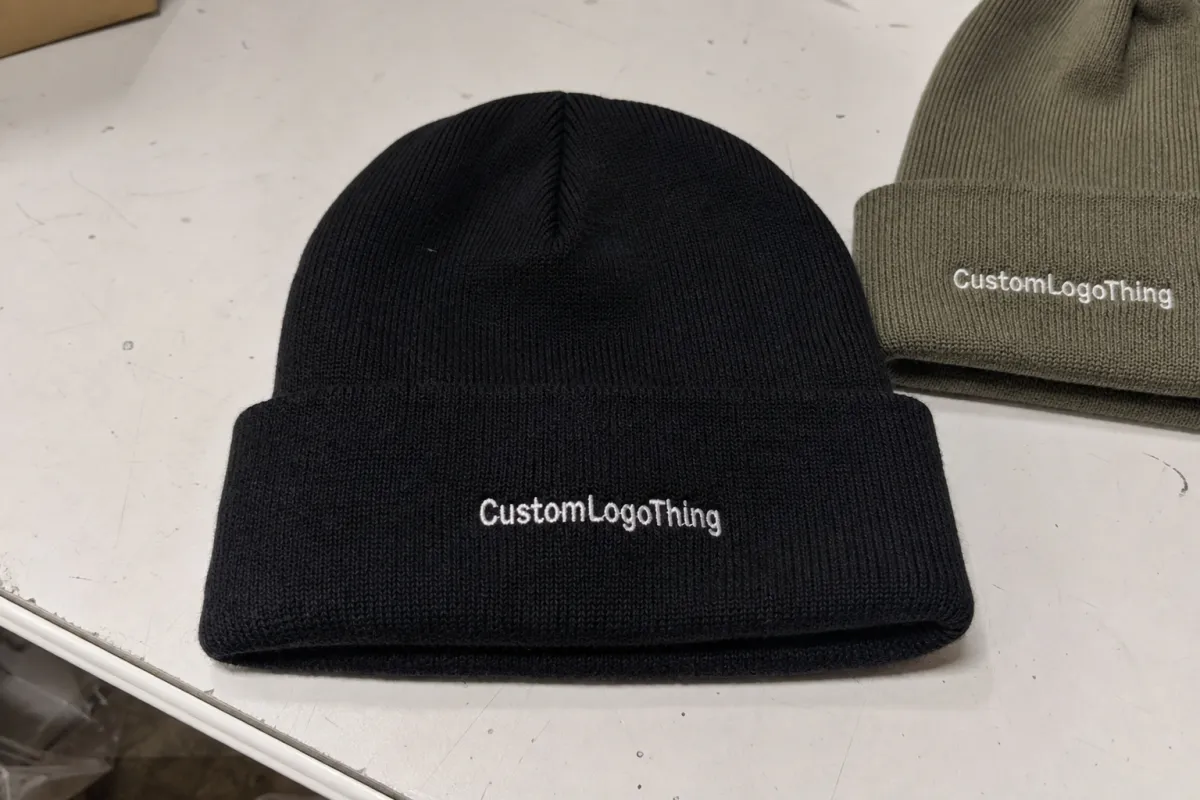
Ribbed knit works because it behaves. The fabric stretches, recovers, and sits close to the head without feeling stiff. That makes it easier to fit a wider range of members than a flatter knit or a more fashion-driven silhouette. It also gives the decoration room to read clearly, which is not trivial when the logo has to survive a textured surface.
Wine clubs tend to use beanies in four ways: as holiday gifts, as add-ons for shipment tiers, as tasting-room retail items, and as staff gear for colder months. One product can cover all four if the design stays disciplined. A cuffed ribbed beanie with restrained branding can move from a member box to a retail display without feeling out of place. That flexibility is a large part of the value equation.
The item also supports repeat visibility better than most seasonal merch. Glassware stays home. Inserts get recycled. A winter hat gets worn in public, often for months. That gives the club a long tail of exposure without asking for any extra action from the buyer. It is a practical form of advertising, which is why it tends to hold up better in budget reviews than novelty items.
Fit affects perceived quality more than buyers expect. A beanie that sits too shallow feels cheap. One that is too tall looks sloppy. Ribbed winter styles give some forgiveness, but not unlimited forgiveness. The shape should match the club's brand posture. Premium and understated usually means a tighter cuff and a clean label. More lifestyle-led brands can tolerate a looser crown or a slightly more casual drape.
Fit, cuff height, and knit style choices that change the look
Cuffed beanies are the safest default for most wine club programs. The cuff creates a natural branding zone, helps the hat sit lower on the forehead, and keeps the silhouette controlled. A rolled cuff can work as well, especially if the club wants a softer retail look. Slouchier styles are more relaxed and can appeal to younger buyers, but they usually reduce the sense of polish that many clubs want in a gift item.
Measurements matter. A standard adult ribbed beanie often lands around 8.5 to 9.5 inches in height before stretch, with a cuff of roughly 2.5 to 3 inches. Those numbers are not absolute, because knit density, yarn type, and finishing all shift the final feel. Still, they are a useful baseline when comparing samples. Flat mockups rarely show how much a crown changes once the knit opens up on a real head.
Color and structure interact. A dark charcoal or black beanie tends to read more refined and hides wear better after a season of use. Lighter colors can feel more premium or more fashion-forward, but they are less forgiving during production and during actual wear. If the club wants cream, oatmeal, or heather tones, the spec sheet needs a tighter shade reference and a more realistic tolerance for variation.
Label placement can change the whole perception of the piece without changing the mechanics of the order. A small front embroidery hit feels direct and traditional. A woven side label suggests retail polish. A patch adds visual weight and can make the beanie feel more substantial, but it also adds handling and often pushes the cost up faster than buyers expect. For a first run, restraint usually wins.
Use the silhouette to serve the audience. If the wine club leans classic and members are mostly repeat buyers, keep the shape tidy and the decoration modest. If the club is trying to signal a more contemporary lifestyle angle, you can loosen the fit slightly or use a patch with more texture. The key is not to let the design overtake the product. The hat still has to be wearable.
Material, decoration, and spec sheet details to lock down
Yarn choice sets the tone before decoration ever enters the picture. Acrylic is the workhorse material: warm enough for winter use, consistent from run to run, and usually the most budget-friendly. Acrylic-poly blends can improve softness and shape retention. Wool blends feel more premium and generally perform better in cold weather, but they can raise cost and make care expectations more sensitive.
For most wine club programs, acrylic or an acrylic blend is the practical starting point. It keeps the price accessible, especially when the hat is part of a larger shipment or a member thank-you item. If the beanie is meant for retail or for a premium winter collection, a softer blend may justify the added spend. The material should match the audience and the use case, not just the mood board.
Before asking for a quote, lock down the spec sheet. The supplier needs knit gauge, target weight, finished dimensions, color count, decoration size, thread matching limits, and packaging requirements. If those variables are vague, the quote will be vague too. That is how orders drift into avoidable revisions later, usually at the worst possible point in the schedule.
Decoration is where a lot of buyers overcomplicate the order. On ribbed knit, embroidery is usually the cleanest default because it is durable and sits well on the fabric. A woven patch can look more retail-oriented and may handle finer details better, but it adds setup and can increase lead time. A single decoration location is usually enough for the first run. Every extra placement raises the chance of inconsistency and usually increases cost faster than the logo impact justifies.
For practical buying decisions, the rule is simple: embroidery if the brief is durability and control; woven patch if the design needs sharper detail or a more premium retail feel; custom labels only if the brand story truly benefits from them. There is no prize for adding features that the customer will not notice.
- Acrylic: lower cost, dependable warmth, easier color consistency.
- Acrylic/poly blend: softer hand feel, better recovery, modest price increase.
- Wool blend: warmer and more premium, but pricier and more care-sensitive.
- Embroidery: strong durability and predictable unit cost.
- Woven patch: sharper detail and a more retail look, with extra setup.
Packaging deserves a line item of its own. A beanie dropped into a standard polybag is cheap, but it may not match the feel of a club shipment. A folded insert card, belly band, or paper wrap can improve presentation without pushing the product into luxury territory. If the club cares about material sourcing, FSC-certified paper can help on the packaging side. That does not change the beanie itself, but it does change the unboxing impression.
Wine Club Ribbed Winter Beanies Unit Cost Review and MOQ
The wine club Ribbed Winter Beanies Unit Cost review should separate the base product from the costs that hide around it. A quote can look attractive until embroidery digitizing, sample charges, custom labeling, packaging, and freight are added. Then the number shifts, sometimes enough to force a second approval cycle. That is why buyers should ask for an itemized quote early.
In general, three variables move price the most: quantity, decoration method, and yarn choice. Quantity matters because fixed costs spread over more units as the run gets larger. Decoration matters because patches, extra colors, or multiple placements add time and handling. Yarn matters because premium blends cost more to source and often require better finishing. Everything else is secondary, though not irrelevant.
| Order Size | Typical Cost per Piece | Best Use Case | Budget Notes |
|---|---|---|---|
| 48-99 pcs | $5.20-$8.40 | Small member gift, test drop, limited winter offer | Setup burden is high relative to the run, so freight and samples weigh more |
| 100-299 pcs | $3.60-$5.80 | Seasonal club gift, staff gear, modest retail quantity | Often the best balance between price, risk, and flexibility |
| 300-1,000+ pcs | $2.90-$4.60 | Recurring winter program, multi-channel sales, re-order inventory | Lowest unit cost, but storage, sizing assumptions, and sell-through matter more |
Those ranges assume a standard ribbed beanie in acrylic or acrylic-blend yarn with one embroidery location. Add a woven patch, custom inside label, gift box, or extra decoration zone and the price climbs. The increase may look modest in isolation, but on 250 or 500 units it becomes meaningful quickly.
MOQ tradeoff: smaller minimums help when the club is testing a concept or tying the beanie to a limited holiday package. Larger minimums make more sense when the hat is intended to return each winter. A slightly higher MOQ can lower repeat pricing and simplify reorder planning. Buyers who only chase the lowest starting threshold often pay more later because they forced the factory into a less efficient setup.
Hidden costs are the ones that cause friction. Watch for these:
- Setup charges for embroidery digitizing or patch application.
- Tooling fees for custom labels or molded elements.
- Sample fees for pre-production approval pieces.
- Packaging fees for inserts, bands, or individual packing.
- Freight if the delivery window is fixed and inventory has to arrive on time.
There is also the question of retail margin. If the beanie is sold, not given away, the landed cost must leave room for markup without pushing the final shelf price into a range that feels inflated for the category. That is why a $0.50 difference at the factory can matter more than it first appears. Once freight and handling are added, the gap widens.
Production steps, lead time, and delivery windows
The production path is usually straightforward: confirm the spec, review the mockup, approve a sample if needed, run production, pack the goods, and book freight. Each step depends on the one before it. Delays often come from unclear approvals rather than from the factory itself. A buyer who changes the brief three times in two days is effectively adding a new schedule risk.
Simple ribbed beanies can move faster than buyers expect once artwork is finalized. If the factory already stocks the right yarn and the decoration is a single embroidery placement, the lead time can stay reasonable. Add custom dyeing, mixed colors, a patch build, or unusual packaging and the schedule stretches. Holiday season makes everything tighter because many brands discover winter at the same time.
Transit should be planned with the ship date, not the hoped-for ship date. If the beanies are going into mailed club boxes, any delay can affect the broader fulfillment window. If the product is being delivered to retail, late freight can push the item into the wrong selling season. For packed goods, transit testing standards from ISTA are useful because they reflect the reality of cartons being handled, stacked, and moved more than once.
What speeds the job up
Clean vector artwork. One decoration location. A base color the supplier runs regularly. Fast proof approval. Those four things do more for schedule control than any promise of a rush order. If a vendor offers an accelerated timeline, ask what is actually compressed. Sometimes it is only production. Sometimes the shipping leg is unchanged. Sometimes the rush is not real at all.
What slows the job down
Last-minute logo edits, indecisive color changes, patch-to-embroidery switches after quote approval, and vague shipping instructions. Those problems are common, and they are mostly preventable. The approval owner should be easy to reach during the quote and proof stage. Otherwise the project stalls while everyone waits for someone else to answer.
The safest approach is to build backward from the club ship date and add buffer. If the beanie is part of a winter mailer, earlier arrival is usually better than a tight schedule. Inventory sitting in storage for a short period is manageable. Inventory in transit during the mailing window is not. The difference is often the difference between a calm fulfillment cycle and a flood of customer service emails.
What a reliable supplier should prove before you buy
A low quote is not proof of competence. Knit goods vary enough that supplier process matters almost as much as price. A reliable vendor should be able to explain measurement tolerance, color matching limits, stitch count, digitizing, patch construction, and the inspection steps used before cartons leave the floor. If those answers are vague, expect more surprises later.
Comparing suppliers is not just about comparing numbers. One quote might include packaging and setup while another hides them. One supplier may return proofs quickly and note the risks in the decoration choice. Another may say yes to everything and leave the complications for later. Precision is usually a better sign than overconfidence.
Ask these before approval:
- What yarn blend and knit gauge are you quoting?
- What is the embroidery size limit on ribbed knit?
- Are setup charges separate from unit cost?
- Do custom labels or patches add tooling fees?
- What is the production window after art approval?
- Can you handle split shipping if the club needs multiple destinations?
Repeatability matters if the product will return next season. A supplier that can reproduce the same cuff height, stitch placement, and color tone without reopening the whole brief saves time and protects consistency. That matters more than many buyers admit, because winter merch often becomes a program, not a one-off. The second order is where the process either gets easier or becomes annoying.
Reliable suppliers also know when to push back. If a logo is too detailed for the knit scale, the honest response is better than a messy workaround that looks acceptable only in a mockup. Crooked embroidery, uneven labels, and poor edge finishing are easy to miss at quote stage and hard to forgive after delivery. Quality control should be visible in the way the vendor talks about the order.
Next steps to quote, approve, and place the order
If you are ready to ask for pricing, send one complete message instead of a string of partial notes. Quantity, base color, decoration method, target delivery date, logo file, and ship-to location are the essentials. With those six items in hand, a supplier can usually answer with something useful instead of a placeholder estimate.
- Share the quantity range and the real delivery deadline.
- Attach a vector logo and note any color restrictions.
- Choose the knit color and the decoration method.
- Request a mockup, sample photo, and itemized quote.
- Confirm who approves artwork and whether rush service exists.
- Ask whether the order needs split shipping or member-level packing.
After the quotes arrive, compare them line by line. Unit cost matters, but only as part of the full landed number. Check whether setup is included, whether packaging is extra, whether freight is estimated or fixed, and whether the MOQ matches the actual need. A quote that hides details is not more competitive. It is just less transparent.
For clubs that want a seasonal item with repeat value, the most sensible path is usually a modest first order, one decoration zone, and a material choice that matches the budget and the member audience. That keeps the risk controlled while still producing a hat people will actually wear. Use the wine club ribbed winter beanies Unit Cost Review as a checklist: material, decoration, quantity, packaging, and delivery date. Get those right and the rest becomes execution rather than guesswork.
What drives the unit cost for ribbed winter beanies for a wine club?
Quantity, yarn choice, and decoration method move the price most. Setup, sampling, packaging, and freight can also change the landed cost enough to matter, especially on smaller runs.
What MOQ should I expect for a custom wine club beanie order?
Small runs can start at a few dozen pieces, but the per-piece cost usually improves once orders reach the 100 to 300 unit range. If the beanie is likely to return every winter, a slightly higher MOQ can be the better business choice.
Which decoration method works best on ribbed winter beanies?
Embroidery is usually the most practical option because it holds up well on rib knit and keeps the order simple. Woven patches make sense when the brand wants a more retail-oriented finish or needs finer detail.
How long does production usually take after approval?
Simple orders can move quickly once artwork is approved, but custom colors, patch builds, and holiday congestion can extend the timeline. Ask for sample, production, and freight windows separately so the schedule is realistic.
Can I order mixed colors for a wine club winter beanie program?
Yes, though mixed colors can increase complexity and sometimes affect MOQ or unit cost. The cleaner route is usually one core color for the first run, then an added colorway on the reorder if demand supports it.