At boutique scale, boutique buyer Custom Poly Mailer Bags wholesale order planning is less about chasing the lowest quote and more about avoiding the hidden costs that show up after the order ships: added postage from oversized bags, product movement inside the mailer, weak seals, and packaging that makes a brand look less precise than its merchandise. A bag that is only half an inch too large can change how a parcel stacks, how much void space sits around the product, and sometimes even how a carrier prices the shipment.
That is why experienced buyers treat the mailer as part of the cost chain, not a separate buying decision. Fit, shipping weight, damage risk, and customer perception all move together. Brands that already care about branded packaging, packaging design, or custom printed boxes usually recognize this quickly: the mailer is the outer layer of product packaging and retail packaging, and it reaches the customer before any hangtag or tissue paper does.
Before a quote goes out, define the order in practical terms. List the product type, folded dimensions, annual volume, shipping method, and whether the bag has to do one job or two. Does it mainly protect the product, or does it also need to carry package branding at the doorstep? Those answers affect material, size, print coverage, and lead time more than most buyers expect. If you need a starting point, compare the options in our Wholesale Programs, review current Custom Poly Mailers, and keep your broader Custom Packaging Products lineup in view while you plan.
What boutique buyers usually miss before ordering wholesale mailers
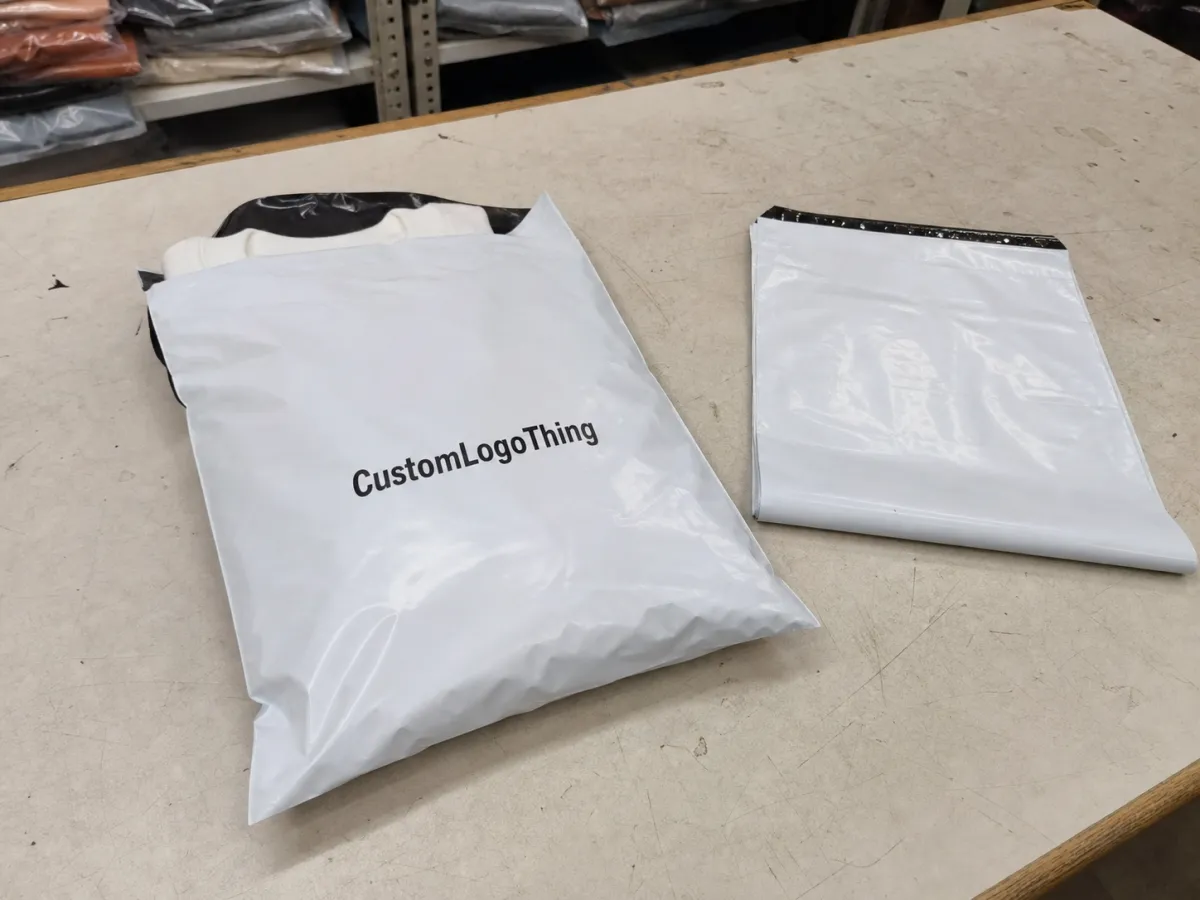
The most common mistake is sizing the mailer to the garment flat instead of the folded, bagged, and sealed item. That seems minor until the first bulk pack-out. A sweater that shifts around inside a loose poly mailer can crease, rub, and arrive looking more mid-market than boutique. A bag that is too tight can stress seams and make the adhesive flap harder to close cleanly, which slows down the fulfillment table and creates inconsistency from one packer to the next.
The right order plan starts with the product itself. A soft tee, a knit accessory, a subscription insert pack, and a boxed cosmetic item all behave differently inside the same film. One may need opacity more than strength. Another may need a wider opening. A third may need enough extra length to seal over a folded insert card without forcing the closure. The packaging spec should reflect the item, not the catalog page.
For a quote that is actually useful, write down:
- product dimensions after folding and any inner wrap
- monthly or annual volume, plus a reasonable growth estimate
- ship method, such as parcel, first-class, or warehouse fulfillment
- the mailer’s main job: protection, branding, or both
Once those details are clear, the quote shifts from guesswork to planning. That matters because a mailer is not just a bag. It is a small piece of logistics, a branding surface, and sometimes a shipping cost control tool. Treating it as one of those things only is how buyers get surprised later.
Mailer construction matters because different boutique assortments ask for different tradeoffs.
- Lightweight apparel: usually works with thinner films and a standard peel-and-seal closure.
- Soft accessories: often need more opacity and a tougher seam to reduce tearing during transit.
- Subscription inserts: benefit from consistent print placement and an opening that packs quickly.
- Boxed goods: may need a wider profile or a padded alternative if corners can puncture thin film.
The cheapest mailer is expensive if it raises postage, slows pack-out, or arrives with a weak seal.
Boutique buyer custom poly mailer bags wholesale order planning for mixed product lines
For many boutiques, the difficult part of Boutique Buyer Custom Poly Mailer bags wholesale order planning is not the artwork. It is the mix. One store may ship lightweight tops on Monday, jewelry pouches on Tuesday, and folded denim on Friday. That means one mailer style rarely solves everything, and the buyer has to decide where consistency matters most and where flexibility is worth the extra SKU.
Opaque white or black mailers usually feel cleaner and hide contents better. Tinted film can look more restrained if the brand wants less visual noise. Matte finishes often read as more premium than gloss, especially in apparel and wellness categories, while gloss can show scuffs faster and sometimes telegraph lower cost even when the film itself is decent. The point is not to pick the most stylish option on paper; it is to choose the surface that matches the brand and holds up in transit.
Adhesive strength deserves the same attention. A peel-and-seal closure that holds during shipping but opens without a fight gives the customer a better first touch. Too weak, and the seal can split or lift in the parcel stream. Too aggressive, and the mailer becomes annoying to open. Neither outcome helps repeat purchase behavior.
| Mailer option | Best fit | Typical spec | Approx. unit cost at 5,000 pcs |
|---|---|---|---|
| Standard opaque PE mailer | Lightweight tees, socks, flat accessories | 2.5-3 mil film, standard adhesive flap | $0.14-$0.24 |
| Premium matte mailer | Fashion brands focused on presentation | 3 mil film, matte finish, custom print | $0.18-$0.30 |
| Extra-thick tear-resistant mailer | Knits, heavier apparel, items with sharper edges | 4 mil film, reinforced seams | $0.22-$0.38 |
| High-coverage custom printed mailer | Strong package branding and retail presentation | Full-surface print, white ink, tighter color control | $0.20-$0.36 |
Those numbers move with size, freight, and print coverage, but they are useful as a planning frame. A 3 mil mailer is not just “a little thicker” than a 2.5 mil option; that difference can matter on seam strength, puncture resistance, and how the bag feels in hand. If the line includes items with zippers, hardware, or hard tags, the cheaper film can become the more expensive option after damage or repacking is counted.
For buyers who want to stay aligned with environmental reporting and waste-reduction guidance, the EPA’s packaging resources are a practical reference: EPA recycling and source reduction resources. For handling and transit testing, the International Safe Transit Association publishes standards that many shipping teams rely on: ISTA testing standards.
Size, thickness, and print specs that decide performance
The spec sheet should be simple enough that a production team can use it without filling gaps by guesswork. Start with finished width, usable length, film gauge or mil, seam construction, flap width, and print safe area. If a supplier only asks for a size, that is not enough detail. A mailer labeled 10 x 13 inches can behave very differently depending on seam allowance, closure placement, and whether the dimensions refer to the flat bag or the usable interior.
Tolerance matters more than many boutique buyers realize. A variation of even a quarter inch can change how easily a folded blouse slides in, how the flap lines up, and how the bag stacks in a shipping cart or on a retail shelf. If the same mailer needs to support both fulfillment and retail packaging, consistency matters as much as color. A tidy-looking outer bag that slows pack-out is not a good trade.
Print planning deserves the same discipline. Decide whether the artwork should sit centered on the front panel, wrap across both sides, or leave a quiet border around the edges for a more restrained look. For full-color artwork, confirm whether the printer needs white ink underlay, and ask how many colors fit within the quoted price tier. Thin logos and fine lines are usually the first details to disappear when artwork is rushed into a proof without enough safe area.
Useful checklist for the proof stage:
- confirm exact outer dimensions, not just the marketing size
- verify whether the mailer is measured flat or finished
- set print placement against the actual folded product
- note any tolerance range in writing
- lock the ink colors using a reference code or approved visual sample
A practical rule helps narrow the decision quickly: if the bag must fit several SKUs, size it for the largest regular item and test the smallest one for excessive void space. That shows whether one mailer can cover the line or whether the product mix really calls for two sizes. Small businesses often try to simplify too early, then discover that “one size fits all” turns into wasted film or awkward presentation.
Pricing, MOQ, and unit cost drivers for wholesale orders
In boutique buyer Custom Poly Mailer bags wholesale order planning, price rarely moves because of one factor alone. It is usually a combination of size, film weight, print count, and whether the construction is stock-based or fully custom. A larger bag uses more resin. More colors need more setup. A specialty finish adds labor. Custom dimensions can create their own tooling or setup costs. The quote often looks simple on the surface and complicated underneath for that reason.
MOQ should be treated as a planning tool, not just a hurdle. A lower minimum reduces risk for a new collection or seasonal launch. A higher quantity band usually lowers unit cost and makes reorders cleaner. If a bag will be used repeatedly, it often makes more sense to buy enough for the first production cycle and part of the next one instead of placing a stream of tiny urgent orders that keep freight and admin costs high.
Watch the landed cost, not just the quoted unit price. Setup charges, proof fees, freight, and import handling can change the real cost materially. On a 5,000-piece order, a difference of $0.03 per bag is $150. On a 15,000-piece run, that same gap is $450. That is enough to affect margin on lower-ticket products, especially in categories where packaging is not a tiny part of the total order value.
A buyer should ask three questions before approving a quote:
- What is included in the quoted price?
- Are plate charges, proofing, or freight billed separately?
- What price breaks appear at the next quantity tier?
If the mailer is only one piece of a larger packaging system, compare the quote against other Custom Packaging Products and decide where the brand needs premium treatment most. A boutique does not need every outer package to be expensive. It needs the right outer package to protect margin and presentation at the same time.
Process and lead time: from artwork approval to shipment
The production path is usually straightforward, but every step depends on the one before it. A solid order starts with the request for quote, then size confirmation or a dieline, then artwork prep, then a digital proof. If the bag requires a physical sample, that comes next. Only after approval does production start. Inspection and shipment finish the cycle. Skipping one of those steps usually costs more time than doing it carefully the first time.
Lead time expands in predictable places. Late artwork approval is one. Color correction is another. Seasonal factory load can add days or weeks. Shipping changes can have the biggest impact of all, especially if a buyer switches from sea freight to air freight after inventory is already committed. None of that is unusual; it just needs to be planned for before the purchase order is written.
If the launch date is fixed, build in buffer time. For many custom runs, 12 to 15 business days after proof approval is a realistic production window for a standard order, while more complex print or size requests may need longer. Freight then adds its own clock on top. That is why reorders should be placed before the last carton is opened, not after the stock room starts to feel thin.
Ask the supplier to confirm:
- proof approval cutoff date
- production start date
- expected inspection window
- shipping method and transit time
- what happens if artwork changes after approval
Good timeline planning is not pessimism. It is the simplest way to keep packaging from becoming the reason a product launch slips.
Samples, proofing, and quality checks before production begins
Never approve a run on artwork alone. A sample should be checked with an actual product inside it. Look at the insert feel, the seal, the print alignment, and whether the final look matches the presentation level the brand expects. A mailer can look correct on screen and still fail in hand because the flap sits too short, the film feels too thin, or the logo lands lower than intended once the product is folded and inserted.
A few simple tests catch most problems early. Open and close the adhesive several times. Drop the packed bag from a normal handling height. Rub the printed surface lightly to check abrasion. If the fulfillment team handles volume, ask them to pack a short pilot run and note where the bag slows the line. These checks are not laboratory testing, but they reflect real shipping conditions better than a mockup does.
For tighter control, lock the approved sample, artwork file, and spec sheet into writing before production starts. That creates a reference for reorder consistency and helps prevent quiet changes later. It also matters for team handoff: a new buyer can see exactly what was approved instead of relying on memory or a string of old emails.
Good proofing usually answers five questions:
- Does the product fit without force?
- Does the flap seal cleanly the first time?
- Is the logo placed where the customer sees it first?
- Is the color close enough to brand standards?
- Does the finish match the expected package branding experience?
If the answer to any of those is no, the fix belongs in the spec stage, not after production. Small changes in flap length or film thickness are far easier to absorb before the run starts than after several thousand pieces have already been printed.
What separates a dependable supplier from a cheap quote
A low quote is useful only if the supplier can repeat the result. That is where many first orders go wrong. The quote looks attractive, but communication slows down, the proof changes twice, or the next reorder does not match the first run. The real cost appears later in time and rework, not only in dollars.
Dependable suppliers usually do a few things well. They respond quickly. They explain artwork limits clearly. They keep the approved spec on file. They are willing to note size, color, and film details in writing. They also understand that boutique buyers often work in seasonal cycles, so they can help organize multiple sizes or artwork versions without confusion. That kind of operational memory is worth real money on repeat orders.
It also matters because boutique packaging is rarely one-size-fits-all. A brand may need a small run for a capsule release, a second run for core inventory, and a third run for holiday shipping. A supplier that handles those changes cleanly protects both margin and brand consistency. One that only knows how to quote a single line item often creates headaches later, especially when a reorder needs to match a previous batch exactly.
Ask direct questions before you commit:
- Will the supplier archive the approved file and reference sample?
- Can they hold the same build on a reorder?
- How do they handle color consistency from run to run?
- What support is available if a print detail needs adjustment?
If you want to compare packaging partners more broadly, start with the structure of our Custom Packaging Products range and then narrow the conversation to the exact mailer spec that fits your fulfillment setup. The best partner does not just sell bags; it helps keep the packaging program stable enough that reorders do not turn into small emergencies.
Next steps to lock your wholesale order plan
At this point, the order should be more than an idea. Turn it into a one-page plan. Include product dimensions, target quantity bands, print colors, delivery date, and the minimum acceptable size range for each SKU. That document gives the supplier something concrete to quote against and gives your team a record to use for reorders later.
Then do one practical thing: gather a real product sample and request a proof against that sample, not against a flat measurement alone. The difference between those two tests is often the difference between a mailer that looks fine on paper and one that actually supports the brand in transit. For boutique buyer Custom Poly Mailer Bags wholesale order planning, that step saves more rework than almost anything else.
Finally, set a reorder trigger now. Decide the inventory threshold, the backup quantity tier, and the point at which artwork or spec changes freeze. If the goal is to keep shipping steady, repeatable, and visually consistent, the best time to protect the next run is before the current run begins. That sounds obvious, but in practice many packaging problems are simply timing problems disguised as design problems.
For buyers who want a clean starting point, use the current Wholesale Programs as the baseline, compare mailer styles in Custom Poly Mailers, and keep the full packaging stack aligned with the brand presentation you actually ship. A good order plan does not need drama. It needs measurable choices, a realistic timeline, and enough detail that the next reorder is easier than the first.
FAQ
How do I choose the right custom poly mailer size for boutique apparel?
Measure the folded product with packaging added, not just the garment flat. Leave enough room for an easy insert and a clean seal without forcing the seam, because a tight fit can strain the closure and a bag that is too large can increase movement in transit.
What MOQ should boutique buyers expect for custom poly mailer bags wholesale?
MOQ varies by size, print complexity, and whether the bag is stock-based or fully custom. Higher quantities usually lower unit cost, so it helps to plan order bands around reorder speed instead of treating the minimum as the target.
What usually extends custom poly mailer lead time?
Late artwork approvals and color changes are the most common delays. Factory scheduling and shipping method changes can add more time than the production run itself, especially during seasonal demand spikes.
Can I reorder the same poly mailer design without starting from scratch?
Yes, if the supplier keeps the approved artwork, size spec, and sample reference on file. Ask for the exact previous version before reordering so the next run matches the first.
What should I include in a quote request for wholesale order planning?
Include product dimensions, bag size target, quantity range, print colors, and delivery deadline. Add usage details like apparel type, shipment method, and whether the bag must support retail presentation so the quote reflects real performance needs.

