If you are comparing event kits, employee welcome packs, or apparel gifts, the corporate gifting Custom Poly Mailer bags factory quote checklist is the fastest way to turn vague pricing into something you can actually compare. A poly mailer is rarely the most expensive part of the program. Freight, setup, and last-minute spec changes usually do more damage than the bag itself.
That is the reason buyers keep returning to Custom Poly Mailers for branded packaging. They reduce dimensional weight, pack quickly, and give a clean presentation without the labor of building boxes for every shipment. The real decision is not whether the bag looks attractive in a mockup. It is whether the film, print, closure, and lead time fit the item and the route it has to survive.
For light corporate gifts, a well-specified mailer can do three jobs at once: protect the contents, keep the shipment efficient, and make the unboxing feel deliberate rather than improvised. That combination is hard to beat for soft goods, folded apparel, notebooks, scarves, and compact promotional kits. Once the contents become brittle, bulky, or easily crushed, the math changes and a box can regain the advantage.
Buyer test: if the mailer lowers freight, speeds pack-out, and still arrives looking tidy, it belongs on the shortlist. If it only wins on appearance, the spec is not ready.
Corporate Gifting Custom Poly Mailer Bags: Where They Win
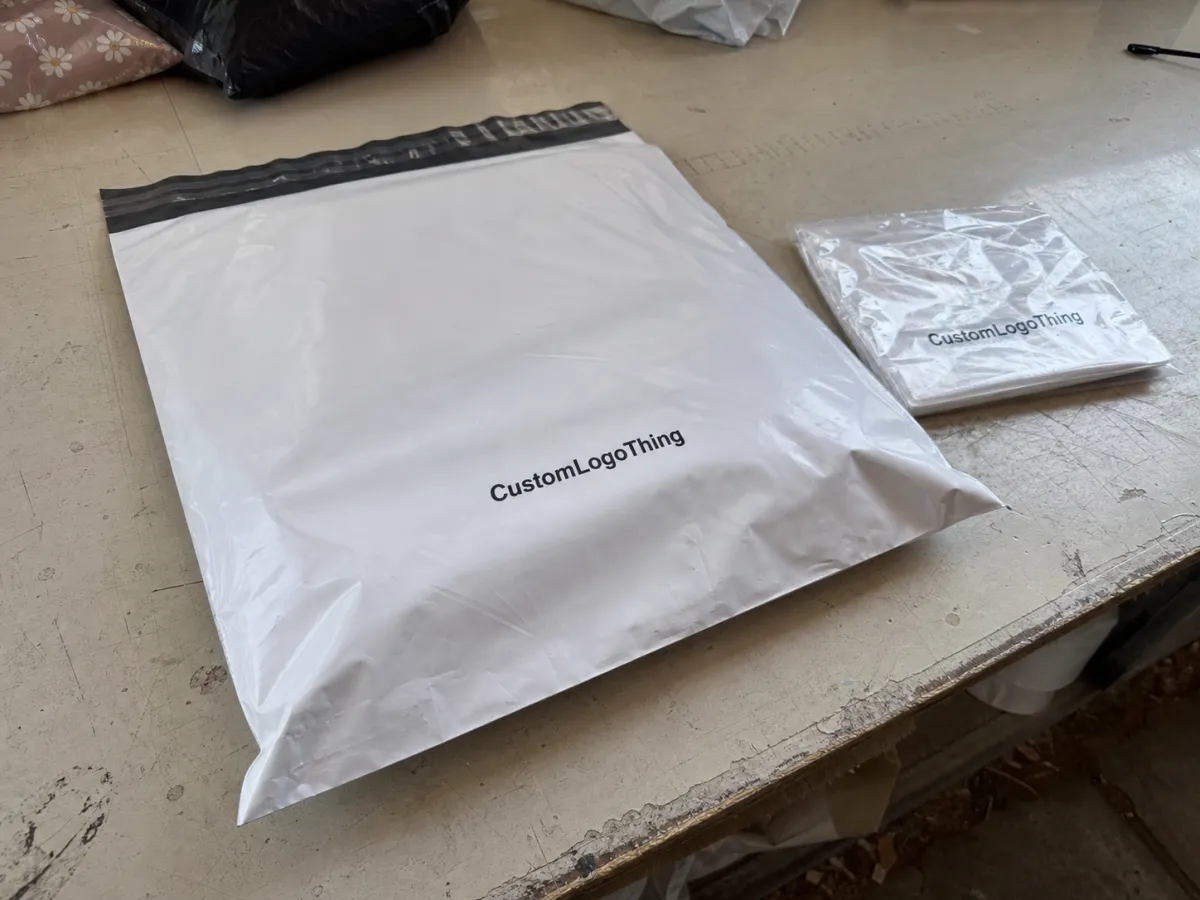
Poly mailers fit corporate gifting programs because the format is efficient, not because it is fashionable. A folded tee, a fleece hoodie, a soft accessory, or a slim kit can move in a lightweight bag that does not add much to shipping cost. That matters more than many teams expect. On a high-volume run, even small reductions in carton size and pack time can change the economics enough to justify the switch.
They also simplify fulfillment. A poly mailer closes in seconds, stacks neatly, and avoids the extra motion of assembling rigid packaging. That is useful for recurring shipments, seasonal drops, and event mailings where labor adds up fast. A box may still be better for premium electronics, glass, or fragile branded items, but for apparel-heavy gifting, the mailer is often the more practical tool.
There is a quieter advantage as well: the brand presentation stays consistent. The bag arrives with the logo visible, the opening controlled, and the contents concealed from warehouse handling. That consistency helps when a program ships in waves, because each shipment looks intentional even if the fulfillment team is moving quickly.
The format is not universal. If the product has hard edges, breakable pieces, or a shape that shifts under pressure, a poly mailer can create more risk than it saves. The best packaging decisions start with the product and the route, then work backward to the cheapest format that still protects the contents. That is the kind of tradeoff a useful quote checklist should expose.
Material and Print Options That Shape the Unboxing
Film choice drives most of the cost and a fair amount of the performance. Co-extruded film is the standard starting point because it balances opacity, puncture resistance, and price. Many corporate gifting runs use a 2.5 to 3 mil build. That range is usually enough for folded apparel and slim kits without adding unnecessary stiffness. Heavier contents, rougher routes, or more demanding handling can push the spec to 3.5 mil or higher.
Recycled-content film is a common request, but it usually changes both the look and the pricing. The surface can appear slightly different from virgin film, color consistency may vary more, and supply options can tighten. Buyers should ask for documentation if the sustainability claim will appear on packaging or in a procurement record. A vague “eco-friendly” description is not enough for a serious quote review.
Color choices affect the unboxing as much as the logo does. White film feels clean and bright. Black film hides the contents and tends to read as more private and premium. Custom film color can be powerful for brand consistency, but it often increases minimums and narrows the number of factories that can produce it reliably. If the brand demands a specific shade, the quote should include color matching expectations, not just a generic “custom color” line.
Closure style deserves the same attention. Standard peel-and-seal adhesive works for most corporate gifts. A tamper-evident strip gives the receiver a clear sign that the package has not been opened. Dual-seal closures make sense when the recipient may reuse the bag or when returns are part of the workflow. The closure can change pack speed, opening behavior, and perceived quality in one step, so it should never be treated as a minor detail.
Print method determines how sharp the branding looks and how much setup the factory needs. Single-color flexographic print remains the most economical route for logos, short text, and repeat marks. Multi-color print adds depth and polish, but it also brings plate charges, longer proofing, and higher minimums. Fine type, gradients, and tightly registered artwork need extra scrutiny. If the art depends on white ink or underprint to stay visible on dark film, that requirement needs to be stated before the quote is issued.
Finish matters too, though buyers often treat it as a cosmetic afterthought. Matte film reduces glare and can feel more restrained. Gloss creates sharper contrast and often photographs better. Interior blackout layers help hide the contents, which is useful for employee gifts and client kits that should not be visible through the bag. Those choices influence how the package reads in hand, not just how it looks in a rendering.
| Build option | Typical MOQ | Typical unit price impact | Best use |
|---|---|---|---|
| Stock co-ex, one-color print | 3,000-5,000 | $0.11-$0.18 | Simple apparel gifts and recurring shipments |
| Recycled-content film, one- or two-color print | 5,000-10,000 | +10%-20% | Sustainability-led branded packaging |
| Custom color film, multi-color print | 10,000+ | $0.18-$0.35+ | High-visibility package branding |
| Dual-seal or tamper-evident bag | 5,000+ | + $0.02-$0.05 | Returns, secondary use, or added security |
Size, Thickness, and Spec Checks Before You Quote
Guessing the size is the fastest way to get a quote that looks good and performs badly. Measure the folded gift or apparel piece first, then add room for seams, inserts, and the way the item actually gets packed on the line. A mailer that seems correct on paper can still pinch at the opening if the product has a stiff fold, a collar, or a bulky edge. The factory needs the outer size and the usable interior size, because those are not the same thing.
Thickness needs the same discipline. A thinner gauge can lower unit cost, but it can also raise tear risk if the pack is heavy or the route is rough. For soft corporate gifts, 2.5 to 3 mil often lands in the practical middle. For denser kits, a thicker film may be the safer choice. The goal is not to buy the heaviest material available. It is to buy the lightest film that still protects the shipment and keeps the bag easy to handle.
Before sending the RFQ, list the non-negotiables. Outer dimensions. Usable interior space. Seam width. Adhesive type. Print-safe area. If the bag must carry a barcode, variable data field, or regulatory text, that should be marked clearly. If the artwork wraps near the edge, the factory needs to know which zones sit too close to the seal or machine grip area to print cleanly. Spec drift creates avoidable disputes, and it usually starts with one missing detail.
There are also fit issues that show up only after the bag reaches the packing line. A narrow opening slows down packers. A seal that overlaps the logo makes the piece feel careless. An opaque film that is technically acceptable on paper may still show the contents under bright warehouse light. A good quote should account for real operating conditions, not just the artwork file.
A useful way to reduce surprises is to test the bag with the actual folded item before approving mass production. If the program includes inserts, add them to the test. If the mailer has to survive parcel handling, ask for performance references or test methods that resemble the route the package will take. The more realistic the sample, the less likely the production order is to drift away from the intended result.
| Spec item | Why it matters | Buyer check |
|---|---|---|
| Outer dimension | Controls fit and freight size | Measure the packed item, not only the flat product |
| Usable interior size | Shows real pack space after seams | Confirm the factory is not quoting only outer measurements |
| Film thickness | Affects durability and stiffness | Match gauge to route and weight, not to habit |
| Seal and adhesive | Changes pack speed and tamper behavior | Request the closure type in writing |
| Print-safe area | Prevents logo loss near the edges | Mark keep-out zones on the artwork brief |
Cost, Pricing, MOQ, and Quote Variables
Factories usually price poly mailers by a small cluster of variables: size, gauge, print colors, resin type, closure, packing method, and shipping terms. The headline number can look simple, but one change in the spec can move the cost more than a buyer expects. A stock white bag with one-color print can remain very economical. Add custom film color, white underprint, or extra print passes, and the number rises quickly.
MOQ follows the same logic. Lower volumes work best with stock film and simpler artwork. Once the order moves into custom color or more complex print, the factory usually needs a larger run to spread setup costs. If the program repeats seasonally, ask whether the same plates and tooling can be reused on reorders. That question matters because the first order and the reorder do not always behave the same way on paper.
Tiered pricing is much more useful than a single quote. A 3,000-piece price, a 5,000-piece price, and a 10,000-piece price reveal where the breakpoints actually sit. Sometimes the jump from one tier to the next is small enough that a slightly larger order gives a better total result. Sometimes the extra inventory is not worth it. The point is to see the curve, not just the first number.
Hidden charges deserve close attention. Plate fees. Artwork revisions. Sample shipping. Rush production. Export packing. Special carton labels. None of these is unusual on its own, but together they can distort the comparison between suppliers. Freight often changes the final landed cost more than the bag unit price does, especially on smaller orders. A quote that looks cheap at the factory gate can become the most expensive option once packing and delivery are included.
Comparisons only make sense when the specs match exactly. Same dimensions. Same gauge. Same print count. Same closure. Same packing format. If one supplier quotes a 3 mil bag and another quotes 2.5 mil, the lower price is not a meaningful comparison. The corporate gifting Custom Poly Mailer Bags factory quote checklist exists to keep those differences visible.
| Quote item | Why it changes the number | Buyer check |
|---|---|---|
| Plate or setup fee | Offsets print preparation and color setup | Ask whether it repeats on reorders |
| Sample and proof cost | Covers artwork prep, blank samples, or pre-production runs | Confirm if it is credited back against production |
| Freight and packing | Can outweigh the bag unit price on smaller orders | Request Incoterms or a delivered estimate |
| Rush production | Compresses scheduling and material allocation | Ask what changes in lead time and cost |
Production Steps, Timeline, and Approval Gates
A clean order usually follows the same path: RFQ, artwork review, proof approval, sample sign-off, production, inspection, and final packing. The sequence is predictable. The risk sits in the approval gates. Once a proof is approved, the factory generally treats the dimensions, artwork placement, and color targets as fixed. If the buyer is still debating the layout at that point, the schedule starts to slip.
Lead time depends on complexity. A simple one-color bag with stock film often moves faster than a full-coverage, multi-color order with a custom color background. Recycled-content film, oversized formats, and multiple SKUs add time as well. For straightforward runs, a planning baseline of roughly 12 to 15 business days after proof approval is reasonable. Custom material sourcing or larger volumes can extend that window. It is a baseline, not a promise.
Proof review should cover more than the logo. Check the dieline, the seal area, ink density, barcode position, carton label requirements, and the ship date. Decide who has final sign-off before the proof arrives. One decision-maker keeps the process moving. Five people forwarding comments at different times do the opposite. If the shipment has a fixed event date, build a buffer for transit, customs, and internal receiving time before the factory's stated ship date.
Most schedule problems do not come from the press room. They come from missing information. If the supplier does not know which size is final, whether the artwork is vector or raster, or which side should carry the logo, the order pauses. The faster programs are usually the ones with the fewest assumptions. That is true whether the pack uses a poly mailer, a rigid carton, or a mixed set of branded packaging components.
For teams balancing multiple gift formats, the same lesson keeps repeating: the more complete the brief, the fewer delays in production. A bag that ships on time usually had a clear size, a clear print plan, and a clear approval chain before the first sample was ever made.
Factory Controls and Next Steps for a Clean RFQ
A reliable factory should be able to explain how it controls quality, not just how it sets a price. Ask for the material specification, print tolerance notes, inspection method, packing standard, and export packing details. If the supplier cannot describe how it handles color consistency, seam strength, or defect thresholds, that is a sign to slow down. Good factories know their tolerances. Better factories can explain them without hiding behind jargon.
Compare suppliers on evidence. Do the samples match the quoted spec? Do the details stay consistent across emails? Does the factory answer technical questions the same way the second time as the first? A quote that shifts size, gauge, or closure after the opening call is not a stable quote. The goal is not simply to find the lowest number. It is to find the version of the order that can be repeated without surprise.
Useful quality checks for poly mailers are practical, not theatrical. Look at seal adhesion. Check print registration. Rub the print lightly to see whether ink sheds. Confirm the film gauge with a spec sheet or measurement report if the order is sensitive. For shipping programs, ask how the factory counts units, labels cartons, and handles overages or shortages. Small errors in count or packing become large problems once the shipment is already in transit.
Before issuing the RFQ, gather the dimensions, artwork files, quantity tiers, target lead time, ship-to region, and budget range. If inserts, outer cartons, or labels are part of the same campaign, state that in the same brief so the supplier can quote the pack as a system rather than as disconnected pieces. That approach is slower to assemble on the buyer side, but it produces cleaner comparisons and fewer gaps in the final order.
Quick rule: a strong quote shows the same spec, the same print method, the same packing format, and the same timeline across every supplier. If one of those changes, the price comparison stops being useful.
Use the Corporate Gifting Custom Poly Mailer bags factory quote checklist to line up each supplier against the same details, then compare landed cost only after the spec is fixed. That is the cleanest way to avoid rework, keep the schedule intact, and end up with packaging that looks like a deliberate brand choice rather than a rushed compromise.
What MOQ should I expect for corporate gifting custom poly mailer bags?
MOQ is usually lower when you choose stock film and one-color print, then rises with custom color, extra print passes, or specialty closures. A practical starting range is 3,000-5,000 pieces for simpler runs, while custom-color programs often begin at 10,000 or more. Ask for tiered pricing so you can see where the cost drops.
How do I compare factory quotes for custom poly mailer bags for corporate gifting?
Start with the exact spec: dimensions, film thickness, closure type, print method, and packing format. Then compare landed cost, not just the unit price, because freight, setup fees, sample charges, and export packing can change the final number. If a quote leaves those items vague, request a revised breakdown before deciding.
What artwork files do you need for a corporate gift poly mailer bag quote?
Vector files are best, along with Pantone or CMYK references if color matching matters. Include logo placement, safe zones, barcode locations, and any text that must remain readable after sealing. If no dieline exists, send the bag dimensions first so the factory can build the layout from the spec.
Can I get samples before placing a bulk order for custom poly mailer bags?
Yes, and it is usually the safer route whenever the fit, print placement, or seal strength matters. Use the sample with the actual gift inside, then check opening width, closure strength, and appearance under normal warehouse lighting. Confirm whether sample charges are refundable against production, because factory policies differ.
What affects lead time for corporate gifting custom poly mailer bags?
Lead time depends on artwork approval, print complexity, film sourcing, order size, and whether the factory already stocks the material you need. Simple orders can often move in about two weeks after proof approval, while custom film or larger programs usually take longer. Keep proof time separate from production time so the schedule reflects reality.

