Serious buyers do not lose money on the hat body. They lose it on vague artwork, oversized logos, and a placement choice that looked fine on a screen but fights the knit in real life. That is the part people keep learning the hard way. Boutique embroidered beanies Bulk Order Planning should start with the decoration spec, not the color swatch. Lock the details early and the quote gets cleaner, the proof gets faster, and the final goods look intentional instead of rushed.
For retail drops, employee kits, seasonal merch, client gifts, and fulfillment runs, boutique beanies can support a premium price if the decoration stays tight and repeatable. Simple embroidery usually beats clever ideas that turn into production headaches. Buyers tend to get better unit economics, fewer QC issues, and less back-and-forth by deciding on quantity, color, decoration method, and delivery window before asking for pricing. That is the real order of operations. Everything else is noise.
There is also a material reality that gets ignored too often. Most bulk beanies are built from acrylic or acrylic-wool blends because they hold shape, take embroidery reasonably well, and keep price points sane. A wool-heavy beanie feels warmer and more premium, but it can also raise cost and make sampling more important. Recycled yarns are a nice option if the brand cares about sustainability, but they are not magic. They still need a clear spec and a supplier who can keep dye lots under control.
Boutique Embroidered Beanies Bulk Order Planning: What to Lock In First
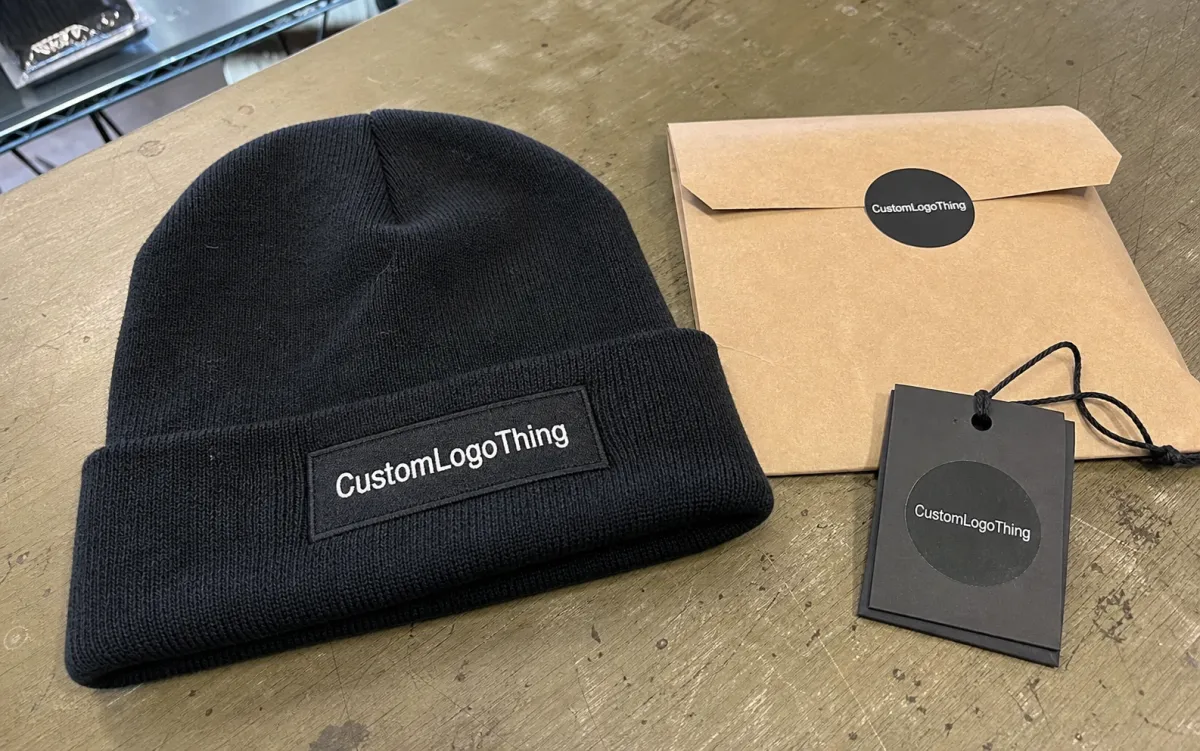
Most beanie problems start with three things: logo size, stitch density, and placement on a stretchy knit. If the artwork is too small, the stitch structure fills in and the logo turns muddy. If it is too dense, the knit pulls and the beanie stops looking boutique. If placement wanders even half an inch, the run looks inconsistent across the whole order. None of this is mysterious. It is just what happens when a buyer tries to quote a decorated knit product without a real spec.
Bulk buying only makes sense if the order supports a real use case. The usual ones are simple:
- Retail drops that need a clean premium feel and repeatable sizing.
- Employee kits where one style has to fit a mixed team without drama.
- Event merch where the item needs to photograph well and survive long wear.
- Client gifts that should feel sharper than a throwaway promo cap.
- Seasonal fulfillment runs where stock has to land before the weather turns.
The planning goal is blunt: lock quantity, color, decoration method, and delivery window before the quote starts wobbling. If you send art first and think about quantities later, you invite multiple revisions and lose price clarity. Clean input creates clean numbers. Messy input creates guesses, and guesses cost money.
"If the beanie needs a redesign to fit the logo, the logo was the problem, not the beanie."
That is the part many buyers miss. Boutique embroidered Beanies Bulk Order Planning is not about chasing novelty. It is about choosing a repeatable decoration path that can survive knit texture, winter wear, and a production line that does not care about your mood board. Production likes boring. Boring is efficient.
A practical buyer also thinks about stock depth and color availability. Black, navy, heather gray, and ivory usually move fastest because mills and decorators keep them close at hand. Trend colors can look great in a pitch deck and annoying on a production calendar. If a seasonal color is critical, ask early whether the yarn is stocked, dyed to order, or pulled from a limited lot. Those three paths have very different timelines.
Choose the Beanie Body That Fits Your Brand
The base style drives more of the outcome than most people expect. A cuffed knit beanie gives you a defined decoration zone and a classic retail look. A slouch fit feels more casual and can hide a lot of useful space in the crown, but the extra fabric makes placement more sensitive. Rib knit bodies usually stretch well and hold shape, while pom beanies add personality and usually limit where the logo can sit without competing with the top detail. Heavier cold-weather styles feel more premium, but they also cost more and may be overkill if the item is meant to move fast.
Construction matters too. A 1x1 rib usually gives a tighter, cleaner look. A 2x2 rib can feel thicker and more forgiving, especially on a cuffed body. Most bulk programs live in the middle of the road: enough structure to keep embroidery readable, enough stretch for comfort, enough weight to avoid looking flimsy. That balance matters more than chasing the trendiest silhouette.
One base style usually wins in bulk. Fewer SKUs mean better unit cost, easier QC, and less risk that one color batch looks different from the next. The buyer who splits an order into five colors, two fits, and three logo placements is not ordering one program anymore. They are creating several small jobs and paying for the privilege.
| Beanie Body | Best Use | Decoration Fit | Typical Cost Tier |
|---|---|---|---|
| Cuffed knit | Retail, employee kits, clean logo programs | Best for front embroidery and woven labels | Low to mid |
| Slouch fit | Fashion-forward drops, casual merch | Good for larger art, less ideal for tiny text | Mid |
| Rib knit | All-purpose winter programs | Good stitch hold, dependable structure | Low to mid |
| Pom beanie | Team merch, seasonal promos | Logo placement is more limited | Mid to high |
| Heavy gauge cold-weather style | Premium retail, colder markets | Supports cleaner stitch detail | High |
Direct embroidery is usually the best move for simple logos on a knit surface. A woven patch works better if the mark has small type, thin rules, or a lot of contrast. Leather patch and appliqued label options can look good too, but they are not free. They usually add cost, extra setup, or both. If the artwork is detailed and the beanie is a fashion item, a patch can protect legibility better than forcing embroidery to do a job it is not built for.
Thread choice affects the finish more than buyers expect. Standard polyester embroidery thread is the workhorse because it holds color, handles wear, and does not get dramatic about winter conditions. Rayon can look slightly softer and shinier, but it is less common in rough-use programs. Matte thread can be a good fit for understated retail pieces. Metallic thread looks flashy and behaves like metallic thread, which is to say it is fussy, can break more easily, and should be used because the design needs it, not because someone wants it to “pop.”
For packaging-minded buyers, the choice also affects how the product presents on a shelf or in a mailer. A simple cuffed beanie with one sharp embroidered mark reads more premium than a crowded piece that tries too hard. That is just reality.
Spec Sheet Details That Prevent Costly Revisions
A good spec sheet keeps the job from drifting. Start with the logo dimensions in inches or millimeters, not just a vague note like “small front mark.” The useful fields are logo width, logo height, cuff zone, distance from edge, and the usable stitch field on the knit. On a cuffed beanie, the decoration zone may only allow a logo around 2.5 to 3.5 inches wide before the shape starts to look forced. If you ignore that limit, the beanie will tell on you.
Artwork should be vector when possible. Clean line work matters. So does stitch discipline. Four or five thread colors are usually easier to manage than a design built from tiny gradients and hairline details that disappear into yarn texture. Tiny text is another problem. If a font size is too small to read at arm’s length, it is usually too small for knit embroidery too.
The type of artwork also changes the approval path. A simple left-chest style logo is one thing. A crest with layered elements, thin borders, and copy wrapping around a badge is another. The second one can still work, but the embroidery digitizing has to be more deliberate. That means more setup time and more chances for a small error to show up in the proof. Buyers who assume every logo behaves the same tend to get surprised. There is nothing equal about a clean mark and a design that depends on delicate line work.
Branding decisions affect quote and timing more than buyers expect. Front-only embroidery keeps the order efficient. Side placement adds setup and can complicate packing. Woven labels, private labeling, and retail hangtags all have their place, but each one adds a separate decision point. If the goal is a clean bulk run, keep the first pass simple. Fancy can come later.
A solid proofing step should include four things:
- Mockup review to confirm placement and scale.
- Stitch count check so the design does not overbuild the surface.
- Thread color confirmation against the brand palette.
- Sample or strike-off approval if the order is detailed or the customer is picky.
That last one matters. A sample costs less than a bulk rework. Not even close. In bulk embroidery, the cost of being wrong grows fast because every unit repeats the same mistake. A buyer who approves a sample with a clear eye saves time, money, and a lot of unnecessary email chains.
QC on beanies should be more than “does it look okay from a distance.” A proper inspection checks stitch alignment, thread tension, puckering, loose ends, color consistency, and whether the logo sits level on the cuff. If the embroidery distorts the knit, the run may still technically be finished, but it will not look premium. That is a lousy place to land after paying for a custom order.
Pricing, MOQ, and Unit Cost Breakpoints
Pricing for boutique embroidered Beanies Bulk Order Planning usually comes down to five drivers: hat body, stitch count, thread colors, decoration method, and packaging requirements. Basic cuffed knit styles with one simple embroidery hit the lower end. Add a patch, custom labeling, or a more complex body and the number climbs. That is normal. The trick is knowing which cost is buying value and which cost is just noise.
MOQ is not a moral issue. It is a production math issue. One style and one color usually price best because setup gets spread across a larger, more consistent run. Mix too many colors or logo variants and the job turns into several smaller jobs with higher unit cost. The same thing happens when buyers ask for multiple packouts, split shipping, or separate branding versions inside one order.
| Order Size | Common Price Behavior | What Usually Changes | Buyer Takeaway |
|---|---|---|---|
| 100 pieces | Highest unit cost | Setup and digitizing have less volume to absorb | Good for testing, not best for margin |
| 250 pieces | Better balance | Setup spreads more efficiently | Often the sweet spot for small retail runs |
| 500 pieces | Lower per-unit cost | Production tier starts to reward volume | Useful for seasonal launches and team programs |
Typical hidden add-ons show up in the same few places: digitizing, extra samples, rush fees, split shipments, private labels, and carton-level packaging changes. Digitizing is usually not huge, but it is not zero. Rush fees can be trivial or annoying depending on the schedule. Split shipments can wipe out savings if the order has to be broken apart. Buyers who ask for “just one more small change” often discover that small changes are expensive in bulk embroidery.
There is a practical cost range most buyers can work from. For a basic embroidered cuff beanie in modest volume, wholesale pricing often lands somewhere around $4 to $9 per unit depending on yarn, stitch count, and decoration size. Add patches, custom labels, specialty yarns, or heavier construction and the range can move into the $7 to $14+ zone fast. That is not a guess meant to sound helpful. It is the reality of how the cost stack behaves once setup and materials enter the picture.
For reference, real packaging standards matter too. If beanies ship in retail cartons or custom mailers, ask about shipping test methods such as ISTA procedures. If the presentation includes paper hangtags or inserts, sustainable paper options should come from FSC-certified sources when brand policy calls for it. That is not a trend note. It is a practical way to keep the program defensible.
Price targets vary by decoration and quantity, but buyers usually make better decisions if they ask for tiered quotes at 100, 250, and 500 units. Then the cost curve is visible. Guessing is how teams overspend on the wrong quantity. So is pretending a fancy presentation does not have a line item attached.
Production Timeline and Approval Process
The usual workflow is straightforward: artwork intake, digitizing, mockup approval, sample or strike-off, bulk production, QC, packing, and shipment. The problem is that simple workflows still get delayed by slow approvals. Clean artwork moves fast. Confusing artwork does not. Simple logos with limited thread colors can often move through the process faster than detailed marks that need repeated cleanup or color correction.
For most orders, a realistic production window is often 10 to 15 business days after proof approval for straightforward runs, then longer if the order needs sampling, complex thread matching, or a heavy seasonal queue. Holiday demand stretches everything. So do last-minute changes. If the order needs to land before an event, build the buffer before you place it. Waiting until the calendar gets tight is how people end up paying for rush service and still sweating the delivery date.
Speed comes from discipline. One decision-maker is better than four people leaving comments. Final quantities should be final, not “final unless marketing changes the count.” The delivery address should be real, checked, and ready. A signed spec sheet should exist before production starts. That is not bureaucracy. It is what keeps a small run from becoming a mess.
There is also a packing angle. If the beanies are shipping retail-ready, confirm carton counts, bundle instructions, and label placement before the run begins. If the order is going into multiple locations, spell out the split plan early. A carrier label does not magically fix unclear instructions.
QC timing should be included in the schedule, not treated like an afterthought. A production line can finish embroidering quickly and still lose a day or two if the batch needs re-inspection, thread correction, or rebagging. Buyers tend to forget that “made” and “shipped” are different verbs. The calendar only cares about the second one.
One more practical note: if the client wants a premium finish, ask about carton quality, tissue, inserts, and whether the presentation needs to hold up to receiving and shelf display. That is especially useful for wholesale and direct-to-consumer hybrid programs. Better to solve the unglamorous parts before the goods are on a truck.
Common Order Mistakes That Trigger Requotes or Delays
The biggest avoidable error is simple: the logo is too detailed for a knit beanie. Thin lines, tiny text, and stacked copy often need simplification or a different decoration method. A buyer can love the artwork all day long. Production still has to make it work on yarn. If the design cannot survive the material, the order gets delayed or repriced. That is not a surprise. It is a consequence.
Another common mistake is over-SKUing the run. Too many colors, too many placements, and too many packaging versions turn one order into several small ones. Unit cost rises. QC gets slower. The team spends more time confirming each variant than selling the product. Use variation with purpose, not because someone on the team thinks the line “needs options.”
Packing mistakes are just as annoying. Missing carton instructions, unclear retail labeling, and no plan for multiple destinations can all create avoidable delays. The product may be finished, but finished is not the same as shipped. A clean shipping plan matters.
Material mismatches cause trouble too. A soft, loose-knit beanie may feel nicer on a hanger, but if the embroidery has nowhere stable to sit, the final result can pucker or drift. On the flip side, a very dense knit can hold detail better but may feel warmer and heavier than the buyer expected. Neither outcome is a disaster. Both are preventable if the sample gets checked by someone who knows what they are looking at.
Use this buyer checklist before you issue the purchase order:
- Style and body type confirmed.
- Color count final.
- Quantity by color approved.
- Logo file sent in vector format.
- Decoration placement approved with measurements.
- Packaging and labeling instructions confirmed.
- Delivery date and ship-to address locked.
Ask for a tiered quote, a mockup, a sample path, and a production calendar in the same reply. That gives the buyer one clean approval decision instead of four half-decisions spread across a week. It also makes reorder planning easier. Keep the spec sheet, keep the approved mockup, and the next run becomes much faster.
That is the actual value of boutique embroidered Beanies Bulk Order Planning: fewer surprises, better margin control, and a product that looks premium without being fussy. If the plan is tight, the order usually is too.
FAQ
What is the usual MOQ for boutique embroidered beanie bulk orders?
MOQ usually depends on one style and one color, because that keeps setup and production cleaner. Smaller test runs are possible, but the unit cost rises fast when you split colors, logos, or packaging. Ask for tiered pricing so you can see where the order becomes efficient instead of guessing.
How detailed can my logo be on embroidered beanies in bulk?
Simple logos with clean shapes and limited text work best on knit beanies. Tiny lettering, thin lines, and high-detail gradients usually need simplification or a different decoration method. A digitized mockup should show stitch limits before production starts, not after someone has already approved the wrong thing.
How long does bulk production for embroidered beanies usually take?
Simple orders often move in about 10 to 15 business days after proof approval. Sampling, color approval, and holiday demand can extend the schedule. The safest approach is to build buffer time into the plan so the order lands before the actual need date.
Can I mix beanie colors in one bulk embroidery order?
Yes, but too many colors can push the order into higher-cost tiers. Mixing colors is easiest when the logo, placement, and thread setup stay identical. Request pricing by color so the unit cost impact is obvious and nobody has to pretend it is not there.
Should I choose direct embroidery or a patch for boutique beanies?
Direct embroidery is clean and efficient for simple logos on a good knit surface. Patches work better when the logo is detailed, needs more contrast, or must read from farther away. The better choice depends on stitch detail, budget, and the premium feel you want the finished piece to have.
What beanie materials work best for bulk embroidery?
Acrylic and acrylic-wool blends are the safest bulk options because they hold shape, keep pricing manageable, and usually embroider cleanly. Heavier wool blends feel more premium, but they can raise cost and require a more careful sample review. Very loose knits are the riskiest because the embroidery can distort the surface.

