A winter promo can look cheap on paper and still turn into an expensive mess if the order lands late, the fit is wrong, or the decoration method does not hold up. That is why tea pom pom beanies Bulk Order Planning should start with the spec sheet, not the quote. The price matters. So do yarn, knit density, pom pom construction, and the actual lead time hiding behind the sales number.
Tea tones are popular because they sit in a calm middle ground. They are neutral without being dull. They work for retail, staff apparel, event merchandise, and seasonal giveaways because they do not fight the rest of the display. A tea-colored beanie can read more premium than a bright novelty color, especially when the knit is clean and the branding stays restrained.
The catch is simple: bulk orders do not forgive loose planning. A sample that feels fine in hand can still fail in production. A logo that looks sharp in a mockup can disappear once it hits a textured cuff. A cheap quote can become expensive the moment freight, sampling, and repackaging show up on the invoice.
From a buyer's perspective, this is a volume decision with a deadline attached. The goal is not just a lower unit cost. The goal is predictable inventory that sells, arrives on time, and reorders without surprises. That is harder than it sounds, which is exactly why the details matter.
Tea Pom Pom Beanies Bulk Order Planning: what actually moves the price
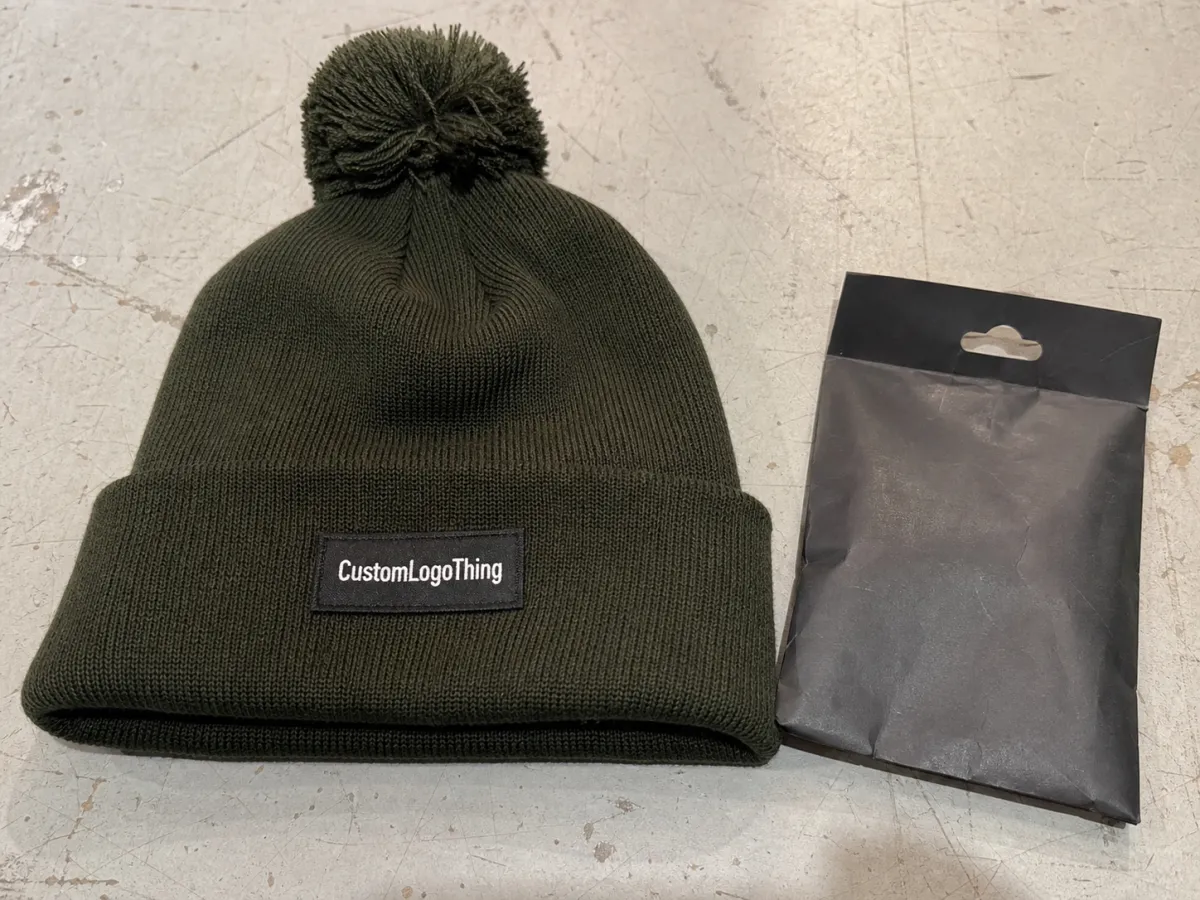
A beanie quote is really a stack of small choices. Yarn content. Knit gauge. Cuff style. Pom pom build. Decoration method. Packaging. Setup labor. If any one of those changes, the price moves. Sometimes only a little. Sometimes enough to break a margin plan.
Most of the cost pressure comes from labor, not raw material. A simple cuffed acrylic beanie with a woven patch is easy to scale. Add a dense embroidered logo, a fuller pom pom, custom labeling, or retail-ready packing, and the factory spends more time on each piece. That is why two hats that look similar on a screen can land in very different price bands.
Tea-colored Pom Pom Beanies also benefit from the fact that the color is easy to merchandise. Buyers like that. It feels less risky than a strong fashion color. The downside is that neutrality can hide flaws. If the stitch tension is uneven or the crown shaping is sloppy, a muted color will not distract from it. It will expose it.
The hidden cost is usually not the hat itself. It is the rework after a rushed approval, the color miss that forces a second sample, or the order that arrives in bulk polybags when the store team expected tagged units. Those mistakes are not dramatic. They are worse. They are the boring kind that eat time and budget.
"A low unit price is only useful if the order arrives usable."
For tea pom pom beanies Bulk Order Planning, ask for the full landed picture before comparing suppliers: product cost, setup, sample cost, freight, and rush charges if the schedule is tight. A headline unit price without those lines is not a comparison. It is a guess dressed up as one.
It also helps to keep the order spec disciplined from the start. When the construction, logo method, pack-out, and delivery destination are clear, the next reorder is easier to quote and easier to match. That matters for seasonal programs, where consistency is worth more than shaving a few cents off one run.
Select the right knit, cuff, and pom pom style before you quote
The build decides how the beanie feels and how it sells. Buyers often start with artwork, then try to force it onto a style that was never a good fit. That is backward. Start with the construction.
Cuffed acrylic is still the most practical bulk choice. It gives a clear decoration zone, keeps costs manageable, and usually produces the most predictable result. Slouchy styles look more relaxed, but they are harder to stack, harder to display cleanly, and less forgiving if the fit is off. Wool blends feel warmer and more premium, though they raise the unit cost quickly and can extend lead time if the yarn is not already available.
Acrylic remains the workhorse for most custom bulk beanies because it is stable, easy to knit, and cost-effective. Recycled yarn is useful when sustainability is part of the brief, but it is not automatically cheaper. It can be comparable to standard acrylic or slightly higher depending on yarn availability and dyeing needs. Wool blend options usually sit at the premium end because they carry better handfeel and warmth, but they also bring more cost sensitivity.
The pom pom deserves more attention than it usually gets. A sewn-on pom pom holds up better in transit than a loose attachment. A denser pom looks fuller on shelf and photographs better. A contrast pom creates more visual energy. A color-matched pom feels cleaner and more understated. None of those choices is universally better. They signal different things.
Decoration method matters just as much. Embroidery is common for cuffed beanies because it is durable and straightforward. A woven patch gives sharper detail, which helps when the logo has fine text or small elements. A sewn label can work better when the brand mark should stay subtle. Direct knit graphics can look strong on some styles, but they are not always the best choice on a pom pom beanie because the top already carries a lot of visual weight.
Sample early if the order is meaningful. Check stretch recovery, handfeel, seam finish, and how the pom pom is attached. Pull the cuff. Shake the beanie. Look at the underside of the logo. If a sample feels flimsy, production will not rescue it later. Bulk makes flaws louder, not smaller.
For buyers who need to line up labeling, carton counts, or mixed style programs, a working knowledge of shipping and packaging standards helps. If the goods will be handled heavily in transit, ISTA testing methods are a useful reference. If paper inserts or hangtags need certified sourcing, FSC paper is the cleanest standard to ask for.
Confirm sizing, decoration space, and color specs that prevent rework
Fit is where bulk orders quietly go wrong. A beanie can look balanced in a mockup and still feel shallow, too loose, or too tight in real wear. That is not a small issue. If the hat does not sit well, the buyer will hear about it from customers, store teams, or event staff.
For adult unisex styles, a common finished height runs around 8.5 to 9.5 inches, with a cuff in the 2.5 to 3 inch range. That is a practical starting point, not a rule. Yarn thickness, knit tension, and finishing all change the actual result. Youth sizing needs its own spec. Do not shrink an adult pattern and assume it will work.
Decoration placement should stay disciplined. The front cuff is the safest zone for embroidery or a patch because it gives the logo a flatter surface and keeps it readable. The crown is fine for select knit patterns, but it is a poor place to force dense branding if the pom pom already takes up the top of the silhouette. Too much decoration on a textured beanie usually looks busy, not premium.
Color is another place where expectations need a reality check. Pantone references help, but yarn is not paper. Tea tones can lean warm, cool, beige, taupe, or muted tan depending on the fiber blend and dye lot. If the brand needs a close match, ask for the nearest yarn reference and approve a physical swatch before the bulk run starts. A good supplier will tell you when exact matching is not realistic. That honesty is worth more than a confident promise.
Pack-out details deserve the same level of scrutiny. Some orders need individual polybags only. Others need hangtags, size stickers, carton labels, or retail inserts. If the shipment will go to stores, an event team, or a distribution center, the receiving instructions should be clear before production begins. Otherwise, the product may be right and the logistics may still fail.
In practice, tea pom pom Beanies Bulk Order Planning gets easier when four things are clear: who the hat is for, how it is decorated, how it is packed, and where it ships. Miss one of those and the quote gets fuzzy. Fuzzy quotes are how delays begin.
Understand cost, pricing, MOQ, and unit-cost breakpoints
This is the part buyers either manage well or regret later. MOQ, setup cost, and tiered pricing are tied together. Small runs almost always cost more per unit because the factory has to absorb the same setup and coordination across fewer pieces. Larger runs improve unit cost, but they also increase inventory exposure. More hats in the warehouse is not automatically a win.
| Order size | Typical unit range | Best fit | Tradeoff |
|---|---|---|---|
| 100-300 pcs | $5.50-$9.50 | Small launches, pilots, internal merch | Higher unit cost, faster testing |
| 500 pcs | $4.20-$7.80 | Retail trials, campus stores, regional promos | Better pricing, more cash tied up |
| 1,000+ pcs | $3.40-$6.50 | Seasonal programs, chain rollout, larger giveaways | Lowest unit cost, highest inventory risk |
Those ranges are broad on purpose. A basic cuffed acrylic beanie with a woven patch can sit near the lower end. A wool blend with dense embroidery and retail packaging can push higher. Recycled yarn, specialty pom pom work, and more detailed labeling can add cost too. None of that is unusual. It is just how production math works.
Every quote should separate product cost, setup, sample cost, freight, and rush fees. If those lines are blended into one number, the comparison is weak. Buyers get into trouble when they choose the lowest unit price and ignore the rest. Then the freight bill lands. Or the sample takes two extra revisions. Or the order needs repacking before it can ship to stores. The cheap quote stops being cheap very quickly.
Quantity choice should also reflect sell-through, not ego. A lower unit cost only helps if the beanies actually move before the season ends. The right order size is the one that fits demand, storage, and timing. Buying more than you can sell because the price break looked nice is a clean way to turn a good product into dead stock.
As a practical rule, 100 to 300 pieces buys flexibility. Around 500 pieces, the pricing usually improves enough to matter. Past 1,000 pieces, the unit economics are strongest, but only commit there if the demand is real. Seasonal accessories are not the place for optimistic inventory math.
Map the process, turnaround, and production steps from quote to delivery
A clean bulk order starts with a usable inquiry. The usual path is inquiry, spec review, artwork check, mockup or sample, production approval, manufacturing, quality control, and shipment. Skip a step and the next one becomes slower. That is not paperwork for its own sake. It is the difference between a controlled run and a scramble.
For standard orders, a simple build with stock yarn and straightforward embroidery often takes about 12 to 20 business days after final approval. More complex work, custom dyeing, or detailed patch construction can stretch into the 20 to 30 business day range. Rush orders are possible sometimes, but they usually cost more and leave less room for correction. If a supplier promises an unrealistically fast turnaround without caveats, ask what gets skipped.
The slowdowns are predictable. Color approval takes longer than expected because yarn references are less exact than people imagine. Artwork files often need cleanup. Payment timing can hold the queue. Freight choice matters too; air shipping is faster and expensive, while ocean freight is slower and easier on the budget. If the launch date is fixed, the schedule should be built backward from delivery, not from the day the quote was sent.
Approvals should happen early. Confirm the color reference, logo placement, carton count, and shipping method before production starts. If the beanies are tied to a store reset, holiday campaign, or sports season, build in buffer time for customs, transit, and receiving. A two-day delay in approvals can become a two-week problem once the calendar tightens.
The best status updates are specific. Sample approved. Yarn reserved. Bulk knitting started. Decoration complete. Cartons packed. Shipment booked. That is useful information. Vague notes are not. Buyers need checkpoints they can plan around, especially when inventory is tied to a fixed event date.
What a reliable bulk-beanie supplier should prove before you sign off
The difference between a vendor and a supplier is repeatability. Anyone can send a quote. Fewer can repeat the same tea tone, stitch density, and pom pom finish across a reorder without excuses. For seasonal programs, that repeatability matters more than a small discount on the first run.
Ask where quality control happens. The answer should include yarn inspection, stitch consistency checks, logo alignment review, seam strength checks, and carton audits before shipment. If that process cannot be explained clearly, the run is looser than it should be. That matters even more when the beanies need to look uniform across stores, teams, or event lots.
Communication is another filter. Clear approvals, clear revision rounds, and clear ship dates are basic expectations. A supplier that stays vague about the schedule is usually hiding uncertainty in the process. Buyers should know what is approved, what is pending, and what could move the date. If nobody can explain that, the risk is already inside the order.
Packaging support matters too. Some programs need mixed-size cartons, store-specific labels, or repeat orders with the same artwork and packing structure. A good supplier keeps those details organized so the buyer does not have to rebuild the order each time. That saves time and reduces the chance that the second run arrives "close enough" instead of correct.
For tea pom pom Beanies Bulk Order Planning, the best supplier is not the one that says yes first. It is the one that can prove the same result twice.
Next steps: lock the spec sheet and request a clean quote
Before asking for pricing, gather the basics: quantity, target delivery date, color reference, logo file, decoration method, and packaging requirement. If the order needs to be real instead of approximate, those details need to be on the page. Without them, the quote will be too wide to help.
Ask for a sample or a digital proof before production approval, especially if the tea tone needs to sit near an existing brand palette. A sample costs less than a rework. That is not a dramatic point. It is just how the math works. If the beanies are going into a seasonal retail or merch program, confirm carton counts, label details, and shipping terms at the same time so the receiving team is not left guessing later.
The smartest bulk order is narrow enough to control and specific enough to repeat. That is the real job of tea pom pom beanies bulk order planning: choose the right construction, confirm the actual cost, allow enough lead time, and stop guessing at the details that decide whether the run works.
If the spec is clear, the quote will be clearer. If the spec is vague, the order will behave like it. The season will not wait for a second round of corrections.
What is the usual MOQ for tea pom pom beanies bulk orders?
Most custom runs start around 100 to 300 pieces, but the real minimum depends on the knit style, decoration method, and yarn choice. Higher quantities usually unlock better unit pricing, so the lowest MOQ is not always the best buying decision.
How much should I budget per unit for tea pom pom beanies bulk order planning?
Budget based on yarn quality, knit complexity, pom pom type, and logo method instead of chasing the cheapest headline number. Add setup, sample, and freight costs before comparing suppliers, or the comparison will be misleading.
How long does production usually take after approval?
Standard bulk production often takes about 12 to 20 business days after artwork and sample approval, while more complex builds can run 20 to 30 business days. Delays in color approval, artwork cleanup, or payment can push the ship date, so those items should be locked early.
Can I mix tea-colored beanies with other colors in one order?
Sometimes yes, but mixed-color orders can change MOQ pressure or reduce the best price tier. Ask for a split quote early so the supplier can confirm whether the mix changes pricing, timing, or carton planning.
What files do you need for a custom tea pom pom beanie quote?
Send a vector logo file, target color references, quantity, deadline, and preferred decoration method. If you have packaging needs, include those too; otherwise the quote will miss a real cost line.

