A paper bag can do more than carry a purchase from the counter to the door. For Boutique Paper Bags for jewelry brands, it often becomes part of the memory of the sale: the feel of the handle, the weight of the board, the way the logo catches light in a store mirror or shopping bag photo. Jewelry is small, but the packaging around it carries a lot of pressure. The bag has to signal care immediately, before the customer even opens the box inside.
That is why buyers should treat the bag as part of the product system rather than a loose accessory. A ring box, necklace box, tissue wrap, and carry bag all work together. If one piece feels generic, the entire set drops in perceived value. The reverse is also true. A well-made bag can make a modest item feel more deliberate and help a premium item look worth its price.
Boutique Paper Bags for Jewelry Brands: What Actually Changes
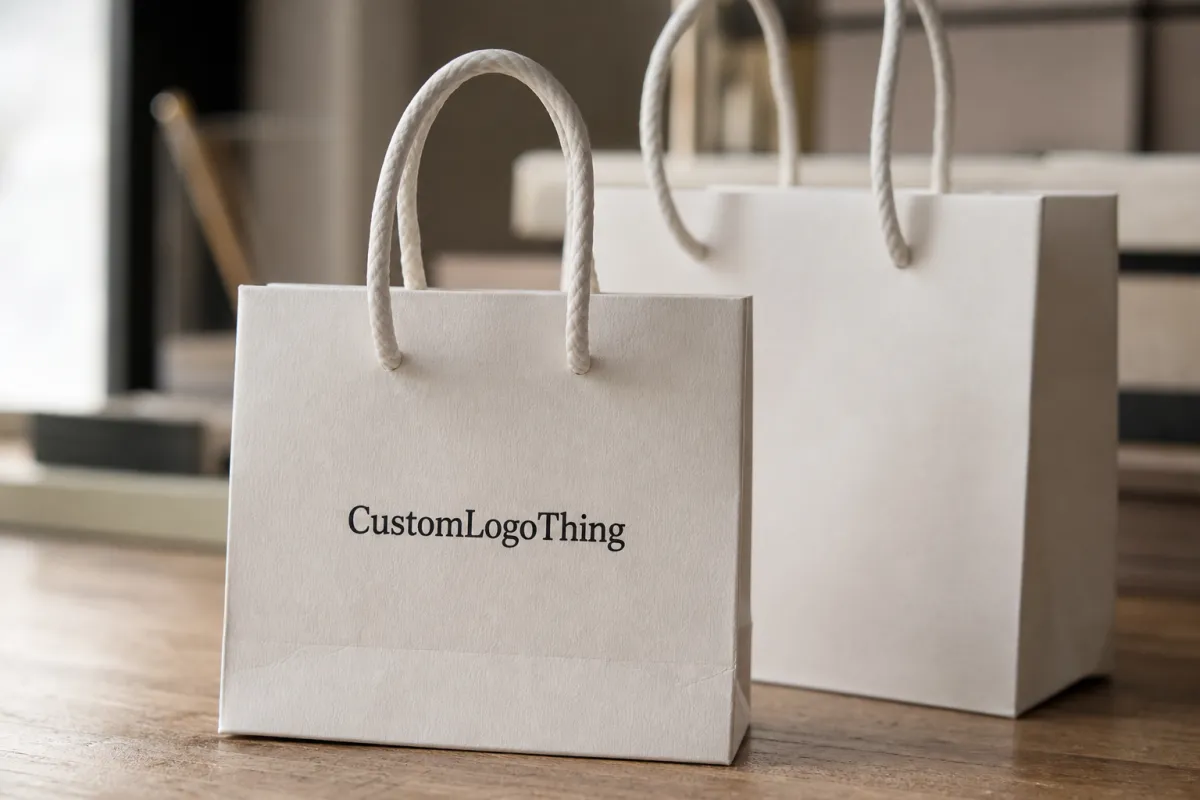
The difference between a standard retail carrier and a boutique presentation bag starts with structure. Heavier paperboard, cleaner folding, reinforced corners, and a base that stays flat all change how the bag behaves once a rigid jewelry box is placed inside. A thin bag may survive the trip home, but it rarely feels dependable. A thicker bag, sized well and glued cleanly, gives the customer a steadier read the moment they lift it.
Finish is the next layer. Matte lamination tends to feel restrained and polished. Soft-touch coating gives a more tactile, velvety surface, though it can show scuffs if the bag will be handled often. Foil stamping works well for a logo or monogram, but it needs enough negative space around it. Crowded artwork, multiple finishes, and heavy patterns usually make jewelry packaging feel more promotional than boutique.
Jewelry packaging is especially sensitive to proportion. A bag that dwarfs a small ring box looks improvised. A bag that is too tight around a bracelet box starts to fight the product instead of framing it. For Boutique Paper Bags for jewelry brands, the right proportion tells the customer the packaging was chosen for the product family, not borrowed from a generic retail template.
Handle choice also changes the impression. Twisted paper handles are economical and practical. Cotton rope feels more finished and usually carries weight better. Grosgrain ribbon is often used for higher-end gift presentation, though it adds cost and can complicate assembly. Die-cut handles create a cleaner silhouette, but they read best for lightweight bags and simpler brand identities. Each option has a visual language. The wrong one can make even a beautiful print look out of place.
A jewelry bag should feel like part of the purchase, not a leftover packing component.
The best signal is often restraint. One clean logo, one consistent surface finish, and strong construction tend to look more expensive than a crowded bag trying too hard. That may sound simple, but in production, simplicity demands better control over paper, glue, registration, and cutting.
How Paper Bag Structure Shapes the Jewelry Unboxing
Structure affects how a bag feels in the hand, how it stands on a counter, and how well it protects the packaging inside. Paper weight matters, but it is only one part of the picture. A 180gsm sheet can work for lighter counter pickup bags, while 250gsm or 300gsm stock is usually a better fit for rigid jewelry boxes, gift sets, and bags that will be carried longer distances. If the base panel is weak, a heavier sheet alone will not solve the problem.
Gusset depth deserves more attention than it usually gets. A shallow gusset can pinch a box and make the bag bulge in an awkward shape. A wide gusset can make the bag look oversized and wasteful. The right balance depends on the box dimensions, handle placement, and the experience the brand wants to create. The bag should open cleanly, hold shape, and close visually around the product without fighting it.
Surface treatment can shift the entire mood of the package. Gloss finishes can catch eye movement on a shelf, but they are more likely to show fingerprints and surface wear. Matte finishes feel calmer and usually photograph better. Soft-touch coating has a richer tactile effect, though it is not always the best choice for bags that will move through busy retail environments. A customer handling the bag for only a minute may never notice the coating choice. A customer reusing the bag several times will.
Details inside the bag matter too. Tissue wrap, card inserts, and the way a box sits in the cavity all affect the reveal. If the jewelry box rattles around, the package feels unfinished. If the box is packed too tightly, the customer has to tug at the opening and the experience turns clumsy. Boutique Paper Bags for Jewelry brands work best when the inside and outside are planned together.
There is also a practical side that buyers sometimes overlook. A bag used for earrings may not need the same body as a bag meant for a heavy necklace set or a velvet-lined gift box. One size rarely suits every SKU. Brands that try to force a single format across all products often end up with bags that look fine in one context and wrong in another. A small family of sizes usually performs better than one oversized catch-all.
Specs That Decide Durability, Feel, and Brand Fit
Paper specification should start with the product weight and the expected handling environment. Counter pickup and small pouches can sometimes use lighter stock, especially if the jewelry already ships in a rigid inner box. For gift sets, event packaging, or higher-value pieces, stronger board and reinforced handles are worth the extra spend. The customer may not say why the bag feels better, but they will notice when it does not bend or collapse.
Color is another area where the sample can mislead. Pale beige, cream, and muted gray often look elegant, but they also reveal variation in print and coating more quickly than darker colors do. Black bags can look premium in a proof and disappoint in production if ink density is inconsistent or the surface coating is not controlled. Metallic accents need careful registration. If the logo shifts even slightly, the package stops looking precise.
Paper source matters for both brand story and specification control. If recycled content, FSC certification, or another sourcing standard matters to the brand, those requirements should be fixed before quoting begins. Ask for the exact paper grade, not just a general description. A “250gsm paperboard” quote can mean several different constructions depending on coating, caliper, and how much stiffness the sheet actually delivers. Buyers who request samples and written specs get fewer surprises later.
Edge quality is worth checking by hand. Rough cuts, weak glue joints, or frayed handles are easy to miss in a digital proof and hard to excuse in person. A good sample should show clean folds, even lamination, stable handle attachment, and a base that sits flat on a counter. If a bag arrives with wavering side panels or sticky glue marks, it may still function, but it no longer reads as boutique.
It helps to compare the bag to the box it carries. A paper bag that feels lighter than the inner packaging makes the set feel mismatched. A better rule is balance: the bag should not overpower the jewelry box, but it should not feel like it came from a different tier of packaging either. Consistency across weight, finish, and shape is what makes the system feel designed.
Practical specs often get overlooked in early sourcing conversations. Handle length should match how the bag will be carried. A short handle looks neat in-store but can be awkward once the customer is leaving with several purchases. Glue area matters because handles can peel if the attachment zone is too narrow. Bottom reinforcement matters for bracelet sets and gift bundles, especially when stores add tissue or a small card. These are small details on paper and large details in use.
Cost, Pricing, MOQ, and Quote Variables to Compare
Pricing for Boutique Paper Bags for jewelry brands usually shifts with quantity, paper thickness, print complexity, finish, handle type, and whether any special tooling is needed. A simple one-color logo on a standard matte bag sits in a very different price band than a soft-touch bag with foil, embossed branding, and ribbon handles. The quote only becomes useful when those variables are clear.
For many custom runs, a basic boutique bag can fall somewhere around $0.40 to $1.20 per unit at moderate volumes, while more elaborate construction can move higher depending on size, decoration, and region of production. Small runs often cost more per bag because setup is spread over fewer pieces. This is normal. What matters is comparing the full landed cost, not just the headline unit price.
MOQ can be the hardest part of the decision. A lower minimum sounds flexible, but it can raise unit cost, sample fees, or tooling charges. A higher minimum may lower the price per bag, yet it increases inventory risk if the brand changes artwork, updates packaging, or launches seasonal collections several times a year. The right MOQ is the one that matches reorder rhythm and storage capacity, not the one that looks best in a price column.
Ask for a line-item quote every time. The sheet should show tooling, sampling, print, finishing, freight, and any rush charges separately. Without that detail, two suppliers can look comparable when they are not. One may be quoting a fully packed service, while the other is leaving major costs to surface later. Hidden items are common enough that a low quote should be read carefully, not celebrated too early.
| Option | Typical Fit | Typical MOQ | Cost Signal | Notes |
|---|---|---|---|---|
| Basic matte bag, one-color print | Counter pickup, entry-level gifting | 1,000-3,000 | Lowest setup burden | Works best when the inner box carries most of the premium feel |
| Soft-touch bag with rope handles | Core retail, polished gift presentation | 2,000-5,000 | Moderate | Good balance of tactile feel, durability, and repeat ordering |
| Foil-stamped bag with ribbon handles | Luxury lines, seasonal launches | 3,000-10,000 | Higher | Needs tighter color control and more production oversight |
| Fully custom structure and specialty paper | Flagship collections, high-touch gifting | 5,000+ | Highest | Best for brands that want the bag to feel like a signature object |
A useful comparison is not “Which supplier is cheapest?” It is “Which quote gives the best mix of finish, durability, and reorder stability?” That question usually leads to better buying decisions because it reflects how the bag will actually be used. A low-cost bag that needs replacement after one season is not really low-cost.
Production Steps and Lead Time From Proof to Delivery
The production path is straightforward, but only if the brief is complete. It begins with dimensions, paper stock, finish, handle style, and artwork files. After that comes proofing, sample approval, production, inspection, and shipping. Each stage can move quickly or slow down depending on how precise the buyer is at the start.
Most delays come from the same few places. Low-resolution artwork creates back-and-forth on logo quality and color. Foil and embossing slow things down because they need tighter alignment than plain print. Handle materials can add lead time if a specific style is not in stock. Seasonal congestion makes all of that worse, especially before holidays and bridal peaks.
Lead time for simple custom bags can sometimes land in the 2-4 week production range after approval, with more complex bags taking longer. Sampling adds its own clock, and freight should be treated separately from production. A buyer planning a launch needs to build in margin for both. If a launch depends on packaging arriving on a fixed date, the schedule should be locked earlier than the product deadline suggests.
Rush jobs do happen, but they do not erase the physical realities of curing, assembly, inspection, and transit. A premium bag with foil, soft-touch coating, or specialty handles needs space in the schedule. Cutting that space usually leads to compromise somewhere else. If the goal is quality, the calendar needs to respect it.
Inspection should not be treated as a formality. Check print alignment, color consistency, handle attachment, board stiffness, glue marks, and scuffing on the surface. If the bags will be handed over in-store, a quick load test with the actual jewelry box is worth doing. The bag should carry the product without bowing, tearing, or twisting. Packaging that fails under real handling conditions rarely gets a second chance.
Step-by-Step Buying Plan for a Jewelry Brand
Start with the actual products, not a guessed size. Measure ring boxes, necklace boxes, bracelet boxes, and any Gift Sets That will share the bag. A few millimeters can change the fit. Brands often underestimate this and end up with a bag that looks fine on a spreadsheet but awkward on the counter.
Next, gather the brand assets in usable form. The supplier needs logo files, color references, finish preferences, and any sourcing requirements before quoting begins. Clear files reduce revisions and make pricing more accurate. If the artwork is still in flux, the sample may still help, but the final quote will be less reliable.
After that, request samples and handle them physically. Check the way the bag opens, how the handles sit in the hand, whether the base remains flat, and how the surface reacts to light. A sample should also be tested with the heaviest planned box. If the bag wrinkles, stretches, or feels off-balance, that problem will only get more visible at scale.
Once the sample is approved, place a pilot order rather than jumping straight into a large run unless the timeline leaves no choice. Inspect that first batch carefully. Verify dimensions, logo placement, color consistency, handle strength, and edge quality. A good pilot order is the cheapest insurance against a bad reorder.
Then set a reorder point while inventory is still healthy. Waiting until the last carton is in use creates unnecessary pressure on pricing and production timing. Packaging works better as a planned system than as a last-minute purchase.
- Measure every jewelry box that will go inside the bag.
- Confirm the exact paper grade and finish in writing.
- Approve one physical sample before volume production.
- Compare at least two line-item quotes.
- Set a reorder point based on sales rhythm, not guesswork.
That list sounds basic because the basics are what usually get missed. Most packaging problems are not dramatic. They come from small assumptions that were never checked.
Common Mistakes That Make Premium Bags Feel Ordinary
The most common mistake is choosing a bag that is too thin for the box it carries. Once the walls flex and the handle pulls unevenly, the brand story weakens. Customers may not know the paper weight, but they know when something feels fragile.
Another problem is over-design. Too many graphic elements can make a jewelry bag feel closer to promotional merch than boutique packaging. Fine jewelry usually benefits from cleaner spacing, one strong logo placement, and a controlled palette. A bag does not need to shout to look expensive.
Skipping samples is still a costly habit. Digital proofs cannot show the feel of the handle, the stiffness of the board, or the way a finish behaves under light. Print color also shifts more often than buyers expect. A sample is the only reliable way to see how the package behaves in hand.
Timing creates another class of mistakes. Packaging ordered after a campaign is already public tends to become reactive and rushed. That rush shows up in both cost and quality. A better practice is to lock packaging before final inventory decisions, especially for holiday launches, bridal collections, and limited-edition drops.
Premium packaging often fails at the simplest moment: the customer lifts it.
That lift reveals weight, balance, handle comfort, and board stiffness in a second. If the bag is not ready for that moment, the presentation loses credibility no matter how good the jewelry inside may be.
Expert Next Steps for Building a Repeatable Packaging Program
Build the bag program around repeatable decisions. Audit current sizes, finishes, and reorder history. Many brands discover that one bag size is being used for too many box formats, or that a premium finish is adding cost without changing the customer experience enough to justify it. That kind of review is not glamorous, but it is usually where the savings live.
Then send the same spec sheet to two or three suppliers and compare them on the same terms. Price, MOQ, sample quality, lead time, and freight all belong in the comparison. If one option is cheaper but vague, treat the vagueness itself as a cost. Clear quotes are usually a sign that the production path has been thought through.
Create a packaging checklist for future launches. Include exact dimensions, artwork files, approved finishes, handle choices, sample status, and reorder thresholds. Once that checklist exists, new collections stop depending on memory and rushed email threads. The process gets calmer and less error-prone.
Boutique paper bags for jewelry brands perform best when they are treated as part of the presentation system, not a spare item at the edge of the budget. The bag should match the box, support the product, and stay consistent from one reorder to the next. That is the kind of packaging that helps a brand look deliberate without overexplaining itself.
FAQ
What makes boutique paper bags for jewelry brands different from standard retail bags?
They usually use heavier stock, more controlled finishes, and stronger handle construction. The sizing is also more specific, since jewelry packaging is smaller and more gift-oriented than general retail packaging. The goal is not just to carry a purchase home. It is to make the purchase feel considered and reusable.
Which paper weight works best for jewelry gift bags?
For light items, lower weights can work if the inner box does most of the protective work. For rigid boxes and premium gifting, 250gsm to 300gsm stock is often a better starting point. The right choice depends on the box weight, handle type, and how often the bag will be carried or reused.
How do I estimate MOQ for custom jewelry paper bags?
Start with your reorder rhythm and storage limits. MOQ changes based on size, print method, and finish, so ask each supplier how they set it. A lower MOQ may seem easier, but it can carry a higher unit price and more setup cost. A higher MOQ works only if the brand can hold the inventory comfortably.
How long does production usually take for custom boutique bags?
Simple custom bags can sometimes move through production in 2-4 weeks after proof approval, while more complex finishes and structures take longer. Sampling, freight, and seasonal congestion can add time. Build extra margin into launch schedules so the packaging is not the last thing holding the product back.
What should I include when requesting a quote for jewelry paper bags?
Include dimensions, paper type, handle style, print colors, finish, quantity, and delivery destination. Attach logo files and reference images so the quote reflects the real design. Ask for tooling, sample, freight, and rush charges as separate line items so the offers can be compared cleanly.

