Custom Logo Things
Boutique Paper Bags Unit Cost Breakdown: Buy Smarter
The phrase boutique paper bags Unit Cost Breakdown only makes sense once you separate the recurring bag price from setup, proofing, finishing, and packing. On a real quote, paper is just one input. MOQ, handle style, print coverage, and inspection standards often have a bigger effect on the final number than the sheet itself.
Why Small Boutique Runs Can Cost More Than Expected
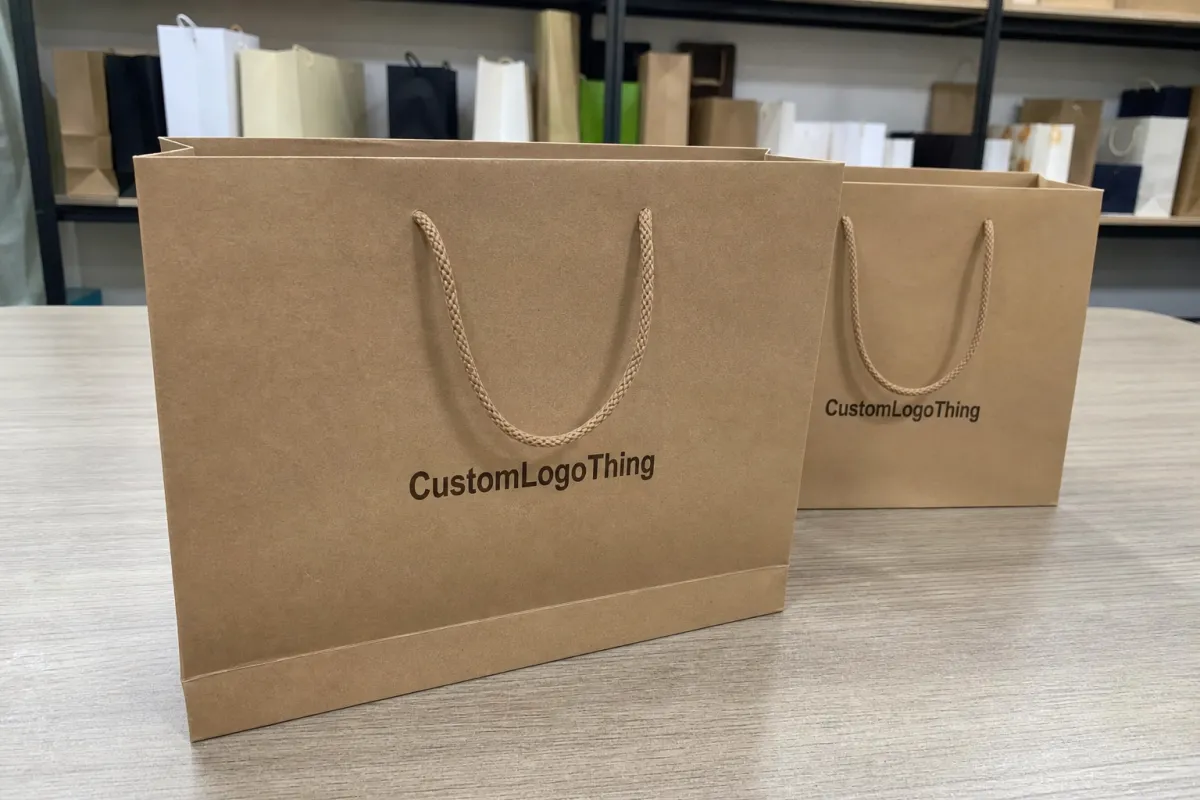
Small runs often cost more per bag because fixed work is spread across fewer units. A supplier still has to prepare the artwork, set up the press, make the die, test the line, and inspect the result whether the order is for 500 bags or 50,000. That is why a short boutique order can look expensive even when the bag itself is simple.
The main cost pressure usually comes from setup charges, tooling fees, and labor-heavy operations. Print registration, die-cutting, lamination, and handle attachment all take time. If the build includes multiple finishes or more manual steps, the supplier has to slow the line down and check more pieces. The unit cost rises because the factory is not just selling paper; it is selling production time and consistency.
Buyers can also overpay by asking for too many premium effects at once. A bag can look upscale with one strong material choice and one finish. Once foil, embossing, soft-touch coating, and ribbon handles are all added together, the process becomes slower and more inspection-heavy. The quote may still be fair, but the bag is now harder to make.
A low unit price is only meaningful if the quote includes the same assumptions: die, proofing, handle assembly, packing, and the same delivery term.
For pricing comparisons, separate the one-time items from the recurring items. The recurring cost is driven by paper, print, handle style, finish, and quantity. The one-time cost is driven by setup, proofing, and tooling. That split makes it easier to see whether a supplier is truly competitive or just quoting narrowly.
Paper Stock, Handles, and Finishes That Change the Build
Paper stock changes both appearance and cost. Kraft paper gives a natural retail look and is usually the most practical choice for simpler branding. Coated art paper supports sharper graphics and richer solids, which is useful for fashion, beauty, and gift packaging. Heavier board adds stiffness and a more premium feel, but it uses more material and can require more careful folding.
GSM matters, but it does not answer everything. A lighter sheet can print well but feel too soft for boxed products. A heavier board can solve that, though it may need better creasing and more care during production. Buyers get better quotes when they describe what the bag must carry instead of asking for “premium paper” in general terms.
Handle choice has a direct effect on both labor and presentation. Flat paper handles are usually the least expensive and easiest to assemble. Twisted paper handles are still efficient and look slightly more refined. Rope handles, ribbon handles, and die-cut handles look more upscale, but they can add cost through manual attachment, extra parts, or stricter board requirements.
Finishing is where the price can move fastest. Matte lamination adds protection and a softer retail look. Soft-touch coating gives a velvety feel but increases processing. Foil stamping, embossing, debossing, and spot UV all require extra machine time and inspection. If alignment matters, the factory may need to reject more pieces or slow production to keep the result clean.
Structural details matter too. Reinforced tops help the bag hold shape, bottom pads improve load support, and gusset adjustments can change both capacity and paper use. For heavier retail items, a stronger base may be worth the cost. For lighter gifts, a simpler structure often delivers the same shelf appeal for less money.
| Build choice | Typical cost impact | Visual result | Best fit |
|---|---|---|---|
| Kraft paper + twisted handles | Lowest to moderate | Natural, clean, practical | Boutiques, events, everyday retail |
| Coated art paper + rope handles | Moderate to higher | Sharper print, richer finish | Fashion, beauty, premium gifting |
| Soft-touch lamination + foil logo | Higher | Distinctly premium | Launches, seasonal collections, display packs |
| Embossed board + ribbon handles | Highest | Gift-like, upscale, tactile | Limited editions, presentation packaging |
For broader sourcing context, trade references like Packaging Association and certification guidance from FSC are useful when material choice and buyer expectations both matter.
Boutique Paper Bags Unit Cost Breakdown by Order Size
The best way to read a quote is to map the full cost stack: paper, print, handles, finishing, assembly, quality control, packing, and freight. Once those items are visible, the boutique Paper Bags Unit Cost Breakdown becomes much easier to judge. A quote with a low per-piece number may still leave out proofing, carton packing, or other real charges.
MOQ changes the math because fixed costs are spread across fewer bags. A small order carries a heavier share of setup and handwork. A larger order spreads those charges out, so the unit price usually drops quickly at first and then levels off. That curve is normal, and it is one reason buyers should compare quantity tiers instead of focusing on a single number.
Here is a practical view of how bulk pricing often behaves for boutique-style bags with one to two-color printing and standard construction. Exact figures vary by region, material, and freight method.
| Order size | Typical cost per piece | What drives the price | Buying note |
|---|---|---|---|
| 500-1,000 pieces | $0.95-$2.20 | Setup charges, proofing, small-run handwork | Good for launches or design tests |
| 2,000-5,000 pieces | $0.35-$0.95 | Better spread of fixed costs, more efficient line time | Often the sweet spot for boutique retail |
| 10,000+ pieces | $0.18-$0.55 | Material efficiency, higher run speed, lower setup share | Best when the design will repeat |
Premium finishes flatten the savings curve. A simple printed kraft bag benefits strongly from volume. A foil-stamped or heavily laminated bag still carries meaningful labor at higher quantities, so two quotes with the same MOQ can differ a lot if one has more production steps. The paper may look similar, but the build is not.
A useful pricing rule is to separate tooling fees and first-run charges from the recurring bag cost. Then compare the actual production price before freight. That is the cleanest way to compare cost per piece across suppliers. If the order may repeat, ask whether tooling can be reused for the reorder so the second run can be priced more accurately.
Pricing Traps That Hide in a Clean Quote
The cleanest quote is not always the most complete one. Some quotes leave out freight, export cartons, reproof charges, or a minimum fee for a small paper conversion. If those items appear later, the actual landed cost can be much higher than expected.
Watch for quotes based on a standard size when your bag needs a slightly different proportion. A wider gusset, a taller handle, or a heavier board can change paper usage enough to move the order into a different cost bracket. The adjustment may look minor on a drawing, but it affects material yield and production time.
Sample policy is another item that needs clarity. A plain sample may be inexpensive, while a printed or finished pre-production sample often costs more. That is normal. What matters is whether the sample cost is credited back when the order goes ahead. If it is not, include it in the full comparison.
Freight can also distort the unit price. Paper bags are light but bulky, so carton volume matters. A product quoted at a good ex-factory price may become less attractive once packing and shipping are included. If one supplier ignores volume assumptions, the quote is incomplete even if the bag price itself looks low.
Quality control is part of the cost structure too. Buyers want centered logos, clean folds, consistent handle placement, and neat glue lines. Those standards require inspection time and sometimes rework. A cheaper bag that fails QC is not a better purchase; it just moves the cost into delays and replacements.
Process and Timeline From Proof to Delivery
Once the specification is locked, the process is straightforward. The buyer sends an RFQ, the supplier confirms the size and construction, the artwork is checked against the dieline, a proof is approved, and production begins. Delays usually come from missing details such as handle drop, color references, or finish notes.
The production sequence is usually predictable. Printing comes first. Coating or lamination follows if needed. Then the sheets or board are die-cut, folded, and glued. Handles are attached unless the bag uses a die-cut handle. Finally, the bags are counted, packed, and prepared for shipment. Decorative builds take longer because each step needs more care.
Typical timing for a well-prepared order often looks like this:
- Quote and spec confirmation: 1-3 business days
- Artwork and dieline review: 1-4 business days
- Proof approval: depends on buyer response and revision count
- Production: about 12-18 business days after approval for many standard runs
- Freight: a few days by air, several weeks by ocean for larger replenishment orders
Lead time also depends on finish complexity and factory load. A plain kraft bag with a single-color logo is easier to schedule than a laminated, foil-stamped bag with ribbon handles and a reinforced insert. If the launch date is fixed, the safest approach is usually to keep the structure simple and avoid late-stage changes after proof approval.
The fastest way to protect a launch date is to approve the dieline early, keep artwork files clean, and freeze the finish before production starts.
Specifications Buyers Should Lock Before Requesting Quotes
If the spec sheet is vague, the quote will be vague too. A supplier can only price what is defined. Clear dimensions, construction details, and delivery requirements lead to better comparisons and fewer surprises later.
Start with the size. Width, gusset, and height affect paper usage immediately. Handle drop matters too, because a bag meant to carry a boxed product needs a different proportion from a bag for wrapped goods. The intended load should be stated clearly so the supplier can choose a structure that performs without unnecessary overbuild.
Then define the print and finish. State the number of colors, whether there is inside printing, and whether a Pantone match is required. If the artwork includes gradients, reverse type, or photography, mention that early. These details affect registration, waste allowance, and inspection. If sustainability is important, specify recyclable paper, FSC-sourced stock, or another required material path up front.
- Bag size: width, gusset, and height in exact units
- Handle style: flat paper, twisted paper, rope, ribbon, or die-cut
- Print: color count, inside print, Pantone matches, special registration
- Material: kraft, coated art paper, board weight, or specific GSM
- Delivery: carton pack count, pallet needs, destination, deadline
For shipping-sensitive jobs, ask about pack count and pallet count early. Freight pricing changes when cartons are oversized or when pallet stacks are inefficient. If the bags are part of a larger kit or distribution flow, ask whether the pack plan should align with ISTA expectations for transit protection. That is not always necessary, but it matters when packaging is handled multiple times.
Also send artwork in a format the supplier can use cleanly. Vector files are usually best for logos and type. Include approved color references and any no-go zones around the mark. A better quote starts with better input, not with a better guess.
Next Steps to Get an Accurate Quote Fast
To get a useful quote, start with the essentials: size, quantity, paper, handles, and finishing. Those five inputs drive most of the price movement in a Boutique Paper Bag order. Add artwork, destination, and deadline, and the supplier can usually price the job with much more confidence.
- Confirm bag dimensions, gusset, and handle drop.
- State the exact quantity and whether the order may repeat.
- Choose the paper stock and board weight, not just the general look.
- Specify handle style and any finish such as foil, lamination, or embossing.
- Send the logo file, color references, and shipping details.
Ask for a tiered pricing table if possible. A good quote shows how the unit cost changes at 500, 1,000, 2,500, 5,000, and 10,000 pieces. That makes the break point visible and helps you see whether the price movement comes from volume, finish complexity, or handling. It is much more useful than a single line item with no context.
Compare quotes only after the spec matches line by line. A slightly higher price on a cleaner, simpler build may still be the better buy if it avoids waste, rework, or a late launch. For repeat programs, ask the supplier to separate first-run charges from reorder pricing so you can plan beyond the initial order. If the bag has to perform across retail and shipping channels, build for the hardest use case first and keep the structure as simple as possible while still meeting the load requirement.
Frequently Asked Questions
What drives the biggest change in boutique paper bags unit cost?
Setup and hand-finishing usually matter more than the paper stock on short runs. Special finishes, handle styles, and print coverage can push the cost per piece up quickly when MOQ is low and fixed charges are spread across fewer bags.
How does MOQ affect boutique paper bag pricing?
Lower MOQ means fixed charges are divided across fewer units, so the per-unit price rises. Higher quantities usually reduce the unit cost, especially when the spec stays simple and the production line can run without extra changeovers.
Which bag specs lower unit cost without looking basic?
Standard sizes, fewer print passes, and simpler handles usually keep the look clean while controlling price. Skipping premium coatings or specialty foils can save money without hurting presentation if the artwork is strong.
How long is the typical turnaround for boutique paper bags?
Turnaround depends on proof approval speed, finish complexity, and shipping method. Many standard runs move through production in about 12-18 business days after approval, while air freight moves faster and ocean freight is usually better for larger replenishment orders.
What should I send for a more accurate quote?
Send dimensions, quantity, artwork, paper preference, handle style, and the delivery destination. Include your target deadline and any required print or finish standards so the quote reflects the real job instead of a rough placeholder estimate.
Can a premium-looking bag still be cost-controlled?
Yes, if the design is disciplined. A strong logo, a good paper stock, and one well-chosen finish usually do more for presentation than stacking several decorative processes onto the same bag.

