The snapback caps Unit Cost Breakdown for brand launch kits is easy to misunderstand because the cap is rarely just a cap. In a launch box, it often becomes the most photographed piece, the most worn piece, and the one item people use to judge the rest of the kit before they ever touch the inserts. A clean front panel, steady crown shape, and correct logo placement can make a modest package feel considered. The opposite is just as quick.
That is why buyers should not focus only on the blank hat price. Decoration, packaging, and freight all change what the cap actually costs once it lands in the kit. The blank may look cheap on a quote sheet, then turn expensive after embroidery setup, bagging, kitting labor, and shipping are added back in. The real number is the delivered unit cost, not the source cost.
For launch programs, the goal is balance. The cap has to hold shape, wear well, and look aligned with the rest of the merch without eating more of the budget than it deserves. A good build supports brand perception. A weak one can drag down an otherwise strong box.
"In a launch kit, the snapback is judged twice: once in the invoice and once in the unboxing."
That is why a buyer's first question should be practical. What does the hat need to do inside the kit? If it needs to feel retail-ready, stay presentable in photos, and survive shipping without flattening, it needs a spec that supports those jobs. Cheap is not always efficient, and expensive is not always better. The useful answer sits in the middle, where construction, decoration, and packing method match the brand's actual launch plan.
Why Snapback Caps Punch Above Their Weight in Launch Kits
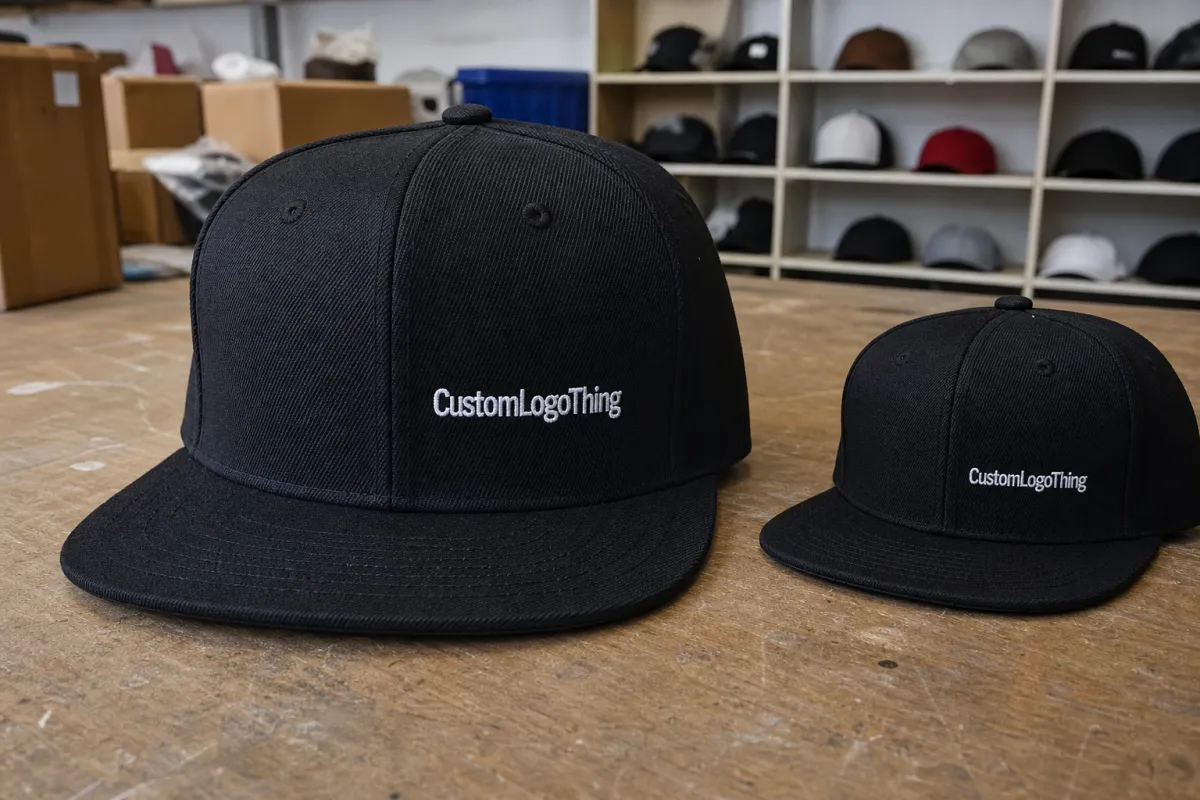
Snapback caps tend to earn more visual value than their line item suggests. A sticker or postcard can fill space, but a cap can carry the identity of the whole kit. It has a practical use, a large decoration area, and enough shape to read as a finished retail item rather than an afterthought. That combination gives it more impact per dollar than many other promotional pieces.
They also travel well through content. Staff photos, social posts, event coverage, and onboarding shots all tend to feature hats prominently. If the crown sits correctly and the logo lands cleanly, the cap reinforces the brand every time it is worn. If the embroidery pulls or the visor arrives warped, that flaw repeats in every image. People notice that quickly, even if they cannot explain why the kit feels off.
There is also a budget reason to favor snapbacks in a launch kit. They usually sit below outerwear in cost, but above low-value inserts in perceived quality. That makes them useful for kits that need a stronger point of view without moving into premium apparel territory. The cap can carry a premium feel while still leaving room in the budget for inserts, packaging, or a second merch item.
Material and construction do most of that work. A structured crown holds shape better than a floppy one. A cleaner sweatband feels better in hand. A closure that snaps firmly and sits straight tends to look more finished than a closure that feels flimsy or misaligned. None of that sounds dramatic on paper. In the box, it matters.
Buyers also need to think about how the cap affects the rest of the presentation. A hat with a strong front panel can make a simpler box insert feel more deliberate. A poorly packed cap can crush the whole presentation, especially if the brim gets bent in transit. That is why cap selection should be tied to pack-out, not treated as a separate decision.
Build Choices That Change the Hat Before You Ask for Pricing
Before any supplier can quote accurately, the cap has to be defined in real terms. Structured or unstructured. Flat visor or pre-curved. Plastic snap or metal closure. Six-panel or five-panel. Each of those choices changes both the look and the cost. The changes are not huge in isolation, but they add up once the order reaches production.
Structured crowns are usually the safer choice for launch kits because they hold their shape and photograph well. Unstructured caps can work for softer brand positioning, but they read more casual and are easier to flatten in transit. If the kit is supposed to feel polished, structure usually earns its place.
Visor shape changes the impression more than many buyers expect. A flat visor pushes the cap toward streetwear and can make embroidery appear larger. A pre-curved visor feels more familiar and is often easier for end users to wear immediately. The build also changes the handling steps during packing, especially if the cap needs to retain a specific silhouette.
Closure choice affects both cost and perceived quality. Plastic snaps are common because they are efficient and keep pricing controlled. Metal closures tend to feel sturdier and may photograph better, but they almost always add cost. That cost can be small on a high-volume order and more noticeable on a short run. The same is true for custom branded hardware or specialty trim.
Decoration is the largest variable after the blank itself. Basic embroidery is usually the most economical path for a clean logo. It is direct, legible, and easy to spec if the artwork is not overly detailed. Patches add dimension and can handle finer visual texture, though they require additional material and application labor. Puff embroidery increases depth and can make a front logo stand out, but it is more sensitive to small text and tight curves. Printed panels or all-over graphics can work, yet they are better treated as a design-driven exception than a default answer.
Fabric choice also shifts the result. Cotton twill, brushed cotton, and polyester blends each behave differently under stitching and handling. A thinner fabric may keep costs lower but can look limp in a launch kit. Heavier twill usually holds shape better and feels more substantial in hand. The right choice depends on whether the cap needs to read as premium, sporty, or utility-driven.
Small construction details are easy to miss and hard to fix later. Sweatband quality, stitch density, thread tension, and panel symmetry all influence how the hat looks once it is out of the carton. A buyer may only see these issues during sample review, but the end customer sees them immediately. That is why a good brief should define the build, not just the logo.
Specifications to Lock Before You Request a Quote
A reliable quote starts with a complete brief. If the supplier has to guess at the fabric, closure, logo placement, or packaging, the number they send back will be padded with assumptions. Those assumptions are where budgets break later. The more precise the spec, the less room there is for revisions after approval.
At minimum, lock these items before pricing: crown style, visor shape, closure type, base color, logo method, logo size, and the packaging format. If the cap needs a woven label, interior print, side logo, or under-brim detail, include that too. The same applies to hang tags, size stickers, and barcode placement. These are not decorative extras. They change labor and pack-out time.
Pack-out instructions matter just as much as the cap itself. Some launch kits require polybagging only. Others need tissue, fold control, a printed insert, or a box arrangement that keeps the brim from flattening. If the cap is going into a multi-item set, the sequence of packing may affect the carton size and the shipping charge. That part is often forgotten until the first sample arrives and the contents do not sit the way the buyer expected.
Artwork quality can save time or create delays. A simple logo in vector format usually reviews cleanly. Low-resolution art, unseparated colors, or tiny type can force a redesign before production begins. If the cap uses embroidery, the stitch count and placement should be reviewed against the crown area so the logo does not crowd the seam or disappear near the visor. That step is basic, but skipping it is one of the most common reasons a launch schedule slips.
Color matching deserves its own check. Buyers often think in Pantone numbers, but thread, patch fabric, and labels each have their own behavior. A color that looks close in daylight can look very different under warehouse lighting or on a textured fabric. If strict brand matching matters, ask for a strike-off or sample reference before approval. Otherwise the final cap can be technically acceptable and visually wrong.
For packaging suppliers that work across launch programs, outside standards can help define expectations. FSC certification matters if your inserts or cartons include paper claims, and ISTA test methods are useful if the kit must survive rough transit. Those references do not turn a hat order into a lab project. They do, however, keep the packaging conversation grounded in real conditions instead of ideal ones.
Snapback Caps Unit Cost Breakdown: Pricing, MOQ, and Margin
This is the part most teams want first, and for good reason. The snapback caps Unit Cost Breakdown for Brand Launch Kits is not a single price. It is a stack of pieces that only makes sense together: blank cap cost, decoration, setup, packaging, kitting labor, scrap allowance, and freight allocation. Missing one line item does not make the number simpler. It makes the quote misleading.
MOQ changes everything. At low quantities, setup fees carry more weight because the fixed work is spread across fewer units. At higher quantities, the same setup gets amortized and the per-unit cost usually drops. That is why a 100-piece order can feel expensive while a 1,000-piece order often looks much cleaner on paper. The build is not necessarily better. The math is simply less compressed.
Indicative pricing bands for early budgeting usually fall into these ranges:
| Build Type | Typical MOQ | Indicative Unit Price | What Moves the Cost |
|---|---|---|---|
| Basic embroidered snapback | 100-300 pcs | $3.50-$6.50 | Embroidery size, stitch count, closure type |
| Patch-front snapback | 200-500 pcs | $4.50-$8.00 | Patch material, attachment method, artwork detail |
| Puff embroidery build | 200-500 pcs | $5.00-$9.50 | Thread volume, logo shape, fabrication time |
| Premium retail finish | 300-1,000 pcs | $6.50-$12.00 | Metal closure, woven label, special trim, complex pack-out |
Those ranges are meant for planning, not for locking a purchase order. A simple logo on a clean blank can stay near the lower end. Add a detailed patch, a custom interior label, a branded insert card, and special bagging, and the number moves quickly. Freight can change the final figure again, especially if the kit needs multiple cartons or split delivery.
Several margin leaks show up repeatedly in cap programs. Sample charges get missed until the buyer requests revisions. Rush fees appear when the schedule is tighter than the build can support. A custom color match for thread or patch material adds another layer of work. Split shipments create more handling and more freight. Kitting labor rises when the cap has to be folded, tagged, bagged, and packed in a specific sequence.
One item can quietly change the whole economics: mixed specs. A small run with two cap colors, two closure types, and two logo placements is rarely efficient. Every variation adds sorting, setup, and pack-out effort. If variation is necessary, keep the underlying build the same and change only one element. That keeps the order manageable and makes the unit cost far easier to forecast.
For launch kits, the cleanest way to think about margin is simple. Do not price the cap in isolation. Price the finished kit. A slightly more expensive cap can reduce waste, lower rework, and protect the unboxing experience. In practice, that can preserve more margin than chasing the lowest blank price ever will.
Production Steps and Lead Time From Art Approval to Delivery
Cap production is straightforward only if decisions are made early. The usual sequence is artwork review, pricing approval, sample or proof confirmation, bulk production, quality control, and shipment. Every time a spec changes after approval, the schedule becomes harder to protect. The time lost on a late adjustment usually exceeds the time saved by rushing the first version.
For a simple embroidered cap, production can move fairly quickly once the artwork is approved. More complex builds take longer because they add stitching time, material prep, or extra attachment steps. A patch-front cap is not difficult, but it introduces another layer of handling. Puff embroidery can also lengthen the process because the stitching needs to be clean and the raised area has to hold its shape without distorting the crown.
The most common delays are familiar: slow artwork revisions, late color confirmation, packaging changes, and quantity changes after the order is already in motion. Quantity changes are especially costly because they affect not just production but also carton planning and shipping. An order that started as 500 pieces and becomes 650 after approval can lose its original cost structure very quickly.
Lead time should be built around the slowest component in the kit, not the easiest one. If the hats are ready but the inserts are not, the launch waits. If the boxes arrive but the embroidery proof is still being revised, the launch waits again. A realistic plan often leaves room for production plus transit, then a small buffer for inspection and assembly. For standard runs, a rough starting point after proof approval is often 10-20 working days, with specialty builds taking longer. That is a planning range, not a promise.
Shipping method matters too. Air freight protects the calendar but can erase savings fast. Sea freight is easier on the budget, yet it only works if the launch date is flexible enough to absorb transit time. Buyers sometimes underestimate how much a kit depends on the cap being the last or first item in the chain. If the hat is delayed, the entire package may need to wait.
One practical habit helps here: work backward from the in-hand date and set approvals earlier than feels necessary. That cushion is usually cheaper than paying for a rush or redoing a shipment because a sample was signed off too late.
What a Strong Supplier Handles Before You Approve Production
A good supplier does more than send a unit price. They itemize the cap cost, decoration cost, setup, packaging, and lead time in a way that makes the order readable. If the response is a single number with no context, the buyer is still missing the information needed to manage margin. Clarity on the front end usually prevents correction costs on the back end.
Proofs matter because a cap is a three-dimensional item. A logo that looks centered in a flat mockup can land too high or too low on a structured crown. A tag that looks harmless in a file can block the embroidery field. A strong supplier will show the placement in context and flag any issue before bulk production starts. That kind of review is not decorative; it prevents rework.
There is also value in honest pushback. If the stitch count is too tight for the artwork, that should be said. If the requested color match is unrealistic for the selected thread line, that should be said. If the ship date leaves no room for a sample, that should be said too. Buyers do not need reassurance from a quote. They need the facts that keep a launch on schedule.
Quality control should be specific, not vague. On cap orders, the checks that matter most are logo placement, stitch consistency, panel symmetry, crown height, closure function, color accuracy, and carton condition. If the order includes pack-out, the supplier should also confirm that bagging, inserts, and labels are arranged as approved. A cap can pass sewing inspection and still fail as a launch item if the final presentation is weak.
If you compare suppliers, ask for a quote structure that separates the blank, decoration, packaging, and freight assumptions. That makes it easier to see where the money is going and where the risk sits. A supplier that understands launch kits will usually think in the same way. They know the difference between producing a cap and delivering one that actually works inside a branded set.
That distinction matters because a launch kit is judged as a whole. The cap is only one part, but it often sets the tone for the rest. If the supplier understands how the hat will be displayed, packed, and opened, the chance of a surprise drops sharply.
Next Steps to Order Launch-Kit Snapbacks Without Margin Surprises
The cleanest ordering process starts with five decisions: quantity, decoration method, packaging format, target ship date, and ship-to location. Once those are fixed, the quote becomes much easier to trust. Before that point, every estimate is partly guesswork.
After the base spec is set, ask for a few pricing scenarios instead of one. Keep the cap style consistent and vary only the finish. For example, compare an embroidered cap with a simple polybag, the same cap with a branded insert, and a patch-front version with fuller pack-out. That gives a true picture of tradeoffs without distorting the budget with unrelated changes.
Send all of the following together if you want fewer back-and-forth cycles:
- Vector logo file and any brand color references
- Cap color, crown style, and closure preference
- Decoration method, placement, and approximate size
- Pack-out format, including inserts, tags, or labeling
- Total quantity and any split quantities by color or size
- Ship-to address and required delivery window
Be direct about priorities. If presentation matters more than saving a few cents, say so. If the launch date is fixed, say that too. If the hat has to match the rest of the merch line, include that in the brief. The quote will only be as clear as the instructions behind it.
The most useful request is still the full snapback caps Unit Cost Breakdown for brand launch kits, not just the blank cap price. That one change forces the conversation to include the real cost drivers: decoration, packing, handling, and freight. Those are the pieces that determine whether the kit stays on budget or gets quietly pushed over it.
What affects snapback cap unit cost most in a launch kit order?
Decoration method usually moves the price more than the blank cap itself. MOQ, packaging, and freight can change the true landed unit cost quickly, and more complex builds like patches, custom labels, or specialty closures raise the quote.
How does MOQ change snapback cap pricing for brand launch kits?
Lower MOQs spread setup cost across fewer units, so each cap costs more. Higher quantities usually drop the per-unit price if the decoration stays the same. Ask for tiered pricing at two or three volume levels before you commit.
Which decoration method gives the best snapback cap pricing?
Simple embroidery is often the most efficient middle ground for cost and presentation. Patches and specialty finishes look premium but usually cost more per unit. Print-heavy or multi-step decoration only makes sense when the kit needs a stronger retail feel.
Can I mix colors or styles without raising unit cost too much?
Yes, but mixed builds often increase setup, sorting, and pack-out labor. A small color mix is usually manageable; too many variations push pricing up fast. Keep the same base spec across colors if you want the cleanest quote.
How long does snapback cap production usually take after approval?
Standard production depends on decoration, approval speed, and quantity. Artwork delays and sample changes are the biggest reasons timelines slip. Build the launch calendar around production plus shipping, not just the factory run.

