A boutique Recycled Poly Mailers MOQ guide only works if it starts with the right assumption: the recycled-content label is rarely the thing driving your minimum. Size, print setup, finish, and shipping terms usually move the number far more than the material story does. If you send a clean spec sheet, you can see the MOQ, unit cost, and landed cost before the order turns into a guessing game.
For a smaller brand, the packaging job is not abstract. The mailer has to protect the item, look deliberate on arrival, and avoid turning into an expensive line item with little strategic value. A recycled mailer should behave like working packaging, not a virtue signal wrapped in plastic. If you are building out the rest of your packaging stack, keep the mailer spec aligned with broader materials through Custom Packaging Products or compare formats at Custom Poly Mailers.
Show me the landed cost, not the headline quote. If a vendor will not separate setup, freight, print variables, and remake terms, the number is useful only as bait.
Boutique Recycled Poly Mailers MOQ Guide: What Actually Drives the Order
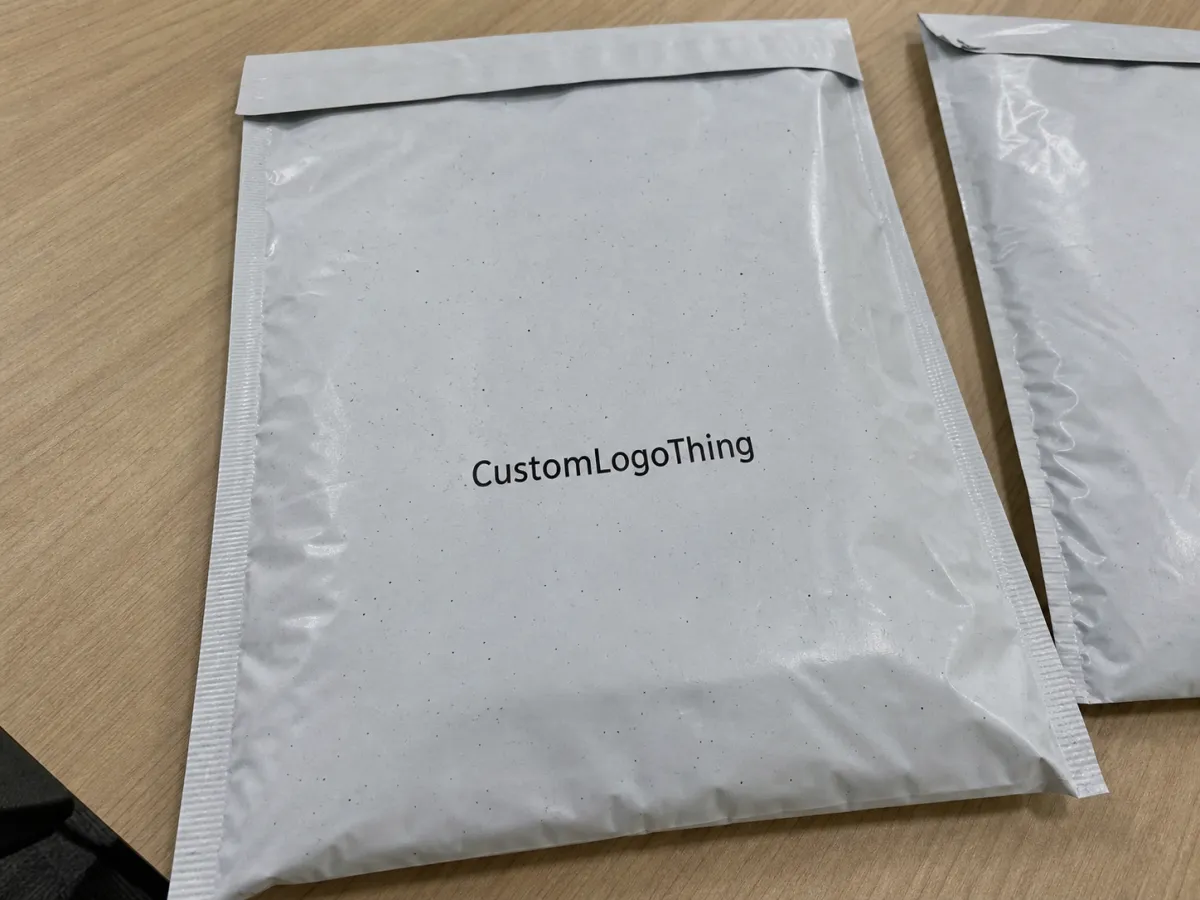
The most common misunderstanding is that recycled film automatically sets the minimum order quantity. It usually does not. MOQ is mostly a factory economics problem: the press needs setup time, film has to be sourced in the right gauge and width, and the run has to justify labor, waste allowance, and inspection. A plain one-color logo on a standard mailer is easier to run than a full-coverage design on an oversized bag with special finish work and a tight ship date.
That is why two brands can ask for “custom recycled mailers” and get wildly different answers. One wants 1,000 units of a single size with a simple logo. The other wants three sizes, four ink colors, and a rush window that collides with someone else’s production schedule. The second order is not just bigger; it is structurally harder to produce. More moving parts mean more cost, more opportunity for waste, and a higher likelihood that the supplier adds buffer into the quote.
The right question is not merely, “What is your MOQ?” Better is, “What does the MOQ include, which specs move it, and where does the cost step up?” Vendors that answer cleanly usually understand packaging production. Vendors that hide behind vague ranges often do not want to explain why a quote changed by 20% after one line of artwork or one inch of width.
Before asking for pricing, a buyer should know three things:
- What to send: exact dimensions, thickness target, print colors, finish, quantity tiers, and destination ZIP.
- What MOQ means in context: the lowest run that still delivers a usable unit cost and realistic lead time.
- Where the cost levers live: dimensions, print coverage, recycled-content level, closure style, and freight method.
That is the practical core of a boutique Recycled Poly Mailers MOQ guide. Everything else is detail, and detail is where margins are usually won or lost.
Film Blend, Print Coverage, and Finish Choices Buyers Can Trim
Not all recycled film behaves the same. Buyers often hear phrases like PCR content, post-consumer recycled, or “eco film” and assume they describe the same material. They do not. A 30% to 60% PCR blend is common in custom mailers, while higher recycled ratios can bring more visible color variation, less opacity consistency, and narrower sourcing windows. None of that makes the material unusable. It just makes the run less forgiving.
That matters because mailers are judged quickly and harshly. A customer does not inspect a bag with a caliper; they notice whether the color looks flat, whether the print sits where it should, and whether the parcel arrives with scuffs or seam issues. Compared with rigid cartons, mailers expose material variation more directly. A recycled film that looks good in a sample can still show minor banding or tonal shift in production if the blend changes from one lot to the next.
Print coverage is the second major lever. A small front logo with generous negative space is cheaper and easier to hold in register than full-bleed artwork that covers every visible surface. Full coverage uses more ink, increases setup sensitivity, and gives the press less room to absorb film variation. For boutique brands, one-color or two-color graphics are often the sweet spot: enough identity to feel branded, not so much decoration that the packaging cost starts acting like a second product line.
Finish choices can quietly inflate a quote. Matte effects, gloss appearance, black interior opacity, peel-and-seal closures, tear strips, and special surface textures all add material, process steps, or both. Some are functional. Others are aesthetic preferences that sound compelling in a mockup and disappear in importance once you are paying freight on every box of bags.
A useful way to judge complexity is to group options like this:
- Lower complexity: standard size, one-color logo, clear or lightly tinted recycled film, self-seal flap.
- Moderate complexity: two or three colors, matte or soft-touch appearance, privacy interior, custom copy.
- Higher complexity: full-bleed graphics, specialty finish, tear strip, tight color matching, multiple SKUs.
If you want to see what matters, ask for side-by-side pricing on the same dimensions with only one variable changed. The difference between a basic logo bag and a visually refined premium mailer is often far smaller than buyers expect. Occasionally it is the opposite, and that is the useful surprise: a modest upgrade can be worth the incremental cost if it improves brand consistency without increasing waste.
For recycled-content claims, the EPA recycled content guidance is a useful reference point. It will not write your spec sheet, but it helps you ask sharper questions about what “recycled” actually means and how that claim is documented.
Size, Thickness, Seal Strength, and Recycled Content Specs
Size is usually the first hard cost driver. A mailer that fits a folded tee is not the same job as one that needs to hold a hoodie, a boxed set, or a bundle with inserts. Flat width, length, flap size, and usable fill space all affect film usage. Bigger bags are not simply more expensive by a small margin; they may force a different roll width, different die setup, and a different scrap pattern on the line.
Thickness matters just as much. Boutique ecommerce mailers commonly sit around 1.5 to 2.0 mil for lighter goods, while heavier or more abrasion-prone items often move into 2.5 to 3.0 mil territory, depending on the film blend and parcel conditions. If the bag is going through a standard carrier network, extra thickness can reduce punctures and split seams. But overbuilding is easy to do and hard to justify later. A thicker mailer that adds cost but not measurable protection is just expensive optimism.
Seal strength deserves as much scrutiny as the artwork. A weak adhesive strip or a narrow seal area creates complaints that look like fulfillment errors but are really packaging failures. Ask how wide the seal is, whether it is tamper-evident, and how the adhesive behaves under compression. If the mailer will be stacked, dropped, crushed, and reshipped, the closure needs to stay intact after real handling, not just pass a nice-looking sample table.
Recycled-content documentation should be precise enough to survive procurement review. Ask for:
- PCR percentage and whether it comes from post-consumer or pre-consumer input.
- Material declaration for the film blend.
- Print method and whether inks change any recyclability claims.
- Sample support before production if the spec is sensitive.
Packaging durability should be checked against the use case, not a mood. ISTA publishes test protocols many shippers use as a reference for transit abuse, compression, and drop performance. You do not need to run a lab, but you do need to know whether the mailer can survive the kind of handling that actually happens between warehouse and doorstep.
Sample review should cover four basics: seal integrity, print placement, barcode readability, and whether the bag stays intact after a normal drop-and-slide test. If one of those fails, the sample is not “close enough.” It is a warning.
Pricing, MOQ, and Unit Cost: Where the Quote Moves
Pricing usually falls in tiers, and the unit price drops as setup costs are spread across more pieces. For a simple custom recycled mailer with standard sizing and one-color print, common working ranges before freight and duties look roughly like this:
| Quantity | Typical Cost per Piece | Common Setup Charges | Best Use |
|---|---|---|---|
| 500 | $0.42-$0.78 | $75-$200 | Testing a launch or short seasonal drop |
| 1,000 | $0.30-$0.56 | $75-$200 | Small brand run with controlled art |
| 3,000 | $0.22-$0.38 | $100-$250 | Better bulk pricing for steady sellers |
| 5,000 | $0.18-$0.31 | $100-$250 | Lower unit cost for repeatable volume |
Those numbers move. A larger size, full-bleed artwork, a matte or soft-touch appearance, tighter recycled-content documentation, or a compressed lead time can push the unit price up. The same is true if the supplier is quoting a heavier gauge film or a more demanding inspection standard. Bulk pricing only looks simple until the specification gets specific.
The headline price is rarely the real price. Watch for:
- Tooling fees or plate charges for certain print methods.
- Setup charges for artwork prep and press calibration.
- Freight, duties, and split shipments.
- Color corrections or remake language that shifts risk to the buyer.
- Rush production or compressed scheduling charges.
Compare quotes only when the inputs match exactly. Same dimensions. Same thickness. Same print count. Same destination. Same delivery window. Otherwise the “cheapest” quote may just be the vaguest quote. That is how buyers end up approving a number that looks lean and lands anything but.
There is also a useful comparison most teams skip: the cost of carrying inventory versus the cost of a slightly higher piece price. A run of 5,000 bags may lower unit cost, but if 1,500 sit unused for months, the savings fade fast. A little discipline here prevents packaging from becoming a slow-moving asset with a pretty print file attached.
Production Steps, Proofs, and Lead Time You Can Plan Around
A clean order follows a predictable path. Artwork prep comes first. Then the vendor checks the dieline and confirms the size, flap, and print area. After that, you should receive a digital proof. If the design is sensitive, request a physical sample or pre-production proof. It takes longer, but it also catches mistakes that are expensive to fix once the run is underway.
For standard runs, a realistic lead time is often 12 to 15 business days from proof approval. More complex orders, specialty finishes, or high-volume runs can move into the 18 to 25 business day range. If you are near a peak season or a freight bottleneck, add cushion. Production calendars are not generous, and shipping delays have a way of arriving exactly when the campaign plan is most brittle.
Lock these items before production starts:
- Final artwork files and exact print colors.
- Confirmed dimensions, thickness, and finish.
- Shipping ZIP, delivery window, and freight method.
- Payment terms and approval rules for proof changes.
Do not approve a run with vague instructions. “Make it look premium” is not a spec. Neither is “close enough.” The more exact you are on the front end, the less likely you are to pay for avoidable remakes, extra setup, or a shipment that misses the launch window by three days and breaks the entire schedule.
A good supplier will tell you what can be changed cheaply and what cannot. That matters more than a shiny mockup. Real production knowledge often shows up in what a vendor advises against.
Inventory Planning for Boutique Drops and Reorders
Boutique brands do not buy packaging like a mass merchant. They launch in drops, seasonal capsules, and short replenishment cycles. That means MOQ should fit cash flow as much as it fits unit economics. The lowest possible price per piece can still be the wrong decision if it traps capital in packaging that sits on a shelf until the next color story comes around.
The cleanest approach is usually one core mailer size with controlled artwork changes. Keep the base format stable. Adjust the promo copy, insert note, or seasonal graphic only when there is a reason. That keeps the brand system coherent and makes reorders far simpler. It also avoids the warehouse version of a traffic jam, where three nearly identical SKUs all look right until someone has to pick the wrong one at speed.
A practical reorder rule looks like this:
- Safety buffer: hold 10% to 15% above forecast for active sellers.
- Last-time-buy threshold: reorder when stock covers less than your lead time plus two weeks.
- Scale-up trigger: move to the next tier when two consecutive orders hit 80% or more of the current run.
If sell-through is steady, it usually makes more sense to step up one quantity tier than to chase the absolute lowest MOQ every time. That is how you improve unit cost without tying up the business in unnecessary inventory. A brand with a predictable reorder pattern has more room to negotiate than a brand that buys randomly and calls it strategy.
If you need a broader packaging checklist, the FAQ page can sit alongside this guide as a reference point for common ordering questions.
What to Compare Before You Approve a Vendor
Price matters. Reliability matters more. The cheapest quote is not a win if the bags miss spec, print crooked, fail seal tests, or arrive after the campaign has already shipped. Compare vendors on the variables that actually affect the order:
- Minimum order policy and whether it shifts by size or print count.
- Proof of recycled-content claims and the quality of documentation.
- Sample support, especially whether the sample is production-close.
- Print consistency from run to run.
- How clearly the quote explains setup charges, freight, and remake policy.
Hidden costs are where a lot of packaging budgets leak. Color matching can add time. Split shipments can increase freight. Art corrections can change the schedule. Rush shipping can erase any advantage from a lower bag price. Most suppliers will not announce those costs with a warning label, but they will appear if the spec is loose or the approval path is slow.
Ask direct questions:
- Is the quoted price all-in for the specified quantity tier?
- Are tooling fees or plate charges included?
- What happens if the proof needs one more correction?
- How close is the sample to the production run?
- What is the remake policy if print or seal quality misses spec?
Clarity beats charm in a transactional purchase. Strong packaging partners explain tradeoffs instead of hiding them. That matters even more with custom Recycled Poly Mailers, where one spec change can move the quote more than buyers expect and more than the marketing copy would suggest.
Next Steps: Build the Spec Sheet and Request Tiered Quotes
Build one clean spec sheet and send it to every vendor you want to compare. Keep it simple: bag dimensions, thickness, print colors, finish, quantity tiers, shipping ZIP, and target delivery window. If the quote is going to be useful, the supplier needs enough detail to price the same job every time.
Then ask for an itemized quote and a proof or sample. That is how you compare cost, timing, and print quality side by side. A flat quote with no breakdown is hard to trust. A line-item quote shows where the difference sits, and those differences are often more instructive than the final number itself.
Use this boutique Recycled Poly Mailers MOQ guide as your working checklist: trim the spec where it does not add value, keep the design focused, and order at a tier that matches sell-through rather than ego. The best packaging decisions are usually the least dramatic ones. They protect the product, respect the budget, and stay stable long enough to reorder without starting from scratch.
FAQ
What is a realistic MOQ for boutique recycled poly mailers?
Simple custom runs often start around 500 to 1,000 pieces. More complex artwork, specialty finishes, or larger formats can push the minimum higher. Ask for tiered pricing at 500, 1,000, and 3,000 units so you can see where the real break point sits.
How does recycled content affect boutique poly mailer pricing?
Recycled film can carry a modest material premium, but setup, print coverage, and size usually have a bigger impact on the final quote. If a quote jumps sharply, check the print spec first before blaming the recycled material.
Can I get a sample before placing a full order?
Yes, and you should ask for one if color matching, seal strength, or print placement matters to the order. A sample or proof adds time up front, but it is far cheaper than redoing a bad batch.
What details do I need for an accurate quote on recycled poly mailers?
Send bag dimensions, thickness, print colors, artwork files, quantity tiers, finish choice, shipping destination, and target timeline. Include any recycled-content documentation requirement so the quote matches your compliance needs.
How can I lower the unit cost without sacrificing brand quality?
Use standard sizes, limit print colors, avoid rush freight, and order at a tier where setup costs are spread across more units. Keep the design clean and the spec stable so reorders stay predictable. That is the practical version of this boutique recycled poly mailers MOQ guide, and it holds up better than wishful thinking.


