Why Recycled Mailers Can Change the Real Cost Picture
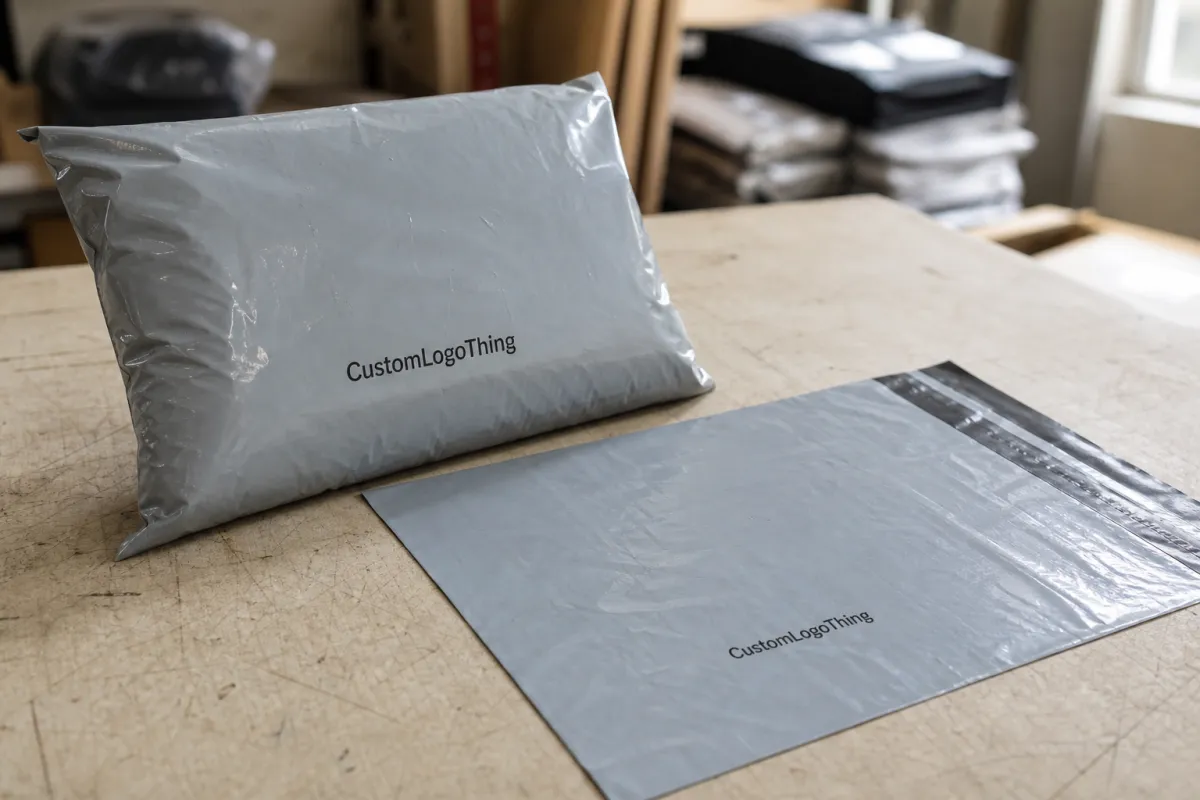
The retail Recycled Poly Mailers unit cost question usually gets more complicated after the first quote. One option may look cheaper on paper, but freight, setup, print coverage, spoilage, and returns can quickly change the real number. For retail programs, the cheapest bag is not always the lowest-cost choice.
A thin mailer that splits in transit, a seal that fails in warm conditions, or a package that arrives scuffed can create costs that never appear on the quote. Replacement shipments, customer service time, and extra handling often outweigh a few cents saved at purchase. That is why buyers should judge the full landed cost, not just the unit price.
Size, gauge, adhesive performance, case pack, and destination often affect pricing more than recycled content alone. A right-sized mailer can also improve pallet density and reduce wasted film. For teams comparing broader packaging options, the full lineup of Custom Packaging Products and the dedicated Custom Poly Mailers page can help frame the choice before pricing starts.
Compare the quote line, but buy the package that survives the trip and still fits the retail standard.
Product Details: What You Are Actually Buying
Recycled Poly Mailers are typically made from polyethylene film with either post-consumer recycled or post-industrial recycled resin. That distinction matters because the documentation behind the bag changes with the resin stream. Post-consumer resin comes from used goods recovered after consumer use. Post-industrial resin comes from manufacturing scrap and trim.
A retail-ready mailer usually includes an opaque film, a self-seal adhesive flap, side seams that hold under load, and a surface that can accept branding without looking weak or muddy. Recycled blends may show slight color variation, speckling, or less uniform gloss than virgin film. That is common and should be approved against a sample unless it falls outside the agreed spec.
Print quality matters because the bag often carries a logo, return address, barcode, seasonal art, or compliance mark. Each element needs enough contrast and spacing to remain readable after handling. If the same mailer is used in fulfillment, the surface also has to work with labels and scan points without fighting the adhesive or hiding key information.
A useful spec sheet should stay measurable:
- Flat width, length, and flap depth
- Film gauge or thickness target
- Recycled-content target and resin type
- Print colors, coverage area, and ink limits
- Seal type, adhesive strength, and return-seal requirement
- Pack count, case pack, and ship-to details
That level of detail makes quoting faster and comparison easier. It also prevents a supplier from pricing a vague idea instead of the actual package.
Specification Choices That Affect Strength and Shelf Appearance
Size is the first choice that changes the feel of the program. Flat width and length determine fit, fill efficiency, and whether the mailer works for folded apparel, soft accessories, or a mixed retail assortment. Too much empty space means shipping air; too little room puts stress on the seams and makes the package look strained.
Film gauge comes next. In retail mailers, common builds often sit in the 1.5 to 2.5 mil range, with heavier loads pushing higher when puncture resistance matters more than material savings. A thicker film can improve strength and perceived quality, but extra gauge does not automatically mean better performance. Lightweight apparel may run well on a mid-range film, while products with sharper corners need more margin.
Seal details deserve the same attention. Adhesive strength, flap width, and seam quality affect both customer confidence and return risk. A weak seal creates transit problems. An overly aggressive flap can slow returns processing or frustrate pack-out teams that need controlled opening.
Print design also affects cost. A single-color logo or limited spot graphic is usually easier to produce than full coverage art. More colors and larger ink coverage can increase setup and waste, especially if the job needs careful registration. If a barcode window, compliance zone, or return instruction must live inside the design, it should be planned early.
Optional features can help, but each one should earn its place:
- Dual adhesive for return-friendly mailers
- Tear strip for easier opening
- Opaque black or tinted film for privacy
- Preprinted return zone for repack workflows
- Special labeling for retail or compliance handling
These features usually raise the unit cost, but they can prevent handling problems that cost more than the feature itself.
Retail Recycled Poly Mailers Unit Cost, MOQ, and Quote Drivers
The short version: retail Recycled Poly Mailers unit cost is driven more by specification than by recycled content alone. Size, gauge, print complexity, order quantity, and shipping destination usually move the number faster than the resin mix. A quote that looks low often assumes fewer requirements, fewer colors, or a smaller bag.
MOQ matters because setup charges, plate costs, and production prep get spread across the run. On a small order, those fixed costs sit heavily on each piece. As quantity increases, the unit price usually drops until the run reaches a more efficient production band. That is why larger retail programs often buy in tiers instead of chasing the absolute lowest first-order price.
For planning, the table below reflects typical quotation behavior for printed recycled mailers used in retail programs. These are not live offers, but they are close to how pricing often moves when the spec stays stable.
| Order level | Typical cost per piece | What usually happens | Best fit |
|---|---|---|---|
| 3,000-5,000 units | $0.22-$0.38 | Higher setup spread, less bulk efficiency | Launches, pilots, short retail tests |
| 10,000 units | $0.15-$0.28 | Better balance between unit cost and flexibility | Seasonal programs, steady replenishment |
| 25,000 units and up | $0.10-$0.20 | More efficient production and freight planning | Core retail SKUs and repeat programs |
These ranges can shift with resin price, print coverage, geography, and production load. A simple one-color bag in a standard size usually prices lower than a heavy-coverage design with multiple proof rounds. Freight can matter just as much, especially on smaller orders where shipping eats a larger share of the total.
A solid request for pricing should include dimensions, print coverage, recycled-content target, pack count, ship-to location, and any retail compliance notes. If the design needs more than one quantity tier, ask for those at the same time. Side-by-side pricing usually exposes the exact volume where the retail Recycled Poly Mailers unit cost starts to improve.
Production Process, Lead Time, and Approval Steps
The path from quote to shipment is straightforward in theory: spec confirmation, artwork review, proofing, then production. If any step is loose, the run can drift in color, dimension, or finish before the first carton is packed.
Proofing is the most important checkpoint. A proof should verify logo placement, barcode readability, color expectations, and any note that affects retail handling. It is not just a preview image; it is the last chance to catch a mismatch before film is printed and converted.
The run itself usually moves through material prep, printing, converting, sealing, packing, and final inspection. For custom work, suppliers may include plate charges, setup charges, or other pre-production fees. Those are normal for custom printed flexible packaging. What matters is whether the quote labels them clearly and ties them to the correct quantity.
Lead time depends on quantity, print complexity, artwork revisions, and material availability. A straightforward one-color order on a standard size can move relatively quickly after approval, while a multi-color bag with special handling or a new recycled resin blend needs more room. In many programs, the approval cycle is the real schedule risk, not the press time.
For shipping-performance conversations, many teams refer to ISTA transit testing methods when they want to understand how packaging should hold up in distribution. For sustainability language, the EPA recycling guidance is useful when internal policy requires a defensible claim. Those references do not replace supplier documentation, but they help procurement teams ask for the right proof before production starts.
How Repeat Retail Orders Stay Consistent Across Reorders
Retail mailers are judged over time, not just on the first delivery. If the same bag is reordered season after season, it needs to seal the same way, print the same way, and pack the same way. That is where programs slip if the spec is not locked down.
Good quality control usually covers seal strength, film gauge, print registration, color consistency, and pack-out count. Those checks catch the kind of drift that causes complaints later. A slightly weaker seal can show up as transit damage. A small color shift can make a branded mailer look off next to the rest of the product line.
Consistency is hardest to maintain when the file version changes, the resin source changes, or the vendor swaps a process without a controlled spec. Buyers sometimes notice the issue only after a reorder arrives with a different gloss level or a softer hand feel. That may not matter to a casual observer, but it matters to a retailer comparing the new run against the last one.
The fix is simple: keep approved samples, proof files, and notes tied to the account. Record dimensions, gauge, print version, and seal type in one place. If procurement, operations, and marketing all work from the same record, the reorder is easier to repeat and easier to defend when someone asks why the cost changed.
That control is a cost tool as much as a quality tool. Replacing damaged bags, sorting mispacked cartons, or reworking art burns money faster than most teams admit. Stable packaging trims those losses and makes the quoted number more meaningful across the life of the program.
What to Compare Before You Lock the Purchase Order
Before the PO goes out, compare total landed cost, not just the unit price. Freight, setup, proofing, case pack, and special handling can change the final total in a way that is hard to see from a single line on a quote. Two bids may look close until the hidden pieces are added.
Verify the recycled-content claim against your internal sourcing rules. Some teams need post-consumer content only. Others accept a mixed recycled blend if the documentation is clear. That should be settled before production, not after the goods are already packed and in transit.
Case pack counts matter more than they first appear to. A mailer that arrives in awkward pack sizes can slow receiving, complicate storage, and force the warehouse to open more cartons than planned. That friction shows up as labor, even if nobody labels it as packaging cost.
Artwork revisions and sample expectations should also be in the comparison. If the program needs multiple mockups, an approval sample, or a production sample, those steps belong in the price conversation. A careful buyer compares at least two or three options with the same assumptions and checks whether the lower price still fits the retail standard.
Use a quick decision checklist:
- Does the spec match the product size and retail presentation?
- Are freight and setup charges visible?
- Is the recycled-content documentation acceptable?
- Do case packs fit the warehouse plan?
- Do the print, seal, and gauge details match across quotes?
That keeps the decision practical and easier to explain across procurement, operations, and marketing.
Next Steps for a Fast, Accurate Quote
If you want a clean quote, start with the basics: dimensions, quantity range, print coverage, recycled-content target, ship-to location, and any retail compliance notes. That one step prevents the long chain of follow-up questions that usually slows a sourcing cycle.
Send artwork files, logo assets, and barcode requirements early, even if the design is still being refined. The production team can then check layout, registration risk, and overall readiness before the order moves ahead. That also makes it easier to see whether the job needs a simple proof loop or a more controlled approval path.
Ask for two or three quantity tiers and request the unit-cost difference at each level. That side-by-side view makes the breakpoint visible and shows whether a slightly larger run materially improves the retail Recycled Poly Mailers unit cost. In many programs, that answer matters more than squeezing the first quote by a cent or two.
Hold the spec steady once the proof is approved. Stable artwork, realistic freight assumptions, and a clear production plan usually produce the best outcome: a mailer that looks right, performs well, and stays within budget.
What drives retail recycled poly mailers unit cost the most?
Size and film gauge usually have the largest impact because they determine how much material goes into each bag. Print coverage, number of colors, and order quantity can move the price quickly, and freight or setup can change the landed total even when the base quote looks steady.
Are recycled poly mailers more expensive than standard poly mailers?
Not always. A simple recycled mailer in a standard size can price close to a conventional option, especially at higher quantities. The gap usually grows on small custom runs, heavier print coverage, or builds with extra features that add setup and material cost.
What MOQ should I expect for printed retail recycled poly mailers?
MOQ depends on print method, size, and whether the order is a custom run or a stock-style program. Lower MOQs usually carry a higher cost per piece because setup is spread across fewer units, so it helps to ask for several quantity tiers before deciding.
How long does production take after artwork approval?
Lead time depends on order size, print complexity, and whether the required material is already available. For straightforward jobs, production can move quickly after approval; for complex builds, proof revisions and material sourcing usually set the pace.
Can I lower unit cost without changing the retail look?
Yes, often by using a standard size, simplifying print coverage, or reducing the number of colors. Keeping the spec stable and avoiding unnecessary add-ons usually saves more than changing the recycled-content target, and a side-by-side quote will show where the savings really are.


