Two suppliers can quote the same mailer size and still arrive at very different numbers, lead times, and print results. That is the problem the cosmetics Recycled Poly Mailers quote checklist is meant to solve. It forces every vendor to price the same build, not a loose idea of one. For beauty brands shipping sample kits, subscription boxes, or direct-to-consumer orders, the real differences usually hide in film gauge, closure style, recycled-content documentation, and freight.
The first quote rarely tells the whole story. The useful one is the quote that still makes sense after proofing, cartons, ink coverage, and destination charges are added. If that sounds fussy, it is because packaging can be fussy. A 10,000-piece run that is off by four cents per unit is a $400 swing before anyone notices. That kind of miss is common when the request skips the details suppliers actually need.
Buyers in cosmetics also have a narrower margin for packaging errors than many categories. A sleeve that tears in transit, a flap that peels too easily, or a recycled-content claim that cannot be documented can damage both the shipment and the brand message. The checklist exists to catch those failures early, before a quote gets mistaken for a commitment.
“The cheapest number on the page is often the most expensive one to correct later.”
That is the standard worth applying before requesting pricing from Custom Poly Mailers or any other supplier. A well-built quote protects margin, reduces revision cycles, and tells you whether the vendor actually understands cosmetic packaging or just sells a commodity bag.
What a cosmetics recycled poly mailers quote checklist should prove
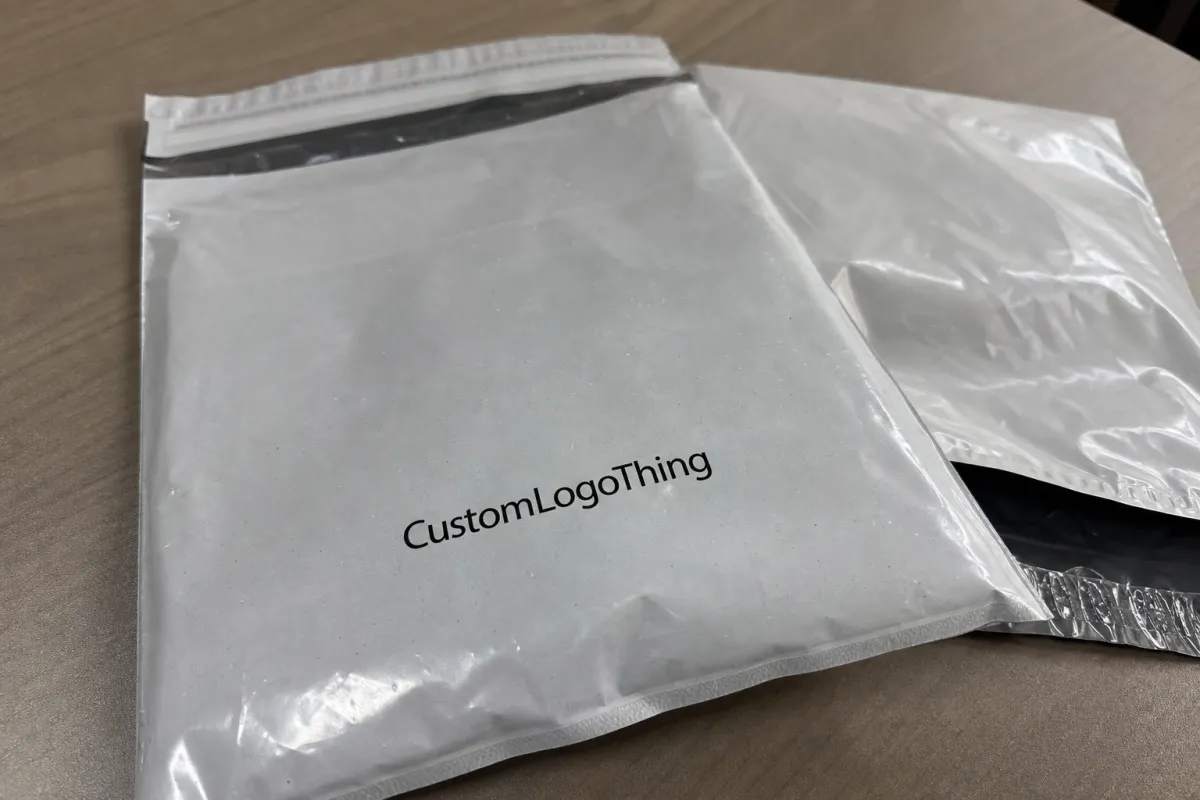
The first thing this checklist should prove is that two mailers described as the same size are often not the same product. One quote may assume a standard side-seal bag with a single-color logo. Another may include a tamper-evident flap, a heavier film, full-bleed printing, and a stricter recycled-content declaration. Those differences change resin usage, press time, waste rate, and sometimes the production route itself.
For cosmetics, the shipping use case matters as much as the mailer structure. A campaign sample kit has different needs than a refill order for boxed skincare, and both differ from a wholesale replenishment shipment. Sample mailers usually lean toward presentation and low unit cost. Fulfillment mailers often need more puncture resistance and a closure that survives sorting, stacking, and repeated handling. The checklist should separate those uses so the supplier prices the right build instead of guessing.
There is also a trap that shows up constantly in sourcing: the headline unit price looks fine, but the landed cost rises after setup, cartons, freight class, and destination fees are added. A serious quote should break out product price, artwork or plate charges, sample cost, carton cost, and shipping method. If those pieces are folded into one opaque number, the quote is incomplete.
For sustainability claims, the checklist should verify what the supplier can document, not just what the sales sheet says. If recycled content is part of the brand message, ask for the actual material declaration and any test or compliance paperwork tied to the market where the mailers will be sold. FSC is often used as a reference point for chain-of-custody discipline, even though the finished item here is plastic packaging rather than paperboard. For distribution handling, ISTA testing methods are a practical benchmark to discuss with suppliers: FSC guidance and ISTA standards both help buyers ask better questions.
The simplest rule is also the most useful one: a good quote has to satisfy protection, branding, and sustainability goals without creating a second round of revisions. That is what the cosmetics recycled Poly Mailers Quote checklist is for. It trims the field quickly and shows which supplier can price a real production spec instead of a loose estimate.
Mailer formats, closure styles, and print choices that change cost
Mailer structure changes cost more than many buyers expect. Side-seal construction usually offers a clean finish and an efficient production flow. Bottom-seal formats can feel sturdier for certain loads. A standard adhesive flap is the baseline, but tamper-evident closures raise confidence for retail beauty shipments and usually add to unit cost. Double-adhesive return mailers sit higher still because they add a second functional layer and more converting steps.
Finish matters too. Matte film often reads more premium and can hide scuffs better in transit. Gloss makes colors pop, but it also shows handling marks faster. Opaque color films support stronger branding and privacy, while a clear window or panel changes both the appearance and the material usage. If the artwork covers most of the surface, expect more ink, more setup time, and more scrutiny on registration. A small logo on a tinted recycled mailer is simpler to price than a full-wrap design with tight color matching.
Protection should never be treated as a generic box-check. Glass droppers, serum bottles, compacts, and rigid cartons all behave differently in transit. The mailer must resist puncture, tearing, and moisture exposure while still looking intentional at delivery. Ask how the supplier measures film performance. Tensile and impact testing often rely on methods such as ASTM D882 or ASTM D1709, and those results should match the gauge being quoted, not a different stock that happened to test well.
Small details can vanish in a vague request for quote. Tear notches, barcode zones, custom messaging, and inner liners all change the cost. If the unboxing experience matters, ask whether the supplier can print a short interior message or adjust the flap area for a cleaner opening. Those features do not always add much to the unit price, but they do alter the production plan and proof cycle.
| Mailer option | Typical quote impact | Best fit | Buyer check |
|---|---|---|---|
| Side-seal, one-color logo | Lowest setup cost; usually the simplest production path | High-volume ecommerce orders | Confirm film gauge and adhesive strength |
| Bottom-seal, full-coverage print | Higher material use and press time; more waste control | Premium brand presentation | Ask for artwork limits and proofing steps |
| Tamper-evident flap | Moderate price increase for added closure security | Retail cosmetics and gift sets | Check seal width and peel behavior |
| Double-adhesive return mailer | Higher than standard flap; useful for returns | Apparel, sample swaps, exchange-heavy programs | Confirm second-use label placement |
For beauty brands, the visual finish is not cosmetic in the casual sense; it shapes how the parcel feels before it is opened. That is why the safest quote request names the functional use, the print coverage, and the closure requirement together. Leave out one of those pieces and the price can look accurate while the product is wrong.
Size, gauge, recycled content, and compliance specs to lock down
If the dimensions are loose, the quote will be loose too. A supplier needs exact width, length, gusset, and usable capacity so the mailer fits the packed item, not a catalog approximation. A 10 x 13 inch bag may work on paper, but if the product sits inside a rigid carton or padded insert, the usable space may be too tight. That is where revisions begin, and revisions cost money.
Gauge, thickness, and weight should be stated clearly. Buyers often assume a mailer is “thick enough” until a shipment tears in transit. Ask for the film thickness in microns or mils and tie it to the expected load. For lightweight cosmetic samples, a thinner gauge may be enough. For glass or boxed products, a heavier gauge is usually worth the modest cost increase. The quote should reflect the exact specification, not a generic warehouse stock.
Recycled content needs the same discipline. If the brand wants post-consumer recycled content, spell out the target percentage and the claim language that will appear on the package or in product documentation. “Recycled” is not a single standard. The supplier should state what fraction is post-consumer versus post-industrial and what documentation supports that claim. If the label matters, treat it as part of the quote, not a marketing note added later.
Compliance also changes by market. If the mailer is crossing borders or going into a retailer-controlled packaging program, ask whether the supplier can support the documentation needed for that channel. Some buyers request chain-of-custody style proof even on plastic items because the brand story has to hold up under legal review and customer questions. That is sensible. It is also much cheaper to resolve before production than after delivery.
Print mechanics deserve equal attention. Color count, print coverage, logo placement, and barcode position should all be written into the request. If the supplier has to guess where the scan area sits, the proof cycle slows down. If the layout is fixed, the quote is cleaner and the production risk drops. This is where the cosmetics Recycled Poly Mailers quote checklist earns its keep: it keeps assumptions from hiding inside the pricing.
One practical sign of a solid supplier is the willingness to call out tolerance instead of hiding behind vague wording. Ask about size tolerances, seal consistency, and acceptable variation in print registration. Those are not glamorous details, but they are the details that decide whether the order can run smoothly at scale.
If you need a broader packaging mix beyond mailers, the same discipline applies across Custom Packaging Products. The strongest buyers are rarely the ones with the biggest spend. They are the ones who document the spec once and reuse it consistently across reorders.
Pricing, MOQ, and landed unit cost: what to compare line by line
Price comparisons only work when the line items are aligned. A useful quote should separate product cost, tooling or plate fees, artwork prep, proofing, carton charges, and freight. If those are wrapped into one number, you cannot tell whether the lower unit price is real or just incomplete. That is a common source of bad procurement decisions.
Here is a practical way to compare recycled poly mailer quotes for cosmetics:
| Order profile | Typical unit price range | Common MOQ | What usually pushes cost up |
|---|---|---|---|
| Plain recycled mailer, no print | $0.12-$0.20 | 3,000-5,000 pcs | Thicker film, special size, recycled-content verification |
| One-color logo mailer | $0.18-$0.28 | 5,000-10,000 pcs | Setup, proofing, higher coverage, tighter color match |
| Full-coverage printed premium mailer | $0.26-$0.45 | 8,000-15,000 pcs | More ink, press time, waste allowance, extra QA |
| Tamper-evident or return-friendly format | $0.30-$0.52 | 10,000 pcs and up | Additional closure materials and more complex converting |
Those ranges are directional, not promises. Size, gauge, destination, print coverage, and freight mode can move any of them. Still, they are useful because they show where the market usually sits. If one quote lands far below the range, ask what was removed. If one quote lands far above it, ask what was added. That is how a buyer avoids paying for a mystery.
MOQ deserves its own discussion. A supplier may quote 5,000 pieces on a simple one-color bag, then move the minimum to 10,000 once the artwork becomes more complex or the recycled-content target changes. That does not always mean the supplier is being difficult. Often, it means the setup cost can no longer be spread efficiently across a small run. The right response is to ask for tiered pricing: 5,000, 10,000, and 20,000 pieces, with the same build on each line.
Landed unit cost is the number that matters to finance. It combines product price, freight, carton counts, and destination charges into one view. A quote that looks $0.03 cheaper at the factory can become more expensive after shipping if the cartons are larger or the pallet configuration is inefficient. For cosmetics brands that reorder regularly, a slightly higher MOQ can still be the better deal if it lowers the landed unit cost enough to justify the inventory. Storage is a real cost, but so is paying too much on every shipment.
There is another wrinkle buyers miss: a low factory price can hide a weak packing plan. If the cartons are overfilled, the mailers crease. If the pallet height is off, freight climbs. If the order is split across multiple cartons because no one checked the converted dimensions, receiving slows down. The quote checklist should force those logistics questions into the open.
One more point: compare payment terms if you are buying across borders. A favorable unit price can be offset by slow sample approvals, wire fees, or export documentation delays. The cosmetics recycled Poly Mailers Quote checklist is not only about price. It is about reducing friction at every step from estimate to dock receipt.
Production steps and turnaround: from artwork to shipment
Good timelines are built step by step, not guessed in one line. The usual sequence is quote review, specification confirmation, artwork handoff, digital proof, sample or pre-production approval, production, quality check, and shipment. If a supplier skips one of those stages in the conversation, the schedule will probably slip later. Cosmetics buyers feel those slips quickly because launch dates are often tied to campaign windows or subscription drops.
Ask each supplier for stage-by-stage timing. A usable answer might be: proof within 1-2 business days, sample or signoff within 3-5 business days, production in 10-15 business days after approval, and freight added separately. That is much better than “about two weeks,” which tells you almost nothing. If the supplier also needs documentation to support the recycled-content claim, add extra time for that review.
Color matching can be a hidden delay. Metallics, deep black, and high-coverage brand colors often need more than one proof cycle. If your brand standards are strict, ask whether the supplier uses a physical strike-off, a digital proof, or a pre-production sample. Each has a different speed and confidence level. There is no universal winner; it depends on how sensitive the packaging is to shade variation.
Peak season matters too. So does freight mode. A quote that assumes ocean shipping will look cheaper than air, but the timeline will stretch. If the warehouse has a narrow receiving window, tell the supplier early. Orders get delayed more often by missed receiving rules than by the mailer itself. That is not a packaging failure. It is a planning failure.
For brands that want a useful benchmark on transit handling, ISTA-aligned testing language is worth discussing with suppliers. Even when full certification is not part of the order, that vocabulary helps buyers and vendors speak the same operational language. It reduces surprises once the mailers enter real distribution.
How to choose a supplier and send a quote-ready request
Do not choose on price alone. Score suppliers on transparency, sample quality, response speed, production scale, and documentation quality. A supplier that replies quickly but cannot explain recycled-content support is less useful than one that answers clearly and shows exactly what is included. In packaging, clean communication usually predicts cleaner execution.
Ask for proof of similar work. Not a vague promise. Look for mailer structures, print complexity, and closure types that resemble your own spec. Also ask whether the supplier will flag substitutions before production begins. A direct answer here is revealing. The best vendors are specific about what can change and what cannot.
When you send the request, include three must-haves, three nice-to-haves, pack size, print count, destination ZIP or port, target quantity, and desired ship date. Then attach the cosmetics Recycled Poly Mailers quote checklist itself. That simple step filters out weak suppliers immediately. Anyone who can price the job correctly should be able to respond with a formal, line-by-line quote on the first pass.
Here is a practical RFQ structure that works well:
- Product: recycled poly mailer for cosmetics ecommerce shipments
- Size: exact width, length, and gusset
- Construction: side-seal or bottom-seal, standard or tamper-evident closure
- Print: one-color, two-color, or full-coverage artwork
- Spec: film gauge, recycled-content target, and documentation needed
- Logistics: quantity, ship-to address, cartons, and target delivery window
A useful supplier will also answer the harder questions without wavering: What is the accepted tolerance on gauge? How is seal integrity checked? Does the quote include overrun or under-run allowances? How are defective prints handled? These questions sound technical because they are. They are also the questions that separate a polished quote from a real one.
My blunt advice is simple: treat the cosmetics recycled poly mailers quote checklist like a buying control, not paperwork. It protects margin, reduces rework, and keeps the packaging aligned with the product. For cosmetic brands that ship every week, that discipline is worth more than a slightly lower first quote.
FAQ
What should be included in a cosmetics recycled poly mailers quote checklist?
Include exact size, film gauge, recycled-content target, closure style, print count, and ship-to location so the supplier can price the real build. Ask for separate pricing on setup, artwork, samples, freight, and cartons to avoid hidden costs in the headline unit price. Add the intended use case, such as ecommerce shipment or sample kit, because performance needs can change the quote.
How does custom printing affect recycled poly mailer pricing for cosmetics?
Each added color, ink coverage area, or special finish can increase setup and production cost, especially on smaller runs. Full-coverage branding usually costs more than a simple logo print because it uses more material and more press time. The cheapest quote is often the one with the fewest print variables, not the one with the lowest advertised base price.
What MOQ should I expect for custom cosmetics recycled poly mailers?
MOQ depends on size, print complexity, and whether the mailer is stock or fully custom, so ask for tiered pricing by quantity. Simple specs can often support lower quantities than premium, multi-color, or specialty-closure mailers. If you reorder often, a slightly higher MOQ can lower unit cost enough to justify the extra inventory.
How long does production usually take after artwork approval?
A typical sequence is proof approval first, then sample or pre-production signoff, then full production and final inspection. Turnaround varies by supplier capacity, print complexity, and whether documentation or color matching needs revision. Ask for stage-by-stage timing so you can see where delays are most likely before you commit.
What sustainability documents should I ask for with recycled poly mailers?
Request recycled-content declarations, material specs, and any third-party test or compliance documentation tied to the market you sell into. Confirm whether the supplier can support the exact claim you plan to print on the package. If sustainability is part of the buying decision, treat documentation as part of the quote, not an afterthought. That is the simplest way to use a cosmetics recycled poly mailers quote checklist without getting burned later.