Branded Padded Mailers for candle brands Unit Cost Breakdown is not a packaging trivia question. It is a margin question. One cracked jar, one wax stain, or one replacement shipment can wipe out the savings from dozens of clean orders, which is why the cheapest mailer on a quote sheet is often the most expensive choice once shipping starts.
The better measure is landed cost per safe shipment. That includes the mailer itself, print setup, freight, packing labor, and the cost of damage that never shows up in the packaging line item. A good mailer can lower void fill, shorten pack time, and keep the customer’s first touch with the product looking deliberate instead of improvised.
Candle brands feel that difference quickly. A two-ounce perfume vial can survive a lot of abuse in transit; a glass jar with a metal lid and a scent-heavy wax fill has a different personality altogether. It is heavier, more brittle, and more sensitive to scuffing and pressure. Packaging has to match that reality, not the ideal version of it.
Why Candle Brands Keep Overpaying for Damage They Can Prevent
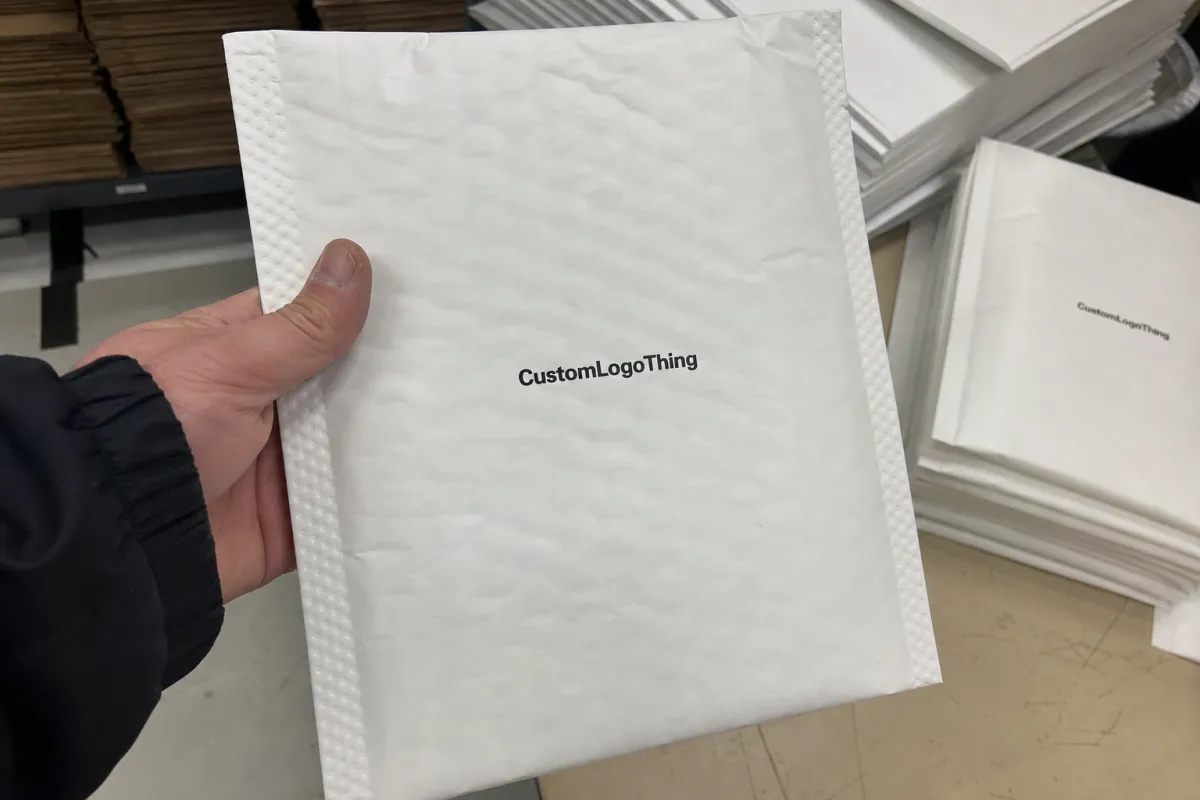
Candle shipping hides its costs well. A parcel that arrives chipped or leaking does not just create a refund. It triggers customer support time, a second shipment, payment processing fees, and sometimes a negative review that lingers long after the candle is replaced.
The arithmetic gets ugly at scale. If a brand ships 2,000 orders a month and breakage drops from 2.0% to 0.5%, that is 30 fewer problem shipments. Even a modest replacement cost of $12 to $18 per order starts to look material very quickly. The real loss is larger when labor and freight are included.
Branded Padded Mailers help most when the product is compact, premium, and repeat-shipped. Single candles, small gift sets, wax melts, and refill kits fit that profile well. The mailer reduces the need for loose fill and oversized cartons, so the pack line moves faster and the product spends less time being handled.
Plain packaging often appears cheaper because the first quote is lower. Then the hidden pieces appear: extra inserts, stronger outer boxes, more tape, longer pack time, and more damage claims. That is not a dramatic failure. It is a slow leak in margin.
“A package that arrives intact is inexpensive. A damaged package is expensive in more than one way.”
That is the useful lens. The right mailer is the one that protects the candle with the fewest extra steps and the lowest overall risk, not the one that merely looks economical in isolation.
What Branded Padded Mailers Include for Candle Orders
A padded mailer is a small system. The outer face carries the brand, the inner layer absorbs abrasion and minor impact, and the closure has to stay sealed through sorting, stacking, and vibration. For candle brands, those three parts matter because jar weight, lid movement, and scent oils all change how a package behaves under stress.
Most buyers focus on the front-panel artwork, but the usable print area is smaller than expected. A clean logo, one accent color, and a short brand line often perform better than dense art on a small surface. Fine type can look elegant on screen and muddy on a press run if the substrate is textured or the print method is not built for tight registration.
The structure can vary. Some programs use paper-based mailers with a padded liner; others use bubble or foam-lined formats for more fragile SKUs. A paper-forward build feels better for premium candle presentation and may support recycling claims more easily, but it still needs to be tested for tear resistance and closure strength. A bubble-lined option often protects better against abrasion, though it can look less elevated depending on the design language.
This format is useful for direct-to-consumer candle shipments, refill subscriptions, holiday launches, and bundled promotions. It also helps brands that want one mailer size across several SKUs. Fewer sizes usually mean fewer inventory errors, less training, and less dead stock sitting in the back room because the “right” mailer for a specific jar sold out at the wrong time.
For teams comparing formats, it helps to view the mailer alongside other Custom Packaging Products or a different outer shipper such as Custom Poly Mailers. The best choice is rarely the fanciest one. It is usually the one that fits the candle, the route, and the return-rate target without overbuilding the pack.
Specifications That Affect Fit, Print Quality, and Damage Rates
Specifications are where a packaging idea becomes a shipping system. Start with the candle itself: jar diameter, height, lid profile, and packed weight. Then add the items that travel with it. A care card, tissue wrap, or sample insert can add enough thickness to make a previously acceptable mailer too tight.
That extra thickness matters more than many teams expect. A package that fits during a tabletop sample test can pinch at the seal once the insert card and protective wrap are added. For glass candles, tightness is not automatically a benefit. If the pack bows, the closure works harder, and the mailer can scuff or split at stress points.
Material choice changes the equation. Buyers normally compare outer layer weight, padding type, adhesive strength, and recycled-content options. For paper-based builds, ask for board or paper weight in gsm, not just a marketing description. For polymer builds, thickness in microns and seal type tell you more than a generic “durable” claim ever will. If a supplier says a mailer is strong, ask how it was tested and what failed first.
Print quality depends on color count, coverage, and the base color of the substrate. Heavy ink coverage on a dark surface can raise cost because the press needs more passes or more controlled curing. Small logos, reversed type, and thin lines may also lose clarity if the printing method is not matched to the material. Premium candle brands care about this because the mailer is often photographed before it is even opened.
Operational details deserve the same scrutiny. Check adhesive performance in warm and cold conditions, whether the mailer can be stacked without crushing, and whether the finish scuffs under normal parcel handling. A pack can look excellent on a sample table and still fail in the network because the seal relaxes in heat or the face print rubs during transit.
If sustainability claims are part of the brief, keep them precise. Confirm the exact substrate and any chain-of-custody documentation before using certification language. If a program is built around paper and fiber content, that is the time to verify whether the claim is supported by FSC documentation or another applicable standard. Buyers do not need decorative wording. They need statements they can defend on a label or product page.
For higher-risk SKUs, transport testing is worth asking about. Recognized distribution methods such as ISTA protocols or comparable drop and vibration checks are not a guarantee, but they are a lot better than guessing. The goal is simple: find failure before customers do.
Branded Padded Mailers for Candle Brands Unit Cost Breakdown and MOQ
The Branded Padded Mailers for Candle brands unit cost breakdown usually starts with five variables: size, padding type, substrate, print coverage, and order quantity. Then come the one-time charges. Setup, plates or tooling, sampling, and freight can move the real cost more than the quoted unit price, especially on low-volume runs.
Read a quote in two parts. First, isolate the per-piece cost. Second, add the launch expenses that happen only once. A low unit price can hide artwork corrections, plate charges, rush freight, or a sample cycle that grows from one round to three. By the time the order lands, the “cheap” quote may no longer be cheap.
| Order Size | Typical Unit Cost | Setup Charges | Freight Pressure | Best Fit |
|---|---|---|---|---|
| 1,000 pieces | $0.52-$0.78 | $85-$220 | High if air shipped | Launch tests, seasonal drops, SKU validation |
| 3,000 pieces | $0.31-$0.49 | $85-$220 | Moderate, often easier by ocean or consolidated freight | Core candle SKUs and repeat DTC programs |
| 5,000 pieces | $0.24-$0.38 | $85-$220 | Lower per unit if shipping is planned well | Stable volume, multi-SKU rollouts, stronger margin control |
MOQ shifts the cost curve sharply. Smaller runs protect cash and reduce storage risk, but the unit price rises because the setup cost is spread across fewer pieces. Larger runs improve cost efficiency and color consistency, yet they only make sense if the brand can move the inventory before the artwork changes or the seasonal packaging refresh arrives.
There is a second cost curve that many teams miss: labor. If one mailer takes 20 seconds longer to pack than another and a brand ships 10,000 orders, that is more than 55 extra labor hours. The difference can erase the savings from a lower print price. Packaging decisions should be judged against speed, damage rate, and storage, not only against piece price.
Production Steps, Proofing, and Lead Time Expectations
The production sequence is usually predictable: size confirmation, artwork review, proof approval, production scheduling, inspection, and freight booking. Each step is ordinary on its own, but one late approval can shift the whole order. The most common schedule problem is not factory capacity. It is delayed sign-off.
Proofing deserves real attention. A digital mockup checks layout and text, but it does not prove fit, finish, or how the print behaves on the actual substrate. For candle mailers, a physical sample is often the safer choice because jar fit and closure behavior matter more than a polished rendering. If the candle is heavy or the insert stack is tight, a sample can save a costly redesign.
Lead time depends on the construction and the print method. Standard projects often move in 12 to 15 business days after proof approval, while fully custom dimensions or multi-color runs can take longer. Add shipping, customs clearance if relevant, and a small revision buffer. A launch date with no slack is not a plan. It is a hope.
One useful habit is to approve only what you would accept in volume. That includes logo placement, die-line accuracy, adhesion, and the feel of the finished closure. If the brief is vague, the factory will fill in the missing details. Buyers usually dislike those assumptions most when the full run arrives.
Pressure changes the calendar too. Holiday programs, reorders after a viral spike, and product launches with several SKUs can compress the timeline in a way that makes rushing expensive. A clear spec sheet prevents a lot of that pain before it starts.
How We Keep Reorders Consistent for Candle SKUs
Reorders are where a packaging program either becomes reliable or becomes a recurring headache. The strongest process keeps saved dielines, archived artwork, and a written spec sheet tied to each SKU. That way, the next order is not dependent on memory, a screenshot, or someone digging through old email.
Quality control should focus on three things before freight release: seal strength, print registration, and finished-size checks. If one slips, the customer may not notice until the package fails in the last mile. That is especially relevant for candle brands with multiple jar sizes, because one mailer family often needs to serve more than one SKU.
Reorder consistency also depends on color discipline. A logo that looks crisp in the first run can drift if ink density, substrate lot, or curing settings change. A sample archive helps. So does a written standard for what “close enough” means and what needs approval again. Ambiguity in packaging is usually expensive.
There is real value in suppliers that can explain fit logic instead of just taking orders. A good partner can tell a brand why a 9 oz jar can share a format with a 12 oz jar, or why a two-candle bundle needs a different internal cavity. That kind of judgment is more useful than a long list of generic promises.
Repeat buyers tend to optimize for fewer surprises. They want a mailer that ships the same way every time, arrives with the same finish every time, and packs at the same speed every time. That is how packaging moves from procurement into operations.
How to Compare Quotes Without Missing Hidden Costs
Quote comparison works best line by line. Ask for unit price, setup charges, sample cost, freight, overrun allowance, storage if any, and artwork revision fees. A supplier that gives only a base number is not giving you the full picture. They are giving you the first number.
The lowest quote is not always the lowest-risk one. A thinner film can shave pennies but increase breakage. A weaker adhesive can save a fraction and cost dollars in returns. A narrower print area can keep the quote neat while making the package feel cramped and less premium in unboxing photos. Those tradeoffs usually appear after the order has been paid for.
Ask for a landed-cost estimate at the volume you actually expect to ship. That one number tells you more than a tidy quote and a polished email. If two options are close, favor the one with better fit, lower breakage risk, and fewer packing steps. Packaging should remove friction from the shipping line, not create it.
It also helps to compare the mailer against neighboring formats. Sometimes the best answer is a padded mailer. Sometimes it is a mailer inside a light carton. Sometimes a simpler outer shipper with a branded insert is enough. The question is not which format looks strongest on paper. The question is which one protects the product most efficiently on the route you actually use.
That lens matters because carrier handling is uneven. A route with short regional delivery may tolerate a lighter build. A longer route with more touches usually needs better padding and a stronger closure. The quote should reflect that reality.
What to Send for an Accurate Quote and Fast Next Step
If you want a quote that is useful on the first pass, send the information that changes cost. That means candle dimensions, total quantity by SKU, destination zip code or port, artwork files, and any special requirements such as inserts, recycled content, or a retail-ready finish. Weight matters too. A 6 oz candle and a 16 oz candle do not share the same risk profile.
A sample candle or a dimensioned spec sheet is one of the most useful things you can provide. It lets the supplier check fit before pricing and reduces the odds of a rework later. If the program needs tiered pricing, ask for 1,000, 3,000, and 5,000 piece scenarios in the same reply. That makes the MOQ tradeoff visible immediately.
Ask the supplier to separate unit cost, setup, freight, and sample charges. That keeps the comparison fair. If you are also reviewing broader packaging formats, compare the numbers against other Custom Packaging Products so the candle packaging decision is made on a real cost basis rather than a single line item.
The cleanest next step is simple: confirm the size, request a proof, review the MOQ, and verify the timeline before the order is placed. That keeps price, performance, and schedule aligned from the start. It also prevents the most common packaging mistake, which is assuming the first quote already accounts for the full job.
Frequently Asked Questions
What drives branded padded mailers for candle brands unit cost the most?
Size, padding type, substrate, print coverage, and quantity usually have the biggest impact. Setup charges and freight can move the landed number just as much as the per-piece price, especially on smaller runs. If the design needs multiple revisions, that can add more cost than buyers expect.
What MOQ should a candle brand expect for custom padded mailers?
MOQ depends on the construction, print method, and whether the mailer is stock or fully custom. Smaller runs are possible, but the unit price is usually higher because setup cost is spread over fewer pieces. Tiered pricing at 1,000, 3,000, and 5,000 units makes the tradeoff easier to judge.
How do I know if a padded mailer is strong enough for glass candle jars?
Check the seal quality, padding density, and wall strength, then match those specs to the jar weight and transit distance. A physical sample with the actual candle is the safest way to confirm fit. If the jar is heavy or the route is long, compare the mailer against the cost of breakage before deciding.
How long does production usually take for custom candle mailers?
Standard projects often move in about 12 to 15 business days after proof approval, though custom dimensions, multicolor printing, and freight timing can extend that. Build in time for sample review and revisions. Tight launch calendars usually need more buffer than buyers assume.
What should I include in a quote request for branded padded mailers?
Send product dimensions, quantity, artwork files, destination, and any sustainability or retail requirements. Add the candle weight and packaging style so the supplier can recommend the right construction. Ask for a landed-cost quote with setup, freight, and sample fees shown separately.


