Buyer Fit Snapshot
| Best fit | Branded Padded Mailers for Coffee Roasters Unit Cost projects where brand print, material claims, artwork control, MOQ, and repeat-order consistency need to be specified before quoting. |
|---|---|
| Quote inputs | Share finished size, material target, print colors, finish, packing count, annual reorder estimate, ship-to region, and any compliance wording. |
| Proofing check | Approve dieline scale, logo placement, barcode or warning zones, color tolerance, closure strength, and carton packing before bulk production. |
| Main risk | Vague material claims, crowded artwork, missing packing details, or unclear freight terms can make a low unit price expensive after revisions. |
Fast answer: Branded Padded Mailers for Coffee Roasters Unit Cost should be specified like a repeatable production item. The safest quote records material, print method, finish, artwork proof, packing count, and reorder notes in one written spec.
Production checks before approval
Compare the actual filled-product size with the drawing, then confirm tolerance on folds, seals, hang holes, label areas, and retail display edges. Reserve space for logos, QR codes, warning copy, and material claims before decorative graphics fill the panel.
Quote comparison points
Review material grade, print process, finish, sampling route, tooling charges, carton quantity, and freight assumptions side by side. A quote is only useful when the supplier can repeat the same color, closure quality, and packing count on the next order.
For coffee brands shipping direct to drinkers, branded Padded Mailers for Coffee Roasters unit cost breakdown is not a spreadsheet hobby. It decides whether the outer pack protects the roast, supports the brand, and still leaves room for margin. Miss one of those pieces and the “cheap” mailer turns into a costly little surprise. Damage claims. Repacking labor. Freight that balloons after the quote looked friendly.
The real question is boring in the best way: what does each shipped unit actually cost, and what is included in that number? A roaster does not just buy a mailer. The buyer is paying for print setup, padding, material strength, pack-out speed, and the tiny bit of confidence that the parcel will survive the trip. Customers never see that spreadsheet. They do see a crushed bag.
If the outer mailer looks flimsy, the order feels flimsy. People judge fast. Coffee is still in the box at that point.
Why Roasters Notice Mailers Before They Notice Margins
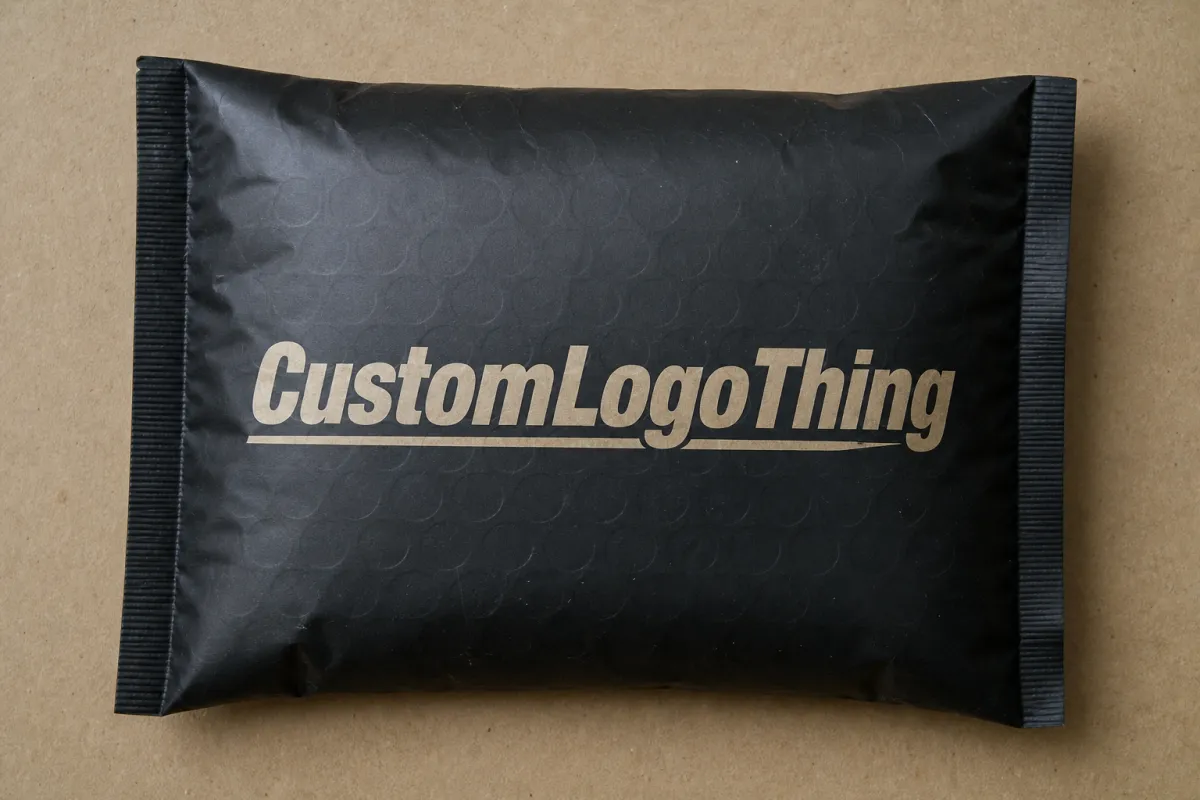
On paper, the mailer can look like a forgettable line item. In the warehouse, it behaves like a frontline employee. It takes the hits from parcel handling, stack pressure, rough sorting, and the occasional drop that nobody admits to. Coffee bags leave the line looking clean and still arrive with bent corners, scuffed seams, or a dented valve because the outer pack was too light for the route. That is why Branded Padded Mailers are more than decoration. They protect the product and carry the first impression.
The mistake is staring only at the invoice. The cheaper option can lose once every few hundred shipments and quietly eat the savings. One broken seal. One damaged retail bag. One team member repacking orders at 5 p.m. because the packaging was chosen by spreadsheet optimism. That is real money. It does not care how tidy the quote looked.
Roasters also underestimate how quickly the mailer becomes the moving billboard for the brand. The print, texture, closure, and overall build land before the customer reads a word about origin or roast profile. Subscription coffee makes this even more obvious because the same outer pack shows up again and again. People notice consistency. They also notice sloppiness. Funny how that works.
Treating the mailer like a generic shipping supply is the fastest way to get bad results. It is a tradeoff between unit cost, presentation, and damage prevention. Compare Branded Padded Mailers with plain stock packaging the right way. Include inserts, labels, void fill, and replacement shipments. A quote without those costs is just an invitation to fool yourself.
Packaging standards help keep that conversation honest. Coffee parcels do not need industrial freight testing, but buyers who reference ISTA shipping methods and material guidance from organizations such as ASTM tend to get cleaner comparisons and fewer made-up claims. That extra discipline saves time later. Usually right after the first disappointing sample arrives.
What Branded Padded Mailers Include for Coffee Shipments
A branded padded mailer is not a single material with a logo slapped on top. It is a layered structure. Outer face, inner padding, closure, seam style, printable surface, and size all change the price and the performance. If a supplier skips those details, the quote is not actually comparable. It is a vague promise wearing a measurement.
Kraft padded mailers are common for roasters that want a warmer look and a more natural brand feel. Poly bubble-lined mailers usually win on moisture resistance and puncture protection. Paper-walled padded mailers push a cleaner sustainability story, though the internal structure has to back that claim up. Hybrid recyclable builds sit in the middle, trying to balance presentation, transit strength, and end-of-life claims that do not fall apart under scrutiny.
Printing method matters just as much as structure. A simple one-color logo is usually the lowest-cost custom option. Full-panel decoration costs more, yet it creates room for origin stories, subscription messaging, and seasonal launches. Repeat pattern branding can look sharp at scale, but the artwork has to hold registration without turning into a blurry mess. Short copy, a thank-you line, or a roast note often lands in the sweet spot between personality and ink spend.
Mailers also need to match the product mix. A sample pack, a single 8 oz bag, two 12 oz bags, and a gift bundle each put different stress on the closure and seam. Add a box-bottom pouch or accessory insert and the dimensions shift again. A quote that ignores that is basically a guess with a logo attached.
There is one more split buyers should keep in view: custom-printed mailers versus stock mailers with a label or sleeve. Stock plus label usually lowers MOQ pressure and shortens lead time. Custom print usually costs more per piece, but it removes a manual labeling step and gives the package a cleaner finish. The right answer depends on volume, brand maturity, and how often the artwork changes. There is no magic setting. Only better or worse fit.
- Kraft padded mailers: better for a natural brand look, moderate protection, and simple printing.
- Poly bubble-lined mailers: better moisture resistance and puncture protection, often lighter in transit.
- Paper-walled padded mailers: better sustainability story, with performance tied to the internal build.
- Hybrid recyclable options: useful when the goal is a middle ground between curbside recyclability and transit safety.
If your team is comparing formats, it helps to look at Custom Poly Mailers as a reference point. Some roasters discover that a lighter poly structure lowers shipping weight enough to offset a higher print cost. Others decide the warmer look of kraft is worth the added spend. The right answer depends on the route, the bag, and the customer expectation. Packaging is rarely romantic. It is usually arithmetic with a branding problem.
Branded Padded Mailers for Coffee Roasters Unit Cost Breakdown
The cleanest way to explain branded Padded Mailers for Coffee roasters unit cost breakdown is to split the quote into its actual parts. Start with the substrate and padding. Add print setup, color count, finishing, carton packing, and freight. That is the real cost stack. Two suppliers can quote the same size and still land in different universes if one uses better material and the other hides the weak spots behind a lower sticker price.
Setup charges matter more in smaller runs than most buyers want to admit. Artwork prep, print plates, color matching, and machine changeover do not shrink just because the order is modest. Those fixed costs get spread across fewer pieces. As volume rises, the per-piece share drops. That is why MOQ is not only a buying hurdle. It is a pricing formula.
The ranges below are planning anchors, not promises carved into stone. Material choice, print coverage, dimension, and freight distance all move the final number. Still, the table helps separate a reasonable quote from a fantasy.
| Order Type | Typical MOQ | Approx. Unit Cost | What Usually Changes the Price | Best Fit |
|---|---|---|---|---|
| Stock mailer + custom label | 100-500 | $0.24-$0.60 | Label finish, mailer stock, labor, secondary packaging | Testing a new subscription, seasonal launches, low-volume SKUs |
| One-color custom printed mailer | 500-2,000 | $0.18-$0.42 | Setup charges, print coverage, padding type, freight | Growing DTC roasters with a stable logo and repeat shipment volume |
| Full-panel branded mailer | 2,000-5,000 | $0.28-$0.68 | Ink coverage, registration tolerance, finish, material grade | Subscription coffee, gift bundles, brand-heavy presentations |
| Recyclable hybrid custom build | 3,000-10,000 | $0.30-$0.75 | Construction complexity, certification claims, supplier testing | Brands balancing sustainability messaging and transit protection |
The easiest levers to control are usually the ones buyers ignore during the first quote round. Fewer print colors cut tooling and setup. Standard dimensions reduce custom cutting. Simpler artwork lowers proofing risk and registration headaches. Fewer SKUs help too, because every unique size or file adds overhead that eventually shows up in the price. One mailer format for most roasted bag sizes can save more than it sounds like it should.
Three common buying scenarios make the math easier to see:
- 1,000-unit pilot run: setup costs can add $0.08-$0.20 per unit, so the mailer feels expensive even when the raw material is not.
- 5,000-unit subscription run: setup spreads out better, and the unit cost usually drops into a more workable range for recurring shipments.
- 10,000-unit seasonal run: suppliers usually show stronger bulk pricing, especially if the artwork stays stable and the size is standard.
Freight can distort the headline quote more than buyers expect. A low factory price does not help if the cartons are bulky, heavy, or moving from a distant plant with annoying accessorial charges. A mailer that packs flat and nests efficiently usually wins on landed economics. That means the price per piece should always sit next to carton count and shipping method, not float around by itself like a meaningless brag.
There is also a hidden cost when the specification is sloppy. A loose fit can force the team to use inserts or outer cartons just to keep the coffee bag from moving around. A tight fit slows packing and can stress the seal. Both raise total unit cost in ways that never show up in the first invoice. Packing pain is still cost. It just wears work gloves.
A proper quote includes material description, finished size, print colors, artwork coverage, carton count, and whether freight is prepaid, collect, or billed separately. Missing that detail turns the number into marketing, not pricing. Buyers should not need a decoder ring to know what they are buying.
Simple landed-cost example
Imagine a one-color custom mailer quoted at $0.26 per piece with a $240 setup charge and $180 freight on a 2,000-unit order. The real landed piece cost is not $0.26. It lands closer to $0.47 before receiving or packing labor. If another supplier quotes $0.31 per piece with lower setup and better freight, the apparently higher quote may actually be cheaper. That is the kind of comparison a lot of roasters miss on round one.
A small difference in print price can hide a big difference in operations. The spreadsheet does not care. The warehouse does.
Specifications That Protect Beans and Support Shelf Appeal
Finished size is the first spec to confirm. That includes interior clearance, flap depth, and how the mailer behaves once the coffee bag is filled. A 12 oz pouch with a zipper and valve is not the same as an 8 oz pouch. A box-bottom bag changes the thickness again. If the product barely fits on a drawing, the production run will expose the problem. Every time.
Buyers should also ask about puncture resistance, edge crush protection, seal strength, and how the mailer behaves in manual versus automated fulfillment. Not every supplier will give the same test data. That is fine. The point is to have the conversation. A mailer that tears at the seam on a fast packing line is not a bargain. It is a delay with nice branding.
Brand-facing specs matter too. Print resolution, ink coverage, color tolerance, and finish all shape how the mailer reads in a customer’s hands. Matte usually feels more premium and cuts glare in photos. Gloss can sharpen color contrast, though it shows scuffs faster. If the brand depends on logo recognition, the layout should keep the mark clear and give the design room to breathe. If the goal is a seasonal launch, the copy can push more promotion and origin imagery without feeling cramped.
Sustainability needs a practical lens. Roasters want recyclable packaging, but the end-of-life story depends on paper, film, adhesive, and padding. A “recyclable” claim means very little without a material breakdown. The EPA has useful guidance on packaging and waste reduction, and the details matter if you are making claims to customers who actually read labels.
For fiber-based claims, it is worth checking whether the paper component is tied to responsible sourcing. A FSC reference can support that conversation if the documentation is current and real. Coffee buyers notice environmental language. They also notice flimsy packaging. The spec has to survive both tests.
- Measure the product first: finished bag size, valve protrusion, and any inserts or accessories.
- Ask for performance data: puncture, seam, and seal behavior under normal shipping stress.
- Review the finish: matte, gloss, soft-touch, or uncoated paper changes both cost and perception.
- Check the claim logic: recyclable, recycled content, and compostable are not interchangeable terms.
Warehouse compatibility matters more than branding teams like to think. A pretty rendering can turn into a headache if the mailer slows packing speed, needs hand-adjustment, or pushes dimensional weight higher. If the packout is already tight, the packaging should help throughput, not complicate it. That is one reason some brands move from boxes to padded mailers for lighter coffee orders: fewer parts, less assembly time, less nonsense.
For a wider look at packaging structures and product categories, compare options across Custom Packaging Products. The best mailer depends on whether your priority is shelf appeal, transit safety, sustainability claims, or operational simplicity. In most cases, the right spec is not the fanciest one. It is the one that makes fulfillment easier and customers less annoyed.
Production Process, Timeline, and Lead Time Expectations
A reliable timeline starts with a complete brief. The supplier needs finished dimensions, quantity, print coverage, target material, and final artwork files before the schedule means much of anything. Leave those out and the quote may look fast, then drag once the revisions start. Clean handoff beats back-and-forth emails every time.
The process is usually straightforward. Quote request. Size confirmation. Artwork review. Dieline approval. Sampling or proofing. Production scheduling. Quality control. Packing. Shipment booking. Each step can move quickly. Each step can also absorb time if the details are fuzzy. Change the size after proofing and the clock resets. Nobody is shocked. Everyone is annoyed.
Lead time depends on the production route. Stock customization is usually fastest because the base mailer already exists. Printed standard formats sit in the middle because the supplier still has to manage print setup and color control on a known structure. Fully custom builds take longer because tooling, die-cutting, and material checks add more checkpoints. For most branded mailers, a realistic production window after artwork approval is often 10 to 20 business days. Larger volumes and complex prints can stretch that.
Common delays are predictable. Late artwork changes. Missing Pantone references. A reworked size after sampling. A quantity bump after production is already booked. These are ordinary reasons schedules slip. They are not mysteries. The cleaner the initial brief, the fewer of those problems show up later.
For coffee brands tied to subscription drops or seasonal roast launches, cushion matters. A mailer due the same week as a roast release is too tight. Leave room for proofing, transit, and small production fixes. One-week delays create ugly compromises. Emergency freight costs more than planning did. That part should surprise nobody, yet it still does.
Production gets easier to manage when artwork stays stable across runs. If the design will not change for a while, ask about repeat-run pricing and lower setup on reorder. That is where repeat business actually helps. The supplier knows the format, the team has already checked the fit, and the odds of a fresh mistake drop.
Separate the ordering timeline from the shipping timeline. Manufacturing may take 10 to 20 business days, but ocean freight, domestic trucking, or express delivery can extend the real arrival date. Buyers who only quote factory lead time end up feeling very pleased right up until the shipment is late. Landed timing matters more than factory timing. The launch does not care that the cartons left the plant on schedule.
Timeline questions to ask before you approve the order
- Is the quoted lead time measured from artwork approval or from purchase order date?
- Does the timeline include sampling, proofing, and internal QA?
- Are freight and carton booking included in the estimate?
- What happens if color correction or size adjustment is needed?
Those four questions do more for a project than a vague “how fast can you do it?” ever will.
Why Choose Us for Coffee Roaster Packaging
Custom Logo Things is built for buyers who want packaging clarity, not foggy reassurance. Coffee packaging gets specific fast. Bag size, roast style, fulfillment method, and brand tone all affect the right mailer spec. Printing a logo is the easy part. Matching the structure to how coffee actually ships is the part that matters.
A solid quoting process should separate unit cost from setup charges, freight, and optional extras. That makes comparison easier and keeps the conversation honest. If one proposal looks cheaper per piece but hides tooling fees or handling charges, it is not really cheaper. Transparent quoting lets roasters compare landed cost instead of chasing a headline number that only sounds good.
We also pay attention to the details that affect daily operations. Dieline guidance. Artwork checks. Sample coordination. Advice on whether a stock mailer plus label makes more sense than a fully custom build. For a roaster testing a new subscription format or a limited roast release, that kind of support can keep the first order from turning into expensive overbuying. It also prevents the opposite problem: ordering a mailer that looks polished but slows fulfillment.
Quality control is not a slogan. In packaging, it is the difference between a clean run and a costly reprint. Coffee orders often include fragile pouches, valve bags, or small accessory inserts. If the mailer dimensions drift even a little, the performance changes. Good control reduces waste, rework, and damage claims. That matters even more on recurring orders, where one error multiplies across months.
Roasters just getting started usually need a smaller MOQ. Established brands care more about repeatability and better pricing on the second or third order. The packaging should support both stages. A modest launch quantity should not trap you in a format that cannot scale. A larger brand should not pay for features that do not improve transit safety or shelf appeal.
If you want to see how we think about related packaging decisions, our Case Studies page shows the tradeoffs brands face when they move from plain shipping materials to custom-branded packaging. The point is not decoration for its own sake. The point is function, cost, and presentation held together in a package that survives actual fulfillment.
Ask for the lowest-cost spec that still protects the product. That usually shows the difference between an optimized order and an overpriced one. A good supplier should explain why a structure, finish, or print method fits the job. If they cannot do that, you are probably paying for extras that do not move the business forward. Nice packaging is fine. Waste is not.
Next Steps to Quote and Order the Right Mailer
The fastest way to get a useful quote is to gather the basics before you ask for pricing. Have the coffee bag dimensions ready, including height, width, depth, and any extra thickness from a valve, zipper, or box-bottom structure. Add monthly shipment volume, target order quantity, and print coverage. If you know the shipping method, include that too. A complete brief makes for a cleaner quote and fewer awkward follow-up emails.
Decide what matters most before you start comparing options. Is the priority the lowest unit cost? Faster turnaround? A stronger unboxing moment? Better sustainability claims? You usually cannot max out all four at once. A roaster that values protection and presentation may accept a slightly higher piece cost if it reduces replacements and makes the brand feel stronger on arrival. A startup chasing speed may choose a stock base with a custom label until volume justifies a full print run.
Ask for a sample or mockup whenever the bag size is unusual or the fill weight changes between SKUs. A sample confirms fit, seal quality, and shelf appearance before production starts. That step is especially useful for seasonal formats, gift bundles, and limited releases. Fixing a sample costs less than fixing 5,000 finished units. Math wins again. Annoying, but true.
Compare offers on landed cost and workflow fit, not just the headline piece price. The cheapest quote can become the most expensive if it slows packing or forces extra packaging layers. A slightly higher quote may be the better operating choice if it lowers breakage, simplifies fulfillment, or cuts the need for reorders.
For many roasters, the smart starting move is to compare the custom mailer against a stock alternative, then decide where brand value actually shows up. That is where packaging stops being guesswork and starts becoming purchasing discipline. If you are ready to move, request a formal quote for Branded Padded Mailers for Coffee roasters unit cost breakdown with exact dimensions, volume range, and artwork notes so the numbers reflect the real job, not a generic estimate.
Custom packaging works best when the brief is specific. Tell us the bag format, the roast count, and whether the mailer needs to support subscriptions, wholesale gifts, or retail sampling. From there, the unit cost conversation gets much sharper, and the final spec is easier to defend internally.
What drives branded padded mailers for coffee roasters unit cost the most?
Quantity usually has the biggest impact because setup and print preparation get spread across more units as volume rises. Material type, number of print colors, and final size also move pricing quickly. Freight, packaging format, and special finishing can change the landed cost more than buyers expect.
What MOQ should I expect for custom coffee roaster padded mailers?
Many custom runs start around 500 to 1,000 units, though the exact MOQ depends on size, print method, and substrate. Standard shapes with simple one-color branding often support lower minimums than fully custom constructions. If you need a tighter MOQ, ask whether a stock mailer plus custom label or sleeve is the better fit.
How long does production usually take for branded padded mailers?
After artwork approval, production commonly takes about 10 to 20 business days, depending on the print method and order size. Sampling, proofing, and shipping should sit on top of that timeline. Rush schedules are possible, but they usually require faster approvals and may raise the unit cost.
Are branded padded mailers better than corrugated boxes for coffee bags?
For lighter ecommerce orders, padded mailers can reduce cost and packing time compared with a box-plus-filler setup. For heavier bundles or fragile multi-item kits, corrugated boxes may offer better crush resistance and stacking strength. The right choice depends on your bag size, shipping distance, and how much protection your fulfillment channel needs.
Can I make recyclable branded padded mailers for coffee roasters?
Yes, but the actual recyclability depends on the mix of paper, film, adhesive, and padding used in the build. Ask for a material breakdown before you promise end-of-life claims on the packaging. If sustainability is a priority, choose the construction that matches your local recycling access and your damage-prevention requirements.
The takeaway is simple: quote the mailer as a landed, functional component, not a decorative add-on. Lock the bag dimensions, print coverage, freight terms, and MOQ before you compare suppliers, then judge each option by what it does to damage risk, pack-out speed, and total unit cost. That is the difference between a packaging buy that supports the business and one that just looks good in a spreadsheet.