Buyer Fit Snapshot
| Best fit | Printed Padded Mailers for Coffee Roasters projects where brand print, material claims, artwork control, MOQ, and repeat-order consistency need to be specified before quoting. |
|---|---|
| Quote inputs | Share finished size, material target, print colors, finish, packing count, annual reorder estimate, ship-to region, and any compliance wording. |
| Proofing check | Approve dieline scale, logo placement, barcode or warning zones, color tolerance, closure strength, and carton packing before bulk production. |
| Main risk | Vague material claims, crowded artwork, missing packing details, or unclear freight terms can make a low unit price expensive after revisions. |
Fast answer: Printed Padded Mailers for Coffee Roasters: Film, Print, MOQ, and Carton Packing should be specified like a repeatable production item. The safest quote records material, print method, finish, artwork proof, packing count, and reorder notes in one written spec.
Production checks before approval
Compare the actual filled-product size with the drawing, then confirm tolerance on folds, seals, hang holes, label areas, and retail display edges. Reserve space for logos, QR codes, warning copy, and material claims before decorative graphics fill the panel.
Quote comparison points
Review material grade, print process, finish, sampling route, tooling charges, carton quantity, and freight assumptions side by side. A quote is only useful when the supplier can repeat the same color, closure quality, and packing count on the next order.
Printed Padded Mailers for Coffee roasters unit cost breakdown is a mouthful, but it points to a real problem: packaging can quietly eat margin faster than a bad roast schedule. A small coffee order looks light on paper. Then the carton, void fill, labels, tape, packing time, and carrier charges show up. Suddenly the packaging bill is doing more damage than the beans.
That is why this buying decision should stay anchored to cost per shipped order, not just the sticker price of the mailer itself. A good mailer can remove a packing step, reduce dimensional weight, and make the shipment look intentional the second it lands on a porch. A bad one can do the opposite while still looking fine on the sample table.
For coffee brands, the job is simple in theory and annoying in practice. The mailer has to protect the product, fit the pack-out, print cleanly, and support the brand without turning fulfillment into a tiny production line. Sampler packs, merch inserts, seasonal blends, and subscription drops all benefit from that kind of discipline. Pretty is nice. Predictable is better.
A mailer only earns its space if it saves time, holds up in transit, and still looks clean after a rough handling chain.
Why Printed Padded Mailers Change Coffee Shipping Economics
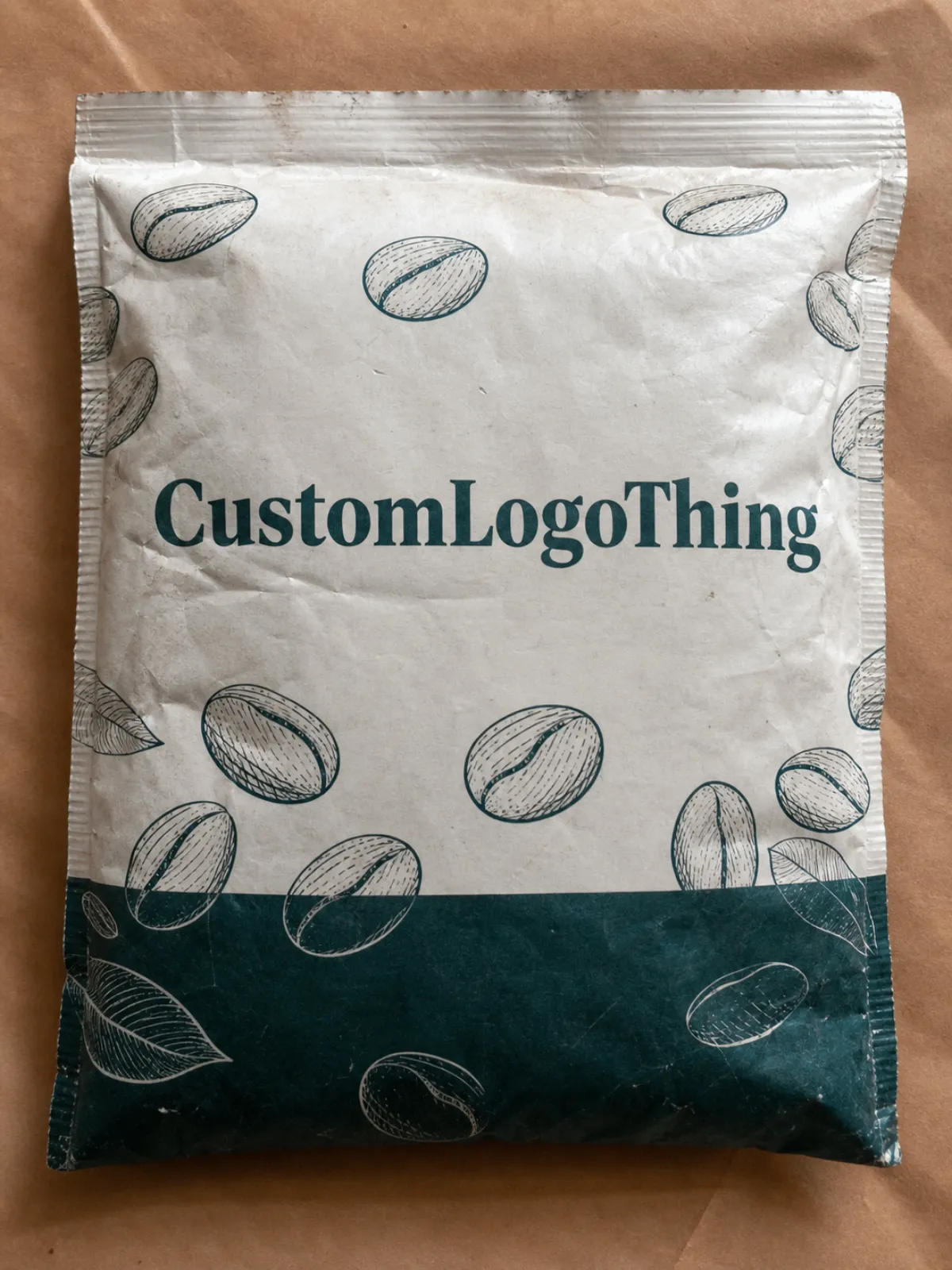
Coffee shipping fools people because the product is light. A 12 oz or 2 lb bag of beans does not look like a packaging problem. Then the bag gets boxed, cushioned, labeled, and handed to a carrier, and the freight bill rises faster than the original order value. A printed padded mailer can cut out some of that waste, which often lowers dimensional weight and keeps the packing station moving.
The labor savings are easy to underestimate. Carton assembly takes time. Void fill takes time. Tape takes time. If a mailer can reduce those steps, the payback shows up in labor efficiency before it shows up in a spreadsheet. A warehouse team notices that kind of thing immediately. They may not say thank you, but they will stop complaining about the pack-out.
Customers also read the package before they taste the coffee. That matters for sampler packs, gift subscriptions, and bundled merch. A clean printed mailer sends a different message than a generic brown outer box slapped together under pressure. It signals that the brand pays attention. For a first-time buyer, that small cue can be the difference between “nice” and “I guess they ship like this.”
The economics are best understood as a chain, not a single line item. Material cost matters. Print cost matters. But so do the costs that sit around the mailer: the time to assemble it, the postage tier it triggers, the receiving cost at a 3PL, and the rate of claims or re-ships if the product arrives damaged. A mailer that lowers one of those and raises another may not help much. The right choice balances the whole route.
There is also a quality-control angle. Coffee orders move through bins, conveyors, trucks, porch drops, and sometimes a retail backroom before the customer ever sees them. A mailer that actually fits the contents can reduce scuffing, corner crush, and seal failures. That protects both margin and brand perception. Cheap packaging that arrives tired is not cheap.
If the goal is to compare formats, keep the options realistic. Some coffee programs need a padded paper mailer. Some need a poly mailer with a different moisture profile. Others still need a carton because the contents are awkward or fragile. The right choice depends on the product mix, not the mood board.
Printed Padded Mailers for Coffee Roasters: Material & Product Details
Most Printed Padded Mailers are built from three parts: an outer printable face, a cushioning layer, and a closure system. The face may be kraft paper, coated paper, or polyethylene film depending on the look, the print method, and the level of moisture resistance you need. The cushioning layer may be paper fiber, bubble cushioning, or another lightweight insert designed to absorb handling abuse without turning the package into a brick.
For coffee roasters, the outer face matters more than many buyers expect. Paper gives a warmer, more natural look and usually prints well with flexographic or digital methods. Film holds up better against moisture and scuffing, which matters in humid roasting rooms, busy docks, or shipping lanes that are not exactly gentle on packaging stock. If mailers will sit near a loading area or get handled a lot before use, that film face starts to make a lot of sense.
Cushioning thickness should match the contents, not the logo. A sampler pack or a flat merch insert may need only light padding. A bundled retail order with a card, sticker sheet, or accessory may need more protection. Too much cushioning adds cost and bulk. Too little invites returns, bent inserts, and that ugly “opened but not enjoyed” look nobody wants.
Common custom options include width, length, flap style, tear strip, adhesive closure, print coverage, and one-color or multi-color branding. Coffee brands usually care about three things: whether the mailer fits the filled product without dead space, whether the closure seals the first time, and whether the print still looks clean after a little abuse in transit. That is the real spec. Everything else is decoration.
Moisture resistance deserves a real look. Coffee is usually protected inside a barrier bag before it goes into the outer mailer, but the outer package still shapes the customer’s first impression. Wet weather, cross-docks, and long last-mile routes can all make a more moisture-tolerant surface worth the extra spend. A mailer that looks tired on arrival still counts as damage, even if the beans are fine.
Fit testing should always use live product. Whole-bean bags, seasonal blends, gift sets, and sample cards do not behave the same way in transit. A mailer that looks perfect on a spec sheet can be too loose once the bag shifts, or too tight once an insert card is added. Real product testing catches that before the first production run turns into a lesson.
Some buyers focus on print and ignore structure. That usually backfires. A beautiful mailer that tears at the corner or opens under pressure costs more than a plain one with a reliable seal. The best coffee mailer balances presentation, puncture resistance, and pack-out speed because the fulfillment table is where the spec gets judged.
Printed Padded Mailers Pricing, MOQ, and Unit Cost Breakdown
The printed Padded Mailers for Coffee Roasters unit cost breakdown usually comes from five buckets: raw material, printing, setup charges, tooling fees, and freight. Sampling, color matching, special packaging, and kitting can show up too, but those five drive most quotes. Packaging pricing looks simple until you ask for the landed number. Then all the hidden edges become visible.
A useful way to think about the unit cost is this: material cost plus print cost plus amortized setup, then freight, then any waste or receiving fees. The exact math changes by supplier and shipment method, but the pattern stays the same. Quantity spreads the setup cost around. That is why a small order often looks expensive per piece even when the total spend is manageable.
As quantity rises, the unit cost usually falls. That is just how setup overhead works. A small run may carry the same plate charge or press setup charge as a much larger one, which makes the per-piece number look ugly at first glance. Bigger orders usually get the better piece price, but only if the inventory risk stays under control. Buying 50,000 mailers to save two cents each is not a victory if they sit in a warehouse for a year.
The part buyers should watch closely is landed cost. A low quote can still be the wrong deal if freight is heavy, the MOQ does not match the next reorder, or the artwork needs another proof cycle. The real number is the one that includes inbound shipping, samples, duties, and warehouse delivery fees that hit before the inventory is even usable. A cheap quote without those pieces is just a teaser.
| Order Profile | Typical MOQ | Unit Cost Range | Typical Setup / Tooling | Best Fit |
|---|---|---|---|---|
| Test run | 500-1,000 pieces | $0.85-$1.40 each | $150-$350 combined | New roast launch, seasonal drop, first-time spec validation |
| Growing subscription program | 2,500-5,000 pieces | $0.48-$0.85 each | $125-$300 combined | Monthly recurring mailings with steady usage |
| Established bulk order | 10,000+ pieces | $0.24-$0.55 each | $250-$600 if new plates or custom tooling are needed | Higher-volume coffee clubs and repeat fulfillment contracts |
Those numbers are planning ranges, not fixed pricing. Size, print coverage, liner weight, closure type, and whether the construction uses paper or film can move the quote a lot. A full-coverage multi-color design on a larger padded mailer will cost more than a simple one-color logo on a stock-size format. Packaging has a way of charging for ambition.
MOQ deserves its own conversation. A smaller minimum can help a coffee roaster test demand for a new subscription box or a limited single-origin release, but the unit cost is usually higher. That is fine if the order supports a launch window or short-term promotion with revenue behind it. It becomes a problem when the spec is oversized or the team orders too little to reach a sensible production tier.
Tooling fees and setup charges are easy to misunderstand. In many print programs, the customer pays for the work needed to prepare artwork, plates, cutting dies, or press settings. If the spec stays the same on a reorder, those charges may drop or disappear. Change the size, add colors, or revise the construction, and some part of the setup usually comes back. That is normal, not a surprise.
A useful quote review method is simple:
- Confirm the exact size and packed-product dimensions.
- Separate unit cost from freight and one-time charges.
- Ask whether tooling fees are one-time or repeatable.
- Check whether the quoted MOQ matches your true monthly usage.
- Compare landed cost, not just the printed sticker price.
Freight class and carton count matter more than many people expect. A mailer that ships efficiently in a flat-packed master carton can save more than a slightly lower ex-factory quote that arrives in bulky cases. For a roaster shipping to a 3PL, that difference also shows up in receiving time and storage space. A few extra cubic inches per case can become a real bill over a quarter.
If your team is deciding between paper-faced padded mailers and other flexible formats, ask for samples in the exact size range you plan to use. A sample that is close but not exact can hide issues with fit, seam behavior, or label placement. Those small misses usually turn into expensive misses once production starts.
One more practical point: the cheapest material is not always the cheapest outcome. If a slightly higher-spec mailer cuts damage claims, avoids rework, and reduces pack time, the real unit cost may actually be lower. That is the number that matters. Not the one printed on the quote header.
Production Process, Timeline, and Lead Time Expectations
A clean production schedule starts with artwork review and dieline confirmation. Before any press work begins, the supplier should verify dimensions, fold lines, seal location, and print-safe zones. Skip that step and the proof cycle gets clumsy. Skip it long enough and the first run starts collecting avoidable delays and avoidable excuses.
After the artwork is approved, the team moves into print preparation. That stage may include plate creation, file adjustment, color alignment, or material sourcing if the outer face is not already in stock. Simpler programs move fast. Custom sizing, multi-color artwork, and special finishes slow things down because more variables have to be settled before production starts.
Typical lead time for a straightforward custom padded mailer order is often 12-15 business days after proof approval, though that can stretch to 18-25 business days if the order needs new tooling, complex print coverage, or specialty materials. Shipping time is separate. Ocean freight and extended ground lanes can add several weeks to the calendar, which is useful only if missing a launch date was part of the plan.
Proof cycles are where schedules slip most often. A roaster may want the mailer to match an existing label, carton, or subscription insert, which means color and layout need another pass. That is normal. The useful part is approving the proof with the real packed-product use case in mind instead of judging it like a flat screen graphic.
For transit testing, the ISTA test methods are a solid benchmark because they reflect the knocks and drops a package will see in a distribution chain. If your brand cares about fiber sourcing, the FSC system is worth understanding, especially when the outer face or another fiber-based component is part of the sourcing story. Neither one replaces real-world pack testing, but both help frame the conversation.
Buyers should have these details ready before asking for a quote:
- Filled package dimensions, not only the coffee bag size.
- Target order quantity and monthly usage, if recurring.
- Print colors, logo files, and any back-panel copy.
- Desired ship date and launch date.
- Ship-to address, warehouse rules, and carrier preferences.
Seasonal promotions need extra buffer. Holiday blends, roast anniversaries, and subscription refreshes tied to a date on the calendar should be ordered early enough to absorb proof edits and freight variability. Rush freight eats savings fast, and a cheap unit price does not help much if the cartons show up after the promotion has already started.
First-article approval matters too. Even when the digital proof looks right, the first physical sample should be checked for seal strength, print clarity, and the way the mailer loads with a real coffee bag inside. A package that works on screen is not good enough for a packing line that needs repeatable handling every day.
Production timing should also account for internal approval cycles. If brand, operations, and finance all need to sign off, the supplier timeline is only part of the schedule. The fastest orders are the ones that do not sit in someone’s inbox for three days because the print proof “looks fine enough.”
Specification Checklist for Coffee Subscription Shipments
A subscription mailer has to do more than move a product from one place to another. It needs to hold shape, protect the contents, and still look good after handling by packers, sorters, and delivery drivers. The spec checklist should start with the packed dimensions of the coffee bag plus any inserts, cards, stickers, or labels that travel inside the package.
Fit allowance should be modest. Most teams leave enough clearance for the product to slide in without forcing the seams open, but not so much room that the contents rattle during transit. If the package carries a flat insert card and a coffee bag together, the mailer must account for the added thickness at the seam and the pressure created by the closure strip. Too loose wastes space. Too tight slows the line.
Performance details matter as much as appearance. Ask for seal strength data, puncture resistance expectations, cushioning level, and print durability. A clean logo only helps if it survives stack pressure, cart movement, and the minor abrasion that happens in every real shipping lane. The barrier bag protects freshness. The outer mailer protects the brand impression.
Barcode placement and label compatibility should be checked early too. If your warehouse uses thermal labels, the mailer needs a flat, readable zone that will not wrinkle under the label or interfere with the closure. If the operation uses automated sortation or dense stacking, the mailer should feed cleanly and resist curling. Nobody wants a mailer that fights the printer and the packer at the same time.
Here is a practical test plan before committing to full production:
- Pack 10-25 live orders using the exact coffee bag and insert set.
- Measure how quickly the mailer seals and whether the adhesive holds immediately.
- Run a short transit test with carrier-like handling and a normal delivery route.
- Check for edge crush, seam split, print scuff, and label lift.
- Open a few returned or test packages and inspect the product presentation inside.
That type of testing usually exposes the actual tradeoff. A premium-looking mailer that is slightly too large can cost more in postage and material, while a tighter spec can improve efficiency but may need more careful pack-out. There is no universal answer. The right choice depends on the coffee format, average order weight, and how much unboxing polish you want to preserve.
Stackability matters more than it sounds. If the mailers are stored in cartons near the packing line, the outer face should resist curling and the unit bundle should stay easy to handle. A mailer that warps in storage slows down the team long before the customer sees it.
Roasters that ship multiple product types should not assume one package family fits everything. A sampler pack, a full retail bag, and a gift set can need different mailer depths or pad levels. One spec sheet does not magically solve a mixed catalog. The packs need to be tested as a family, not as an abstract concept.
Practical experience usually points to the same thing: the best spec is the one the warehouse can repeat without improvising. If packing performance depends on a perfectly aligned adhesive strip or a careful hand every time, the spec is too fragile.
Why Choose Custom Logo Things for Coffee Mailer Programs
Custom Logo Things works well for coffee mailer programs because the job is disciplined packaging, not hype. Coffee brands need repeatable size control, dependable print quality, and direct answers on what affects cost. A good supplier turns those details into a quote the buyer can actually use instead of hiding the real economics behind fluffy language.
That matters most during quoting. A roaster may start with a target look and a rough size, but the project only gets manageable once the supplier confirms the exact dimensions, the number of print colors, the closure style, and whether the program needs stock material or fully custom production. Better spec matching means fewer surprises in both unit cost and lead time.
It also helps to work with a team that understands fulfillment, not just branding. The best coffee mailer supports the warehouse flow. It loads quickly, seals cleanly, stores well, and ships without a lot of trimming, rework, or extra protective packaging. That kind of discipline saves money because it removes friction at every touchpoint.
For buyers comparing formats, it makes sense to look at the broader packaging portfolio and think through where the mailer sits in the shipping chain. If the operation expects to scale from small subscription drops to regular monthly volume, keeping spec consistency on reorders is worth real money. Reorder consistency protects brand appearance and inventory planning in the same move.
In practical terms, the right partner should be able to help with:
- Artwork review and file cleanup before proofing.
- Sample guidance so the team can test fit and seal performance.
- Quote comparisons that separate unit price from one-time charges.
- Reorder planning so the next shipment matches the first one closely.
- Volume forecasting for roasters expecting subscription growth.
The difference shows up in the quote review. Some suppliers lead with a low piece price, then add setup charges, freight, or spec changes later. A better process puts those items in view early, which helps coffee roasters budget around seasonal demand and recurring shipment schedules without getting blindsided halfway through the order.
There is also a service benefit for brands that manage both coffee and merchandise. Mailers do not sit alone; they live beside cartons, labels, fillers, and sometimes other flexible packages. A partner that can advise across formats helps the roaster choose the right structure for each shipment type without overbuying packaging that does not match the order profile.
The objective is plain: deliver a mailer that ships cleanly, prints well, and fits the real cost model of a coffee business. That is where a packaging partner earns the keep.
The most useful supplier is the one that can explain the tradeoffs without dressing them up. If a lower-cost spec adds risk or a higher-end build will not pay back in your channel, that needs to be said plainly. Coffee brands have enough moving parts already.
Next Steps to Order Printed Padded Mailers
The fastest path to a useful quote is to gather product dimensions, target quantity, artwork files, and launch timing before starting the conversation. If the coffee bag is changing, include the filled dimensions of the actual bag, not the empty shell. Seam pressure and fit depend on the packed shape, not the fantasy version from the design mockup.
It helps to compare at least two quote formats. One should show base unit price and one-time charges separately. The other should spell out freight and any likely reorder assumptions. That makes it easier to tell whether a lower sticker price is really the better deal once the order lands at your facility.
A short internal test is worth the time. Ask for samples, pack real product, seal them under normal working conditions, and see how the mailers behave after a short transit cycle. A package can look fine on a sample table and still fail when the product is a little larger, humidity changes, or the packing team moves at normal speed.
A simple launch sequence keeps the order on track:
- Confirm the size, material, and print approach.
- Approve the proof with final copy and brand colors.
- Schedule production with enough buffer for revisions.
- Receive samples or first articles and validate fit.
- Stage inventory so the first shipment date is protected.
If the mailer is tied to a seasonal coffee program, build in extra time for reprints or freight changes. A little cushion in the schedule usually costs less than emergency shipping or a last-minute substitute package. That matters even more for subscription businesses, where a missed ship date can hit retention and trust at the same time.
Once the team has dimensions, artwork, and order volume ready, request a detailed printed Padded Mailers for Coffee Roasters unit cost breakdown so you can compare landed cost, MOQ, and Lead Time with actual numbers instead of guesses. That is the cleanest way to buy the right mailer for the roast, the route, and the fulfillment team.
One last check before signing off on the spec: ask whether the quote reflects the exact packed product, not a generic mailer size. That single question catches a surprising number of bad assumptions. It also keeps the finance team from discovering the mismatch after the first shipment leaves the dock.
What affects the unit cost of printed padded mailers for coffee roasters the most?
Quantity usually drives the biggest change because setup costs spread across more units as volume rises. Print coverage, number of colors, cushioning weight, and custom sizing all push the cost per piece up, and freight needs to be part of the comparison every time. If you are comparing two quotes, the one with the cleaner freight structure is often the better one.
What MOQ should I expect for printed padded mailers with custom branding?
MOQ depends on size, construction, and print method, so it is smarter to ask for the minimum on your exact spec instead of a broad estimate. Smaller test runs are often possible, but the unit cost usually rises at lower quantities, especially if the job needs new tooling or a fresh proof cycle. A launch run and a long-term supply run are usually priced very differently.
How long is the typical lead time for printed padded mailers?
Lead time includes proof approval, production, finishing, and shipment, so the schedule depends on how quickly artwork gets finalized. Simple orders move faster than jobs with custom sizing, multiple colors, or special finishes, and seasonal coffee launches should be planned earlier than routine reorders. If the schedule is tight, build in a buffer for revisions and freight.
Can printed padded mailers protect coffee bags during shipping?
Yes, if the mailer size and cushioning match the packed product and the closure seals properly. They work well for sampler packs, retail bags, and lightweight inserts when the package is not overfilled, but heavier bundles should be tested with real product and carrier handling before scaling up. For fresh coffee, the inner barrier bag still does the freshness work; the mailer protects the presentation and the outer shell.
What information do I need before requesting a quote?
Have the filled package dimensions, estimated monthly or annual quantity, print artwork, and desired launch date ready. Include any special requirements such as moisture resistance, barcode placement, or warehouse packing rules, because that is what makes an accurate printed Padded Mailers for Coffee Roasters unit cost breakdown possible. If you can, include a sample pack too. That removes guesswork fast.