Buyer Fit Snapshot
| Best fit | Branded Presentation Boxes Bulk Order projects where brand print, material claims, artwork control, MOQ, and repeat-order consistency need to be specified before quoting. |
|---|---|
| Quote inputs | Share finished size, material target, print colors, finish, packing count, annual reorder estimate, ship-to region, and any compliance wording. |
| Proofing check | Approve dieline scale, logo placement, barcode or warning zones, color tolerance, closure strength, and carton packing before bulk production. |
| Main risk | Vague material claims, crowded artwork, missing packing details, or unclear freight terms can make a low unit price expensive after revisions. |
Fast answer: Branded Presentation Boxes Bulk Order: Board, Finish, Dieline, and Unit Cost should be specified like a repeatable production item. The safest quote records material, print method, finish, artwork proof, packing count, and reorder notes in one written spec.
Production checks before approval
Compare the actual filled-product size with the drawing, then confirm tolerance on folds, seals, hang holes, label areas, and retail display edges. Reserve space for logos, QR codes, warning copy, and material claims before decorative graphics fill the panel.
Quote comparison points
Review material grade, print process, finish, sampling route, tooling charges, carton quantity, and freight assumptions side by side. A quote is only useful when the supplier can repeat the same color, closure quality, and packing count on the next order.
A branded presentation boxes bulk order is not just a packaging purchase with nicer corners. It changes what a customer thinks the product is worth before the lid even comes off. Put the same item in a plain mailer and it reads as functional. Put it in a rigid presentation box and it starts to feel considered, giftable, and a little more expensive than the number on the invoice.
I have seen teams polish the product, the copy, the photography, and then hand the launch to a box that looked like it had been picked by accident. The result is predictable. The packaging gets judged first. Always.
Bulk ordering matters because repetition exposes weak decisions quickly. If one box is slightly off-shade, if an insert shifts by a few millimeters, if the closure feels flimsy on the last 2,000 units, customers notice. So do warehouse teams. A branded presentation boxes bulk order keeps launches aligned, client kits consistent, and retail gifting from drifting into a patchwork of near-matches.
There is also a simple financial truth here: packaging is often the first physical evidence of quality, and people trust what they can handle. Research on consumer behavior has long shown that first impressions form fast, sometimes in seconds, and packaging usually arrives before the product description has a chance to do its work. That is why the box is never just a box.
The goal here is practical. Not sales fluff. Not mystery jargon. Just the parts that actually change the quote, the timeline, and the final look so you can place a branded presentation boxes bulk order without guessing your way through it.
Branded Presentation Boxes Bulk Order: Why They Move Product Faster
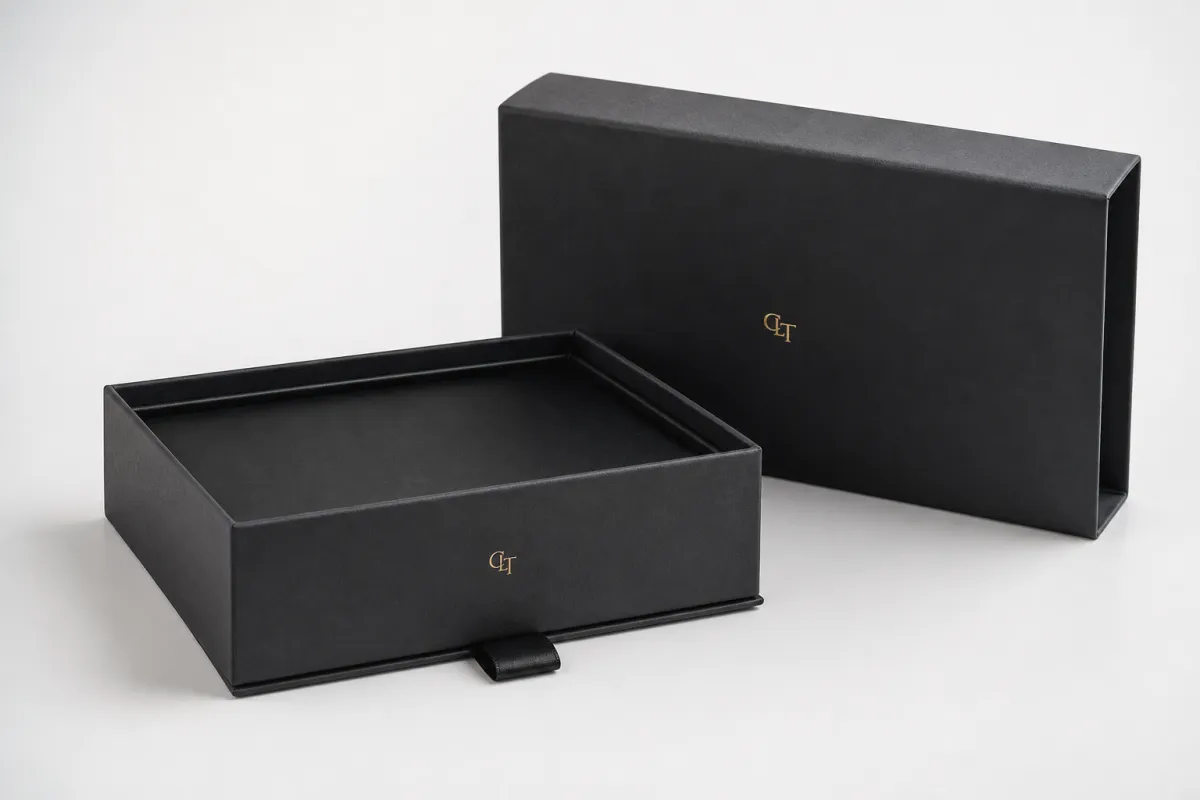
A branded presentation boxes bulk order can move product faster because presentation changes behavior. A rigid box feels intentional. A lightweight folding carton often feels temporary. That difference is not cosmetic; it affects how people read value, how they treat the item, and whether they think the product belongs in a premium lane or a bargain one.
That is why the same item can perform differently depending on the package. A tech accessory, a skincare set, a corporate gift, even a bottle of olive oil can look a tier higher once the outer presentation carries the right weight. I have watched sales teams reuse product photography for months because the box itself made the launch kit look better on camera. No extra styling. No expensive reset. Just a better container.
Bulk ordering adds another layer of value. One structure means one specification sheet, one print run, one approved finish, and fewer little surprises when the order moves into production. Teams do not have to rebuild the packaging plan every time there is a new campaign. That saves time, but it also removes one of the most common failure points: inconsistency between the sample and the live run.
There is a behavioral side to packaging that people underprice. The outside sets the expectation for the inside. If the box feels generic, the product has to do all the emotional work. If the box feels polished, the product starts with momentum. That is a small edge, sure, but small edges compound fast when you are shipping hundreds or thousands of units.
And yes, bulk ordering can be the boring way to get there. Boring is good. Boring means the box arrives in spec, the logo lands where it should, and the unboxing does not rely on luck.
“The box is the first handshake.” People in packaging say that because they have watched the same pattern repeat across retail, gifting, and B2B: the container changes the conversation before the contents are even seen.
There is one more reason these orders matter. A well-planned branded presentation boxes bulk order often reduces damage claims. Better structure, better inserts, and better fit mean less movement in transit. That is not glamorous, but it is where margins quietly get protected.
Branded Presentation Boxes Bulk Order Options and Formats
Not every presentation box behaves the same way. The structure you choose changes the feel, the protection level, the cost, and the unboxing rhythm. A rigid box is not the only answer, but it is usually the one buyers mean when they ask for a branded presentation boxes bulk order.
Here are the formats that show up most often:
- Rigid setup box - The classic premium choice. Strong board, wrapped exterior, clean edges, and enough heft to signal value.
- Two-piece lid and base - Straightforward, elegant, and easy to use for gifting, retail, and luxury samples.
- Magnetic closure box - Popular for kits and presentation sets because the flap gives a controlled open and close. It feels deliberate, not fussy.
- Drawer or slide box - Good for products that benefit from a reveal moment. They are a little theatrical, in the best way.
- Book-style box - Often used for launches, awards, and corporate presentation kits where the opening sequence matters as much as the contents.
The choice is not only about taste. A magnetic closure box might be perfect for a client gift, but overkill for a high-volume retail promotion. A two-piece box might be ideal for cosmetics, but not for a fragile hardware kit that needs a tighter internal hold. The structure has to match the product, the shipping method, and the customer experience. Otherwise the packaging starts working against the item instead of for it.
I tend to think of format selection as the difference between a tailored coat and a rain poncho. Both cover you. Only one changes the way people read the person wearing it. Kinda the same thing happens with packaging.
There is also a practical manufacturing angle. Some structures are easier to scale cleanly than others. A simple lid-and-base design may tolerate higher quantities with fewer points of failure. A box with a complex internal tray, multiple wraps, and strong closure magnets can look stunning, but it also adds assembly steps and more chances for variation. That is fine if the budget and timeline can absorb it. It is not fine if the launch date cannot move.
For a branded presentation boxes bulk order, the smartest format is often the one that balances the desired feel with a production method your supplier can repeat at scale without drama.
Materials, Inserts, and Print Specs That Affect Results
This is where the order either sharpens up or starts to drift.
The outer board is usually the backbone of a rigid presentation box. Many suppliers use greyboard or chipboard in the 1.5 mm to 3 mm range, depending on the size and the weight of the contents. Thicker board feels more substantial, but more thickness is not automatically better. If the box is too rigid for the product or the lid fits too tightly, the customer experience can go from premium to awkward very quickly.
Wrappings matter too. Art paper, coated paper, specialty textured stock, leatherette-style wraps, linen textures, and soft-touch lamination each create a different tone. Soft-touch can feel high-end in the hand, but it shows fingerprints more easily. Matte can look restrained and modern. Gloss reflects more light and can help strong color work, though it also makes surface flaws more visible. There is no perfect finish. There is only the finish that matches the brand and the handling conditions.
Printing is where many people overtrust the screen. Screens lie a little. They always do. A logo that looks dark navy on a monitor may print flatter than expected on paper, and a subtle texture can disappear once the artwork gets wrapped around a box edge. That is why physical samples matter. For color-critical projects, Pantone matching can help maintain consistency across batches, while CMYK is often better for broader image work and more economical runs. If a buyer wants exact brand color, they should say that early instead of hoping the factory guesses right.
Foil stamping, embossing, debossing, and spot UV can lift a branded presentation boxes bulk order without making it feel overloaded. Used well, they draw the eye exactly where it should go. Used badly, they look like someone tried to throw every finish at the box because the menu was too tempting. More finish is not the same thing as more quality.
Inserts deserve more attention than they usually get. A box that looks great on the outside can still fail if the product slides, rattles, or arrives crooked. Common insert options include die-cut cardboard, EVA foam, molded pulp, and vacuum-formed trays. Cardboard inserts are good for lighter items and better recyclability. EVA foam gives a tighter fit and strong protection, but it is not always the friendliest option for sustainability goals. Molded pulp is increasingly attractive for brands trying to reduce plastic, though it needs careful engineering to hold shape and protect delicate edges.
For some products, the insert is doing more work than the outer box. A watch, a bottle, a cosmetic set, or a multi-piece electronics kit can all fail the unboxing if the interior fit is loose by even a small margin. I have seen a beautiful box get rejected because the insert gave the product half an inch too much movement. Half an inch sounds tiny. In packaging, it is a lot.
If there is one honest rule here, it is this: ask for a physical prototype when the product is expensive, fragile, or difficult to replace. That extra round may add time, but it prevents the kind of mistake that turns into a warehouse headache later.
Branded Presentation Boxes Bulk Order: Cost, MOQ, and Quote Basics
Pricing for a branded presentation boxes bulk order is shaped by more than box size. Buyers often expect unit price to be the whole story, but the real number is a stack of decisions. Structure, board thickness, exterior wrap, print method, finish, insert style, tooling, shipping method, and order volume all move the cost.
MOQ, or minimum order quantity, varies by supplier and by construction. A simpler box may be available at a lower threshold, while a custom magnetic or book-style box can require a higher minimum because of setup and assembly labor. Digital production can sometimes reduce the MOQ for certain specs, but lower quantity usually comes with a higher per-unit cost. That tradeoff is normal. There is no magic trick that gives you Custom Luxury Packaging at commodity pricing.
What tends to surprise first-time buyers is tooling and setup. A custom dieline, custom insert cutting, special foiling, or a complex wrap can add one-time costs that do not appear in the headline unit price. Then there are freight and duties, which can make a quote look tidy on paper and messy once the cartons are ready to move. Smart buyers ask for landed cost, not just factory price, because the bill does not care which line item looked prettier.
Here is the short version of what drives cost upward:
- larger box dimensions and heavier board
- specialty wraps, textured stocks, or soft-touch finishes
- foil, embossing, debossing, or spot UV
- custom inserts with tight tolerances
- hand assembly or multi-part construction
- rush production or air freight
For a useful quote, send dimensions, product weight, box style, artwork status, finish preferences, insert needs, quantity, and delivery window. If a supplier has to guess on those items, the estimate will wobble. Sometimes a lot.
I have seen buyers save money by making one clean decision early. For example, they choose a standard board thickness instead of over-specifying the shell, or they simplify the print finish and spend the difference on a better insert. That is often a smarter spend than trying to make every surface dramatic. A package should feel premium, not loud.
The most reliable branded presentation boxes bulk order quotes are the ones built from real production information, not optimism. That is the difference between a budget and a guess.
Branded Presentation Boxes Bulk Order Process, Timeline, and Lead Time
Lead time is where packaging plans either stay sane or start to wobble. A branded presentation boxes bulk order usually moves through several stages: structural design, dieline setup, artwork proofing, sampling, production, quality control, and shipping. Skip one step and the timeline often pays for it later.
The first step is usually the dieline. That is the flat template showing where the box folds, wraps, and closes. If the dieline is wrong, everything else is a waste of ink. After that comes artwork placement and proofing. This is where buyers should check the boring things: logo position, spelling, color references, barcode placement, and whether any copy sits too close to a fold or cut line. Small errors get expensive fast.
Samples come next. A structural sample shows whether the box actually holds the product. A pre-production sample, or gold sample, confirms the final materials and finishes before the full run begins. This is not paperwork theater. It is the stage where many hidden problems get caught. I have watched a sample reveal that a lid was too snug in humid conditions, which would have become a customer complaint in a real warehouse. That kind of problem is a lot cheaper to find on a desk than in a fulfillment center.
Production time depends on the order complexity and the factory schedule, but buyers should usually think in weeks, not days. Simple runs may move quickly. Complex boxes, multiple finishes, and custom inserts take longer. Freight can take longer still, especially if the order is moving by sea. Production and shipping are different clocks, and that distinction matters more than people expect.
Quality control is the last piece people sometimes rush. They should not. A solid QC check looks at color consistency, glue lines, corner alignment, insert fit, scuffing, and whether the box stays closed as intended. A premium box that arrives with crushed corners is not premium. It is a problem in a better outfit.
If the deadline is immovable, tell the supplier early. Honest lead times beat cheerful fantasy every time. A good partner will tell you what can be done and what cannot. That honesty is part of trust, and trust is part of packaging, even if it sounds a bit odd to say it that way.
Why Buyers Choose Us for Branded Presentation Boxes Bulk Order
Experienced buyers usually return to suppliers who can keep the spec steady. Not flashy. Steady. They want the box to look right on sample day and still look right at 10,000 units. That is harder than it sounds.
We spend a lot of time on the details that do not show up in a pretty mockup. Fit tolerances. Glue consistency. Corner wrap behavior. How the insert holds up when the product is a little heavier than expected. Those are the checks that protect a launch from becoming a return problem. Buyers rarely say, “I want fewer surprises” out loud, but that is what they mean.
Another reason buyers stick with a supplier is communication. A branded presentation boxes bulk order has too many moving parts for vague updates. If the dieline changed, the proof was revised, or the finish is going to behave differently on a textured stock, the buyer needs to know early. Not after production has started. Not after pallets are ready. Early.
We also see the difference that a realistic recommendation makes. Sometimes the right answer is a more premium finish. Sometimes it is a simpler wrap and a smarter insert. Sometimes the best move is to reduce the number of decorative features so the box can scale cleanly without pushing the budget into awkward territory. That kind of advice does not always sound glamorous, but it keeps the order honest.
And honestly, that is what most brands want. A box that looks expensive without being temperamental. A run that lands on time. A finish that holds up under handling. No drama. No mystery. Just a packaging system that behaves like it was designed by people who have done this before.
Next Steps for Your Branded Presentation Boxes Bulk Order
If you are preparing a branded presentation boxes bulk order, the fastest way to avoid rework is to define the job before asking for quotes. The cleaner the brief, the cleaner the pricing and the fewer the surprises during sampling.
Start with the product itself. Measure the exact dimensions, weight, and any fragile points. Then decide how the box should open, whether the branding needs foil or embossing, and what kind of insert will keep the product from shifting. If the box is part of a launch, consider how it will photograph. If it is part of a gift program, consider how it feels in hand after the lid has been opened and closed a few times. That last part gets missed more often than it should.
Here is the short checklist that usually saves the most time:
- final product dimensions and weight
- preferred box style and opening method
- branding artwork in the correct format
- finish preferences, including any special effects
- insert type and protection requirements
- quantity, target arrival date, and shipping destination
That may sound basic, but basic is where the good orders begin. If those six items are clear, the rest of the process becomes much easier to manage. If they are fuzzy, the quote will be fuzzy too, and the sample rounds will go a little sideways.
The useful takeaway is simple: a strong branded presentation boxes bulk order starts with fit, finishes with proofing, and succeeds because the box is treated as part of the product, not an afterthought. Get the structure right first. The polish can follow.
FAQ
What counts as a branded presentation boxes bulk order?
It usually means custom or semi-custom presentation packaging ordered in production quantity rather than as a one-off sample. The exact minimum depends on the box structure, print method, and materials. A simple box may have a lower MOQ than a fully custom magnetic or book-style design.
Can I get a sample before placing a bulk order?
Yes, and for anything fragile, expensive, or highly branded, you really should. A sample lets you verify the fit, finish, closure, and color before committing to the full run. That one step can prevent a bad batch from becoming a costly lesson.
Which finish works best for premium presentation boxes?
There is no single winner. Soft-touch gives a velvety feel, matte keeps things restrained, gloss boosts color impact, and foil adds emphasis. The best choice depends on the brand and how the box will be handled. If fingerprints, scuffing, or shipping wear are likely, that should guide the finish decision.
How long does a branded presentation boxes bulk order usually take?
It varies by complexity, sample approvals, and freight method. Simpler orders can move faster, while custom structures with inserts and special finishes take longer. Production should be planned in weeks, and shipping can add more time depending on route and destination.
What information should I send for an accurate quote?
Send the product dimensions, product weight, box style, finish preferences, insert needs, artwork status, quantity, and delivery target. The more complete the brief, the less likely the quote is to shift later. That is the cleanest way to keep the order on track.

