Buyer Fit Snapshot
| Best fit | Branded Tissue Paper Wholesale for Custom Packaging projects where brand print, material claims, artwork control, MOQ, and repeat-order consistency need to be specified before quoting. |
|---|---|
| Quote inputs | Share finished size, material target, print colors, finish, packing count, annual reorder estimate, ship-to region, and any compliance wording. |
| Proofing check | Approve dieline scale, logo placement, barcode or warning zones, color tolerance, closure strength, and carton packing before bulk production. |
| Main risk | Vague material claims, crowded artwork, missing packing details, or unclear freight terms can make a low unit price expensive after revisions. |
Fast answer: Branded Tissue Paper Wholesale for Custom Packaging should be specified like a repeatable production item. The safest quote records material, print method, finish, artwork proof, packing count, and reorder notes in one written spec.
Production checks before approval
Compare the actual filled-product size with the drawing, then confirm tolerance on folds, seals, hang holes, label areas, and retail display edges. Reserve space for logos, QR codes, warning copy, and material claims before decorative graphics fill the panel.
Quote comparison points
Review material grade, print process, finish, sampling route, tooling charges, carton quantity, and freight assumptions side by side. A quote is only useful when the supplier can repeat the same color, closure quality, and packing count on the next order.
Branded Tissue Paper Wholesale for Custom Packaging
Branded Tissue Paper Wholesale changes the feel of an order fast. A plain carton can look ordinary right up until the customer lifts the first sheet and sees a logo, a repeat pattern, or a color choice that clearly had a purpose. That tiny shift does real work. In packaging terms, Branded Tissue Paper wholesale is one of the few upgrades that improves presentation, supports product wrap protection, and keeps the brand visible without changing the outer box size, the shipping method, or the fulfillment routine.
That matters for retail bags, subscription kits, apparel shipments, cosmetics, gift sets, and any program where the opening moment has to feel consistent across every order. Tissue often carries more visual impact per square inch than the carton itself, because it is the first soft-touch layer a buyer sees. For brands ordering at volume, Branded Tissue Paper wholesale is not decorative filler. It is a repeatable packaging component that has to hold print quality, fold cleanly, and stay economical across multiple SKUs, seasonal campaigns, and ongoing replenishment cycles.
Most buyers end up comparing the same three things: cost, appearance, and repeatability. If those line up, the packaging program gets easier to scale. If they do not, the brand ends up fighting color variation, inconsistent packing behavior, and avoidable reorders. Packaging has enough drama already. No one needs more of it from tissue paper.
I have seen teams treat tissue as an afterthought and then act surprised when the whole unboxing feels cheap. That is backwards. The first layer is doing visual work before the product is even visible. If the tissue looks flimsy, the package starts off on the wrong foot. If it is printed cleanly and packed well, the customer feels the difference in about two seconds.
Branded Tissue Paper Wholesale: Why It Changes the Unboxing
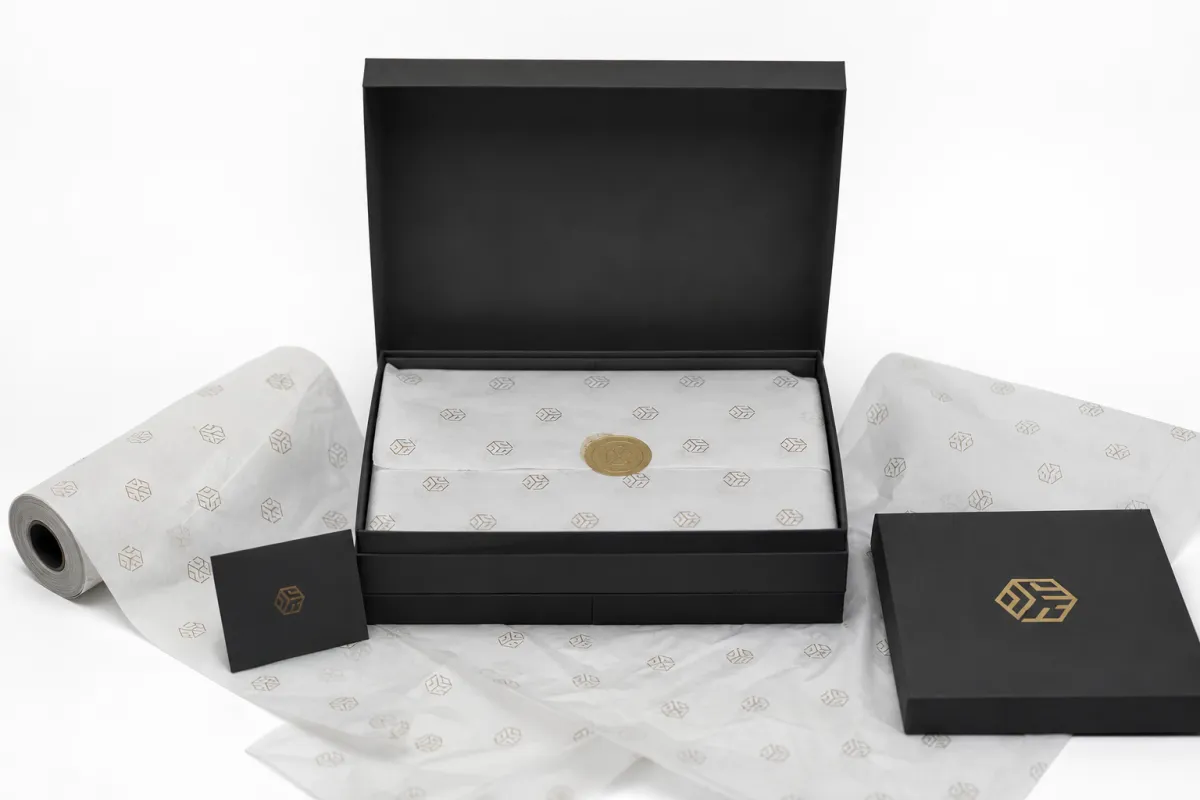
A box can be structurally perfect and still feel flat. Add a few sheets of printed tissue, and the same order suddenly feels curated. That is why branded tissue paper wholesale has become a standard choice for brands that care about presentation at the point of opening. The material is lightweight, but the visual effect is immediate, especially when the print repeats cleanly and the fold pattern is tidy.
From a packaging buyer's point of view, this is one of the most efficient ways to improve perceived value. The outer carton still does the shipping work, while the tissue carries the branding and the first touchpoint. It also helps with product wrap protection, which matters for apparel, accessories, home goods, and fragile items that need an added surface layer before they are boxed or bagged. In that sense, branded tissue paper wholesale supports presentation and function at the same time.
I have worked with teams that assumed tissue would get ignored by the customer. Not true. Buyers notice texture, print sharpness, and whether the sheet opens without tearing. They might not be able to tell you the exact gsm, but they can tell when the packaging looks cheap. That is the part a lot of brands miss.
Branded tissue paper wholesale also fits different channels without changing the packing line. The same printed sheet can line a retail bag, wrap an apparel item, separate stacked product, or add a branded barrier inside an e-commerce carton. That flexibility is useful when one brand sells through direct-to-consumer, wholesale, and store pickup all at once. Instead of redesigning every packout, the team can keep one tissue spec and use it across the program.
"A well-printed tissue sheet does not just fill space. It sets the tone before the product is even visible."
Wholesale buying matters because tissue is rarely a one-off order. Most programs use it across multiple SKUs, so small differences in print consistency, pack size, and unit cost start to add up quickly. A brand that needs 20,000 sheets for a launch and another 20,000 sheets for a seasonal refresh will notice if the logo shifts, the sheet size changes, or the price jumps without reason. That is where branded tissue paper wholesale earns its place as a planning tool, not just a finishing touch.
For buyers building a complete presentation system, it helps to compare this item with other packaging investments. A thicker mailer or a custom carton can be valuable, but they usually come with higher material costs and more shipping impact. Tissue gives you an easier entry point into branded presentation, especially if the goal is to increase polish without forcing a redesign of the main package.
There is also a trust factor here. When tissue arrives with the same logo placement and color behavior across reorders, the packaging program feels under control. That consistency is boring in the best way. Nobody wants to explain to sales or operations why the second shipment looks different from the first.
Product Details: What Buyers Can Choose
Branded tissue paper wholesale gives buyers a surprisingly wide set of options, and the right choice depends on how the tissue will be used. The first decisions are usually sheet size, tissue color, print coverage, logo placement, and whether the artwork stays simple or repeats across the full sheet. A good supplier should be able to explain those choices in plain language instead of pushing every buyer into the same spec.
Standard white tissue is still the most common starting point because it keeps the artwork clean and works for nearly any product line. Colored tissue can add a stronger brand impression, especially for gift programs, luxury retail, or seasonal packaging where the tissue color carries part of the story. Custom-printed tissue sits in the middle and is often the best Fit for Brands that want a stronger identity but do not need a full-color showpiece on every sheet. In many branded tissue paper wholesale programs, that balance matters more than trying to do everything at once.
Print style changes the feel as much as color does. A repeating logo pattern gives the most consistent visibility after folding and wrapping. A centered logo works well when the tissue is opened flat in a retail bag or box. Corner marks can be useful when the tissue needs to sit discreetly around the product. Some brands prefer a full repeat layout because it stays recognizable even when the sheet is cut, folded, or crumpled during packing. Those are the kinds of choices that separate simple decoration from practical branded tissue paper wholesale.
There is also a functional side. Tissue can line a box, wrap apparel, protect fragile accessories, or fill negative space inside a carton so the product does not shift around during transit. In high-volume fulfillment, one item often has to do several jobs at once. That is why branded tissue paper wholesale should be treated as a packaging component with a defined use case, not a loose accessory added at the end of the process.
Finish and handling matter too. A lighter tissue has a softer, more premium crinkle and folds easily around small goods. A slightly heavier stock can feel sturdier in the hand and may resist tearing better during fast packing. Neither option is right in every case. Apparel packs often benefit from a lighter sheet that opens cleanly, while heavier accessories or gift sets may need a bit more body so the wrap holds its shape. That is the kind of detail that makes branded tissue paper wholesale work in the real world.
For brands ordering multiple packaging items, tissue can also be part of a larger system. A logo mailer, a printed insert, and a branded tissue wrap can all carry the same visual language without competing for attention. That gives the packout a more finished look and helps new customers recognize the brand before they even touch the product.
One more practical point: if a brand expects the tissue to do heavy lifting in the presentation, a sample run is worth the time. Paper looks different on a screen. It feels different in the hand. And it can fold in annoying ways that the artwork mockup never shows. That is normal. It is also why experienced buyers do not approve a spec based on a pretty PDF and a prayer.
If you are comparing tissue options with broader packaging programs, it may help to review our Case Studies for examples of how branding and packout choices affect the final result. For teams that buy on a recurring schedule, our Wholesale Programs page is a useful place to understand how repeat ordering is structured.
Specifications That Matter in Branded Tissue Paper Wholesale Orders
Good branded tissue paper wholesale decisions start with the spec sheet, not the artwork alone. Before asking for a quote, a buyer should confirm the paper basis weight, sheet dimensions, print colors, coverage area, and the intended use. Those details determine how the tissue will look, how it will fold, and how much it will cost. Without them, pricing is usually too loose to be useful.
Paper weight is one of the most important choices. Lightweight tissue often falls in the 17 to 22 gsm range, which gives a soft, premium feel and makes folding easy. Heavier stock may reduce tearing during packing and can feel more durable when used around sharp edges or denser products. For branded tissue paper wholesale, the correct weight depends on whether the sheet will be used as a wrapper, a liner, or a transit-friendly protective layer.
Sheet dimensions should match the product and the box. Common formats like 15 x 20 inches, 20 x 30 inches, and larger custom sheets each solve a different problem. An apparel brand may want a sheet that wraps cleanly around folded garments without excess waste, while a gift brand may need a larger format that drapes well in a retail bag. In practice, the best branded tissue paper wholesale spec is the one that uses the least material while still doing the job properly.
Color matching deserves more attention than most buyers give it. Tissue does not behave like coated board, and ink can absorb differently on the surface. That means a brand color may look slightly softer, deeper, or less saturated than it does on a carton or label. If the brand standards are strict, proofing becomes essential. For a serious branded tissue paper wholesale program, the proof is where logo position, repeat spacing, and color expectations should be checked before production starts.
Packaging format also matters. Some orders are packed flat in reams to preserve edge quality and print registration. Others are bundled by count for easier warehouse handling. The way the tissue is packed can affect how neatly it stays stacked during freight and how easy it is for a fulfillment team to open and use. A buyer planning branded tissue paper wholesale at scale should ask how the sheets will arrive, not just how they will print.
Another detail is the artwork layout. A full repeat pattern gives flexibility because the print still looks balanced after the sheet is folded or trimmed. A centered mark may be ideal for simple presentation, but it can disappear more easily in a busy packout. Corner placement is subtle and can suit premium retail, while dense coverage gives more visual impact. The right answer depends on whether the tissue is being used as a feature, a background layer, or both. That is why branded tissue paper wholesale is best approached as a configurable packaging part.
One practical rule helps here: the more exact the brand standards, the more important sampling becomes. If the logo is detailed, the repeat has to stay clean, or the tissue is going into a premium box, ask for a proof or sample before the full run. That extra step often prevents production waste later.
For technical buyers, it can also help to think about the tissue alongside transit expectations. If the material will see rough handling in the warehouse or during shipping, it may be worth reviewing industry guidance such as ISTA test methods at ista.org. That does not replace packaging design, but it does help align the interior packout with the realities of transport.
And yes, if the spec seems small, it is still worth getting right. Tissue is not the loudest part of the packout, but it can make the whole brand look sharper or sloppier in one move. That is kind of the point.
Branded Tissue Paper Wholesale Pricing, MOQ, and Cost Drivers
Pricing for branded tissue paper wholesale usually depends on the sheet size, paper weight, print colors, coverage area, and order volume. The visual complexity of the artwork matters, but it is not the only factor. A simple one-color repeat on a standard sheet can still cost more than expected if the quantity is low, because setup and color matching take time whether the design is simple or not.
Minimum order quantity is one of the first things buyers ask about, and for good reason. MOQ often reflects press setup, color registration, sheet handling, and the efficiency of running a paper order at wholesale scale. A lower quantity may be possible, but the unit cost will usually rise because the setup cost is spread over fewer sheets. For branded tissue paper wholesale, that is normal, not unusual.
The biggest cost drivers are easy to understand once they are laid out clearly:
- Custom print setup and file preparation
- Number of ink colors or print passes
- Paper grade and basis weight
- Sheet size and total sheet count
- Packaging format for shipping and storage
- Freight distance and delivery timing
If a buyer wants to reduce cost without losing the branding effect, there are a few smart moves. A simpler print layout can lower setup complexity. Standard sheet sizes can reduce waste and speed production. Larger runs often improve unit pricing because the setup is spread across more volume. Those are simple steps, but they make a real difference in branded tissue paper wholesale quoting.
| Option | Typical Use | Relative Cost | Notes |
|---|---|---|---|
| White tissue with one-color logo | Apparel, basic retail wrap, e-commerce inserts | Lower | Good entry point for branded tissue paper wholesale when presentation needs are straightforward |
| Colored tissue with repeat print | Gift sets, seasonal packaging, branded bags | Moderate | Stronger shelf and unboxing presence, with more visual emphasis on the brand mark |
| Full-coverage custom printed tissue | Premium retail, launches, luxury packaging | Higher | Best for strong brand recall, but setup and ink usage are usually the highest |
| FSC-certified custom tissue | Retail programs with sustainability targets | Moderate to higher | Useful for brands aligning procurement with fiber sourcing standards |
For many brands, the best value comes from ordering tissue alongside other custom packaging components. If a launch already needs labels, inserts, mailers, or cartons, consolidating the timeline can make procurement easier and keep the presentation consistent. That is especially true for buyers reviewing branded tissue paper wholesale across multiple product lines.
Freight deserves a mention as well. A tissue order may look light on paper, but pallet count, packaging format, and destination can still affect landed cost. A quote is only useful if it includes realistic shipping assumptions, because the cheapest production line item is not always the cheapest delivered cost. That is why a transparent branded tissue paper wholesale quote should clearly separate production, packing, and freight.
If sustainability is part of the buying criteria, sourcing can also matter. FSC-certified tissue or paper made from responsibly managed fiber can support brand commitments and procurement checks. The Forest Stewardship Council explains the certification framework at fsc.org, which is helpful when the packaging spec needs to align with broader sourcing policies.
There is one more practical point. A quote built from clear specs is almost always better than a rough estimate. If the sheet size, print coverage, quantity, and delivery target are known up front, the supplier can price branded tissue paper wholesale with far less guesswork and fewer surprises later.
One thing I tell buyers a lot: do not let the per-sheet price be the only number you compare. If the print is off, if the packing format slows the warehouse down, or if freight eats the savings, the "cheaper" option stops being cheap pretty fast. That is the kind of math that matters.
Process and Timeline: From Artwork Approval to Delivery
The process for branded tissue paper wholesale is straightforward when the information is complete. It usually starts with a spec review, then moves into artwork submission, proofing, approval, production, quality checks, packing, and shipment. Each stage has a purpose. The more clearly the buyer defines the job at the start, the smoother the rest of the order tends to go.
Artwork files make a bigger difference than many teams expect. Vector files are usually the best choice because they keep the logo crisp at print scale, especially if the design repeats across a large sheet. A clean PDF, AI, or EPS file with brand colors and placement notes helps the proofing team move faster. For branded tissue paper wholesale, a strong artwork file can save days in revision time and reduce the chance of registration issues.
The proof stage is where the details get locked down. This is the moment to check logo placement, repeat spacing, print contrast, sheet size, and whether the artwork still looks balanced after folding. If the tissue will be used in a premium retail packout, a proof is not just a formality. It is the place where the buyer protects the brand from a run of expensive mistakes. That is especially true for branded tissue paper wholesale orders tied to a launch date.
Timelines depend on order size, artwork complexity, and proof speed. A simple order with clean art and a confirmed quantity can move faster than a more detailed repeat pattern that needs color adjustment. In many cases, the production window is reasonable once the specs are approved, but freight still has to be planned on top of that. A launch schedule should always include shipping time, not just print time, because a late truck can create the same problem as a late press run. That is a basic truth of branded tissue paper wholesale planning.
From a buyer's point of view, the most efficient orders are the ones where everything is ready at once: artwork, quantity, delivery address, and target date. If any of those are missing, the process slows down. If all of them are set, the order can move through proofing and production with far less friction.
Here is a simple way to think about the timeline:
- Confirm sheet size, paper color, and print style
- Send print-ready artwork with brand notes
- Review the proof and approve details
- Run production and quality checks
- Pack the order for warehouse or direct delivery
- Plan freight so the product arrives before the packaging need
That sequence sounds basic, but it is exactly where smooth branded tissue paper wholesale programs stay on schedule while disorganized programs fall behind.
There is also a human factor in production planning. If one person assumes someone else approved the proof, the order can stall. If the artwork file is missing a color note, the press team has to guess. Guessing is not a production strategy. It just creates avoidable clean-up later.
Why Choose Custom Logo Things for Wholesale Tissue Paper
Branded tissue paper wholesale works best with a supplier that understands packaging as a system. That means the tissue is not treated as a standalone novelty item. It is part of a bigger kit that has to work with cartons, mailers, inserts, retail bags, and the way the fulfillment team actually packs orders. Custom Logo Things is built around that practical point of view.
Clear communication matters a great deal in wholesale packaging. Buyers need accurate answers on sheet size, print method, order planning, and proof expectations before they commit budget. If the supplier can explain what will happen at each step, the buyer can make a cleaner decision. That matters just as much as price in branded tissue paper wholesale, because a cheap quote that causes confusion is not really cheap once delays and revisions are added.
Consistency is another reason buyers keep coming back to a partner they trust. Tissue has to hold color, print placement, and sheet quality from one run to the next, especially when reorders happen across seasons or product launches. A strong branded tissue paper wholesale partner should be able to keep the spec stable so the brand does not have to relearn the order each time.
There is also the benefit of seeing tissue in the context of the whole packaging experience. A brand that uses a custom box, a folded insert, and printed tissue should want all three elements to feel aligned. That is where a packaging-focused supplier adds value. The goal is not more decoration. The goal is a better order experience, cleaner presentation, and fewer surprises during production.
For teams that want to compare packaging approaches before placing a run, the most useful question is usually not, "What is the cheapest option?" It is, "Which spec gives the right result at the right cost and on the right schedule?" That is the standard a serious branded tissue paper wholesale buyer should use.
We also know that wholesale decisions often happen under time pressure. A seasonal launch may have a firm ship date. A retail reset may require a quick packaging refresh. A new product line may need multiple sizes of tissue to support different items in the same program. In those moments, buyers need practical guidance, not vague promises. That is the kind of support Custom Logo Things is set up to provide for branded tissue paper wholesale.
When a packaging buyer has the specs ready, the process becomes much easier:
- Sheet size is confirmed to match the product and packout
- Brand colors and logo files are ready for proofing
- Quantity is realistic for the season or product cycle
- Delivery timing is set with enough room for freight
That is how branded tissue moves from a nice idea into a dependable supply item.
In plain English, a good supplier should not make you decode the process. If the answer to every question is a vague maybe, that is usually a sign to keep looking. Wholesale packaging needs clarity. Otherwise the order starts to wobble before it even reaches production.
Next Steps for a Branded Tissue Paper Wholesale Order
The fastest way to move branded tissue paper wholesale from concept to quote is to lock down the basic specs before the first conversation. Confirm the sheet size, choose the tissue color, estimate the volume, and decide whether the tissue will be used for wrapping, lining, or void fill. Those four decisions usually define the job well enough for a useful price and a realistic timeline.
After that, gather the logo files and any brand rules that affect color, spacing, or repeat layout. If the design is detailed or the brand color is critical, ask for a proof or sample. That step protects the order, especially in a premium retail environment where the packaging has to look exact. For branded tissue paper wholesale, the proof is the place to catch issues before they become production waste.
It also helps to prepare packaging dimensions and delivery requirements ahead of time. If the supplier knows where the order is going, how it will be received, and how it will be used, the quote can be more precise. That is true for small launches and larger replenishment programs alike. A better brief almost always leads to better branded tissue paper wholesale pricing and fewer revisions.
If the order is part of a wider packaging refresh, it is smart to review the tissue spec alongside boxes, inserts, or retail bags. Consistent branding across those materials creates a stronger unboxing story and reduces the chance that one element feels out of place. For teams comparing options, Case Studies can show how packaging decisions play out across different product types, while Wholesale Programs can help define the path for repeat ordering.
From a sales perspective, the main advantage of branded tissue paper wholesale is simple: you get presentation, protection, and repeatability in one item. That combination is hard to beat when a brand wants to look organized without overcomplicating the packout. It is also one of the most manageable ways to bring a stronger branded moment into the box, bag, or mailer.
For buyers who are ready to move forward, the next step is practical rather than flashy: request a quote, review the proof, confirm the schedule, and plan the freight. That is the path that keeps branded tissue paper wholesale aligned with cost, appearance, and production reality.
The cleanest takeaway is this: get the spec right first, then chase the design. If the sheet size, paper weight, print layout, and timeline are locked, branded tissue paper wholesale becomes easy to quote, easier to produce, and much less annoying to reorder later. That is the version worth building.
What is the usual MOQ for branded tissue paper wholesale orders?
MOQ depends on sheet size, print method, and the number of colors in the design. Larger runs usually lower the unit price because setup cost is spread across more sheets. A quote should confirm the exact MOQ after the artwork and specs are defined, especially for branded tissue paper wholesale programs with custom sizing.
Can branded tissue paper wholesale orders match exact brand colors?
Yes, but color matching depends on the print process and the paper base. A proof or sample is the best way to confirm how the brand color will appear on tissue. Small variations are normal because tissue absorbs ink differently than coated packaging materials, so branded tissue paper wholesale should always be reviewed with that in mind.
How long does branded tissue paper wholesale production usually take?
Production time depends on order size, artwork complexity, and proof approval speed. Orders move faster when the sheet size, print layout, and quantity are confirmed early. Freight time should be added on top of production so the delivery date is realistic for branded tissue paper wholesale scheduling.
What file type should I send for branded tissue paper wholesale artwork?
Vector files are usually best because they keep logos sharp at print scale. Include brand colors, repeat pattern notes, and any placement instructions with the file. A clean artwork file reduces proof revisions and helps production start sooner on branded tissue paper wholesale orders.
Is branded tissue paper wholesale better for retail or shipping use?
It works well for both, but the sheet size and paper weight should match the use case. Retail packaging often favors presentation, while shipping applications may need more durable handling. The right spec depends on whether the tissue is for wrapping, lining, or fill, which is why branded tissue paper wholesale should be specified around the actual packout.
For most buyers, branded tissue paper wholesale works best when the specs are locked early, the proof is approved carefully, and the run is sized to the actual packaging program rather than guessed at the last minute.

