Buyer Fit Snapshot
| Best fit | branded void fill packaging protection for packaging buyers comparing material specs, print proof, MOQ, unit cost, freight, and repeat-order risk where brand print, material, artwork control, and repeat-order consistency matter. |
|---|---|
| Quote inputs | Share finished size, material target, print colors, finish, packing count, annual reorder estimate, and delivery region. |
| Proofing check | Approve dieline scale, logo placement, barcode or warning zones, color tolerance, and any recyclable or compostable wording before bulk production. |
| Main risk | Vague material claims, crowded artwork, or missing packing details can create delays even when the unit price looks attractive. |
Fast answer: Branded Void Fill Packaging Protection: Dieline, Finish, Proof, and Buyer Review should be specified like a repeatable production item. The safest quote includes material, print method, finish, artwork proof, carton packing, and reorder notes in one written spec.
What to confirm before approving the packaging proof
Check the product dimensions against the actual filled item, not only the sales mockup. Ask for tolerance on folds, seals, hang holes, label areas, and retail display edges. If the package carries a logo, QR code, warning copy, or legal claim, reserve that space before decorative graphics fill the panel.
How to compare quotes without losing quality
Compare board or film grade, print process, finish, sampling route, tooling charges, carton quantity, and freight assumptions side by side. A lower quote is only useful if the supplier can repeat the same color, closure quality, and packing count on the next order.
Branded Void Fill Packaging: Smart Protection That Sells
The first thing many customers touch after opening a shipper is not the product itself. It is the Branded Void Fill packaging tucked around it, folded beside it, or cushioning it from the carton walls, and that first surface can shape the unboxing experience before the item is even visible. One material ends up doing three jobs at once: holding the product steady, helping it survive the trip, and carrying the Branding That Makes the order feel considered instead of thrown together.
That matters more than it may seem at first glance. A carton can arrive in perfect shape and still feel inexpensive if the interior is just loose filler with no clear purpose, and the opposite is true as well: a tidy, well-branded interior can make even a modest product feel polished and deliberate. For a packaging buyer, Branded Void Fill packaging sits right between product packaging, retail packaging, and fulfillment efficiency, which is why it deserves more attention than it usually gets.
"If the filler looks beautiful but lets the product move, the box still fails. Good packaging design has to protect first and present second."
What Branded Void Fill Packaging Really Is
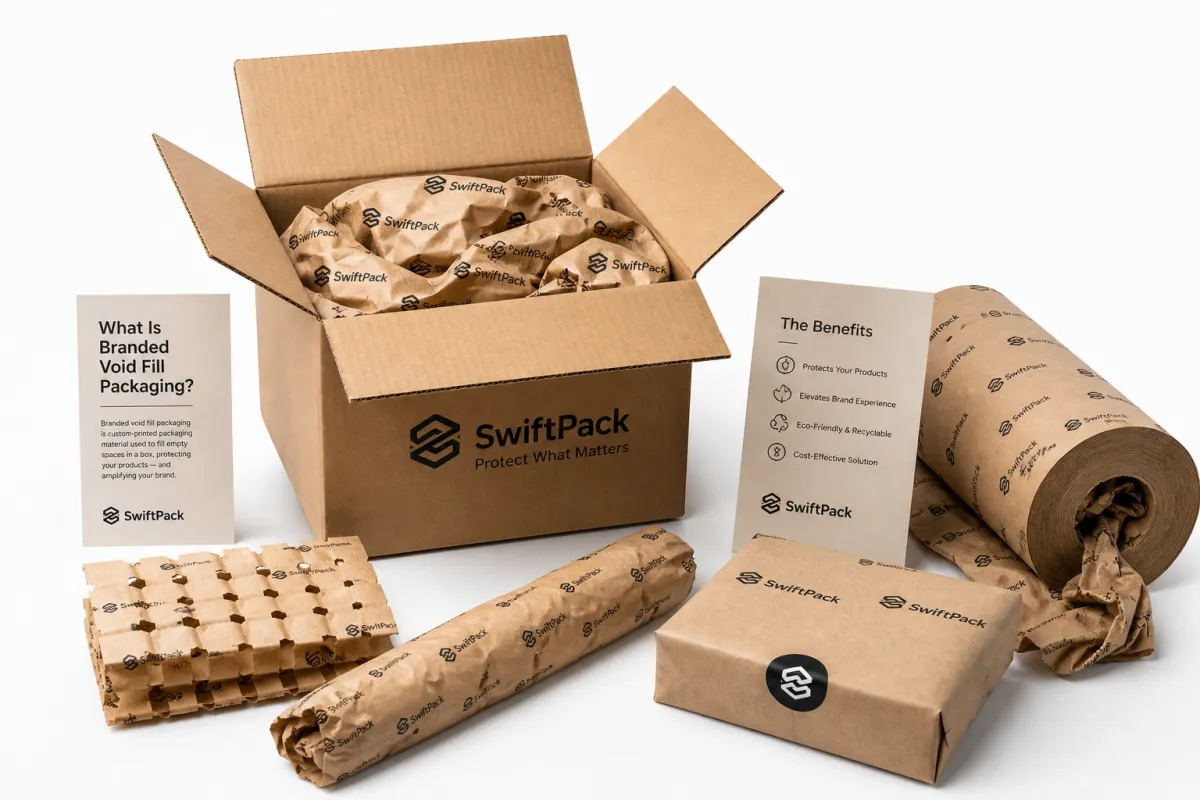
In simple terms, branded void fill packaging is the material used to occupy empty space inside a shipping carton while also showing visible brand cues. Those cues might be a repeating logo, a short thank-you message, a color that matches the rest of the brand system, or a texture that echoes the outer packaging. The purpose is not decoration alone. The purpose is to keep the product centered, reduce movement, and make the opening moment feel connected to the brand from the first glance.
Void fill often gets treated like an afterthought, almost as if it can be ordered separately from the rest of the packaging program. That is usually where the trouble starts. A filler that looks good in a sample tray can still perform poorly in real transit if it compresses too easily, shifts under vibration, or leaves too much room around the product. A proper branded void fill packaging system is built around the item, not around a styled photo. It should be matched to carton size, product shape, fragility, and the kind of handling the shipment will actually face.
The range of use cases is wider than many teams expect. E-commerce brands use it to make direct-to-consumer orders feel more polished. Subscription boxes use it to sharpen the reveal. Gift programs use it to improve presentation without building a complex insert stack. Fragile goods, from glass to ceramics to small electronics, use it because movement is expensive. Seasonal campaigns benefit as well, especially when a simple branded interior helps a limited run feel more intentional without requiring a full redesign of the outer shipper.
There is also a real difference between filler that is purely decorative and filler that is engineered. Decorative paper may look attractive, but if it is not formed or packed correctly, it will not keep a product in place. Engineered branded void fill packaging can include crinkle paper, corrugated shred, molded pulp, tissue wraps, or air-based cushions arranged to support the product at the corners and sides. In some programs, the branding sits directly on the filler; in others, it appears on a coordinated insert, wrap, or printed message card that works with the filler as one system.
That is why the best results usually come from a simple question: what does the product need inside the box, and what should the customer notice first? Once that answer is clear, branded void fill packaging stops being a flourish and starts acting like a working part of the pack-out.
I have seen plenty of programs spend time polishing the outside of the box while the interior was left to chance. The customer still notices the inside, especially if the order arrives rattling around. That part is kinda the whole point of good void fill: it should quietly do the hard work while still looking intentional.
How Branded Void Fill Packaging Works in Transit
The core function is straightforward. Void fill reduces empty space so the product cannot slide, tilt, or strike the carton walls while the box is stacked, dropped, tipped, or moved through parcel networks. A shipment can see corner impacts, vibration, and compression loads, sometimes all in the same trip. If the interior pack is loose, the product becomes the moving mass inside the carton, and damage risk climbs quickly. Good branded void fill packaging keeps that motion in check.
Different materials behave in different ways. Paper-based fills are common because they are fast to place, visually clean, and often easier to recycle. Corrugated shreds add structure and can be a smart fit for heavier items. Molded pulp gives a more formed, nest-like hold, which helps when the product needs a defined cavity. Tissue works well as a light presentation layer, especially for cosmetics, apparel accessories, and gift sets. Air-based options can work for light protection in some settings, though they usually need stronger carton design and should not be chosen simply because they are familiar. The real question is how the material performs under load, not only how it looks in a tray.
Packaging design gets practical at that point. A good branded void fill packaging program balances cushioning, speed, and visual consistency. If the product is a 10 oz candle in a rigid jar, the filler may need to stop side-to-side movement and protect the lid from impact. If the shipment is a boxed skincare set, the goal may be to hold the items upright and create a neat reveal. If the product is brittle or ceramic, the interior may need tighter control and more formed support. The same idea changes shape depending on the category.
Brands that test their pack-out against real transit conditions usually avoid more headaches later. Many teams refer to ISTA test methods when they want to understand how a package behaves under drop, vibration, and compression exposure. That kind of testing is not limited to large manufacturers; it is useful for smaller brands too, because it shows whether the filler is actually protecting the item or just filling space. From a fulfillment floor perspective, the best branded void fill packaging is the version that protects consistently while still being easy for packers to place without slowing the line.
Branding is usually added in a few ways: printed messaging, custom colors, embossed textures, stamped logos, or a coordinated insert-and-filler combination that feels unified. The brand cue should not interfere with function. A bright logo on paper crinkle is useful if the print stays legible after handling. A soft-touch insert can lift presentation if it does not add so much cost or thickness that packers struggle to close the carton. In short, branded void fill packaging works best when appearance serves protection, not the other way around.
Branded Void Fill Packaging Cost and Pricing Factors
Cost is where many teams begin, and that makes sense, but unit price by itself can be misleading. A cheap filler that increases damage or slows packing almost always costs more in the end. A smarter way to judge branded void fill packaging is to look at cost per shipped order, then add the hidden variables: returns, damage claims, labor minutes, and the customer experience. That gives a more honest view of the real spend.
The biggest cost drivers are material type, print complexity, order quantity, carton compatibility, and whether the filler is placed by hand or with help from a machine or dispensing setup. Plain paper crinkle is often on the lower end because it is simple to produce and quick to use. Custom-printed tissue or branded corrugated inserts usually cost more because they need print setup, conversion, and tighter quality control. If a new die, plate, or tooling step is required, that adds both money and lead time. More print coverage also raises the price, especially when the branding uses multiple colors or a full background flood.
For mid-size programs, a practical range might look like this: a basic paper fill could land around $0.12 to $0.25 per shipped order, while more customized branded void fill packaging can move into the $0.20 to $0.60 range depending on print coverage, shape, and volume. Heavier or more formed solutions can go higher. That does not make them expensive if the product is fragile and the returns are costly. The right question is whether the spend buys fewer damages, cleaner pack-outs, and a better opening experience.
Here is a simple comparison many buyers find useful.
| Option | Typical Cost Impact | Protection Level | Branding Fit | Best Use |
|---|---|---|---|---|
| Plain kraft crinkle | $0.12-$0.25 per order | Light to moderate | Low to moderate | General e-commerce, accessories, light gifts |
| Printed tissue or wrap | $0.18-$0.35 per order | Light | High | Cosmetics, apparel add-ons, premium presentation |
| Corrugated shred | $0.20-$0.45 per order | Moderate | Moderate to high | Heavier retail packaging and gift sets |
| Molded pulp support | $0.30-$0.60 per order | Moderate to high | Moderate | Fragile goods, nested products, defined cavities |
| Custom branded insert system | $0.45+ per order | High | High | Premium product packaging, high-value SKUs, launch kits |
Those numbers are not universal, and they should not be treated like a quote. They are a planning frame. A 5,000-piece run may look very different from a 50,000-piece program, and a simple one-color logo can cost far less than a full-coverage print with multiple registration points. Material sourcing also matters. If a paper-based program uses recycled content or FSC-controlled fiber, the sourcing conversation may shift slightly, but the brand story can improve too. For brands that care about responsible sourcing language, the FSC system is worth understanding.
There is another piece many buyers forget: labor. A filler that comes out of a box in neat, manageable counts and drops into place in 2 to 3 seconds per pack is often more economical than a cheaper-looking option that takes twice as long to handle. When a fulfillment center is packing hundreds of orders a day, those seconds add up. Strong branded void fill packaging should make the line easier to run, not harder.
If you are comparing structures for a new program, our Custom Packaging Products page is a useful starting point for understanding how inserts, shippers, and presentation components can work together. And if you want to see how buyers think through real use cases, the Case Studies page can help frame the discussion before you request samples.
Branded Void Fill Packaging Process and Timeline
The process is usually more predictable than people expect, but only if it is planned early. A typical branded void fill packaging workflow starts with the product itself: dimensions, weight, finish, fragility, and how it will be packed. After that comes carton size, because the filler only makes sense once the box is defined. Then the team chooses the fill format, reviews artwork, checks proofs, and tests the pack in a real shipping scenario. The best programs do not skip the sample phase.
In a straightforward project, sample development might take 5 to 10 business days once the basic dimensions and artwork are ready. Proofing can take another 2 to 4 business days depending on how many revisions are needed. Production for a simple paper-based run might run 10 to 15 business days after approval, while more customized branded void fill packaging can stretch to 15 to 25 business days if tooling, print plates, or special converting work is involved. If the schedule is tied to a launch or seasonal event, that timing needs to be built in early, not bolted on late.
A practical timeline often looks like this:
- Define the product, carton, and shipping method.
- Choose the filler style that matches protection and presentation goals.
- Approve artwork and print placement.
- Review samples under real pack-out conditions.
- Run a pilot order and measure damage, speed, and customer reaction.
- Lock the spec for volume production.
The pilot run is the step too many teams skip. A filler may look perfect in a photo, but if it clogs a dispenser, sheds too much, or slows a packer by several seconds, the floor will feel it immediately. During the pilot, the team should check whether the product stays centered, whether the carton closes without bulging, and whether the branding remains visible once the shipment is opened. A good branded void fill packaging sample should survive practical handling, not just a tabletop review.
It also helps to think about storage. Some materials compress in storage and then need to be fluffed or handled before use, while others are ready straight out of the case. If space is tight in the warehouse, bulkier fill formats can create their own operational headache. That is another reason why branded void fill packaging should be selected with the packing area in mind, not just the marketing brief.
For seasonal launches, the safest move is to work backward from the ship date and give the supplier enough time for proofing, test packs, and a small correction round if needed. A lot of problems disappear when the project starts 4 to 6 weeks earlier than the minimum schedule. That extra margin is especially useful if the order needs multiple SKUs or a mix of carton sizes, because each size should be checked for fit rather than assumed to work.
Step-by-Step: Choosing the Right Branded Void Fill Packaging
Choosing the Right branded void fill packaging is less about chasing the fanciest material and more about making a clean sequence of decisions. Start with the product. Measure the item, note the fragile points, and identify whether the product is hard-sided, flexible, boxed, or nested. Then measure the carton interior. You cannot control void space if you do not know how much of it exists. The aim is a snug pack, not a crushed one, so the filler should stabilize without putting pressure on labels, closures, or delicate surfaces.
Next, choose the fill format based on the actual shipment risk. If the product is light and presentation matters more than structural support, paper crinkle or tissue may be enough. If the product has weight or a brittle shape, a more formed option such as corrugated shred or molded pulp may be smarter. This is where branded void fill packaging often pays for itself: the right material can reduce damage without forcing a full redesign of the box. That matters for brands with multiple SKUs and a mix of custom printed boxes and standard shippers.
Then define the branding role. Should the filler reinforce the logo, carry a short message, support the color palette, or create a premium reveal moment? The answer changes the design. A repeat logo may be enough for a clean, understated look. A simple thank-you line may work better for direct-to-consumer retail packaging. A full color treatment may be right for a limited campaign, but it should still be readable after handling. The best branded void fill packaging is usually simple enough to reproduce consistently and strong enough to carry across a production run.
After that, test the pack under real conditions. Put the product in the carton, shake it gently, tilt it, stack a few boxes, and run a few sample drops if possible. Then ask the packing team how it feels to use. Does it slow them down? Does it shed? Does it need extra hands? That kind of practical feedback matters because packaging design is not only about the final picture; it is about line speed and repeatability. In a busy fulfillment area, a pack that saves 4 seconds per order can be worth more than a prettier but awkward alternative.
Finally, lock the specification. That means carton size, filler type, print placement, fill quantity, storage requirements, and the tolerance for each SKU. If a brand has 6 box sizes but only 2 fill formats, the system is much easier to manage. If the spec is loose, every packer will improvise, and the customer will get a different result from one order to the next. Consistency is a huge part of package branding, even if it is not the most glamorous part.
A practical rule of thumb: if the product can move more than a small amount inside the carton, the fill is not finished. If the carton bulges or closes with strain, the fill is too much. Good branded void fill packaging sits in the middle of those two failures.
Common Mistakes With Branded Void Fill Packaging
The most common mistake is choosing a filler because it looks good in a mockup. That is a fast route to returns. A pretty interior means very little if the product slides during shipment and arrives scuffed, cracked, or dented. The filler has to hold the product in place first. If it cannot do that, the branding is just camouflage.
Overfilling is the next problem. It is easy to assume that more material means more protection, but that is not always true. Too much filler can crush products, raise the carton profile, and make the box hard to close. It can also slow pack-out because the packer has to fight the material instead of placing it efficiently. In the worst cases, overfilled branded void fill packaging creates the very damage it was supposed to prevent by forcing pressure onto corners, caps, or fragile finishes.
Another mistake is ignoring the carton itself. Void fill cannot rescue a weak box or a poor carton size choice. If the board is too light, the box can still collapse under stacking loads. If the box is too large, even great filler may struggle to control movement. The carton and the filler have to work together. That is why many packaging teams think about the whole structure, not just the dunnage.
Branding can also fail if the print choice is wrong for the substrate. A design that looks sharp on a screen may disappear on a kraft background if the contrast is too low. Glossy finishes can read as premium, but they may not photograph well or may create glare under warehouse lighting. A print that is too busy can make the interior feel cluttered instead of clean. For branded void fill packaging, clarity usually beats complexity. A simple mark, a clean message, and strong contrast are often enough to make the pack feel intentional.
Then there is the operational mistake: skipping a line test. Some materials look beautiful in a sample, then frustrate the packing team because they are awkward to dispense, hard to grab, or bulky in storage. If the filler adds friction to the line, fulfillment costs rise. A pack that takes an extra 5 seconds per order sounds harmless until the math is applied to thousands of shipments. That is why the best branded void fill packaging choices are tested by the people who actually pack the orders.
"The inside of the box is part of the brand. If the filler is inconsistent, the customer notices that inconsistency long before they think about the logo."
One more quiet problem is inconsistency across SKUs. A brand may have one product that fits beautifully with a certain filler, then another SKU that needs a different fill density or a different carton depth. If the team forces every SKU into the same setup, quality slips. The better move is to standardize where possible, then create a small number of approved variants. That keeps branded void fill packaging manageable instead of turning it into a special case every time an order changes.
Expert Tips and Next Steps for Branded Void Fill Packaging
If I had to narrow this down to a few field-tested habits, I would start with standardization. Most brands do better when they settle on a small number of carton sizes and a short list of approved fill formats. That kind of discipline makes branded void fill packaging easier to scale, easier to train, and easier to cost-control. It also makes the customer experience more consistent, which matters a great deal when orders are going out every day.
Another smart move is to keep the branding simple enough to reproduce cleanly. High-contrast messages, repeat patterns, and a clear logo treatment usually work better than a crowded design that tries to say too much. If the filler is doing most of the visual work, the message should still be easy to read at a glance. That is especially true for brands that rely on branded packaging as part of their identity. The interior should support the same story, not interrupt it.
For sustainability-minded programs, the material choice deserves real attention. Recycled-content paper, recyclable substrates, and FSC-controlled fiber can all fit into a responsible sourcing strategy, but only if the material also performs. The most sustainable solution is not the one with the nicest label; it is the one that protects the product well without using more material than necessary. If a paper-based option does the job, that can be a practical route. If a formed insert prevents damage on a high-value item, that may be the better environmental outcome because it avoids waste, replacements, and returns.
Here is the workflow I would recommend for a new program:
- Measure the product and carton interior carefully.
- Define the protection goal before the design goal.
- Decide how visible the branding should be at first opening.
- Request samples that match the real product, not a dummy item.
- Test the pack with the team that will actually use it.
- Review the result after a small pilot before scaling volume.
That pilot is often where the real insight shows up. Maybe the logo is too small once the filler is crumpled. Maybe the carton closes a little too tightly. Maybe one fill format looks great but slows the pack line by 20 percent. Those details do not show up in a mood board, but they absolutely show up in operations. Good branded void fill packaging is the version that survives the trip from concept to packing bench without surprises.
If you are trying to decide what to change first, start with the top damage point in your current shipments. If corner dents are common, you need better stabilization. If the product shifts inside the carton, you need a tighter fit. If the unboxing feels flat, you need a stronger branded interior. Those are practical fixes, and they are easier to solve than people think. For many brands, the right branded void fill packaging is less about adding more stuff and more about arranging the existing box space with more care.
My final advice is simple: measure the void space, note the top failure points, decide how much brand visibility you want, and ask for samples built around those specifics. Then pilot the chosen fill on your most fragile SKU before you place volume. That gives you a cleaner comparison and a better chance of landing on a system that protects the product, supports the brand, and fits the packing line. Done well, branded void fill packaging is not just filler. It is part of the product experience, part of the cost structure, and part of the way customers judge the brand before they ever touch what they ordered.
FAQs
What does branded void fill packaging do beyond basic protection?
It stabilizes the product inside the carton so items do not shift, strike the box walls, or arrive with scuffs and corner damage. It also adds a branded moment at unboxing, which can make the shipment feel more intentional and premium. The best versions of branded void fill packaging support both goals at once: protection during transit and a clearer brand impression when the customer opens the box.
Which materials work best for branded void fill packaging?
Paper-based fills work well for many e-commerce and retail shipments because they can be protective, recyclable, and easy to brand. Corrugated or molded options can be better for heavier or more fragile products that need stronger structure. The right choice depends on product weight, fragility, available pack-out speed, and the look you want customers to see first. There is no single material that wins every time, which is why branded void fill packaging should be selected case by case.
How much does branded void fill packaging usually cost?
Pricing depends on material choice, print method, order volume, and whether custom tooling or special converting is required. A low unit price can still be expensive if it increases damage, slows packing, or creates more waste. The most useful way to compare options is cost per shipped order, not just cost per individual piece. That approach gives a more accurate picture of how branded void fill packaging affects the whole program.
How long does branded void fill packaging take to produce?
Timeline usually includes sampling, artwork approval, proofing, and production, so the schedule is longer than buying plain filler off the shelf. Simple programs move faster, while custom print, new material sourcing, or large orders can add lead time. Planning early is the safest approach if the packaging needs to be ready for a launch, seasonal peak, or retail rollout. Good branded void fill packaging is much easier to manage when the schedule has room for samples and a pilot run.
Can branded void fill packaging be made with sustainability in mind?
Yes, many programs use recycled-content paper, recyclable substrates, or designs that reduce total material use. The most sustainable option is often the one that protects the product well without overfilling the carton or creating unnecessary waste. It helps to choose a material that fits local recycling rules and keeps the whole package easy for customers to handle after delivery. In practice, sustainable branded void fill packaging is about fit, material choice, and damage prevention working together.
If you are starting a new pack-out, the clearest next step is to measure the void space, pick the lightest filler that stops movement, and test it against your most fragile SKU before you lock the spec. That one pass usually tells you more than a week of mockups ever will.


