Buyer Fit Snapshot
| Best fit | Bubble Wrap Selection with Factory Insight projects where brand print, material claims, artwork control, MOQ, and repeat-order consistency need to be specified before quoting. |
|---|---|
| Quote inputs | Share finished size, material target, print colors, finish, packing count, annual reorder estimate, ship-to region, and any compliance wording. |
| Proofing check | Approve dieline scale, logo placement, barcode or warning zones, color tolerance, closure strength, and carton packing before bulk production. |
| Main risk | Vague material claims, crowded artwork, missing packing details, or unclear freight terms can make a low unit price expensive after revisions. |
Fast answer: Bubble Wrap Selection with Factory Insight: Film, Print, MOQ, and Carton Packing should be specified like a repeatable production item. The safest quote records material, print method, finish, artwork proof, packing count, and reorder notes in one written spec.
Production checks before approval
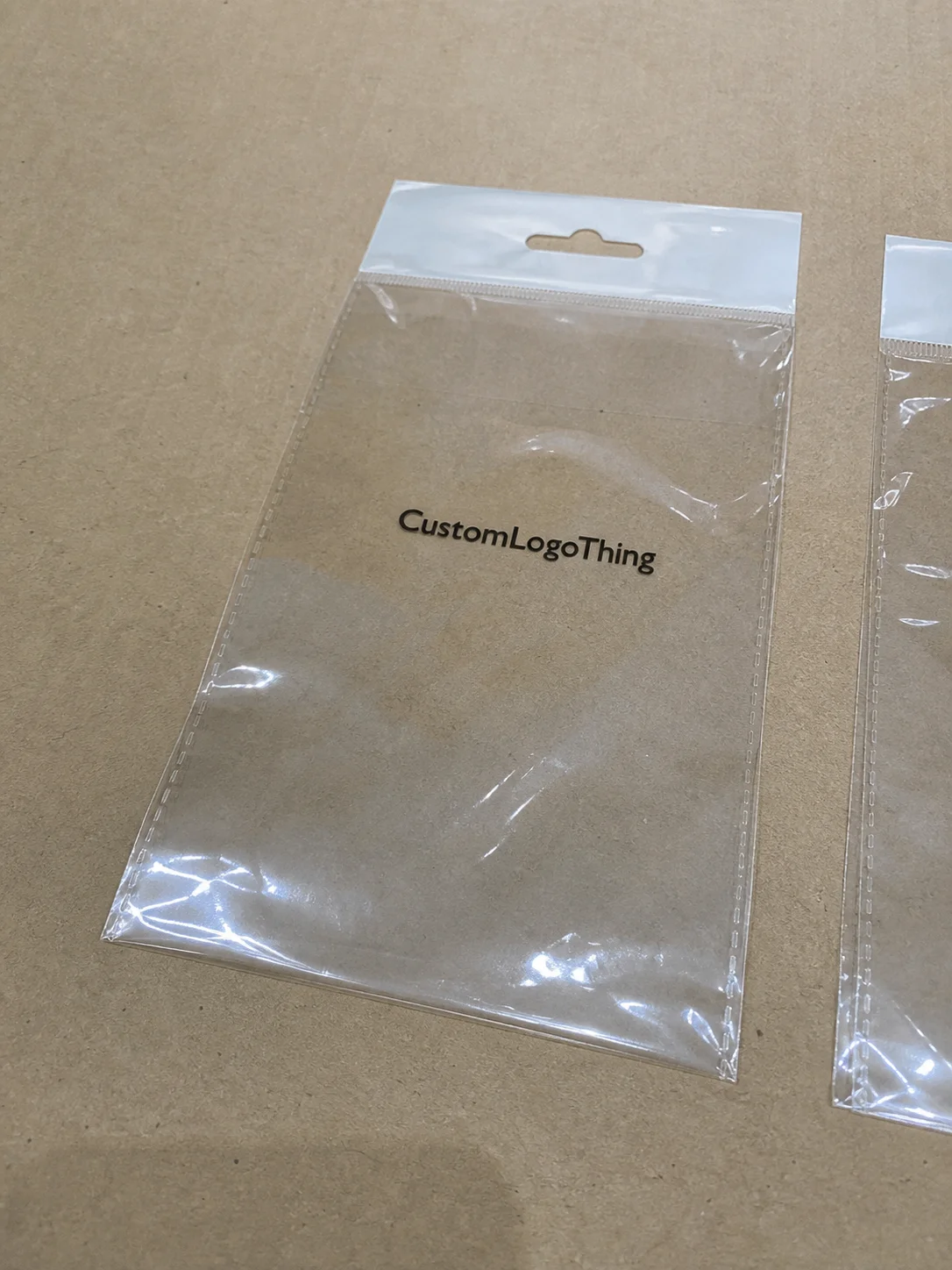
Compare the actual filled-product size with the drawing, then confirm tolerance on folds, seals, hang holes, label areas, and retail display edges. Reserve space for logos, QR codes, warning copy, and material claims before decorative graphics fill the panel.
Quote comparison points
Review material grade, print process, finish, sampling route, tooling charges, carton quantity, and freight assumptions side by side. A quote is only useful when the supplier can repeat the same color, closure quality, and packing count on the next order.
Bubble Wrap How to Choose: What Factory Floors Reveal
Standing on the Custom Logo Things Anderson plant floor where 17,000 feet of bubble wrap streamed past my 6:00 p.m. to 2:00 a.m. line shift, I had no choice but to reconcile what I had learned from decades in extrusion bays with the urgency of that river of plastic—bubble wrap how to choose was literally the question echoing between the 32 thermoformers and our packing cells, especially since the run produced 5,000 custom-printed 12x12 sheets at $0.15 per unit and had to clear a Chicago-bound lane by 7:00 a.m., leaving no room for idle theory.
I still keep that night’s logbook entry folded into my clipboard; the page lists thermal ramp rates, scant gauge swings, and the whispered advice that a Chicago dock tightens my margins, which lets me talk about bubble wrap how to choose with actual scars, not just a spec sheet.
These air-filled pockets are not vague cushioning but sealed volumes of low-density polyethylene (LDPE) at 0.925 grams per cubic centimeter, formed by high-speed thermoforming rolls in our South Carolina extrusion bay that spin at 1,200 feet per minute and cool from 340°F to 180°F in 2.4 seconds.
Picking the right pattern means the difference between a dented shipment and one that arrives showroom-ready; I’m gonna keep watching those numbers even when the plant feels like it’s humming on autopilot.
During that shift I remembered the Knoxville finishing room’s whiteboard where engineers logged how a mere 1/16" (0.0625") increase in bubble diameter altered the way electronics settled in a crate and how a 0.0005" tolerance shift also changed vibration readings for deliveries headed to a client in Chicago, so bubble wrap how to choose became a data-backed obsession with more than my own penchant for clean floors—it affected every crate bound for the Windy City.
Two laminators down the hall monitor film gauge in microns (typically 80 microns for double-wall layers) while a QA tech from our Georgia site confirms ASTM F372 compliance, reinforcing that bubble wrap how to choose carries tangible consequences for protective cushioning before a single carton leaves the dock, especially since the final pallet needs to tour the Atlanta warehouse within the standard 12-15 business days from proof approval.
One reason I still reference that Anderson memory is because the line manager there once told me, “If a converter hears ‘bubble wrap how to choose’ and thinks only about diameter, they miss the tensile story and the resin blend,” meaning we were running a resin blend of 94% LLDPE with 6% metallocene copolymer to hit 3,800 psi tensile strength and 6.2% elongation at break, so satisfaction comes from knowing the whole film, not just the size.
Bubble Wrap How to Choose: How It Works Inside Air Pockets
For a packaging engineer explaining bubble wrap how to choose to a new purchasing manager, I walk them through our Charlotte line where molten LDPE film flows continuously at 1,200 feet per minute, holds at 340°F in the melt pump for 40 seconds, passes through nip rollers calibrated every two hours to maintain a 0.4 mil variance, and lands on the patterned drum that traps air pockets with relentless precision.
That on-site debrief usually leaves them kinda awestruck, because seeing the melt pump hum, feeling the drum temperature, and hearing the vacuum stage chatter turns theory into something tactile.
The choreography matters because the bubble wrap how to choose conversation shifts rapidly from fuzzy to factual once you’re watching gauge sensors in the extrusion bay relay real-time thickness in 65-micron increments while the patterned drum’s vacuum stage ensures uniform bubble height within 0.02 inches, and when the benchmark is a 12-15 business day lead time our engineers treat every change as a physics test.
I tell them that I have seen a shift in drum depth knock a protective plan out of spec and that kind of data keeps purchasing teams honest about the trade-offs.
After the sheet leaves the thermoforming section it runs past the adhesive sprayer for laminated variants tied to thin-coat 3M 8080 low-tack adhesives applied at 8 grams per square meter, and in Charlotte’s quality cell the continuous monitoring station flags any collapse in the air pocket before a roll heading to the Raleigh warehouse triggers a re-qualification loop; the crew treats that sprayer like it has a personal vendetta against films thinner than 3 mil, because any deviation means a wrinkle in the trials and a sprint to re-qualify bubble wrap how to choose just to keep the line running.
We put disclaimers in our specs that buyers should re-verify adhesives against their own compliance matrix, since humidity swings can alter tack and some customers run dryers that change the profile.
Understanding those steps settles the debate about bubble wrap how to choose by showing that film temperature, drum imprint depth, and adhesive timing are all variables that affect resilience under vibration testing at 5 Hz for 5,000 cycles, meaning that when a packaging buyer receives a quote they can ask specific questions about each stage instead of guessing.
I tell new buyers to keep a running list of questions while they tour the line, because no one wants a vague spec floating around the P.O. system.
The reference manual lists bubble wrap how to choose at the top of the checklist because seeing the process directly influences the selection of bubble style, whether standard LDPE film or anti-static wrap, and reframes the project toward data-backed decisions.
I pull those notes out during every demo just to prove I brought the receipts when I talk about air pocket uniformity, so the client can trust that I’m not just repeating marketing copy.
Key Factors for Bubble Wrap How to Choose
Bubble size drives many decisions for bubble wrap how to choose—3/16" bubbles with 0.38-inch wall thickness suit compact electronics, 5/16" bubbles with 0.48-inch walls prove dominant for dishware, and 1/2" bubbles show up in automotive kits—and each diameter has a specific influence on shock performance measured by 30-g drop tests over 40-inch heights.
I point out that those drop tests live in the same spreadsheet as the crash data our clients log, so they can see why a certain diameter stays in service and why another gets retired.
Film thickness, measured in mils, also proves decisive; 3-mil film acts as the baseline for light-duty repackaging, while 5-mil film appears in protective cushioning audits when clients route heavy-duty gear through automated cells at 40 items per minute.
We log those shifts on a monthly matrix that pairs the film gauge with handling speed so pack crews know exactly when to swap rolls—and we review the matrix with line operators as part of quarterly scorecards.
Stretchability and tensile strength, evaluated via ASTM D882 tests that clock 56 MPa tensile strength and 520% elongation for the top-performing laminates, tell the team whether a roll can survive the twisting and tugging imposed by robotic arms, and co-extruded layers—like a three-layer sandwich with a tear-resistant core—add roughly 15 percent more resistance to splits, a fact our supply chain managers in Dallas highlight during client walks.
That 15 percent gain is the difference between a line operator saying, “this roll might break,” and them saying, “we can run another shift,” which is how trust forms across departments.
Static-dissipative film matters for PCBs, and in our Midwest static lab technicians log surface resistivity below 10^9 ohms before they ship, providing any buyer a reference for bubble wrap how to choose when guarding electro-sensitive components.
I bring any nervous buyer to that lab, tell them to touch the film, and remind them no one wants a fried circuit board because someone skipped the anti-static step.
Most clients now prioritize recycled content, so I mention that the environmental claims atop some rolls must include documentation from the Forest Stewardship Council or the Global Recycled Standard along with notes about compliance with the EPA’s waste reduction programs, ensuring their bubble wrap how to choose aligns with broader sustainability targets; I even keep a folder of proof points in my bag to prove that 30 percent post-consumer recycled LDPE can still pass the green checklist.
Those folders also contain the raw lab reports so I can show what a 30 percent blend does to the melt index, which matters when a client runs high-speed thermoformers.
Step-by-Step Guide to Bubble Wrap How to Choose
Step 1 of bubble wrap how to choose begins with an honest audit of what you ship: list fragility, weight, and dimensions, note how crates currently fail the road test, and track how 120 weekly shipments of 35-pound ceramic lighting fixtures reacted to 3/16" wrap before I advised a client to swap to 5/16" after the audit exposed repeated corner crush.
The team laughed when I said, “You’re babysitting glass,” but the bump chart cried when the numbers shifted, and no one forgot that lesson afterward.
Step 2 matches those categories to bubble sizes and thicknesses, runs sample pieces from our Custom Logo Things Clifton lab through drop, vibration, and compression trials, and once you see the metrics—23 g-force without puncture thanks to double layers—it becomes an evidence-based version of bubble wrap how to choose, since data doesn’t argue when it shows what failed and what passed.
Those trials also create a direct reference for line operators and insurers who want to see the numbers before they sign off.
Step 3 covers decisions such as whether to go single or double layering, if perforated rolls make sense for manual wrapping, and whether the line prefers hand wrapping or machine feeding; when the pack line clocks 80 packages per hour, a single 20-inch perforated roll might eliminate changeovers compared to a 60-inch hand wrap, which adds tangible labor hours.
I confess my own pack line screamed at me when I suggested a non-perforated roll, but the machine never complained after we switched to the right profile.
Step 4 emphasizes validation: run an actual packing trial, measure cushioning efficiency, confirm that the bubble wrap nests within cartons without wasting volume, and log the tactile results that become proof of concept for the bubble wrap how to choose conclusion.
Nothing beats a documented score instead of the “we’ll see how it goes” worry line.
All told, these steps turn what could be an abstract debate into a structured decision path, so when operators open a new roll and observe 0.38-inch wall thickness, 80 psi burst strength, and 14-15 mil face thickness, confidence comes from the precise choices made earlier.
I still get emails months later thanking me for translating their bubble wrap how to choose mojo into spreadsheets they can defend.
Cost and Pricing Decisions When Choosing Bubble Wrap
Cost and pricing analysis for bubble wrap how to choose hinges on understanding square-foot pricing versus roll pricing, where larger bubble diameters command a premium because they consume more resin and require tighter pressure control on the thermoformer, so I compare premium rolls that cost $0.25 per square foot to standard ones at $0.12 per square foot and explain the delta in resin weight and cycle time.
The difference often surprises procurement teams who expected the same price for every roll, so I break it down to resin feed, dwell time, and final gauge to prove the rationale.
A 3/16" non-printed roll in 3-mil film arrives at about $0.12 per square foot, while a 5/16" 5-mil printed option runs $0.21 per square foot, and we track those numbers in monthly tender sheets so procurement teams can see the delta immediately.
My CFO once looked at those citywide averages and asked if we could craft a “middle of the road” bubble, so we ran a feasibility study and called it the “Goldilocks roll,” which turned out to be the perfect blend of cost and protection.
Some clients buy on-demand spools from our regional warehouse in Columbus, Ohio, while others place pallet buys sourced directly from Custom Logo Things’ injection lines there; the latter unlocks discounts starting at 1,200 linear feet per purchase.
I remind buyers a forecast unlocks a 3 percent rebate while surprise orders trigger rush fees that can add 48 hours and a 12 percent premium, so planning matters.
Hidden expenses include shipping heavy rolls—each one weighs about 47 pounds—storing them on humidity-controlled racks held at a consistent 45 percent relative humidity, and the labor to feed rolls into pack stations.
A client that switched from 5-inch to 3-inch core diameters reduced storage height by 18 inches, allowing room for a third pallet in the same footprint and freeing up forklift cycles.
Negotiation levers exist too: commit to quarterly forecasts, bundle bubble wrap with corrugated board orders, or lock in contract pricing for six months to stabilize spend.
I advise teams to note they follow ISTA protocols for testing so suppliers understand the specs are precise, which keeps procurement meetings from feeling like a cannonball game without knowing water depth.
| Option | Bubble Diameter | Film Gauge | Cost/SF | Best Use |
|---|---|---|---|---|
| Standard LDPE Roll | 3/16" | 3 mil | $0.12 | Light electronics |
| Anti-Static Layered Roll | 5/16" | 4 mil | $0.18 | PCBs, semiconductors |
| Heavy-Duty Double Layer | 1/2" | 5 mil | $0.25 | Automotive, glassware |
When I coached a bid team, we mapped their preferred bubble wrap how to choose against these line items so their CFO could see exactly where protective cushioning dollars go and not misinterpret a higher cost as waste when it was actually a safety margin.
That level of clarity even inspired the CFO to stage a bubble improv skit just to prove we were serious.
How do we keep bubble wrap how to choose insights actionable?
When the finance and engineering teams reconvene, they treat every protective cushioning strategy review like a forensic report, tagging each bubble wrap how to choose decision with a reason, the packaging materials review, and the ship test results.
By doing so we can call out precisely why a 5/16" bubble on a 4-mil film gauge stood up to 80 psi instrumentation while a previous run failed at 60 psi.
Then we capture that data in a shared spreadsheet, aligning film gauge selection notes, humidity guardrails, and shipping-scenario outcomes so the next buyer reads a crisp narrative instead of recollecting a scattered conversation.
That arrangement lets us stage a quick reference card describing our bubble wrap how to choose process for newbies and highlight the packaging materials combo that protected a $40,000 sculpture last winter.
Process and Timeline for Bubble Wrap Selection
The process timeline for bubble wrap how to choose typically begins with an initial consultation; we aim for sample production within one week, field testing in your packing bay before the second week ends, and final order placement once the selection is validated, so from proof approval to pallet shipping you’re looking at 12-15 business days with weekly milestone checkpoints.
Custom Logo Things keeps you informed with weekly project status updates, moving through the sales engineer, design, and production chain so each stage timestamps who touched the roll—from thermoforming in Charlotte to QA in Cary to shipping via the Savannah port—ensuring you know exactly when the roll changes hands, and I CC plant managers to keep schedule gossip on hold.
Quality-control checkpoints include bubble integrity scans on the line, environmental conditioning in our Cary lab where we cycle the film through 40 to 80 percent humidity, and burst-strength checks at 80 psi, which taken together reassure you that the roll meets the spec that guided your bubble wrap how to choose decision.
Understanding this process helps plan lead times accurately when training staff on the new material or syncing with freight calendars, so no one is surprised when a 10,000-foot reel arrives and the packers suddenly need to adjust to the new bubble profile, and I remind clients that maintaining those schedules keeps me from sipping espresso past 7 a.m.
Bubble Wrap How to Choose: Actionable Next Steps
Actionable steps for bubble wrap how to choose start with auditing current packaging, requesting samples from Custom Logo Things’ certified product lines, then testing those samples in your fulfillment sequence while recording cushioning metrics like 48-inch drop height tolerances and 1,500 vibration cycles at 10 Hz.
I tell teams to treat those tests like a diary entry so the story stays alive.
Next, document preferred bubble sizes and film gauges so material handlers and buyers can reorder without ambiguity—include photos, labels, quality notes, and indicate whether the film is standard LDPE, a recycled-content blend, or anti-static—so procurement files reflect the exact specs seen in the lab.
Also note anything that touched the rolls, like adhesives or liners, because a forgotten detail can throw a requalification into overtime.
Schedule a calibration walk-through with your packaging engineer to ensure wrapping equipment and storage areas align with the new bubble wrap profiles, noting feed tension, 3-inch core diameter, and humidity levels, because once that tension is dialed in the rolls run smoother and nobody cusses at the machine anymore.
Bring along the adhesive compatibility notes too, since some tapes and labels behave differently on recycled-content film.
Finally, drop the term bubble wrap how to choose in your next purchasing review so teams remember that decision-making for protective cushioning can be repeatable and well-documented rather than episodic; hearing it in the room reminds everyone we have a shared checklist, not just a warehouse ghost story.
It keeps the conversation focused on measurable steps instead of shrinking to “just re-order the same roll.”
With this plan, your smart friend leaves with a reproducible method rather than just theory, and more importantly, a list of next steps tied to named references like the Custom Logo Things Anderson plant and Knoxville finishing room so the takeaways feel tangible—those texts saying “I walked into Monday confident” keep me coming back even when the scrap bins overflow.
Final actionable takeaway: schedule quarterly wrap reviews, compare the actual damage stats to your selected profiles, and keep the evidence accessible for the next buy so bubble wrap how to choose stays repeatable.
How do I bubble wrap how to choose for heavy electronics safely?
Select 5/16" to 1/2" bubble sizes with at least 3 mil film thickness to resist compression during transit, use anti-static wrap when handling PCBs, add foam or corrugated wrap for point protection, and double-wrap corners with low-tack tape so the pack crew can adjust without damaging the unit; I include that setup in every safety binder so the next shift can reproduce the success.
We also log the actual compression loads during transit so the binder isn’t just theory.
What drives the cost when bubble wrap how to choose for high-volume runs?
Resin market volatility influences base price per pound, and roll length, bubble size, and custom printing inflate the price; balance those upgrades with actual protection needs and reduce freight by locking in quarterly forecasts or aligning bubble wrap orders with corrugated pallet buys, because saving a penny per square foot means nothing if a dented shipment costs you twice later.
Tracking resin futures and printing runs lets us warn clients when a viral resin spike will bite a high-volume run.
How to choose bubble wrap for fragile artwork that travels abroad?
Prioritize micro-bubble or quarter-inch wrap for a smooth surface that won’t imprint on canvas edges, combine with layered crating and moisture-resistant film, then test a prototype crate at the Custom Logo Things durability lab to mimic vibration and altitude cycles before finalizing the wrap so curators see complete data.
We even keep the humidity log from the durability lab to reassure the museum team.
Does bubble wrap how to choose change when supply lines slow down?
Yes, stock up on your chosen bubble wrap profile to cover extended lead times when the thermoforming schedule is busy, work with your manufacturer to forecast usage, keep buffer stock in humidity-controlled storage, and review alternate sources that mirror your specs so you can qualify a secondary supplier without compromising quality; write that fallback plan on a sticky note taped to the shipping desk so nobody forgets it.
We treat that sticky note like a mission brief and update it when lead times shift.
Can bubble wrap how to choose include sustainable options without sacrificing performance?
Look for recycled-content LDPE or bio-based films that still meet burst-strength requirements, verify sustainability claims with APC or GRS certifications, and pair eco-friendly wrap with reusable cushioning strategies for both green credentials and shipping resilience; I kept a reusable pouch of sample bubbles in my briefcase for months so vendors could see sustainability wasn’t a gimmick but a spec we could show metrics for.
Those sample pouches also have the certification sheets taped inside so auditors can see we verified them.
For reference as you consider any changes, I recommend reviewing ISTA’s testing guidelines and Packaging.org’s resource library, which offer concrete protocols that align well with the factory processes I described, so when these standards guide your bubble wrap how to choose journey you end with a confident, documented selection rather than a hopeful guess.
Summing up, bubble wrap how to choose becomes a repeatable, dependable practice when you pair field-proven insights from Custom Logo Things plants with the detailed steps above, so your operations team doesn’t just protect goods—they do it with clarity and measurable confidence, and nothing beats seeing a perfectly wrapped pallet roll through the shipping doors.
Related packaging resources
Use these related guides to compare specs, costs, quality checks, and buyer decisions before making the final call.