Buyer Fit Snapshot
| Best fit | Bubble Wrap Pricing projects where brand print, material claims, artwork control, MOQ, and repeat-order consistency need to be specified before quoting. |
|---|---|
| Quote inputs | Share finished size, material target, print colors, finish, packing count, annual reorder estimate, ship-to region, and any compliance wording. |
| Proofing check | Approve dieline scale, logo placement, barcode or warning zones, color tolerance, closure strength, and carton packing before bulk production. |
| Main risk | Vague material claims, crowded artwork, missing packing details, or unclear freight terms can make a low unit price expensive after revisions. |
Fast answer: Bubble Wrap Pricing: Quote Scope, Sample Proof, MOQ, and Lead Time should be specified like a repeatable production item. The safest quote records material, print method, finish, artwork proof, packing count, and reorder notes in one written spec.
Production checks before approval
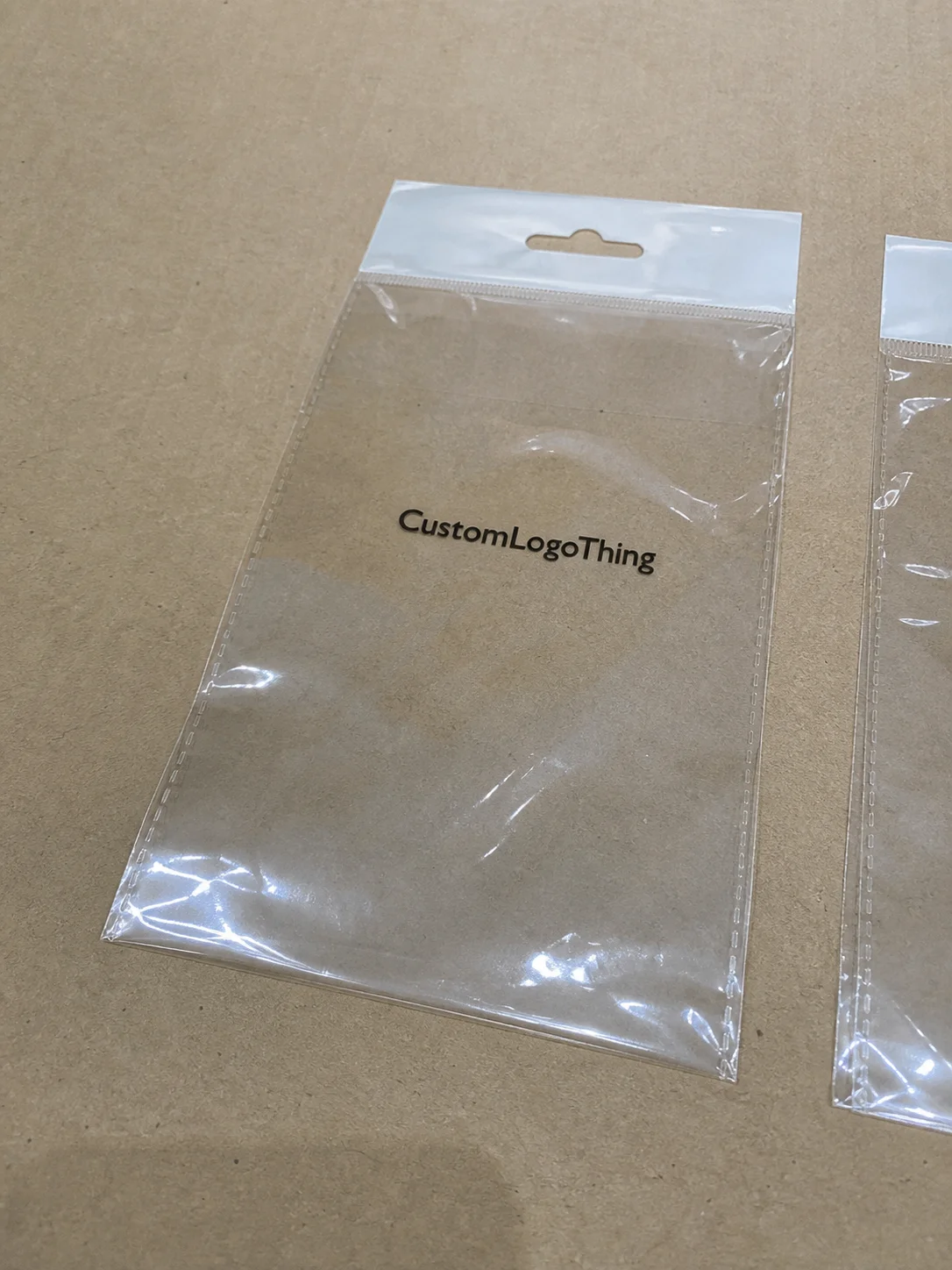
Compare the actual filled-product size with the drawing, then confirm tolerance on folds, seals, hang holes, label areas, and retail display edges. Reserve space for logos, QR codes, warning copy, and material claims before decorative graphics fill the panel.
Quote comparison points
Review material grade, print process, finish, sampling route, tooling charges, carton quantity, and freight assumptions side by side. A quote is only useful when the supplier can repeat the same color, closure quality, and packing count on the next order.
Bubble Wrap Pricing Guide: Why Most Businesses Overpay (And How to Stop)
Twelve years visiting packaging facilities across the Midwest taught me one thing consistently: business owners rarely know what they're actually paying for bubble wrap. I can't count how many times I've watched their faces change when I showed them the real numbers. There's something almost cruel about watching someone's jaw hit the floor when they see their annual packaging spend laid out in black and white. One Chicago-based e-commerce retailer discovered they were spending $34,000 annually on protective packaging—$6,000 more than necessary—simply because nobody had ever audited their purchasing patterns. That conversation changed how they bought bubble wrap forever.
This is one of the most overlooked expense categories in e-commerce, if you ask me. Companies consistently overpay for protective packaging, and the crazy part is nobody's intentionally doing it. They're just flying blind. Industry data suggests businesses spend 15-20% more on bubble wrap than necessary, often due to preventable purchasing decisions. Whether you're shipping your first hundred orders a month or overseeing thousands of daily shipments, understanding how bubble wrap pricing works will directly impact your bottom line.
This guide breaks down every factor that influences what you pay—material composition, roll dimensions, volume discounts, and supplier logistics. My goal is to give you specific knowledge to make smarter purchasing decisions, not vague advice. I'm talking actionable numbers and strategies I've seen work in real facilities. Real people, real dollars, real savings.
Identical bubble wrap rolls cost different amounts depending on where you buy them. Your per-unit price might seem higher than competitors' offers. This guide answers those questions. By the end, you'll understand exactly what determines your bubble wrap cost and how to calculate whether you're getting a fair deal.
How Bubble Wrap Pricing Actually Works
Suppliers use two primary pricing models, and mixing them up destroys your cost analysis. Some vendors quote per-roll prices—straightforward, but misleading if you're comparing rolls of different sizes. Others quote per-square-foot prices, which makes comparison shopping much easier but requires you to know your actual coverage needs. I learned this the hard way early in my career. Explaining to a client why their "great deal" was actually 25% overpriced was not a fun Tuesday morning, let me tell you.
A supplier once tried to convince me their $48 per roll price was cheaper than a competitor's $0.12 per square foot. The catch? Their rolls were 12 inches by 500 feet, while the competitor offered 12 inches by 750 feet. Once I calculated the actual square footage, the "cheaper" option was 25% more expensive per coverage area. Always convert to the same unit before comparing. This should be Packaging Purchasing 101, but I still see it trip up seasoned procurement managers all the time.
Material composition plays a massive role in bubble wrap pricing that most buyers completely overlook. Standard bubble wrap uses polyethylene resin, but the grade varies significantly. Virgin polyethylene produces consistent bubbles with better air retention—crucial if your packages sit in warehouses for weeks. Recycled content reduces cost but can compromise bubble integrity and create inconsistent thickness. I've tested recycled-content rolls that lost 30% of their cushioning effectiveness after three months of storage. RIP, my faith in that supplier's "eco-friendly" marketing claims.
"Standard" sizes rarely match your actual needs. Most suppliers push 12-inch, 24-inch, and 48-inch width rolls because those dimensions fit their machinery efficiently. But what if your products are 9 inches wide? You end up paying for 12 inches of material and throwing away 3 inches of waste. A gift basket company switched to 18-inch custom-width rolls and reduced their material waste by 22% while actually decreasing their per-unit cost. Custom sizing sounded expensive to them initially—turns out it wasn't, once we did the actual math.
The margin between MSRP and bulk pricing separates strategic buyers from reactive ones. Suppliers publish price sheets with MSRP, but these function like car window stickers—starting points for negotiation, not final prices. Most suppliers offer 10-15% discounts at 5 rolls, 20-25% discounts at 10+ rolls, and some regional suppliers negotiate 30-40% off for pallet quantities. Know your annual volume and negotiate tiered pricing accordingly. Seriously, if you're paying MSRP for anything, you're leaving money on the table.
5 Key Factors That Determine Your Bubble Wrap Cost
After reviewing hundreds of supplier quotes and auditing packaging line efficiency, five factors consistently drive bubble wrap pricing differences. Master these, and you'll never overpay for bubble wrap again. Famous last words, right? But seriously, this framework works.
Bubble Size Selection
Bubble size directly impacts both protection effectiveness and cost. Small bubbles (3/16 inch) provide surface-level protection and cost less—typically $0.08-0.12 per square foot. These work well for items wrapped individually, like cosmetics or small electronics. Medium bubbles (1/2 inch) balance cushioning and cost, running $0.12-0.18 per square foot. I recommend this size for most general merchandise. Extra-large bubbles (1 inch) offer maximum protection for heavy or fragile items but cost $0.15-0.25 per square foot. A ceramics shop was using 1-inch bubbles for dinner plates when 1/2-inch would have provided identical protection at 25% lower cost. The owner looked at me like I'd suggested she start shipping her plates naked. But she tried it, and her damage rate didn't change. Sometimes the obvious solution isn't the right one.
Roll Dimensions and Perforation Options
Width, length, and perforation configuration all factor into bubble wrap pricing. Standard lengths range from 175 feet to 750 feet per roll, with longer rolls offering better per-foot pricing but requiring more storage space. Perforation—pre-cut tear points every 6, 8, or 12 inches—adds $0.02-0.05 per square foot but dramatically improves handling efficiency. A fulfillment center was manually cutting non-perforated bubble wrap with scissors, spending 45 minutes per shift on a task that perforated material eliminated entirely. Calculate your true labor cost before dismissing perforation as an unnecessary expense. I watched their operations manager do the math and audibly groan when he realized what he was paying in labor costs for a "cheaper" product.
Material Grade and Thickness
Heavy-duty bubble wrap (3/16 inch thick) costs more upfront but provides better puncture resistance for sharp-cornered products. Lightweight options work for non-fragile items but tear more easily. Gauge matters too—standard gauge runs 1/16 inch thick, while medium gauge is 1/8 inch and heavy gauge reaches 3/16 inch. Buyers save money by choosing medium gauge instead of heavy for items that don't need maximum protection. Match your material grade to your actual product requirements, not defaulting to the heaviest option. Here's my hot take: if your product has corners sharper than a butter knife, go heavy. Otherwise, medium gauge is almost always the sweet spot.
Order Quantity and Volume Discounts
Volume pricing creates dramatic swings in what you actually pay. Most suppliers structure discounts in tiers: single rolls at full MSRP, 5-10 rolls at 10-15% off, 10-25 rolls at 20-25% off, and 50+ rolls (pallet quantities) at 30-40% off. These discount thresholds are negotiable. When sourcing for a mid-sized 3PL operation, we locked in 40% off MSRP at just 24 rolls per month by committing to a 12-month agreement. Suppliers value predictable volume, so don't assume tier pricing is fixed. I can't stress this enough: just ask. The worst they say is no, and then you're no worse off than before.
Supplier Location and Shipping Logistics
Shipping costs add 15-30% to your total bubble wrap cost, especially for heavy rolls. A 750-foot roll of 24-inch bubble wrap weighs approximately 8 pounds—freight charges add up quickly at scale. Local suppliers eliminate shipping costs for orders over $200-300, while national distributors might offer lower unit prices but charge significant freight. Calculate landed cost—unit price plus shipping—before making any purchasing decision. Sometimes a supplier with higher per-roll pricing actually delivers the lowest total cost after accounting for delivery. I learned this lesson after a client spent three months convinced they had the best deal in the industry, only to discover their "savings" were being eaten entirely by freight charges. The spreadsheet moment was... uncomfortable.
| Bubble Size | Price per Sq Ft | Best Use Case | Typical Roll Sizes |
|---|---|---|---|
| 3/16 inch (Small) | $0.08 - $0.12 | Surface protection, lightweight items | 12" x 750', 24" x 500' |
| 1/2 inch (Medium) | $0.12 - $0.18 | General merchandise, moderately fragile | 12" x 750', 24" x 450', 48" x 350' |
| 1 inch (Extra-Large) | $0.15 - $0.25 | Heavy/fragile items, industrial parts | 24" x 250', 48" x 175' |
| Anti-Static (Pink) | $0.18 - $0.32 | Electronics, sensitive components | 12" x 350', 24" x 250' |
Step-by-Step: Calculating Your Bubble Wrap Needs and Costs
The exact process I use with clients eliminates wasted spending. This methodology has saved businesses anywhere from $2,000 to $50,000 annually depending on their shipping volume. I've seen grown adults cry happy tears when they see what these numbers mean for their annual budgets.
Step 1: Assess Your Products
Start by categorizing your top products by three criteria: weight, fragility rating, and average shipping distance. Create a simple matrix with these three factors. A 2-pound ceramic mug going 500 miles requires different protection than a 1-pound plush toy going 50 miles. Assign each product a protection tier—low, medium, or high—and match that tier to your bubble wrap selection. This sounds basic, but I've yet to work with a company that had done this systematically before our engagement. Not once. In twelve years. You'd think someone would have thought of this, but apparently not.
Step 2: Match Bubble Size to Requirements
Use your product matrix to select appropriate bubble sizes. Low-protection items (clothing, soft goods, non-fragile plastics) work with 3/16-inch bubbles. Medium-protection products (ceramics, glassware, electronics accessories) need 1/2-inch bubbles. High-protection items (industrial parts, laboratory equipment, art) typically require 1-inch bubbles or double-wrapping. When in doubt, err toward more protection—the cost difference is usually small compared to damage claims and customer returns. I've seen a $0.05 per unit savings in materials turn into a $15 damage claim. The math doesn't work out.
Step 3: Estimate Coverage Area Per Unit
Calculate how much bubble wrap each unit actually needs. For a box measuring 8 x 6 x 4 inches, you need approximately 188 square inches of coverage if wrapping all six sides. Add 15% for overlap and trimming, bringing you to about 216 square inches or 1.5 square feet per unit. At medium bubble pricing of $0.15 per square foot, that's $0.225 per unit in material cost. Sounds small, but multiply by 10,000 units per month and you're looking at $2,250 in monthly material costs. Getting this calculation wrong in either direction costs you money. The real kicker? Most people vastly underestimate how much they're using. Which means they're also overpaying without knowing it.
Step 4: Compare Total Cost—Pre-Cut vs Continuous
Pre-cut bubble wrap sheets eliminate cutting time but cost 20-30% more per square foot. For high-volume fulfillment operations with consistent product sizes, pre-cut sheets often win when you factor in labor savings. For mixed-product operations where you ship everything from phone cases to furniture parts, continuous rolls with perforation give you flexibility. For a client shipping 50 different product sizes: switching to continuous rolls with 8-inch perforation reduced their packaging cost by 18% despite the slightly higher material price. They called me a genius. I just did the math. Anyone could.
Step 5: Factor Storage and Handling Efficiency
Don't ignore the operational costs of your bubble wrap choice. A 750-foot roll of 24-inch bubble wrap takes up roughly 2 cubic feet of storage space and weighs 12 pounds. Limited warehouse space might force you to rent additional storage for longer rolls. Companies spend $300 monthly on off-site storage for bubble wrap when switching to compact rolls would have eliminated that expense entirely. Calculate your storage cost per roll before assuming longer rolls are always better. I once toured a warehouse where they'd filled an entire loading dock with bubble wrap because they bought "the good deal" on a pallet order. The dock couldn't be used for actual loading. I don't think they ever did the calculation on what that lost productivity cost them.
Common Bubble Wrap Pricing Mistakes to Avoid
Over the years, I've watched businesses make the same purchasing mistakes repeatedly. Here's what to watch out for—and how to sidestep these traps. Learn from their pain so you don't have to experience your own.
Choosing Bubble Size Based on Price Alone
The cheapest bubble wrap option isn't always the most economical. A candle company switched from 1/2-inch to 3/16-inch bubbles to save 20% on material costs. Their damage rate jumped from 1.2% to 4.8%, costing them $8,000 in replacements and refunds over six months. Always calculate total cost—material plus damage/loss—not just unit price when comparing bubble wrap options. I watched their owner's face as he added up those numbers. He actually put his head in his hands. Twenty percent savings doesn't mean much when you're hemorrhaging money four times that amount elsewhere.
Ignoring Perforation Placement Costs
Perforation seems like a minor detail, but wrong placement creates significant waste. If your products need 9-inch wrapping lengths but your perforated roll has tear points every 12 inches, you're paying for 3 extra inches per unit. Over a million units annually, that inefficiency adds thousands to your annual spend. Specify perforation spacing that matches your actual product dimensions. This one drives me absolutely crazy because it's so fixable. Just ask. Suppliers will often custom-perforate for free or minimal cost if you simply inquire. Nobody does, though. Nobody.
Underestimating Annual Volume
Buyers often negotiate based on their immediate order rather than projected annual volume. A medical device distributor committed to 15 rolls monthly, and their supplier offered pricing that matched the 25-roll tier normally required. The sales rep admitted they valued the guaranteed volume over the per-order quantity. Always ask about annual volume pricing before finalizing any agreement. This is negotiation 101, and somehow it still surprises people every time. Your future volume is a bargaining chip you're leaving on the table.
Focusing on Unit Price Without Coverage Efficiency
A roll might cost $38 versus $45 for another option, but if the $45 roll is 750 feet and the $38 roll is only 500 feet, you're actually paying more per foot. Calculate price per square foot of coverage, not just per roll or per foot. This basic comparison has uncovered hidden costs in every supplier quote I've audited. Every single one. You'd think people would learn, but honestly, we're all susceptible to anchoring on the first number we see.
Overlooking Hidden Fees
Fuel surcharges, palletizing fees, minimum order charges, and payment terms all affect your true cost. A supplier might quote $0.10 per square foot but add $75 fuel surcharge and $25 pallet fee per order. Three orders per month means $300 in fees that don't appear in your unit price calculation. Request a complete pricing breakdown including all fees before comparing quotes. I now have a template I send suppliers that explicitly asks for every possible fee. Some of them have actually thanked me for it. Apparently, most buyers don't ask, and then they're surprised when the invoice doesn't match the quote.
Expert Tips for Reducing Your Bubble Wrap Costs
These strategies come from years of negotiation and operational optimization. Some require upfront effort; others are simple mindset shifts. All have delivered measurable results. No fluff, no theory—just what actually works.
Negotiate Based on Projected Annual Volume
Never negotiate based solely on what you need today. Enter every conversation with your projected annual volume, even if you're not committed to those numbers yet. I negotiate 12-month agreements with quarterly volume commitments, which gives suppliers the predictability they want while giving me pricing benefits of annual commitment. Even small businesses can do this—a startup owner negotiated 25% off by committing to 10 rolls monthly instead of ordering 2-3 rolls as needed. He called me afterward, practically giddy about the savings. It was adorable, honestly.
Build Regional Supplier Relationships
National suppliers offer convenience but often charge more to cover their distribution network costs. Regional manufacturers often beat national prices once you factor in freight savings. I've built relationships with three regional polyethylene manufacturers within 200 miles of my primary client base. Shipping costs drop to zero for orders over $250, and delivery timelines shrink from 5-7 days to 1-2 days. That relationship value is hard to quantify but very real. I'm convinced one of these suppliers gets me the good coffee when I visit. Might be my imagination, but the thought warms my heart.
Consider Alternative Protective Packaging
Sometimes the best way to reduce bubble wrap cost is eliminating bubble wrap entirely. For non-fragile items, kraft paper, corrugated wrap, or molded pulp inserts provide adequate protection at lower cost. A home goods retailer switched from bubble wrap to crumpled kraft paper for their non-fragile category (linens, soft goods) and reduced packaging costs by 35%. Reserve expensive bubble wrap for items that genuinely need its cushioning properties. This isn't sacrilege—it's smart business. Not everything needs bubble wrap. I promise your products will survive.
Time Purchases for Off-Season Buying
Polyethylene resin prices fluctuate seasonally, typically peaking in Q4 due to holiday shipping demand and dropping in Q1-Q2. If you have storage capacity, buying in January-February often yields 10-15% better pricing than October-November. A furniture importer buys their entire annual bubble wrap requirement in February and stores it in their warehouse. They've locked in pricing 18% below what they paid buying monthly. Do you know what my favorite time of year is for packaging purchases? February. Everyone else is hungover from the holiday rush. I am full of energy and ready to negotiate.
Calculate Total Cost of Ownership
Your bubble wrap cost includes more than purchase price. Factor in waste percentage (typically 5-15%), labor for cutting/applying, storage costs, and damage rates from insufficient protection. A sophisticated total cost analysis reveals opportunities that simple unit price comparisons miss entirely. Companies save money by buying more expensive heavy-duty bubble wrap because it reduces their damage claims by more than the price premium. This is the concept that transforms packaging from a cost center to a strategic asset. Once you see it, you can't unsee it.
Your Bubble Wrap Pricing Action Plan
Now that you understand the factors driving bubble wrap cost, here's exactly what to do next. I've sequenced these steps based on impact and implementation complexity. No skipping ahead. Actually, you can skip ahead if you want. Your wallet, your choice.
Audit Current Usage
Calculate your cost per shipped unit for the next 30 days. Track how much bubble wrap you're actually using, not what you think you're using. I guarantee the numbers will surprise you. One client discovered they were spending $0.47 per unit on bubble wrap when they thought it was $0.25—wrong assumptions were costing them thousands monthly. His exact words: "How is this possible?" My response: "The same way it's possible for everyone else."
Identify Right Bubble Size
Review your top three shipping categories and confirm you're using appropriate bubble sizes. Match products to protection tiers and eliminate any over-protection. This single step often reduces costs by 15-25% with zero operational changes. Most companies are using bigger bubbles than they need. It's like using a sledgehammer to hang a picture frame. Effective? Probably. Necessary? Absolutely not.
Request Identical Supplier Quotes
Get pricing from at least three suppliers using identical specifications: same width, length, bubble size, gauge, and perforation spacing. Compare landed cost including all fees and shipping. The variation between quotes often exceeds 30% for the same product. I ran a comparison for a client last month—lowest quote was 34% below the highest. Same exact material. Thirty-four percent. I still can't get over it.
Calculate Bulk Ordering Break-Even
Determine the volume threshold where bulk pricing becomes cheaper than your current ordering pattern, accounting for storage costs. Sometimes buying more costs less overall when you factor in per-order fees and shipping. Run the math for your specific situation. Spreadsheets are your friend. I know, I know, everyone hates spreadsheets. But you'll love your bank account when these calculations pay off.
Lock in Pricing for 6-12 Months
Once you have favorable pricing, lock it in with a supplier agreement. Material costs fluctuate, and locking in today's pricing protects you from market increases. Even a simple email confirmation of agreed pricing for 12 months provides budgeting certainty that helps your entire operation. Last year, resin prices spiked 22% in Q3. Clients who'd locked in pricing at the beginning of the year? They slept soundly. The rest of us were stress-eating and watching commodity reports like they were sports scores.
"The businesses that consistently save on packaging costs aren't buying the cheapest materials—they're buying the right materials at the right price through the right channels. That distinction is everything."
Frequently Asked Questions
What determines bubble wrap pricing and costs?
Several interconnected factors shape what you pay for bubble wrap: bubble size (small, medium, or extra-large), material grade and thickness, roll dimensions, order quantity and available volume discounts, and supplier logistics including shipping. Understanding these five variables gives you the framework to evaluate any quote and identify opportunities for savings. This bubble wrap pricing guide covers each factor in detail, but the short version is: always calculate price per square foot of coverage, account for all fees, and negotiate based on your projected annual volume rather than immediate needs.
What is the average price of bubble wrap per roll?
Standard 12-inch by 750-foot rolls with 3/16-inch bubbles typically range from $35-55 depending on grade and supplier. Heavy-duty 24-inch by 250-foot rolls with 1/2-inch bubbles run $45-70. You can expect 40-60% price variation between suppliers for identical specifications, which is why comparison shopping with identical specs is essential. Yes, you read that right: up to 60% variation. For the same product. From different vendors. The packaging industry is wild.
How much does bubble wrap cost per square foot?
Typical bubble wrap cost ranges from $0.08-0.25 per square foot based on thickness and bubble size. Small 3/16-inch bubbles run $0.08-0.12 per square foot. Medium 1/2-inch bubbles cost $0.12-0.18 per square foot. Extra-large 1-inch bubbles range $0.15-0.25 per square foot. Anti-static formulations add premium pricing, typically $0.05-0.10 more per square foot. The math is straightforward once you know what to plug in.
Does buying bubble wrap in bulk save money?
Yes, most suppliers offer 15-25% discounts at 10+ roll orders. Volume pricing typically kicks in at 5-10 rolls for smaller buyers. Pallet orders of 50+ rolls can reduce costs by 30-40% compared to single-roll pricing. Calculate whether bulk pricing plus your storage costs still saves money overall. Sometimes it doesn't—the storage game matters more than people realize.
What affects bubble wrap shipping costs?
Roll weight and dimensional size determine freight class, which directly impacts shipping charges. A 750-foot roll of 24-inch bubble wrap weighs approximately 8-10 pounds and ships at higher freight rates than compact 175-foot rolls. Local suppliers often eliminate shipping charges for orders over $200. Dimensional weight pricing means your packaging's size matters as much as its actual weight. I can't tell you how many times I've seen buyers fixate on weight and completely ignore dimensions. The freight broker always wins in those scenarios.
How do I compare bubble wrap prices between suppliers?
Request identical specifications from each supplier including width, length, bubble size, gauge, and perforation spacing. Calculate price per coverage area (square feet), not just per roll. Account for minimum orders, delivery fees, fuel surcharges, and payment terms. Factor in quality consistency—cheaper materials may have more defects that increase waste and damage rates. Use my checklist: same specs, same unit, all fees included, quality verified. If a supplier can't or won't provide this, that's your answer right there.
Whether you're protecting delicate glassware, industrial machinery, or everyday consumer goods, understanding bubble wrap pricing gives you an advantage in every supplier conversation. The businesses that master this knowledge consistently outperform competitors on both cost and protection quality. Start with your audit, identify your opportunities, and take action—you'll see results within your first reordering cycle. And when you do, come back here and leave a comment. I genuinely enjoy reading about people's wins. Yes, I'm aware that's a bit weird. I've made peace with it.
For additional packaging standards and best practices, consult resources from the Institute of Packaging Professionals or the International Safe Transit Association, which establishes testing protocols for protective packaging performance.
Related packaging resources
Use these related guides to compare specs, costs, quality checks, and buyer decisions before making the final call.