Custom Logo Things
Bucket Hats Unit Cost Breakdown for Bulk Buyers
Use this bucket hats Unit Cost Breakdown to compare fabric, decoration, MOQ, and freight costs so you can quote bulk headwear with fewer surprises before ordering.
The easiest way to misread a bucket hat quote is to focus on the fabric and ignore the rest of the build. A useful bucket hats Unit Cost Breakdown shows how trim, stitching, decoration, MOQ, freight, and packaging can move the number more than a small fabric upgrade. That matters most on lower-volume runs, where setup charges are spread across fewer pieces and every extra step shows up in the unit cost.
The same hat can land in very different price bands depending on the job. A promo giveaway needs the lowest possible cost per piece. Retail merch needs better finishing and steadier color control. Event headwear usually sits between those two, where speed matters as much as finish. The line-item view is important because bulk pricing is rarely only about cloth.
Why Small Material Changes Swing Bucket Hat Costs
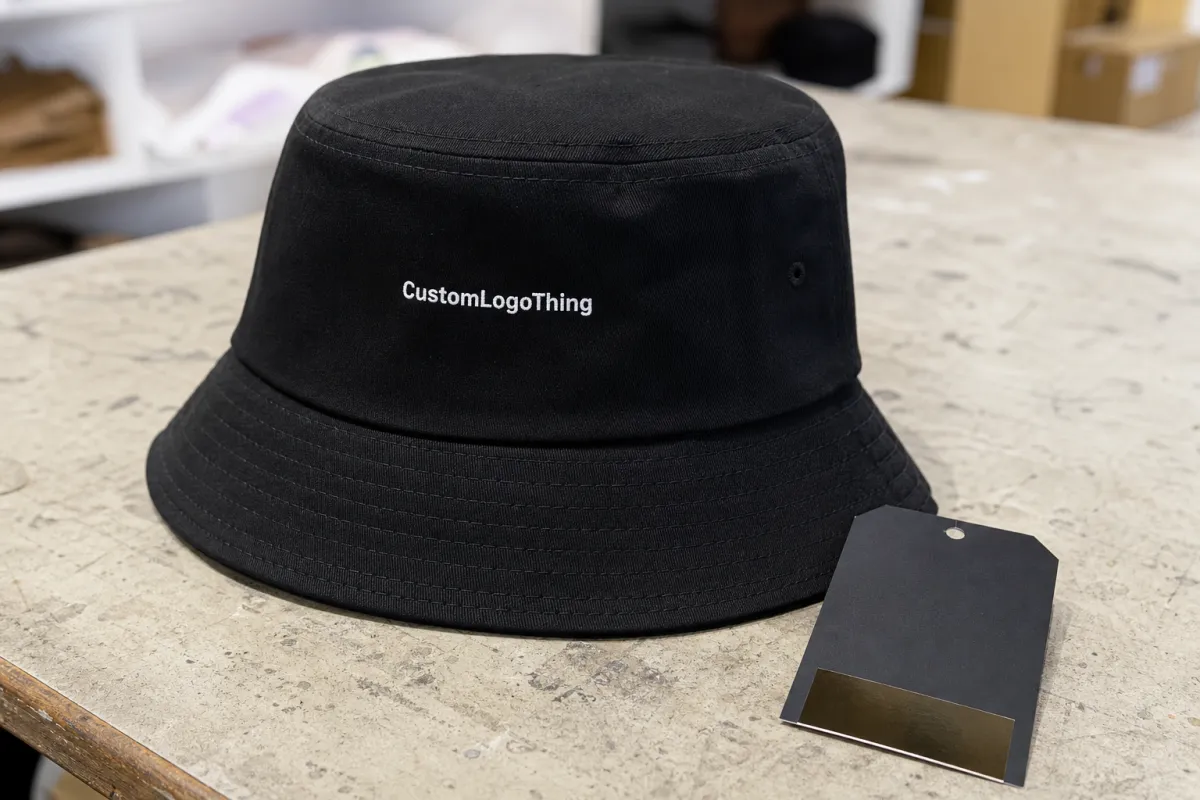
Bucket hats look simple, but the build has more moving parts than most buyers expect. A standard order may use cotton twill, canvas, ripstop, or recycled polyester. Each changes cutting behavior, stitch time, and how cleanly the crown holds shape. If the fabric frays easily, the line slows down. If the cloth is heavy, the brim needs more control.
For a practical bucket hats Unit Cost Breakdown, think about three common buying scenarios:
- Promo giveaway: low MOQ, one small logo, and simple packaging.
- Retail merch: stronger hand feel, cleaner finishing, and more controlled color.
- Event headwear: fast production, easy carton marking, and shipping speed.
On smaller runs, setup charges and stitching labor can outweigh raw fabric cost. A 300-piece order with a complex logo may show only a modest difference between two textiles, but the decoration and trim package can swing the total by more than 20 percent. That is why buyers should compare the full build, not just the shell fabric.
Check the comparison points before asking for a quote: fabric weight, panel count, brim width, sweatband construction, logo method, packaging, and destination. If two samples do not match on those items, the pricing will not be like-for-like.
Bucket Hat Specs That Set the Base Quote
The base price starts with the physical spec. Crown height, brim width, panel count, fabric weight, and inner finishing all affect labor. A shorter crown uses less material, but the savings may be minor if the pattern becomes harder to sew cleanly. A wider brim improves coverage, but it often adds handling time and tighter stitching control.
Common spec points that shape the quote include:
- Panel count: 4-, 6-, or 8-panel construction changes cutting and alignment time.
- Fabric weight: many cotton twills and canvases sit around 180-260 gsm, with heavier builds usually adding structure and cost.
- Sweatband: basic self-fabric is cheaper than a bound or padded sweatband.
- Eyelets: embroidered eyelets, metal eyelets, or no ventilation create different labor and tooling needs.
- Chin cord: cords, cord locks, or toggles increase assembly time and component count.
Custom dyeing and special color matching can also move the price. If a supplier must run a custom color instead of using stock fabric, the MOQ may rise and the schedule may lengthen. Reinforced seams, lining, or brim inserts can add durability, but they also add sewing minutes. Standardize the spec before comparing prices so the quote reflects the same product, not a better or cheaper version of it.
The short version: match the spec first, then compare the price.
Decoration, Labels, and Packaging That Change the Per-Unit Total
Decoration is where a lot of hidden cost sits. The same hat body can look inexpensive or premium depending on the logo method. Embroidery, woven patches, appliques, screen print, and heat transfer all behave differently on setup and volume. The right choice depends on the artwork, the quantity, and how the hat will be used.
| Decoration method | Setup sensitivity | Best fit | Typical cost effect |
|---|---|---|---|
| Embroidery | Moderate | Simple logos, durable branding | Often efficient on mid-to-larger runs; stitch count drives the price |
| Woven patch | Higher tooling fees | Fine detail, clean edges, small text | Good visual detail, but patch setup can raise the first quote |
| Applique | Labor-heavy | Bold shapes, layered branding | Can add noticeable sewing time and higher unit cost |
| Screen print | Low to moderate | Flat graphics, one-color art | Strong value on simple art, less ideal for textured fabrics |
| Heat transfer | Moderate | Full-color graphics, short runs | Useful for complex art, but durability and feel should be checked |
Logo size and placement matter as much as the method. A small front mark is one thing; front plus side plus back is another. Each added position can create extra sewing time, extra proofing, and sometimes extra tooling. On bucket hats, even a 1-inch change in patch width can affect how the logo sits on the curved crown.
Labels and packaging deserve the same attention. A woven main label, size tab, hangtag, polybag, barcode sticker, and carton mark are all real line items. A basic polybag may add only a few cents, while a retail-ready hangtag and branded sticker can add more. If the order is going into a retail channel, that spend may be worth it. If the hats are leaving a warehouse for a single-day event, it usually is not.
Premium packaging makes sense when it supports presentation, retail compliance, or resale value. If the hat is moving straight into giveaway bins, it often raises cost without improving the outcome.
Bucket Hats Unit Cost Breakdown, MOQ, and Pricing Benchmarks
A useful bucket hats Unit Cost Breakdown separates the quote into clear layers: blank hat cost, decoration, sampling, tooling fees, packaging, freight, duties, and any rush charges. That is the only way to see the true landed number. A line that looks cheap on paper can rise fast once the hidden pieces are added back in.
MOQ changes the cost curve because fixed costs get spread across more units. The higher the order volume, the more the setup charges disappear inside the run. That is why the first price break is often the most dramatic. A buyer moving from 100 pieces to 500 pieces may see a bigger drop than from 1,000 to 2,000 pieces.
For a plain cotton twill bucket hat with one decoration position, many bulk quotes land roughly in these zones:
| Quantity | Indicative cost per piece | What usually changes |
|---|---|---|
| 100-199 | $3.80-$6.50 | High setup impact, limited packaging efficiency |
| 300-499 | $2.60-$4.80 | Better spread of setup and decoration costs |
| 500-999 | $1.90-$3.60 | More stable bulk pricing and better carton efficiency |
| 1,000+ | $1.40-$2.90 | Lower unit cost if the spec stays standard |
Those ranges are factory-side, not landed-to-your-door pricing. Complex art, heavier fabric, custom dyeing, or premium packaging can push the number higher. They still help buyers compare offers without getting distracted by the lowest headline number. Ask for tiered pricing at several quantities so you can see where the break-even point sits. A 500-piece quote and a 1,000-piece quote should not be judged with the same lens.
Compare like for like: same fabric, same logo method, same size run, same packaging, same shipping terms. If one supplier quotes ex-factory and another includes air freight, the numbers are not equivalent.
Production Steps, Lead Time, and Delivery Milestones
The production timeline should start after final art approval, color approval, and deposit confirmation. Not before. Buyers sometimes count time from the first email, then wonder why the schedule slips. That is not a production problem; it is a process problem.
A typical sequence looks like this:
- Artwork and spec confirmation
- Sample or mockup approval
- Pre-production check
- Bulk cutting and sewing
- Decoration and finishing
- Quality inspection and packing
- Shipment booking and export handoff
For standard runs, the bulk sewing phase often takes around 7-15 business days after approval, with sampling adding another 5-10 business days depending on complexity. Freight is separate. Air can move fast, while ocean freight stretches the calendar. If the order is tied to a launch date, the shipping method matters as much as the sewing slot.
Common schedule risks are easy to spot once you know where they hide:
- Late artwork revisions after sample approval
- Slow feedback on color strike-offs or logo placement
- Peak-season congestion at the factory or forwarder
- Carton marking changes after packing has started
- Extra label or hangtag requests near the end of the run
Milestone checks keep the order moving and protect the unit cost because they reduce rework. They also protect the delivery window, which is usually the first thing buyers care about once a launch date is fixed.
Quality Checks and Sample Approvals That Prevent Rework
Quality control is not only about defects. It is about preventing small misses that turn into expensive rework. On bucket hats, the key checks are stitch alignment, crown symmetry, brim width tolerance, logo placement, color match, and packaging accuracy. A logo that sits 8 mm off-center may not sound dramatic, but on a curved crown it can look sloppy enough to trigger a rework request.
It helps to separate the sample types:
- Photo sample: useful for visual direction, but it does not prove hand feel, fit, or stitch quality.
- Physical sample: confirms materials, construction, and general finish.
- Pre-production sample: the closest check before bulk cutting starts.
Approving the wrong sample can make a good unit price irrelevant. If the buyer signs off on a photo and assumes the physical build will match, the order can drift. Once bulk sewing starts, changes cost more. That is why a proper pre-production sample is usually the safest approval point.
Packaging verification matters too. Carton labels, barcodes, insert cards, and count accuracy should be checked before shipment. For transit testing and carton handling guidance, the resources at ISTA are useful. If the order includes paper hangtags or insert cards, FSC certification is a straightforward way to specify paper stock with better sourcing traceability.
“A low quote is not a low landed cost if the order needs rework, relabeling, or a second shipment.”
That is the real risk. Quality control protects margin because it stops hidden costs that only show up after the product is already moving.
Why a Full-Service Supplier Lowers Landed Cost
A full-service supplier can lower landed cost even when the base unit price is not the lowest. The reason is simple: fewer handoffs mean fewer mistakes. If one team sources the fabric, manages decoration, verifies QC, and handles shipping documents, the order has less room to slip between vendors.
Compare that with a multi-vendor setup. One vendor cuts the hats, another applies the logo, a third handles packaging, and a fourth books freight. Each handoff creates a chance for a mismatch in spec, label, carton count, or ship date. Every correction eats into the margin you thought you saved on the first invoice.
The hidden value usually shows up in four places:
- Faster proofing: fewer approvals move between fewer teams.
- Cleaner repeat orders: the spec is easier to keep consistent.
- Lower error rate: one document trail is easier to police than four.
- Better freight planning: packaging and carton count can be built around shipping efficiency.
For buyers, that means a slightly higher unit price can still be the better deal. A supplier that gives clear documentation, stable repeat-order specs, and transparent assumptions often saves more than a bargain quote from a fragmented chain. That is not sales language. It is the math of fewer corrections.
What to Send for an Accurate Quote and Fast Approval
If you want a fast, accurate quote, send one clean message with the full job details. The less back-and-forth, the fewer assumptions a supplier has to make. That directly improves the bucket hats unit cost breakdown you receive.
- Quantity by color or size: total units and any split by variant.
- Target delivery date: include your launch date, not just “ASAP.”
- Destination: warehouse, port, or final shipping address.
- Fabric preference: cotton twill, canvas, recycled polyester, or open to options.
- Decoration method: embroidery, patch, print, applique, or mixed methods.
- Packaging needs: polybag, hangtag, barcode sticker, carton marking, or retail pack.
- Artwork file: vector logo, patch art, Pantone references, or sample photo.
- Cost assumptions: ask whether sampling, tooling fees, freight, and duty are included.
A line-item quote should separate the blank hat, decoration, sample cost, packaging, freight, and any rush charges. If those pieces are collapsed into one number, you cannot tell whether the offer is actually competitive. Ask for tiered pricing at two or three quantities, and request the same spec from every supplier.
Include a reference photo or a physical sample if you have one. A picture reduces guesswork. A sample reduces it even more. The fewer revision cycles you need, the closer the order stays to the original budget.
For any buyer comparing suppliers, the cleanest move is simple: request a true bucket hats unit cost breakdown, then compare the landed total, not just the headline unit price. That is where the buying decision lives.
What affects bucket hats unit cost breakdown the most on small runs?
Decoration setup, fabric choice, and MOQ usually move the price more than minor trim changes. Low quantities spread fixed costs across fewer hats, so the unit cost rises quickly.
How does MOQ change bucket hat pricing per unit?
Higher MOQ spreads sample, tooling, and setup charges across more pieces, which lowers the per-hat rate. Ask for tiered pricing so you can see the break at each quantity level.
Is embroidery or a woven patch cheaper for bucket hats?
Embroidery is often cheaper for simple logos, while woven patches can be better for detailed artwork. The lower-cost option depends on stitch count, patch size, and whether the supplier adds tooling fees.
What should be included in a bucket hat quote?
A solid quote should list the blank hat, decoration, sample cost, packaging, freight, and any duties or rush charges. If those items are missing, the landed cost is probably incomplete.
How long does bucket hat production usually take after approval?
Timing depends on sample approval, artwork readiness, and order size, but production should only start after final sign-off. Ask for a milestone schedule so you can track sampling, bulk production, and shipping.

