The Five Panel Caps unit cost breakdown surprises buyers because the cap looks straightforward until the quote starts moving. A five-panel build has fewer seams than a six-panel style, but the final price still shifts quickly once you change fabric weight, front-panel support, closure type, or decoration method. A simple-looking cap can become a premium item with only two or three spec changes.
That is why experienced buyers read the quote like a production sheet, not a shopping cart. The useful question is not “What does one cap cost?” It is “What is inside that number, what can change it, and which choices actually matter for the end use?” A promo giveaway, a retail launch, and a staff uniform order do not deserve the same build.
Lower unit cost usually comes from clarity rather than squeezing every cent out of materials. Tight specs, clean artwork, and a realistic order size do more for pricing than vague requests for “good quality.” Factories quote faster and more honestly when the job is defined well.
Why Small Changes in Five-Panel Cap Specs Move Unit Cost Fast
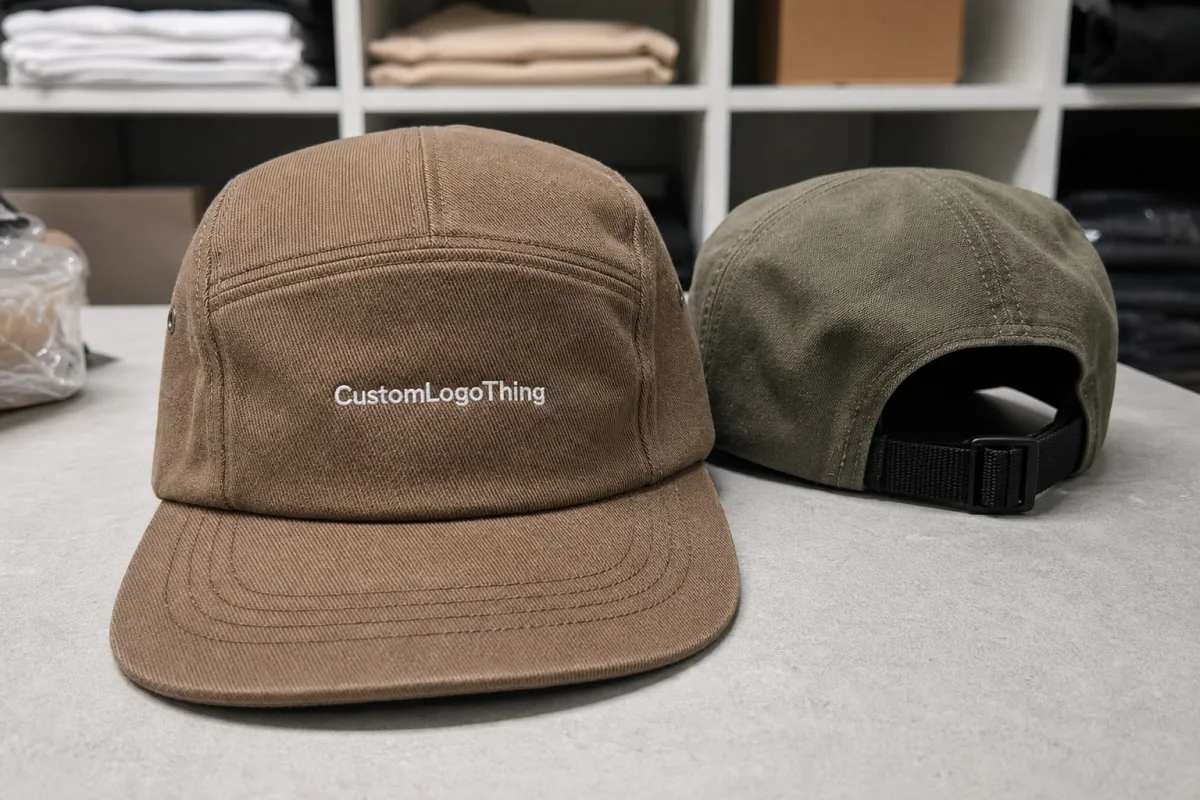
Five-panel caps are not expensive because the shape is complicated. They get expensive because each detail asks for material, machine time, or extra handling. One heavier fabric, one additional logo location, or one upgraded closure can nudge the cost enough to matter on a margin-sensitive order.
The main cost drivers are the front panel construction, the visor shape, the inner finishing, and the decoration method. A soft, unstructured cap with a single flat embroidery hit can stay lean. Add a structured front, a woven patch, a custom sweatband, and inside labeling, and the same silhouette becomes a very different product.
Buyers often focus on the blank cap price and ignore the build. That is usually the wrong lens. If the front panel needs extra support so embroidery sits cleanly, the factory may add interfacing or more stitching. If the cap must keep a crisp shape for retail presentation, labor goes up again. Those changes are not cosmetic. They show up in the unit price because they slow production and create more points for quality control.
Practical rule: the cheapest spec is not the thinnest spec. It is the spec that still supports the logo, the fit, and the sales channel you are using.
Five-Panel Cap Construction: What Buyers Are Actually Paying For
Buyers do not pay for “a cap” in the abstract. They pay for crown panels, visor, closure, inner taping, sweatband, labels, and the finish that holds all of it together. Each of those parts can be basic or upgraded. The price follows the choice.
The front panel matters most on a five-panel style because it offers one uninterrupted surface for branding. That is the reason this silhouette is popular with streetwear labels, event merch, and outdoor brands. A clean front panel helps the logo read from a distance. It also means the cap has to be built well enough to support that logo without warping.
Comfort details move the number too. A smoother sweatband, cleaner seam taping, and a decent closure improve wearability, but they also add labor. On a short-run promo order, a modest build may be enough. On a retail order, buyers usually end up paying for better finishing because the cap has to look finished on the shelf, not merely acceptable in a box.
- Unstructured crown: generally lower cost, softer fit, fewer support materials.
- Structured front panel: better logo presentation, higher sewing and support cost.
- Curved visor: common and efficient for production, usually cheaper than special shaping.
- Custom label placement: small per-piece impact, but it adds setup and finishing steps.
One buyer mistake shows up again and again: ordering more structure than the product needs. If the cap is for a giveaway, a softer build often works better and costs less. If it is a retail piece, structure is usually worth paying for because the cap holds its shape in hand and under lighting. The right answer depends on the channel, not on a general idea of “premium.”
Materials, Closures, and Decoration Specs That Change the Quote
Fabric choice changes the quote faster than many buyers expect. Cotton twill is common because it is familiar, widely available, and easy to price in bulk. Washed cotton usually costs more because the finish adds handling and another quality check. Nylon can give the cap a sportier feel, while polyester blends often help with color consistency from run to run. Recycled fabrics can raise the price a bit, although they may support a sustainability claim that matters to the buyer.
Weight also matters. A lighter fabric may save money, but if the cap loses shape or shows the outline of the front support, the savings are false. On the other hand, going too heavy can make the cap hot and stiff. The useful middle ground is a fabric that keeps the crown clean without feeling bulky.
Closures are another quiet cost lever. A self-fabric strapback tends to feel more polished and can cost more because it needs matching material and cleaner finishing. Plastic snaps are often the most economical choice on larger runs. Metal buckles usually sit higher because they are heavier, more labor-intensive, and often selected for a more retail-ready feel. That choice is small on paper and visible in the quote.
Decoration is where the spread widens. Flat embroidery is often the most economical branded option if the artwork is simple and the stitch count stays under control. 3D puff embroidery increases cost because it uses extra material and additional machine handling. Woven patches can be a useful middle ground for detailed graphics. Print is usually cheaper, but it works best on designs and fabrics that accept it cleanly.
There are also the extras that look minor until they are added one by one: inside prints, side hits, hang tags, special thread colors, woven labels, and retail packaging. If the order includes paper-based inserts or tags, check the chain of custody early and confirm the standard at fsc.org before artwork gets locked. Changing a certification statement later is a nuisance and can delay packing.
Typical decoration cost impact
Simple flat embroidery often adds roughly $0.35-$0.90 per piece on a practical bulk run. Woven patches often land around $0.55-$1.20. 3D puff can push higher, especially if the logo is large or the stitch count climbs. Add a second decoration location and the price rises again because the factory is doing more handling and more alignment checks.
The hidden cost is not just the decoration itself. It is the setup behind it. Digitizing files, creating embroidery programs, approving strike-offs, and checking patch placement all take time. A supplier that quotes a very low decoration number but charges for each stage separately may not be cheaper in the end.
Five Panel Caps Unit Cost Breakdown: MOQ, Pricing Tiers, and Add-Ons
Here is the part most buyers need first: a realistic five panel caps Unit Cost Breakdown by order volume. MOQ changes the math because sample work, setup, and production preparation get spread across fewer or more units. Small runs carry a heavier share of the fixed cost. That is not a trick, just arithmetic.
| Order volume | Typical cost per piece | What usually changes | Buying note |
|---|---|---|---|
| 100-299 pcs | $3.50-$5.80 | Setup charges and labor weigh heavily | Useful for testing a design, not ideal for margin |
| 300-999 pcs | $2.50-$4.25 | Better spread of setup and more efficient material use | Common range for branded merch and small retail launches |
| 1,000-2,499 pcs | $1.70-$3.10 | Bulk pricing improves and production runs cleaner | Good balance of cost per piece and inventory risk |
| 3,000+ pcs | $1.25-$2.20 | Best base cost, but freight and cash flow matter more | Works best when demand is already proven |
Those ranges reflect a practical custom cap, not fantasy pricing. A lean spec with one embroidery hit can sit near the low end. A heavier build with premium fabric, a better closure, and custom labeling pushes toward the top. That is normal. Cheap-looking quotes usually leave something out.
It helps to separate the base cap from add-ons. Custom labels, hang tags, inside prints, specialty trims, extra thread colors, and retail packaging all add cost. Tooling fees are not common on a simple cap, but a custom metal badge, embossed patch mold, or special accessory can trigger them. Setup charges also matter: logo digitizing, file prep, and sampling are often billed once instead of per piece.
Buyers should also watch how a supplier handles the quote structure. A low base price can still hide a costly final invoice if the factory charges separately for the sample, color matching, or rework after approval. The cleanest quote shows the included items and the excluded items on the same page. Anything less invites confusion.
If a supplier cannot explain what sits inside the base price, the quote is not a comparison point. It is a guess with a number on it.
Packaging and transit deserve attention too. If the caps are packed for retail or e-commerce, ask how cartons are tested and stacked. ISTA is a useful reference point for transit performance, especially if the product needs to survive compression, vibration, or repeated handling before it reaches the buyer.
Production Steps, Lead Time, and Sample Approval
A clean order usually moves in stages: artwork review, sampling, approval, bulk production, inspection, and packing. If one of those stages gets skipped, the problem usually appears later, after materials are already cut or stitched. The cost of that mistake is almost always higher than the cost of slowing down at the start.
Lead time depends on spec complexity and how quickly the sample gets approved. A straightforward run can move through sampling in about 5-10 business days, then bulk production in roughly 12-20 business days after approval if materials are available. Custom fabrics, specialty closures, and more complicated decoration packages add time. Rush jobs compress the calendar, but they often add charges and raise the risk of mistakes.
Sample approval deserves more scrutiny than it usually gets. Buyers should check the cap on the head, not just in the hand. Fit can change once the front panel opens under wear. The closure should lock cleanly without feeling sharp. The logo should read at a normal viewing distance, not just in a close-up photo. If the sample passes only because someone says it looks “fine,” that is not a serious sign-off.
Good sample review tends to catch the same handful of issues: logo size that reads smaller than expected, embroidery density that makes the front panel pucker, a closure that feels cheap, or a crown that sits too high. Those are easy to fix on paper and expensive to fix after bulk production starts.
What slows an order down
- Artwork files that need cleanup, redrawing, or color correction
- Too many revision rounds on sample fit or logo placement
- Material changes after the quote is already approved
- Packaging edits after cartons and labels have been planned
Even a well-run order can slow down if the buyer changes the brief after sampling. A small adjustment to logo width may sound harmless. On a cap, that can mean a new embroidery program, another approval round, and a delay in the bulk schedule. Tiny changes are not always tiny in production.
How to Compare Suppliers Without Getting Burned on Hidden Fees
A useful quote should spell out the cap spec, decoration method, setup charges, sampling terms, packaging, and shipping assumptions. A one-line price without detail is not helpful. It hides too much to trust.
The hidden fees are predictable. Artwork changes can trigger extra setup. Embroidery digitizing may be billed separately. Mold or plate fees can appear for patches or badges. Rush charges show up when the schedule gets compressed. Rework after approval is the most painful one, because it usually means the buyer changed something that was already signed off.
To compare suppliers properly, line up the same assumptions on each quote. One supplier may include polybags, carton labeling, and basic sampling. Another may quote only the cap and add the rest later. If the unit price differs by a few cents but the package is not the same, the comparison is fake.
- Base cap cost: fabric, structure, visor, closure, and standard finishing.
- Decoration cost: embroidery, patch, print, or applique.
- Setup charges: digitizing, file prep, sampling, and special tooling.
- Packaging cost: polybags, hang tags, carton labels, and retail inserts.
- Freight assumption: air, sea, or courier, plus destination and duty basics.
A buyer should also ask how the supplier handles quality checks. At minimum, the factory should inspect stitch alignment, decoration placement, seam consistency, closure function, and visible defects on a random sample of the finished lot. For caps, the weak points are often the front panel shape, the embroidery tension, and the visor line. Those are not glamorous checks, but they prevent the ugly surprises.
The best suppliers usually answer cost questions in plain language. They can explain why one option costs more and what the trade-off buys you. The worst ones hide behind vague phrasing and a low number. Price matters, but a quote that cannot be unpacked is a weak quote.
Common Ordering Mistakes That Inflate the Final Cost
The easiest way to raise unit cost is to overcomplicate the brief. Too many thread colors, too many logo placements, too many finish choices. Every extra detail adds handling, and handling is what the factory bills for, directly or indirectly.
Another common mistake is approving the sample too quickly. Buyers sometimes sign off on a cap before checking how it sits on the head, whether the logo reads clearly, or whether the closure feels cheap. Fixing those issues after production starts is expensive. Sometimes the correction is minor. Sometimes it means new materials, new setup, and a very different delivery schedule.
Mixing too many custom elements into one order also pushes the number up. A woven patch, inside print, branded taping, and special packaging may each be reasonable on its own. Together, they can turn a lean cap into a premium build that misses the budget. The math is fine; the product brief is the problem.
One more trap: forgetting to separate product cost from landed cost. A cheap unit price can look good until freight, duty, cartons, and local handling are added. On a small cap order, shipping can alter the real cost enough to change the buying decision. That is especially true when the order is rushed or shipped by air.
The practical fix is simple and a little boring:
- Lock the base cap spec first.
- Choose one primary decoration method.
- Use one or two logo colors unless the design truly needs more.
- Approve fit and size before bulk production.
- Add extras only if they support resale value or a clear brand requirement.
That sequence keeps the quote readable and the production plan workable. Boring is not a flaw here. Boring is what keeps unit cost controlled.
Next Steps to Lock the Right Quote and Order Plan
If the goal is a clean price, the brief should include quantity, target price, fabric preference, closure type, logo files, decoration method, and delivery deadline. The clearer the brief, the cleaner the five panel Caps Unit Cost Breakdown. Vague instructions almost always add cost somewhere in the chain.
It helps to request two or three build options. A lean version shows the floor. A balanced version shows the middle. A premium version reveals how much the upgrades actually cost. That side-by-side view is far more useful than a single quote that hides the trade-offs.
For retail programs, the eye is usually on fit, front-panel shape, logo clarity, and finish. For promo volume, the key is the lowest reliable unit cost that still survives handling. Those are different jobs, so the right cap spec will be different too.
A careful order plan does not just reduce surprises. It also makes the whole quote easier to trust. The value of a detailed Five Panel Caps unit cost breakdown is not a bargain-hunting exercise. It is the ability to match the product to the budget, the schedule, and the channel without paying for unnecessary extras.
What drives the five panel cap unit cost the most?
The biggest drivers are order quantity, fabric choice, decoration method, and whether the cap needs extra structure or custom labeling. Small runs usually cost more per unit because setup, sampling, and labor are spread across fewer pieces.
How does MOQ affect five-panel cap pricing?
A higher MOQ usually lowers unit cost because material prep and production setup get spread across more caps. If your quantity falls below the factory’s preferred MOQ, expect either a higher per-unit price or a setup surcharge.
Which decoration method is usually cheapest for five panel caps?
Simple flat embroidery is often the most cost-efficient branded option when the artwork is clean and the stitch count stays under control. Patches, 3D puff, and multi-location decoration usually cost more because they add materials and production time.
What is a realistic turnaround for custom five panel caps?
Typical turnaround depends on sample approval, material availability, and order size, but custom caps usually need several production stages before shipping. Fast approvals and simple specs shorten the schedule; artwork changes and sample revisions slow it down.
What should I send for an accurate five panel caps quote?
Send quantity, target price, fabric preference, closure type, logo files, decoration method, and shipping destination. If you want a cleaner comparison, ask for a base option and one upgraded option so the cost impact is easier to read.

