Performance Golf Caps Unit Cost Breakdown to Quote Smarter
The unit cost of a Custom Performance Golf cap is never just one number. It is the blank cap, decoration, packing, freight, and the small setup items that often get missed in the first quote. Buyers usually see the real total only after approval, when the extras are harder to change.
For tournament merch, pro shop stock, or a corporate giveaway, the cap has to look good, hold shape, and leave room for margin. If the spec is vague, the quote will be vague too. That is why the performance golf caps Unit Cost Breakdown matters as a buying tool, not just a price check.
Why the cheapest cap quote usually costs more later
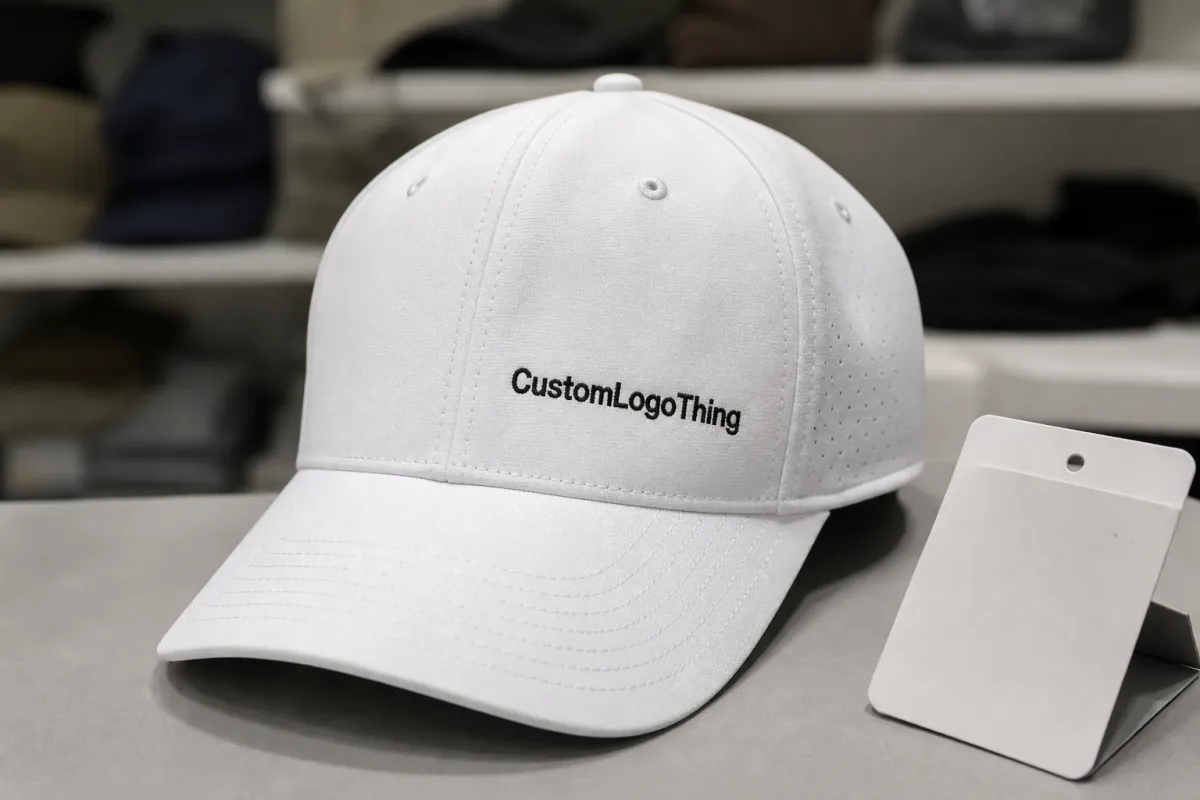
Low factory pricing is attractive, but it rarely includes everything. A supplier may quote a very cheap blank cap, then add embroidery, patch work, labels, packing, and freight later. The landed cost can end up 25% to 60% above the first number.
The cheapest version often saves money in places that affect sell-through. A soft crown, a bill that loses its curve, or a thin sweatband can make the cap feel disposable. That does not show up in the first spreadsheet, but it does affect how fast the order moves.
Think about a club event with 400 caps on a table. If the profile looks generic, the stock sits. If the cap feels polished enough to wear after the round, it sells faster. A few cents on the unit can be less important than a design that actually moves inventory.
A cap is only cheap if the landed cost stays inside margin after decoration, packing, freight, and a realistic defect allowance.
Performance fabric matters because golfers feel the difference quickly. Ask for the actual fabric composition, sweatband type, and finishing details instead of assuming "performance" means the same thing from every supplier.
Materials, fit, and closure choices that change the build
Most performance caps use polyester, nylon, or a blend. Polyester is the most common because it holds color well, takes embroidery cleanly, and stays in a good cost range. Nylon feels smoother and can look more premium, while blends sit between the two on hand feel and price.
Fit changes both appearance and cost. A structured crown keeps the front panel upright and gives the logo a cleaner face. An unstructured crown is softer and more casual, but it may look less retail-ready. A 6-panel cap is the usual baseline; a 5-panel version can give a cleaner front for larger art.
Closures affect sizing risk and price. Snapback and strap closures work for broad audiences. Velcro is inexpensive but can feel less premium. Fitted caps give a cleaner finish, but they add size complexity and inventory risk. For most programs, adjustable is safer; for higher-end pro shop items, fitted can make sense.
These details also matter:
- Pre-curved bill for a ready-to-wear shape.
- Moisture-wicking sweatband for a drier feel on course.
- UV claims only when the fabric and testing support them.
- Shape retention so the cap survives packing and still displays well.
Clear specs make pricing cleaner. "Performance cap" is too broad. "100% polyester, structured 6-panel, pre-curved bill, adjustable closure, moisture-wicking sweatband" gives a supplier something that can be quoted without guesswork.
Decoration specs that decide whether the cap sells or sits
Decoration is where quotes split fastest. Flat embroidery is usually the lowest-cost choice for a simple front logo. It is durable, familiar, and a good fit for most golf programs. When the art gets larger or more detailed, a woven patch or PVC patch can create a more premium look, but the price rises with it.
Thread count, stitch density, and color count all affect cost. A small one-color logo is easy. A full-color logo with fine text is not. Each extra thread color adds handling and more chances for variation, so the logo should stay as simple as the brand allows.
Patches bring their own tradeoffs. Woven patches keep detail sharp. PVC patches add dimension and suit sport-forward branding. Leather or faux-leather patches feel upscale, though they may need custom tooling. Heat transfer can work for complex art or short runs, but it is not always the best fit for a golf cap.
Multi-logo programs need extra care. A front logo, side sponsor mark, and back event name can each carry its own setup charge. Artwork can also run into seam and panel limits, which may force the factory to resize the patch or shift the placement.
If the logo is large, detailed, or split across more than one location, ask for a decorated mockup before approval. It is a small step that prevents avoidable changes later.
| Decoration option | Typical use | Cost impact | Buyer note |
|---|---|---|---|
| Flat embroidery | Clean front logo, club mark, simple sponsor art | Lowest setup and production cost | Best for straightforward branding |
| Woven patch | Fine detail, sharper lines, retail-ready look | Moderate increase from patch material and application | Good balance of clarity and perceived value |
| PVC or leather patch | Premium retail or lifestyle presentation | Higher, often with tooling fees | Best when the brand can justify the upgrade |
| Heat transfer | Complex art or short-run graphics | Varies by size and color count | Useful for detail, less classic for golf |
For packaging and shipping, carton quality and insert choices still affect the order. If the program needs hang tags or FSC-certified paper stock, those items should be included in the quote from the start.
Performance golf caps unit cost breakdown: what buyers pay for
This is where the real quote gets built. The performance golf caps Unit Cost Breakdown is usually a set of separate charges, not a single clean line. A buyer should expect the blank cap, decoration, labels or tags, packing, carton handling, and freight to appear in different buckets.
MOQ changes the math fast. A 100-piece order carries more setup burden per cap than a 500-piece order, and a 1,000-piece run usually gives the best bulk pricing if the spec stays simple. Small runs are not bad, but they pay more for every step that needs setup.
Typical quote variables include:
- Blank cap cost based on fabric, crown build, and closure.
- Decoration setup such as digitizing, patch tooling, or screen prep.
- Placement count for front, side, back, or under-bill marks.
- Packing spec including polybag, hang tag, tissue, and carton count.
- Freight and whether the price is ex-works, FOB, or landed.
Reference bands for a simple custom program usually look like this. They are not universal, because shipping lane, seasonality, and decoration all affect the total, but they are useful for spotting a quote that is too low to be complete.
| Build tier | Typical MOQ | Estimated unit cost | What is usually included |
|---|---|---|---|
| Basic | 100-300 | $2.10-$3.40 | Standard polyester cap, single embroidery, basic polybag |
| Mid-tier | 300-1,000 | $3.20-$5.20 | Better fabric hand, structured crown, patch or multi-color embroidery, retail tag |
| Premium | 500-2,000 | $5.00-$8.50 | Higher-grade fabric, premium patch, custom labels, upgraded packing, stronger finishing |
What moves the number fastest is usually not the fabric alone. Decoration complexity, setup charges, and packing details often swing the quote more than a small material upgrade. In many cases, simplifying the logo saves more money than changing the cap body.
Sample charges are separate from production cost. A pre-production sample often runs $25-$80 depending on decoration and whether patch tooling or digitizing is needed. Custom patch tooling can add $40-$150 or more. Hidden fees are the problem; clear fees are normal.
Process, lead time, and production steps from sample to shipment
A clean cap order follows a simple path: brief, mockup, sample, approval, bulk production, QC, packing, and shipment. Each step can stall if the buyer changes the spec or sends incomplete artwork.
For stock blanks with light decoration, sampling often takes 5 to 10 business days. Bulk production is commonly 2 to 4 weeks once the sample is approved. Fully custom builds, especially with patches or multiple placements, can take longer. Peak season makes the schedule tighter.
Work backward from the delivery date, not forward from the quote. If caps need to arrive before an event, leave room for art revisions, sample review, and approval. If the shipment crosses borders, production time and freight time should be separated. Air can solve urgency, but it can also erase margin quickly.
Common delay points are predictable:
- Artwork arrives in the wrong format or with too many fine details.
- Logo colors are not specified clearly enough.
- The buyer changes the closure or packing after sampling.
- The factory waits on final approval while the calendar keeps moving.
How we keep quotes clean without cutting corners on quality
A quote stays honest when the spec stays stable. That means source consistency on the blank cap, trim control for labels and sweatbands, and a logo placement plan that does not change after approval. If the cap body, thread, patch stock, or packing shifts midway through, the cost per piece should change too.
Good QC is simple, but it has to happen at the right time. A pre-production sample catches proportion mistakes. Inline inspection catches thread tension, color drift, and placement issues. Final carton checks catch count errors and packing damage. Photo sign-off helps when the buyer cannot inspect physically.
Reorders are where consistency pays off. A buyer who can get the same crown shape, same color lot, and same logo placement on the next run spends less time and less money. That matters for pro shops and corporate programs, where the cap needs to match the first order.
Clean quote rule: if a supplier gives a low number but will not confirm decoration method, carton counts, or sample expectations, the quote is not clean. It is unfinished.
Before production starts, ask for three things:
- A decorated proof with logo size and placement marked clearly.
- A pre-production sample photo or physical sample if brand standards are tight.
- A packing summary showing units per carton and outer carton dimensions.
That keeps the performance golf caps Unit Cost Breakdown visible instead of buried in email notes.
What to send for a fast quote and cleaner approval
If you want a fast quote, send a complete brief. A useful quote needs quantity, cap style, closure type, decoration method, logo file, packing spec, and the ship-to address. If you already know your target price, include that too.
To compare two offers fairly, line up the same spec: same fabric, same closure, same decoration placement, same packing, same shipping terms. A quote that looks cheaper can become more expensive after setup charges, freight, or a sample fee you did not expect.
Here is the order I would lock in:
- Confirm the target retail or margin ceiling.
- Approve the sample and decoration size.
- Lock the delivery window before production begins.
- Request carton counts and freight terms in writing.
Once those points are set, approval gets calmer. The supplier knows what to build. The buyer knows what to expect. The Performance Golf Caps unit cost breakdown becomes a planning tool instead of a guessing game.
Frequently asked questions
What drives performance golf caps unit cost the most?
Decoration method usually moves the price first, especially when you add multiple placements or extra thread colors. MOQ and freight can change landed cost more than the factory quote, so compare the full shipped total. Fabric choice matters too, but it usually comes after build complexity and logo setup fees.
How many caps do I need to get a better unit price?
Small runs usually carry the highest per-piece setup burden, especially under 100 units. A 300 to 500 piece order often gives a better balance between price and inventory risk. At 1,000 pieces and up, the unit cost usually drops again if the spec stays simple.
Is embroidery cheaper than a patch on golf caps?
Simple flat embroidery is often the lowest-cost decoration option for a clean front logo. Woven, PVC, or leather patches usually cost more because they add materials and extra application steps. 3D puff, multiple logos, or complex placement will push the price up fast.
How long does a custom performance cap order usually take?
Sampling often takes about 5 to 10 days, depending on artwork and decoration method. Bulk production is commonly 2 to 4 weeks for straightforward orders, longer for complex builds. Shipping method can add more time, so air and ocean should be planned separately.
What should I ask for before I approve a quote?
Ask for a full breakdown of blank cost, decoration, packing, sample fees, and freight. Request a pre-production sample photo or physical sample if the order is brand critical. Confirm lead time, carton counts, and reorder pricing before you sign off.

