Most buyers start a woven label beanies Unit Cost Breakdown with the blank price and stop there. That usually misses the real drivers: label construction, application labor, packing, freight, and the setup work that does not shrink much when the order gets smaller. A beanie quote is only useful if it shows the finished-item math, not just the knit body.
That matters most on low and mid-volume runs. A 100-piece order can carry nearly the same proofing and setup burden as a 500-piece order, so the unit price rises fast even when the product looks identical. A sample can look clean and inexpensive; the bulk invoice often tells a different story.
The cheapest beanie blank is rarely the cheapest finished product. Setup, label handling, packing, and freight usually decide the real unit cost.
Woven Label Beanies Unit Cost Breakdown: What Buyers Miss First
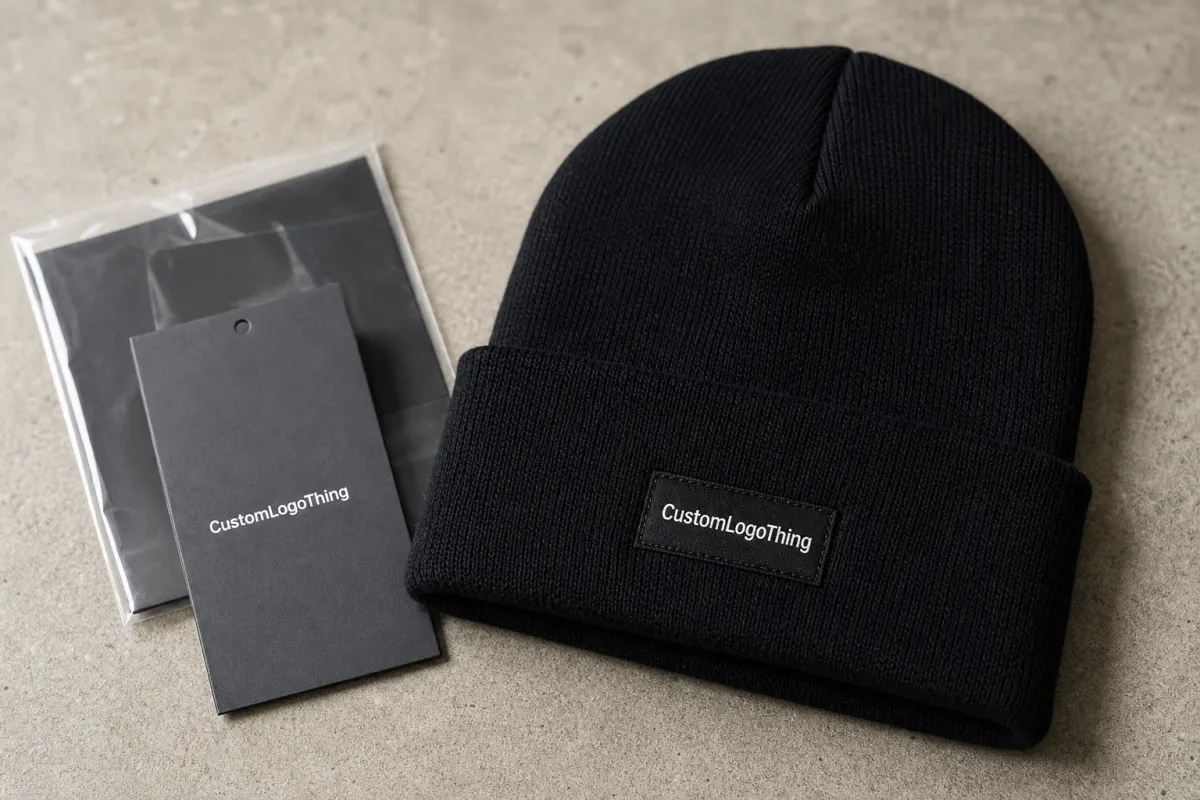
The first mistake is treating the blank as the whole item. A proper woven label beanies Unit Cost Breakdown separates the beanie body from the woven label, the sewing or attachment labor, packaging, and freight. Without that split, two quotes may look similar while hiding very different landed costs.
The second mistake is assuming unit pricing scales smoothly. It does not. Proofing, setup, sorting, and label application take time whether the order is 150 pieces or 1,000 pieces. Spread those fixed costs across fewer units and the per-piece number climbs.
Packing specs also move the price. Bulk-packed beanies in plain polybags are easier to process than individually bagged, tagged, and carton-labeled retail units. Once hang tags, branded inserts, or strict carton mapping enter the order, labor and materials increase even if the beanie itself stays the same.
Label costs are usually not the biggest line item. The bigger swings often come from setup, application method, and pack-out requirements. A useful quote should make those pieces visible instead of hiding them inside one decorated-item rate.
One practical question catches bad quotes early: what is not included? If shipping, packing, or sampling is vague, assume those charges will appear later. For apparel programs that include multiple SKUs, fixed branding rules across styles also help keep pricing consistent from one item to the next.
Beanie Build Details That Decide the Base Cost
Beanie bodies do not all cost the same, even when they look similar online. Yarn choice is the clearest driver. Basic acrylic usually sits at the lower end because it is common, predictable, and easy to knit at scale. Acrylic-wool blends, recycled yarns, and softer premium yarns add cost. A heavier knit also raises the price because it uses more material and machine time.
Gauge matters too. A finer gauge gives a cleaner surface and sharper shape, but it requires tighter production control. If the buyer wants the beanie to sit close to the head with even stretch and a neat cuff edge, the factory has to hold dimensions more tightly, which can add cost.
Cuff construction is another quiet driver. A standard cuff beanie is usually simpler than a slouch version or a double-layer build. More fabric layers mean more handling and more machine time. A pom-pom, lining, or brushed interior pushes the price up again.
Quality control should start with the body spec, not the label. The buyer should know the target circumference, cuff depth, crown height, stretch recovery, and acceptable tolerance before bulk production starts. If those numbers are loose, reorders get messy because the second run may look close in a photo but feel different on head.
- Stock acrylic beanie: lower base cost, faster production, fewer fit variables.
- Custom knit beanie: higher base cost, more control over silhouette, gauge, and color matching.
- Premium finish: pom-pom, lining, or specialty yarn raises cost but can improve perceived value.
A more expensive knit can still be the better buy if it reduces returns, holds shape better, or supports the retail price. The cheapest blank only wins if it still sells cleanly.
Woven Label Specs That Change the Per-Unit Price
The woven label is small, but the spec is not trivial. Size is the first lever. A narrow center label costs less to weave than a wide patch with more detail. Fold style matters too. End-fold, center-fold, and loop labels create different handling needs during sewing. The more unusual the placement, the more time the factory spends lining it up.
Weave density is where cost starts to creep in. Damask labels, for example, can hold fine text better than looser constructions. If the logo includes small type, thin lines, or a compact icon, a tighter weave is usually worth the extra cost because it keeps the brand legible. Cheap labels often fail here: the artwork looks fine at proof stage and turns muddy in bulk.
Color count also changes the price, though not always in the way buyers expect. Extra colors are not free, but the bigger cost sometimes comes from proofing and re-proofing. A label with five colors and a tiny legal line can trigger more revision work than a simpler two-color mark with a cleaner silhouette.
Placement has a direct effect on labor. A label sewn into the cuff seam is usually efficient. A side-edge placement or angled exterior tab can work well for branding, but only if the factory can repeat it quickly. Precision adds time, and time adds cost.
- Simple woven label: one or two colors, standard fold, straightforward placement.
- Mid-detail label: three to four colors, tighter text, moderate application time.
- High-detail label: fine lines, more proofing, higher risk of revision before bulk.
A strike-off or sample label is worth the delay. It catches text that is too small, a fold that hides part of the logo, or a placement that looks crooked once the beanie is worn. Those are the issues that hurt retail value and create avoidable rework.
For larger packaging programs, the label spec should be locked before labor pricing is finalized. Changing the weave, size, or fold after the quote is a fast way to erase any savings. A disciplined woven label beanies Unit Cost Breakdown treats the label as a production spec, not decoration.
Cost, Pricing, MOQ, and Quote Ranges That Actually Matter
Good pricing breaks the order into clear buckets: beanie blank, woven label setup, application labor, packaging, and freight. Sampling, cartons, and retail inserts may appear as separate lines too. That is fine. The problem is hidden charges, not line items.
MOQ changes the economics quickly. Low quantities spread fixed costs over fewer pieces, so the per-piece price rises. At 100 units, a decorated beanie may land much higher than the same spec at 1,000 units because the setup work does not disappear. Once the quantity climbs, the blank cost and label labor usually improve enough to flatten the curve.
| Order Type | Typical Blank Cost | Decoration and Setup | Likely Landed Cost Per Piece |
|---|---|---|---|
| Stock beanie + simple woven label | $1.15-$1.85 | $0.18-$0.40 | $1.65-$2.55 |
| Mid-weight custom knit + woven label | $2.10-$3.40 | $0.22-$0.50 | $2.75-$4.25 |
| Premium knit, pom, or lining + woven label | $3.20-$5.50 | $0.25-$0.65 | $4.00-$6.85 |
These ranges are working estimates, not universal pricing. Yarn market changes, origin country, freight method, carton size, and destination can move the numbers in either direction. Still, the shape of the quote matters. If a complex spec lands far below those ranges, something is probably missing.
Buyers get the cleanest quote by giving the supplier exactly what affects production: quantity, beanie style, yarn preference, label size, color count, placement, packaging, and ship-to zip code. If the deadline matters, say so early. If freight should be included, say that too. A low factory number with no shipping context is not useful for budgeting.
A quote that looks a little higher but includes packaging, carton labeling, and freight estimates is often easier to trust than a low number with thin detail. The second quote usually survives the real order.
Process, Timeline, and Lead Time From Art to Shipment
A realistic timeline helps more than a fast promise. The usual sequence is spec confirmation, artwork check, label proofing, sample or strike-off, bulk production, quality control, and packing. Delays usually come from rushed approvals, incomplete art files, or a buyer changing a label detail after the proof is already approved.
Artwork problems are the most common delay. Missing vector files, unclear color references, and logos that need cleanup all add time before production starts. If the label has fine text, the proof stage matters even more because a file that looks acceptable on a laptop may not hold up once it is woven at small scale.
For a simple run, 12-20 business days from proof approval to shipment is a realistic working window. Complex label specs, custom knit bodies, or retail packing can stretch beyond that. Seasonal demand adds another layer because even a straightforward order waits if the factory is already full.
Some steps can happen in parallel. Freight planning can start while the proof is being reviewed, and carton specs can be confirmed while the body sample is being checked. But label production should not begin until the proof is signed off. Small errors in placement or fold style are cheap to catch early and expensive to fix after bulk starts.
Quality control should be specific, not vague. A solid inspection plan checks label placement, stitch tension, knit consistency, size tolerance, and carton count before the goods leave the floor. For retail orders, the label should also sit flat after the beanie is stretched.
Packing affects both cost and lead time. Bulk polybags are simpler. Individual bags, size stickers, hang tags, and retailer-ready master cartons add time, material, and weight. If the order needs distributor labeling or strict carton mapping, that should be in the quote from the start.
What Drives Repeat Orders for Woven Label Beanies
Repeat orders are usually won by consistency, not by one dramatic win on price. If the fit stays the same, the label lands in the same place, and the color match holds across runs, the buyer does not have to rebuild the product each season. That predictability reduces approval time and lowers the chance of rework.
Good pre-production checking is a cost control tool. A clean proof catches the label size, fold, and artwork detail before the bulk order locks in. That keeps the woven label beanies Unit Cost Breakdown honest because the buyer pays for the right spec instead of paying later to correct the wrong one.
Fast answers, marked-up proofs, and specific questions usually save more money than a cheaper quote from a supplier that is slow or vague. A buyer can live with a simple finish. A buyer cannot live with surprise revisions after the production slot is already filled.
The best repeat orders are boring in the useful sense: same fit, same label spec, same packing method, same result. Boring is efficient. Boring is easier to budget. And boring is easier to reorder.
Next Steps to Lock an Accurate Quote and Production Slot
If the goal is an accurate quote, send the basic facts first: quantity, beanie style, label size, label placement, and delivery zip code. Add artwork files if they are ready. Add packaging notes if the order needs to be retail-ready. That is enough information for a supplier to quote the real job instead of guessing.
Approve one proof before production starts, then lock the weave, fold, and placement so the factory is not making mid-run corrections. Small changes look harmless in email. In production, they become labor, waste, and delay.
The decision path is straightforward: pick the blank, define the label, confirm MOQ, then reserve the production slot. If a quote does not show how those choices affect the unit price, keep asking. A proper woven label Beanies Unit Cost Breakdown should make the economics visible, not mysterious.
That is the point of pricing the order correctly the first time. The best number is not the lowest headline figure. It is the number that matches the spec, the timeline, and the finished product that arrives in the carton.
What is included in a woven label beanies unit cost breakdown?
The useful version separates the beanie blank, woven label setup, application labor, packing, and freight. Some quotes also include sampling, cartons, or retail tags, so ask before comparing vendors. A landed cost per piece is more useful than a factory-only price.
How does MOQ affect woven label beanie pricing?
Lower quantities spread setup charges over fewer pieces, so the per-piece cost rises quickly. Higher quantities usually improve the blank price and the label application cost. Asking for pricing at 100, 250, 500, and 1,000 units makes the curve easier to read.
What details do you need for an accurate quote on woven label beanies?
Send the exact beanie style, quantity, label size, color count, and preferred placement. Include artwork files and packaging requirements because they change labor and setup. If timing matters, include the deadline and destination so freight and lead time are realistic.
How long does production usually take after approval?
A simple run often takes about 12-20 business days after proof approval, depending on capacity and packing requirements. Custom knit bodies, complex label specs, or retail packaging can take longer. Late artwork changes usually reset the clock.
What lowers the unit cost on custom woven label beanies?
Use a simpler label spec, fewer colors, and a placement that is fast to apply. Increase quantity if inventory planning allows it, because setup costs spread out faster. A stock blank with a proven fit is usually cheaper than building a fully custom beanie from scratch.

