A corporate gifting unstructured dad hats Digital Proof Checklist sounds technical, but the real job is simple: make a relaxed cap look intentional instead of generic. The wrong proof can turn a good logo into something too large, too high, or too crowded for the front panel. On a soft crown, those mistakes stand out faster than they do on a structured cap because the fabric does not hold shape the same way.
That matters more than most buyers expect. Dad hats are popular for employee gifts, conference packs, and client mailers because they feel easier to wear than a stiff promotional cap. They are also less forgiving in production. The front panel curves, the crown collapses a little, and the embroidery has to work with the hat rather than sit on top of it like a billboard.
For buyers comparing decoration methods, the practical question is not whether a hat can be branded. It is whether the logo, stitch count, placement, and cap style fit together cleanly. A good proof process catches those tensions before anyone threads a needle. That is the point of the checklist.
If you are evaluating decoration options or trying to understand what a supplier can actually produce, it helps to review the hat specs and branding methods first. A page like Manufacturing Capabilities is useful for comparing crown styles, decoration limits, and packaging choices before the proof round starts.
Why corporate dad hats are trickier than they look
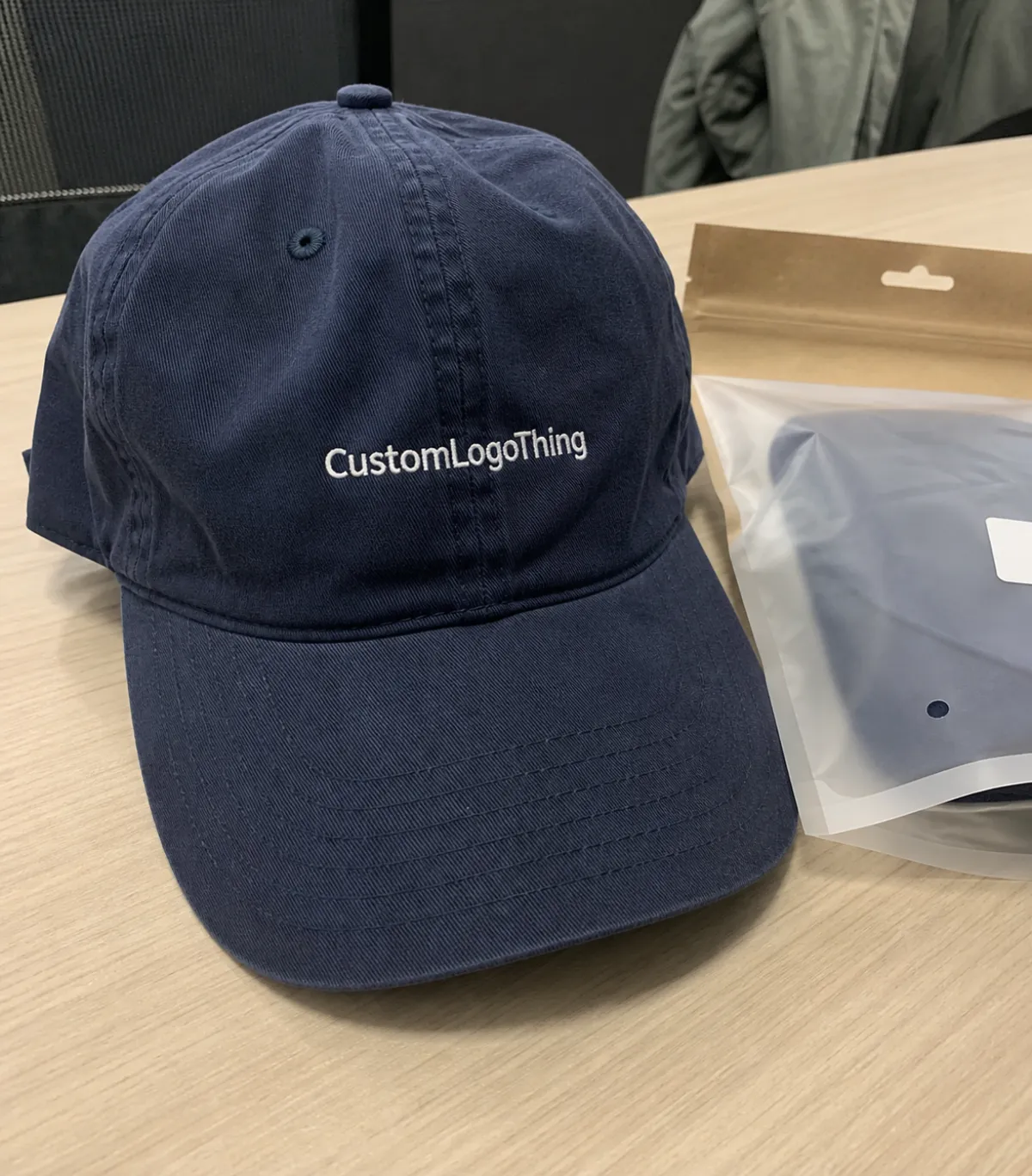
Unstructured Dad Hats are easy to wear because they are soft. That same softness makes them harder to decorate well. A structured cap usually has a firmer front panel, often with some buckram behind it, so embroidery sits on a flatter surface. An unstructured cap moves more. The panel bends, the seams show sooner, and the logo has to survive that curve without looking warped.
That is why a design that looks centered on a screen can feel off by half an inch once it is stitched. Half an inch does not sound like much until you compare it to a front panel that may only be about 4.5 to 5 inches tall at the usable area. A one-inch placement error on that surface can be the difference between a clean gift and a cap that looks rushed.
Most corporate buyers choose dad hats because they are more flexible than fitted caps and less formal than performance gear. The fit is broad. The visual tone is broad too. That works well for onboarding kits, appreciation gifts, sales team apparel, and event swag. It also means the decoration needs to be disciplined. Small marks usually read better than busy ones. Clear shapes beat thin lines. A strong icon often outperforms a long wordmark that loses legibility once the stitches compress.
The material matters more than the mockup suggests. Common options include cotton twill, washed cotton, pigment-dyed cotton, and brushed chino twill. Heavier fabrics hold embroidery more cleanly; softer washed fabrics feel better on the head but can pull slightly when stitched. That is not a defect. It is the trade-off buyers are making when they choose comfort over rigidity.
Practical rule: the more relaxed the cap, the more exact the artwork needs to be. If a logo depends on tiny type, hairline spacing, or a wide horizontal lockup, it may need simplification before production. Otherwise the hat will make the brand look smaller than it is.
One more thing buyers often miss: color contrast is different on fabric than on a monitor. A thread color that seems bold in a PDF may read muted once it is placed against washed navy or olive. On dad hats, that can be an advantage. A less literal match sometimes looks more premium than a bright thread screaming for attention.
How the corporate gifting unstructured dad hats digital proof checklist works
The checklist begins with clean inputs. Send the final artwork, confirm the exact cap style, and define the branding location before the first mockup is built. A digital proof should show logo placement, estimated dimensions, thread colors, cap color, and any secondary decoration such as a side mark, back hit, or patch. If those details are missing, the proof is still a draft, not an approval document.
A solid proof answers the boring questions that save an order later. Is the logo centered on the front panel, or shifted slightly to follow the seam layout? How wide is the embroidery? Does the mark sit low enough to balance the crown, or is it floating too close to the top seam? Is the brand red being translated into a thread color that actually works on fabric? Those questions sound small. They are not.
The proof also clarifies what it cannot show. It will not reveal the exact hand-feel of the hat, how the crown will break in after a week of wear, or whether a dense stitch pattern might stiffen the front more than expected. It will not perfectly predict the visual impact of thread sheen under warehouse lighting. That is why digital proofing is a control step, not a magic trick. It reduces mistakes. It does not erase material behavior.
“Most hat problems do not start in production. They start when someone approves a visual without checking scale against the actual panel. Once embroidery begins, the front of the cap stops being hypothetical.”
Approval is usually a gate. Once the proof is signed off, the order moves into digitizing, embroidery, finishing, and packing. If someone changes logo size after approval, the schedule can slip and the cost may rise. That is normal. Reprogramming embroidery files and resequencing production takes labor. It is not unusual for one extra proof round to add a day, and two extra rounds can stretch a tight timeline quickly.
A better corporate gifting unstructured dad hats Digital Proof Checklist includes measurements, not just images. Ask for the logo width in inches or millimeters, the placement distance from the center seam or brim, the decoration method, and the thread color references. If the supplier is offering a patch instead of direct embroidery, the proof should specify patch material and edge treatment too. Woven, leatherette, merrowed-edge, and printed patches all carry different visual and cost implications.
Cost, MOQ, and quote drivers for dad hat gifts
Quotes for dad hats usually look simple until the line items are unpacked. The main price drivers are hat quality, embroidery complexity, stitch count, thread color count, decoration location, and whether the supplier has to digitize new art. A one-color logo with a clean outline is a very different job from a detailed mark that needs cleanup, underlay adjustments, or a patch to keep the details intact.
MOQ changes the math. Lower quantities absorb the setup cost less efficiently, so the unit price rises. Larger orders spread the same digitizing, sampling, and admin work across more hats, which brings the per-unit cost down. That is why 50 hats and 500 hats can feel like different products even when the design is identical.
| Order band | Typical unit price | Common setup notes | Best fit |
|---|---|---|---|
| 48-99 pcs | $9.50-$15.00 | Higher setup impact; digitizing may add $35-$85 | Small executive gifts, pilot runs, tight guest lists |
| 100-299 pcs | $7.50-$11.50 | Better price spread; simple embroidery keeps costs in range | Employee gifts, event swag, client mailers |
| 300-499 pcs | $6.25-$9.25 | Volume starts helping; packaging choices matter more | Sales kits, multi-office gifting, trade show inventory |
| 500+ pcs | $5.25-$8.00 | Lower unit cost; freight, cartons, and labeling become important | Large employee rollouts, recurring program orders |
These numbers are directional, not universal. A premium washed cotton hat with dense embroidery and custom packaging will land higher than a basic twill cap with a single front hit. A patch can also change the economics. Sometimes a patch is cheaper than a large stitch count; sometimes it is more expensive because the material and application add labor. The cheapest option is not always the best-looking one, and the best-looking one is not always the cleanest fit for the budget.
Hidden charges tend to show up around logistics, not decoration. Rush turnaround, individual polybags, gift boxes, printed inserts, split shipping, and address labeling all add labor. If the hats are being shipped directly to recipients, packaging needs to survive handling by parcel carriers, not just look neat in a photo. Standards from ISTA are useful here because they focus on transit performance, drop resistance, and package durability rather than optimistic assumptions.
Printed notes or branded cards are another quiet cost center. If sustainability matters, FSC-certified paper is a cleaner choice for inserts and packaging pieces, and FSC is the straightforward place to verify that claim.
A useful comparison: a quote that is $1 cheaper per hat but excludes digitizing, revision limits, and shipping labels is usually not cheaper. It is just less complete. In corporate gifting, incomplete pricing has a habit of becoming expensive right before approval.
Step-by-step process and timeline for a clean approval
The cleanest order process starts before the proof arrives. Collect the logo files, choose the exact cap color, confirm the closure style, and set the delivery deadline in plain language. If the recipient list is already known, include shipping instructions up front. That alone removes a surprising amount of friction.
Most orders move through the same basic sequence:
- Submit vector artwork or a high-resolution source file.
- Confirm hat style, crown profile, closure type, and color.
- Receive the first digital proof with dimensions and thread notes.
- Request only the revisions that affect production or brand accuracy.
- Approve the final proof so digitizing and embroidery can begin.
- Allow time for finishing, packing, and shipping.
Proof review can happen quickly when the input is complete. One to two business days is common for a first mockup. Production often takes 7 to 15 business days after approval, depending on order size, decoration complexity, and current machine load. Rush jobs can be shorter, but only if the factory schedule allows it. If the hats need to go to multiple offices or individual addresses, add time for sorting, labeling, and verification. The embroidery may be fast. The admin usually is not.
Set one internal owner. Not a group thread. Not three departments with different opinions. One person should consolidate comments and send the proof back once. That keeps revisions focused and helps prevent the most common failure mode in gifting: the logo gets changed three times because nobody wanted to be the last one to speak.
For higher-volume or repeat orders, keeping a standing spec sheet saves time on the next run. Include approved artwork files, thread color references, packaging notes, the default cap style, and the primary contact for approval. A supplier can work faster when the instructions are already settled. A checklist only works if it stays short enough to use.
Mistakes that turn a simple hat order into a mess
The biggest mistake is approving logo scale without comparing it to the actual front panel. On paper, a 4.25-inch logo may seem modest. On a small unstructured crown, it can dominate the whole hat. The front panel height, seam shape, and embroidery density all affect how large the mark feels once it is stitched. If the supplier gives measurements, use them. Visual judgment alone is often too generous.
Weak artwork creates a second layer of trouble. Low-resolution files, missing font outlines, and logo files built for screens instead of production all slow down the digitizing stage. If the file has thin lines or tiny type, the team may need to simplify it so the stitches do not blur together. That is especially true for washed cotton and soft twill, where the fabric can shift slightly during embroidery.
Color mismatch causes more disappointment than most buyers expect. Screen color is backlit, thread is not, and fabric texture changes the appearance again. A brand blue that looks bright on a monitor may need a deeper or duller thread to hold up on a cap. This is not a flaw in the thread. It is the difference between digital color and real material.
Packaging and shipping errors are just as common. Buyers focus on the cap, then forget to specify whether each one needs a polybag, a box, a branded insert, or a distribution list. Once the hats are finished, that missing information turns into a delay. A perfectly decorated order can still ship late if nobody knows where the boxes are going.
- Wrong scale: The logo fits the screen, not the cap.
- Bad artwork: Raster files and missing outlines delay digitizing.
- Color assumptions: Monitor color and thread color are never identical.
- Packaging gaps: Gift boxes and inserts need their own approval.
- Split shipping confusion: Multiple destinations need exact counts and labels.
The last one sounds minor until the order is ready and one office gets 12 hats, another gets 48, and nobody can explain where the missing 20 went.
Expert tips for cleaner approvals and better gift results
Ask for exact placement measurements every time. Centered is not enough. A proof should show how far the logo sits from the seam, crown edge, or brim, and it should identify the final embroidery width. That gives the approver a real reference point instead of a vague impression. On a soft cap, two millimeters can change the balance more than people think.
Use one reviewer to gather comments and separate production issues from taste preferences. If the logo is too wide, that is a fix. If someone wants it slightly lower because it feels better visually, that may be worth considering, but it should not delay the whole order. The best proofs move quickly because the team is looking for faults, not trying to redesign the hat in real time.
If the order is for executives or client-facing gifting, restraint usually wins. Dad hats tend to look better when the decoration is clean, modest, and well-placed. A smaller embroidered mark often feels more premium than a large one fighting the crown. That is the odd truth of casual apparel: confidence looks smaller than enthusiasm.
Request a photo of a similar finished hat if the supplier can provide one. It will not match your exact logo, but it shows how stitch density, panel curve, and fabric choice behave in the finished product. That is especially useful for tonal branding, small emblems, or dense embroidery that could stiffen the front. If the order is high-stakes, a physical sample is even better. If the schedule is tight, a comparable finished photo is the next best thing.
Separate must-fix notes from preference notes in the same reply. This keeps the revision cycle short and prevents avoidable back-and-forth. A good proof round should deal with size, placement, spelling, thread color, and packaging only. Anything else belongs in the next season’s order, not the current deadline.
For organizations that place branded apparel orders repeatedly, a standard spec sheet is worth more than it looks. Store the approved logo files, preferred hat colors, thread codes, packaging instructions, and the person who signs off. The next order starts from a known baseline instead of a half-remembered email chain.
Next steps before you place the order
Build a one-page brief before you request pricing. Include quantity, budget range, delivery date, shipping destinations, logo files, packaging needs, and the intended audience for the gift. Internal staff, conference attendees, and clients often need different levels of polish. A brief that says so early saves time later.
Compare suppliers on clarity, not just on unit price. A lower quote means little if the proof is vague, the revision policy is unclear, or the timeline depends on assumptions nobody has written down. Ask how many proof rounds are included, whether digitizing is separate, what happens if the artwork changes after approval, and whether the supplier can support split shipment. Those answers reveal whether the project is controlled or merely inexpensive until the first surprise appears.
Keep the approval date firm. If the order matters, set a deadline for internal sign-off and tell the supplier what it is. That way the proof does not drift while people debate tiny design details that will never look different once the hat is on a head. The corporate gifting unstructured dad hats Digital Proof Checklist should be a production tool, not a decorative habit.
The most reliable orders are the ones where the brief, the proof, and the shipping plan all agree. When those three line up, the hats arrive looking deliberate rather than improvised, and that difference is easy to feel the moment the box is opened.
FAQ
What should be on a corporate dad hat digital proof checklist?
Check logo size, placement, thread colors, hat color, and closure style before approving anything. Confirm whether the proof includes front, side, or back decoration and whether the artwork is centered correctly. Ask for notes on any production limits so the approved version matches what can actually be made.
How long does the proof and production process usually take for unstructured dad hats?
Digital proof review is often the fastest part when artwork and specs are complete. A first proof can usually come back in 1 to 2 business days, and production commonly takes another 7 to 15 business days after approval. Rush jobs are possible, but the schedule depends on machine capacity, decoration complexity, and shipping needs.
What affects the unit cost most on corporate gifting dad hats?
Logo complexity, stitch count, number of colors, and decoration locations usually move the price more than the cap itself. Lower quantities raise unit cost, while larger runs usually bring the price down. Extras like custom packaging, rush service, and split shipping can quietly add up.
Do I need a physical sample, or is a digital proof enough?
A digital proof is usually enough for placement, spelling, and layout checks. Request a physical sample when the logo is intricate, the cap color is unusual, or the order is high-stakes. If time is tight, ask for a finished-photo reference from a similar hat instead.
What are the most common approval mistakes with corporate gifting unstructured dad hats?
Approving the wrong logo scale is the biggest one because the hat front is smaller than many buyers expect. Ignoring thread-to-screen color differences creates surprises after production starts. Forgetting packaging, ship-to details, or final quantity changes causes avoidable delays.

