Buy Coffee Shops Clear Retail Bags Carton Packing Spec
What Coffee Shops Clear Retail Bags Carton Packing Spec Really Means
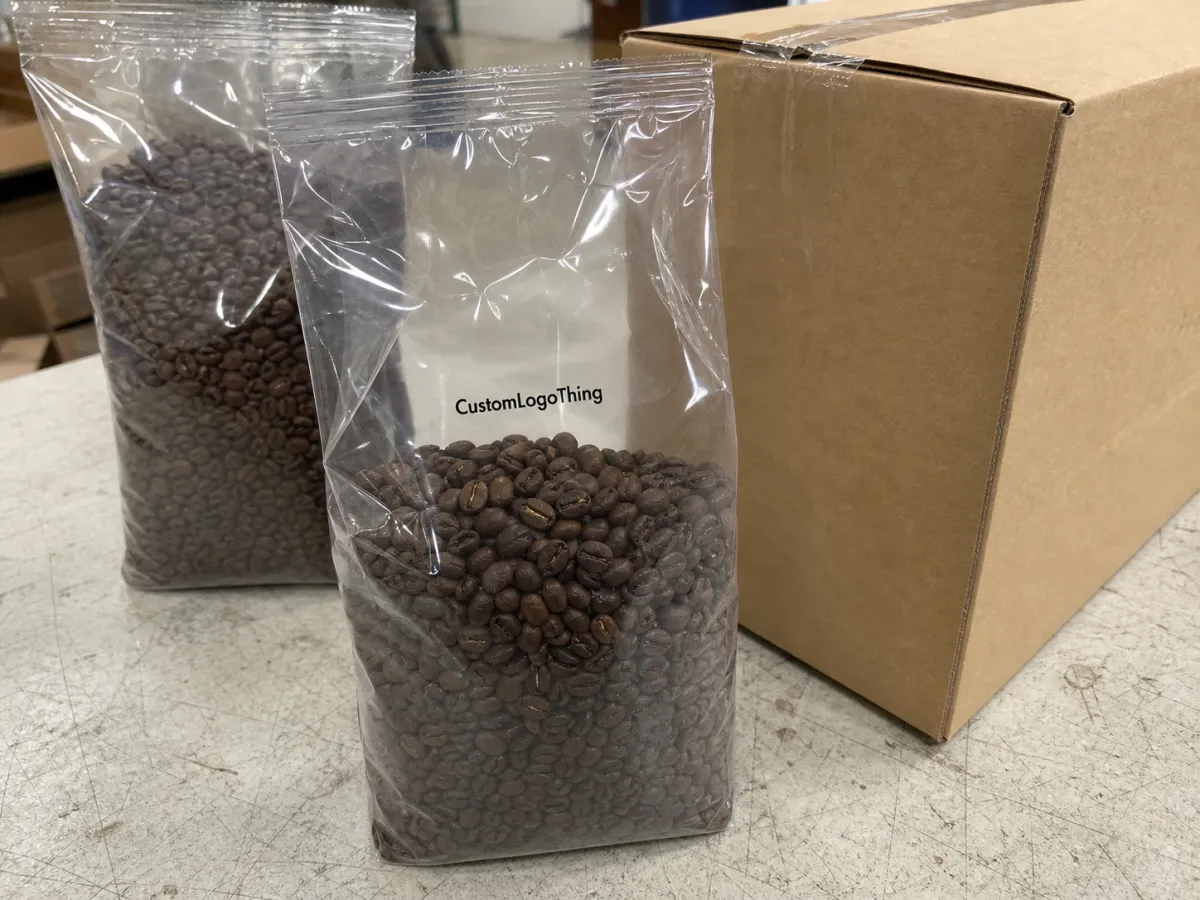
The pastry line is six people deep, the almond croissants are selling faster than expected, and someone opens the replacement carton only to find bags that are too narrow, seals that split at the corner, and 800 usable pieces where the buyer expected 1,000. That is the quiet cost of a weak coffee shops clear retail Bags Carton Packing Spec: the technical and commercial record that determines how bags are sized, counted, bundled, boxed, labeled, shipped, stored, and used.
A spec is not just a factory document. It affects shelf presentation, food handling, checkout speed, stockroom space, freight cost, reorder timing, and how many bags staff waste during a rush. One bad carton turns a two-second packing motion into a ten-second struggle. Multiply that by 300 pastries a week and the math stops looking small.
There are two layers. Bag specifications cover material, gauge, width, height, gusset, closure, print, clarity, seal strength, and food-contact suitability. Carton packing specifications cover pieces per bundle, bundles per carton, carton dimensions, gross weight, labeling, inner packing, pallet pattern, and count tolerance.
Buyers often over-focus on the unit price. They compare $0.022 against $0.026 per bag and miss the carton data that decides whether staff can find, open, count, store, and reorder the product without friction. A cheap carton that crushes the first two bundles is not cheap. It is a discount with a labor bill attached.
This topic matters for coffee shops, bakery cafes, roasters, small food retailers, and brand teams ordering clear retail bags for pastries, cookies, grab-and-go shelves, coffee accessories, merchandise, gift sets, or secondary packaging around retail bean packs. If the bag touches the workflow, the carton packing spec deserves more than a one-line quote.
How Clear Retail Bag Carton Packing Works from Film to Box
Clear retail bags usually begin with resin selection or sourced film. The process may include film extrusion, slitting, printing, conversion, cutting, sealing, punching, wicketing, inspection, bundling, carton loading, carton sealing, and warehouse staging. Each step leaves clues. A weak side seal may point to conversion settings. Static cling may come from film choice or handling. Crushed corners often point to carton strength, poor bundle protection, or overpacking.
Common materials include LDPE, HDPE, polypropylene, compostable PLA blends, and laminated films for special presentation or barrier needs. LDPE is flexible and forgiving. HDPE feels crinklier and can be economical for light-duty use. Polypropylene gives the crisp, high-clarity look many bakery counters like, although it can crease or crack if packed too tightly or handled roughly in cold storage. Compostable films can support a sustainability program, but they may carry higher minimums, shorter shelf-life considerations, and different heat or moisture behavior.
Material choice changes the carton. A 1.5 mil LDPE bag compresses differently than a 1.2 mil polypropylene bag of the same flat size. That matters for pack count, carton dimensions, and whether the bags arrive flat or warped. The same carton volume might hold 500 large gusseted bakery bags or 5,000 small flat cookie sleeves, depending on gauge, fold style, and stiffness.
Typical carton configurations include 500, 1,000, 2,000, or 5,000 bags per carton. For a cafe, 1,000-count cartons are common because they balance unit cost and storage sanity. Larger master cartons may reduce per-bag cost, but an oversized box behind a counter is a trip hazard disguised as procurement efficiency.
Labeling should be specific. Ask for SKU, bag size, material, quantity, lot number, carton number, country of origin, purchase order number, and requested recycling or food-contact marks. If the bag is intended for direct food contact, documentation matters more than marketing copy. The U.S. EPA sustainable materials management hierarchy is useful background for teams comparing reduction, reuse, recycling, and disposal trade-offs.
Buyer’s warning: a low-cost quote can hide loose count tolerance, thin film, weak corrugated cartons, or no inner packaging. The invoice looks tidy. The stockroom tells the truth.
A strong coffee shops clear retail Bags Carton Packing spec makes those hidden variables visible before purchase approval.
Bag Size, Gauge, Closure, and Food-Contact Details to Specify
Start with dimensions, not vibes. Define width, height, gusset depth, lip length, handle style, and usable internal space after folding, sealing, or closing. A bag listed as 6 x 9 inches may not provide a full 6 x 9 inches of usable room once an adhesive flap, bottom gusset, or seal area is involved.
Coffee shop applications vary more than people assume. Small pastry bags may suit cookies, scones, cake slices, and brownies. Wider bags fit croissants or sandwiches. Clear merchandise bags can hold enamel pins, mugs, brewing filters, gift cards, and small retail items. Roasted coffee bags are usually primary barrier packs, but clear retail bags may act as secondary packaging for gift bundles or multi-item displays.
Gauge is the next lever. For lightweight pastries, many buyers review clear bags around 1.0 to 1.5 mil for polypropylene or 1.25 to 2.0 mil for polyethylene. Heavier merchandise, mugs, or gift packs may require 2.0 to 3.0 mil material, handles, or a reinforced bottom. Thinner film reduces unit cost and carton weight. Thicker film improves hand feel, puncture resistance, and perceived value.
Food behavior matters. A dry biscotti is not the same as an oily cheddar croissant. Grease resistance, odor transfer, condensation, and crumb visibility all affect the final choice. A high-clarity bag that fogs around a warm pastry can look worse than a slightly less glossy bag with better venting.
Closure options include open-top, self-seal adhesive strip, flap seal, zip closure, twist-tie compatible opening, heat-sealable edge, and wicketed bags for faster loading. Wicketed bags can be useful for high-volume bakery counters because staff pull one bag at a time from a stack mounted on pins. They add cost, but they can reduce handling time during peak service.
For direct food contact, ask whether the film is suitable for the intended food type and whether documentation is available. If there is printing, confirm ink placement and migration controls. ASTM test methods may be relevant for film properties, seal performance, and tensile behavior, depending on the product. The standards library at ASTM International is a useful reference point for technical discussions, even if a small cafe is not running lab tests itself.
Presentation features include high clarity, low haze, anti-static treatment, vent holes, hang holes, bottom gussets, and easy-open lips. Do not skip the loading test. A bag can measure correctly on paper and still fail if the opening is too tight for staff to load a flaky pastry quickly without dragging icing across the inside panel.
Cost, MOQ, and Unit Cost Drivers Hidden in the Carton Spec
The lowest bag price is not always the lowest landed cost. Carton pack count, freight terms, dimensional weight, storage fit, damage rate, and staff handling time change the real economics. Plastic bags are light, but cartons can be bulky. Carriers may rate them by dimensional weight rather than actual weight, especially for larger gusseted styles.
Major cost drivers include material type, gauge, size, custom print, closure style, order quantity, inner packing method, compliance documentation, carton strength, and shipping distance. Stock clear bags usually have lower minimums. Custom sizes, printed logos, compostable films, special wicketing, or unique carton pack-outs generally push MOQ higher.
For planning, a stock clear pastry bag might land around $0.015 to $0.05 per unit at moderate quantities, depending on size and material. A Custom Printed Clear bag can move into the $0.06 to $0.18 range, and specialty closures or heavier films may climb above that. These are not universal prices. Resin markets, print coverage, freight, and order volume can swing the quote quickly.
| Option | Typical Carton Count | Best Fit | Trade-Off | Indicative Unit Range |
|---|---|---|---|---|
| Stock flat clear bag | 1,000–5,000 | Cookies, small pastries, merch | Limited sizing and branding | $0.015–$0.05 |
| Self-seal polypropylene bag | 500–2,000 | Retail shelves and grab-and-go | Adhesive strip adds cost | $0.03–$0.09 |
| Custom printed clear bag | 1,000–5,000+ | Branded gift sets and premium display | Higher MOQ and proofing time | $0.06–$0.18 |
| Compostable clear film bag | 500–2,000 | Sustainability-led retail programs | Storage and performance limits vary | $0.07–$0.22 |
A 1,000-count carton may cost more per piece than a 5,000-count master carton, but the smaller carton might fit under shelving, stay cleaner, and reduce partial-carton confusion. From a coffee shop buyer’s point of view, that can be worth half a cent per bag.
Ask suppliers for ex-works, FOB, and landed estimates if you are comparing vendors across regions. Also request count tolerance, carton weight, carton dimensions, pieces per bundle, and bundles per carton. If the quote says “1 carton” but not “1,000 bags per carton,” keep asking.
A few cents saved can disappear if staff spend extra minutes opening overpacked boxes, separating static-clung bags, or throwing away crushed bundles. The carton detail is part of the price.
Process and Timeline: From Sample Approval to First Delivery
A sensible order process has a sequence: define the use case, select material, confirm dimensions, choose closure, decide carton quantity, request quote, review sample, approve proof or spec sheet, place deposit, produce, inspect, ship, and receive. Remove two of those steps and the risk rises quickly.
Sampling is not a formality. Test the bag with the real product: croissants, cookies, coffee bean packs, gift cards, mugs, brewing filters, or bundled retail items. A 4-inch-wide cookie may fit a 4.5-inch bag in calm conditions. During a Saturday rush, that same fit can feel absurdly tight.
Stock clear bags can often ship within a few business days if inventory exists. Custom dimensions, print, compostable materials, wicketing, or special carton packing can add sampling, plate setup, production, inspection, and freight time. For many custom runs, buyers should plan on roughly three to eight weeks from confirmed spec to delivery, depending on order size and shipping mode.
Lead time is not abstract. If a cafe uses 300 bags per week and orders one 2,000-count carton, that is less than seven weeks of supply before safety stock. If supplier lead time is four weeks, the reorder point is not “when the carton looks low.” It is around 1,200 bags remaining if the buyer wants a buffer. Higher seasonal pastry sales can make that buffer vanish faster than expected.
During production, ask for a pre-production sample, carton mockup if the pack-out is unusual, packing list format, batch coding, and shipment photos for remote orders. For larger or recurring orders, ISTA transport testing concepts can help buyers understand drop, compression, and transit risks; the International Safe Transit Association publishes widely used packaged-product testing protocols.
Receiving is part of quality control. Check carton labels. Count one sample bundle. Inspect clarity, odor, seal strength, adhesive performance, and corner damage. Photograph transit damage before moving the cartons into storage. Once the box is split between three shelves and half-used, claims become harder to support.
A practical coffee shops clear retail bags carton packing spec should make receiving fast: the label tells staff what arrived, the count makes sense, and the inner bundles are easy to verify.
Step-by-Step Guide to Writing a Carton Packing Spec
Writing the spec before asking for samples saves time. It also prevents the supplier from guessing. Use a one-page format if possible.
- Write the use case. Examples: pastry counter, grab-and-go bakery shelf, roasted coffee gift bundle, retail merchandise checkout, or seasonal gift pack.
- Define dimensions. Record width x height x gusset, and state whether measurements are internal usable dimensions or flat external dimensions.
- Choose material and gauge. Specify LDPE, HDPE, polypropylene, compostable film, or laminate. Add thickness, finish, clarity level, and any odor-resistance, moisture, or freezer tolerance needs.
- State compliance needs. Confirm whether the bag requires direct food-contact suitability, recyclability claims, compostability documentation, or special handling language.
- Specify closure and handling features. Include adhesive flap, zip, wicket holes, hang hole, vent holes, bottom gusset, easy-open lip, or heat-seal compatibility.
- Set carton pack quantity. A clean format is: 100 bags per inner bundle, 10 bundles per carton, 1,000 total bags per carton.
- Define inner packaging. Choose poly sleeve, paper band, inner box, shrink wrap, or no inner wrap. Inner protection can reduce dust, bent corners, and handling damage.
- Record carton controls. Include carton dimensions, target gross weight, maximum staff-handling weight, stacking limits, and palletization if ordering larger volumes.
- Add labeling requirements. Include SKU, bag size, count, material, lot number, purchase order number, reorder code, and carton number.
- Attach a reference. Use an approved sample, photo, or technical drawing so the buyer, supplier, warehouse, and cafe staff all work from the same source.
For staff handling, carton weights under 30 lb are preferable where practical. Not every product allows that, but coffee shops are not distribution centers. If one person has to lift cartons around syrups, cups, paper goods, and prep tables, ergonomics belongs inside the packaging spec.
The best spec reads less like paperwork and more like an operating instruction. It tells people what to buy, how to receive it, where to store it, and how to reorder without detective work.
Common Mistakes That Create Stockroom Waste and Reorder Chaos
The first mistake is ordering by approximate bag size. “About sandwich size” is not a spec. A pastry that fits when carefully placed at room temperature may smear, crack, or crush when staff load it quickly with tongs.
The second mistake is ignoring carton dimensions. Bulky cartons block service areas, get moved repeatedly, and end up in odd locations. If staff hide bags in three different places because cartons do not fit storage, the carton spec is part of the packaging problem.
The third mistake is comparing quotes without matching gauge, material, count per carton, and inner packing. A 1.2 mil polypropylene bag in 2,000-count cartons is not the same purchase as a 1.5 mil LDPE bag in 1,000-count cartons, even if both are called “clear retail bags.”
Static control is another quiet issue. Ultra-clear bags can cling together. During peak service, staff do not want to peel bags apart like wet pages. Anti-static treatment or a different film finish can improve handling, though it may affect price or availability.
Food safety assumptions create avoidable risk. Not all clear bags are intended for direct food contact. Some are better suited for merchandise, gift items, or secondary packaging. Ask for documentation instead of relying on the word “food” in a catalog description.
Over-customizing too early can also hurt. A small coffee shop may be better served by stock clear retail bags while testing pastry volume, product dimensions, and presentation. Custom printed cartons and special pack-outs make sense when usage is predictable.
Reorder math is often weak. If supplier lead time is four weeks and the cafe keeps two weeks of stock, shortages are not accidents. They are scheduled events. Use weekly consumption, lead time, and safety stock to define reorder points.
Finally, document problems on receipt. Count discrepancies, crushed bundles, seal failures, and carton damage need photos, lot numbers, and carton labels. Without that evidence, supplier claims become guesswork.
Build a Spec Sheet Before You Ask for Samples
Before requesting samples, gather three products you actually need to pack. Measure each one. Photograph the desired retail presentation. Estimate weekly bag usage from POS data or a simple count over two normal weeks. Then measure the shelf, cabinet, or stockroom area where cartons will live.
Create a one-page spec sheet with bag size, material, thickness, closure, print needs, carton count, inner pack method, carton dimensions, target order quantity, delivery address, and reorder contact. Add a photo or drawing. If you are ordering for multiple locations, include location-level storage limits; a carton that works in a roomy suburban cafe may not work behind a narrow counter.
Ask the supplier for two or three sample options rather than one. A useful sample set might include a lower-cost stock option, a premium clarity option, and a right-sized custom option if volume justifies it. Also ask for multiple carton pack-outs, such as 1,000-count and 2,000-count cartons, so you can compare storage convenience against unit cost.
Run a mini trial during one busy shift. Track loading speed, tearing, static cling, product fit, clarity, customer presentation, and staff comments. Ten minutes of structured feedback can prevent months of irritation.
The final decision should combine cost, appearance, workflow, compliance, and reorder reliability. Price matters. It just does not deserve to be the only vote in the room.
Before placing a bulk order, turn your coffee shops clear retail bags carton packing spec into a written reference that your supplier, stockroom, and front-counter team can all understand.
FAQ
What should a coffee shop include in a clear retail bags carton packing spec?
Include bag width, height, gusset, material, thickness, closure type, food-contact requirement, pieces per bundle, bundles per carton, total carton count, carton dimensions, gross weight, labeling, lot number format, and inner packing method. Attach a sample photo or drawing so the supplier understands both the technical spec and the intended retail presentation.
How many clear retail bags should coffee shops order per carton?
Many cafes use 500- to 2,000-count cartons because they balance price with manageable storage. High-volume bakery cafes may prefer larger cartons, while small shops often benefit from smaller pack-outs that fit under counters or on backroom shelving without being moved every shift.
Does bag thickness affect carton packing and shipping cost?
Yes. Thicker bags increase material cost, carton weight, and sometimes carton size. However, a slightly thicker bag may reduce tearing, improve presentation, and lower waste, so compare total usable cost rather than price per bag alone.
What is the typical lead time for custom clear retail bags for coffee shops?
Stock bags can often ship much faster than custom bags, sometimes within a few business days if inventory is available. Custom dimensions, printing, special closures, compostable films, or unique carton packing can add time for sampling, proofing, production, inspection, and freight; three to eight weeks is a practical planning range for many custom orders.
How can coffee shops compare quotes for clear retail bag carton packing?
Compare the same material, gauge, dimensions, closure, carton count, inner packing, carton size, count tolerance, and shipping terms. Ask for landed cost, MOQ, production lead time, sample availability, and documentation for any food-contact or sustainability claims before choosing the supplier.


