A beautiful enamel pin, bookmark, sticker sheet, or mini art print can look cheap in seconds if the bag wrinkles, the header card bends, or the outer carton caves in during transit. Packaging is not decoration after the fact. For book merchandise brands, a clear book merch Brands OPP Header Bags Carton packing spec is the instruction set that protects presentation, count accuracy, barcode placement, and retail receiving before the first master carton is sealed.
The risks are small but cumulative. A bag 3 mm too narrow slows every packing operator. A hang hole 5 mm too low makes the product lean forward on a peg. A carton packed 40 units too high may save a few cents in corrugated, then create bent headers across an entire shipment. The spec is where those trade-offs get settled in writing.
Book Merch Brands OPP Header Bags Carton Packing Spec Basics
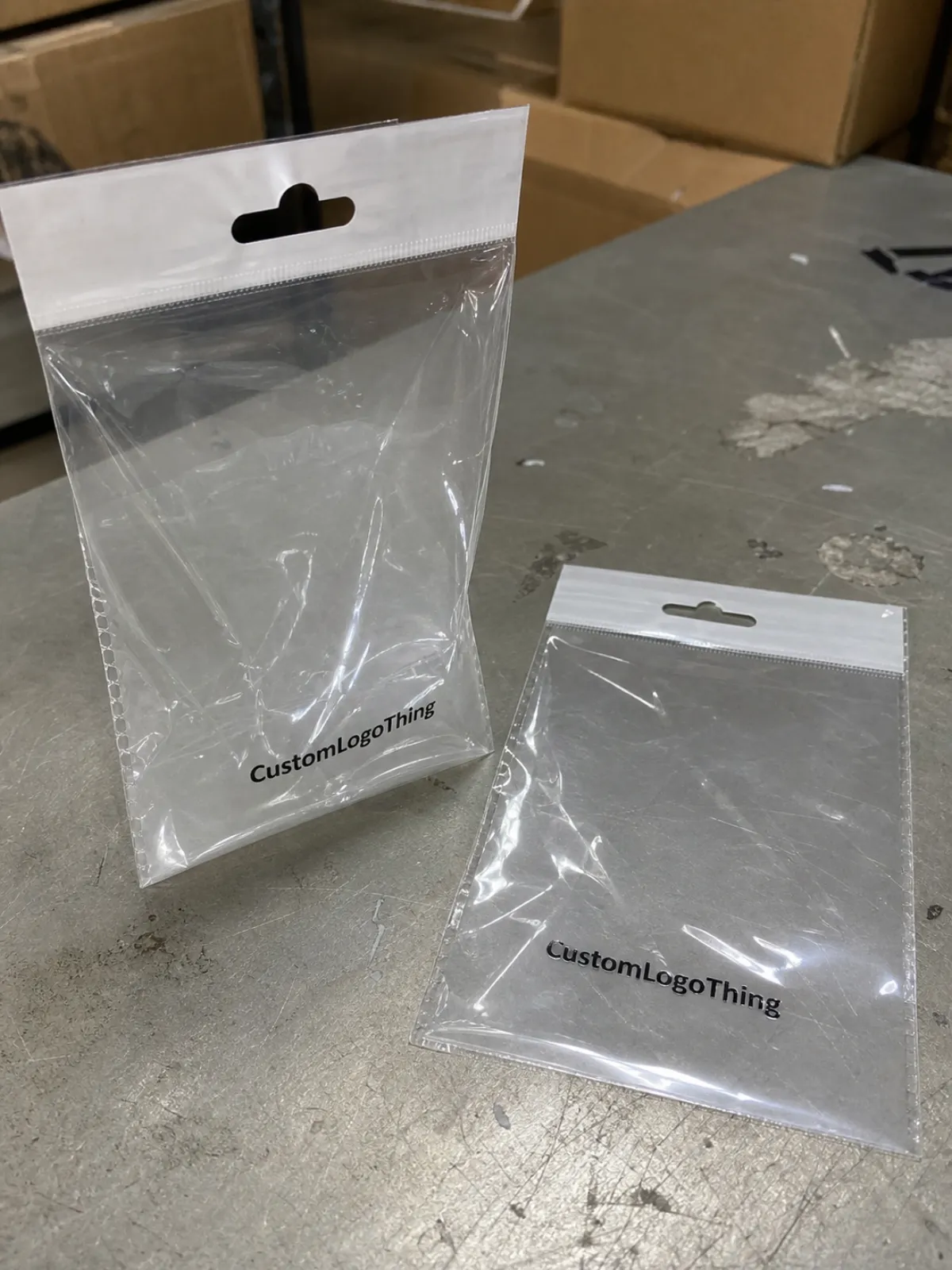
OPP Header Bags are clear oriented polypropylene bags with a defined header area at the top. The header can be printed directly on the film, formed by a folded section, or paired with a separate printed header card. They are common for lightweight book merchandise: bookmarks, enamel pins, sticker sheets, character charms, small stationery sets, subscription box extras, author-branded giveaways, and retail counter products.
Buyers often treat the bag as one line item. Production teams see three separate packing levels.
The first is the retail pack, meaning the individual bag the reader or fan sees. The second is the inner pack, such as 25 or 50 units in an inner polybag, paper band, chipboard divider, or small inner carton. The third is the master carton, the corrugated shipper that moves through parcel networks, freight lanes, fulfillment warehouses, or retail distribution centers.
Many problems start because those levels get blurred. A buyer may write “100 per carton” and mean 100 units per inner carton. A supplier may quote 100 loose retail packs in the master carton. That mismatch changes labor, carton size, receiving counts, freight cube, and damage risk. It can also break a retailer’s routing guide if the order is headed into formal distribution.
Early carton packing decisions matter more than they appear to on a quote sheet. Unit dimensions, loaded thickness, header hole position, warning labels, carton quantity, carton marks, pallet limits, and shipping method all affect the final recommendation. A 4-inch sticker sheet in a 30 micron OPP flap bag behaves nothing like a heavy enamel pin set on a thick backing card, even if both look equally flat in artwork files.
Production rule: measure the packed physical stack. A PDF cannot show how a pin clutch, charm ring, elastic band, tassel, or thick backing board will push against the side seal.
How OPP Header Bags Protect and Present Book Merchandise
OPP is a crisp, glossy film with good clarity. That sharp look is one reason it suits book merch packaging. Cover art, character illustrations, foil-stamped bookmarks, small inserts, and collectible cards remain visible without the milky cast that can appear in softer films. Compared with LDPE, OPP usually looks neater on a peg hook. The trade-off: it is less forgiving around sharp corners when the gauge is too light.
Common styles include self-adhesive flap bags, resealable header bags, side-seal bags, and hang-hole header bags. A self-adhesive flap is often enough for flat sticker sheets, postcards, mini prints, or thin bookmarks. A resealable style can help if warehouse staff or retail buyers need to inspect the product before final placement. Side-seal construction keeps edges tidy for slim rectangular items. Hang-hole header bags are the default when the product must sit on a peg display.
The header area needs its own discipline. It may carry the brand name, series title, SKU, barcode, age grading, suffocation warning, recycling note, website, or short product description. If the merchandise is going to a larger retailer, the barcode quiet zone should be protected. The code should not sit over a seam, curve, wrinkle, heavy-glare patch, or loose section of film. A barcode that scans perfectly on a proof can fail once it is printed on glossy material and wrapped around an uneven product.
For scan quality, many buyers use verifier checks based on ISO/ANSI grading. For tougher distribution environments, packaging may also be checked against procedures from ISTA, especially if the goods will be parcel-shipped or stacked on mixed pallets.
Film thickness changes cost, feel, and failure rate. Thin OPP reduces material cost and carton cube, which can be fine for flat, light goods. Thicker OPP feels more premium and resists tearing around corners, metal edges, pin backs, and stacked insert cards. In practical buying terms, many lightweight retail bags fall around 25 to 40 microns. Heavier or premium-feel header bags may move toward 50 microns or more, depending on the product shape and supplier equipment.
Carton packing is less photogenic, but it often decides whether the order arrives saleable. The carton spec defines units per inner pack, inners per master carton, product orientation, void fill, corrugated board strength, closure method, label position, and carton markings. The retail bag helps the fan understand the item. The carton helps the warehouse receive, count, scan, replenish, and ship it without opening every box on the dock.
Key Spec Factors: Size, Film Gauge, Header, Seal, and Carton Count
Start with the finished product stack, not the design file. Measure after the insert card, backing board, pin, charm, clip, bookmark tassel, sticker bonus, or protective sleeve has been assembled. Then add realistic loading clearance. A flat sticker sheet may need only 3 to 5 mm of width clearance. A pin set on a backing card with clutches on the back may need more width and depth allowance because it is no longer truly flat.
Flat artwork dimensions are useful, but they hide thickness, corner shape, and packing behavior. Operators need enough room to load quickly without fighting the film. If the fit is too tight, seals wrinkle, adhesive strips catch in the wrong place, and output drops. If the fit is too loose, the product slides around and the retail pack looks unfinished.
Film gauge should be specified in microns where possible, paired with a performance expectation. “30 micron clear gloss OPP, suitable for flat sticker sheet, no tearing at side seal during normal loading” gives a factory more useful direction than “standard clear bag.” Some suppliers quote gauge differently by region or material system, so the use case matters.
The header deserves a simple technical drawing. Include top margin, header height, hang-hole style, hole center position, heat seal location, adhesive strip location, print area, barcode size, and barcode quiet zone. A sombrero hang hole can distribute weight better on some peg displays than a small round hole. If the header must stay stiff in retail, define whether that stiffness comes from thicker film, an inserted card, a folded header, or a reinforced construction.
Carton quantity is a balancing act. Pack too few and freight cost rises because you ship air and extra corrugated. Pack too many and cartons become heavy, crushed, or hard for warehouse staff to handle. For many book merch items, a practical master carton target is roughly 8 to 15 kg gross weight, though retailer routing guides may set lower or higher limits.
- Carton marks: item number, PO number, SKU, design name or assortment, quantity per carton, carton number, gross weight, net weight, carton dimensions, and handling symbols.
- Compliance details: country of origin where required, suffocation warning where applicable, small-parts or age grading, recycling notes, and retailer-specific receiving labels.
- Tolerances: bag size, seal placement, print registration, carton dimensions, and carton weight should allow realistic production variation rather than perfect numbers.
A strong spec includes both the target and the tolerance. “Bag width 120 mm ±2 mm” is more useful than “about 120 mm.” The same applies to carton dimensions and gross weight, especially if the merchandise is entering automated receiving or a third-party fulfillment system.
Do not ignore orientation. Flat sticker sheets may lie horizontally in bundles. Pin cards may need vertical rows with dividers to avoid pressure points. Metal bookmarks can create edge marks if every unit faces the same direction. Alternating orientation sometimes reduces pressure, but it can slow packing and complicate receiving counts. The right answer depends on the product, not on habit.
Process, Timeline, and Lead Time From Spec Sheet to Packed Cartons
A normal workflow starts with product dimensions and artwork review, then moves to packaging recommendation, quotation, dieline or layout preparation, sample approval, bag production, packing, carton inspection, and shipment. If one supplier produces the merchandise and packs it into the bags, coordination is simpler. If one supplier makes the pins or bookmarks and another makes the bags, allow more time for sample transfer and fit checking.
Lead time depends on four main variables: stock versus custom size, printed versus unprinted header, custom carton marks, and packing labor. A stock clear OPP bag with a standard header can be resolved much faster than a custom printed header bag with six SKU versions, retail warnings, and unique carton labels. As a working range, simple stock bag selection may take a few business days if samples are available. Custom printed header bags often need 12 to 20 business days after proof approval, before final packing and transit are counted.
Approve in the correct order. Bag size comes first because it controls fit. Artwork and barcode placement come next because those details sit on the physical bag. Carton count and carton marks should be locked before mass packing starts. Late changes ripple through the job: a larger bag may change carton cube, carton count, freight estimate, pallet height, and warehouse receiving setup.
Sample types are not interchangeable. A digital proof checks spelling, layout, and artwork position. A blank size sample checks fit. A printed pre-production sample checks color, registration, barcode placement, and header appearance. A packed carton sample checks count, orientation, void fill, crush risk, and gross weight.
On the production floor, the process may involve film unwinding, cutting, side sealing, header printing or header card insertion, adhesive application, curing or set time for certain closures, counting, bundling, inner packing, master carton packing, weighing, and labeling. For printed headers, registration should be checked during the run, not just at the first pull. For carton packing, the first finished carton should be weighed and compared against the expected gross weight. A material or count error often reveals itself on the scale before anyone opens the carton.
Build in extra days for barcode verification, legal label review, and carton drop or compression checks if the goods are headed to retail distribution. For paper-based components such as header cards or backing boards, buyers may also ask about FSC-certified paperboard; the Forest Stewardship Council explains certification principles for responsibly sourced fiber.
Cost, Pricing, MOQ, and Unit Cost Drivers Buyers Should Expect
OPP header bag pricing is usually driven by film thickness, bag size, print coverage, number of colors, header complexity, adhesive type, order quantity, and packing labor. The empty bag can be inexpensive. The packed unit cost changes once someone has to insert the product, align the header, sort assortments, scan or check barcodes, bundle inner packs, and load master cartons.
MOQ is setup logic, not just supplier stubbornness. A factory needs enough volume to justify film purchasing, print setup, machine setup, line time, and quality checks. A standard bag size may lower the entry quantity because the supplier can use existing film widths or tooling. Custom sizes, special hang holes, direct printed headers, and multiple artwork versions usually raise the practical MOQ.
| Option | Typical Use | Estimated Bag Cost Range | Trade-Off |
|---|---|---|---|
| Stock clear OPP bag with adhesive flap | Sticker sheets, postcards, flat mini prints | $0.03-$0.08 per bag at moderate quantities | Lowest setup, but limited branding and peg-display impact |
| Stock header bag with inserted printed card | Bookmarks, small stationery sets, simple merch bundles | $0.08-$0.18 per packed bag, depending on card and labor | Flexible for multiple SKUs, with more assembly time |
| Custom printed OPP header bag | Retail-ready branded book merch | $0.12-$0.28 per bag for many 5,000-piece runs, depending on print coverage | Cleaner presentation, higher setup and approval burden |
| Premium thicker film with special finish or reinforced header | Pin sets, charms, giftable author merch | $0.20-$0.45+ per packed unit, depending on structure | Better shelf feel, more carton cube and material cost |
These ranges move with quantity, region, material market, print method, and how much packing labor is included. Buyers get into trouble when they compare only the empty bag price. The more useful comparison is landed packed cost: bag, header card, labor, inner packs, master carton, labels, inspection, freight cube, and expected damage risk.
The Carton Packing Spec affects price directly. A lower carton count may increase corrugated and freight cost. A higher carton count may reduce handling, but it can increase crush risk or create overweight cartons. Rigid items such as enamel pins, acrylic charms, and metal bookmarks often need lower carton counts than flat stickers because their high points press into nearby bags.
Artwork choices also add cost. Full-color header printing, spot colors, white ink, metallic effects, matte finishes, and multiple SKU versions can each change setup cost and production planning. If the budget is not yet fixed, ask for three quote paths: one standard-size option, one custom-fit option, and one premium presentation option. The comparison usually exposes whether the retail value justifies the packaging upgrade.
A cheap quote can be useful, but read what is missing. Does it include carton grade? Inner packs? Barcode checking? Retail carton labels? Packing labor? If not, those costs may appear later, after the goods have already been produced. For examples of how packaging structure affects branded presentation, the Custom Logo Things case studies page can help frame display, protection, and packing decisions together.
Common Spec Mistakes That Cause Rework, Damage, or Retail Delays
The most common mistake is sizing the bag from the artwork instead of the assembled merchandise stack. A backing card may be 100 mm wide, but pin clutches, folded inserts, or charm hardware can make the loaded product behave like something wider and thicker. Too-tight bags slow loading and can cause seals to wrinkle, split, or pop open.
Hang-hole placement creates quieter trouble. If the hole is too close to the seal, the header can tear. If it is too low, the bag may sag forward on the peg or cover the branding. A useful header drawing shows the hole center from the top edge and side edges, plus the distance from the seal line.
Barcodes need clean real estate. Do not place them over a seam, fold, curved product area, or glare-heavy section of glossy film. Keep the quiet zone intact, print at a size the retailer accepts, and test the scan on an actual packed sample. A flat proof is not enough.
Overpacking cartons is a classic false economy. Flat stickers can often pack at high counts, sometimes hundreds per carton depending on size and weight. Pins, charms, metal bookmarks, and boxed add-ons need more care because they create pressure points. Once a header card bends or a sharp corner embosses itself through the OPP film, the retail pack looks second-grade even if the item inside is unharmed.
Assortment confusion is another avoidable problem. If multiple designs are packed in one master carton without clear inner labels, warehouses may mis-pick SKUs, and retailers may reject mixed cartons. If assortments are required, define the ratio, inner pack label, carton mark, and whether the carton is mixed by design, color, title, character, or collection.
Vague material descriptions invite rework. “Clear bag” is not a spec. “Normal thickness” is not a spec. A proper Book Merch Brands opp header bags carton packing spec names the material, gauge, bag style, closure, header size, print method, hang hole, retail count, inner pack, master carton count, carton grade, and marks. Legal and warning label changes should also be routed early. Once header artwork is printed, a missing suffocation warning or age-grade note becomes a schedule problem, not a proofreading problem.
Practical Checklist Before You Send a Packaging Request
Before asking for pricing, collect the details a supplier needs to quote accurately. Measure the finished merchandise stack, weigh one packed unit if a prototype exists, choose the retail display method, confirm barcode size, and decide whether the bag needs a printed header or an inserted header card. Clear inputs produce cleaner quotes.
Photos help. Physical samples help more. Send images or samples if the product has sharp edges, thick attachments, elastic bands, tassels, layered inserts, metal hardware, or mixed materials. A bookmark with a charm dangle is not the same packing job as a flat paper bookmark, even if both sit in the same merchandise category.
Define carton goals before the quote. Target units per carton, maximum carton weight, parcel versus pallet shipping, inner cartons or inner bundles, and retailer label requirements should be discussed early. If a retailer or fulfillment partner has a routing guide, share it before final quotation. One label rule can change the labor model.
- Measure product width, height, and loaded thickness.
- Confirm bag style: flap, resealable, side-seal, or hang-hole header.
- Choose film gauge and decide whether the header needs extra stiffness.
- Lock barcode placement, warning text, SKU, and artwork version count.
- Set inner pack quantity and master carton quantity.
- Confirm carton marks, gross weight target, and handling symbols.
- Review a packed sample before approving bulk packing.
Ask the supplier for a spec table covering bag dimensions, film gauge, seal type, header size, hang-hole style, print method, carton quantity, carton dimensions, gross weight, and carton marks. If several branded products are being developed at once, browsing real custom merchandise examples can help compare display, protection, and unit packing choices.
Review the packed sample like a receiving warehouse would. Scan the barcode. Hang the bag. Shake the carton lightly. Count the units. Read the carton label. Look for bent headers, crushed corners, loose product movement, or marks from hard components pressing through the film. Small checks before production prevent expensive corrections after shipment.
Before approval, lock the bag fit, header artwork, carton count, and label requirements in writing. Production needs one standard to follow, not a trail of emails with competing revisions.
Frequently Asked Questions
What should be included in a book merch OPP header bags carton packing spec?
Include bag width, height, film gauge, closure type, header size, hang-hole style, print details, barcode placement, product count per bag, inner pack quantity, master carton quantity, carton dimensions, carton weight, and carton markings. If the merchandise has sharp or heavy parts, also note backing card thickness, reinforcement needs, carton orientation, and limits on units per carton.
How do I choose the right OPP bag size for book merchandise?
Measure the fully assembled product, not just the flat artwork or insert card. Allow space for product thickness, easy loading, seal clearance, and production tolerance, but avoid oversizing so much that the item slides around. Flat paper items may need only a few millimeters of clearance. Pin sets, charms, or layered bundles usually need more.
What carton packing spec works best for header bags with bookmarks, pins, or stickers?
Light flat items like stickers can often pack in higher carton counts. Pins, charms, and metal bookmarks usually need lower counts, backing protection, dividers, or inner cartons. A good carton spec balances weight, crush resistance, handling speed, freight cost, and retail receiving requirements instead of chasing the highest possible count.
Does printed header artwork increase the cost of OPP header bags?
Yes. Printed headers can add setup cost, printing cost, artwork proofing time, and sometimes higher MOQ. Cost depends on print method, color count, coverage area, number of SKU versions, and whether the header is printed directly on film or handled as a separate printed card.
How long does it take to finalize an OPP header bag packing spec?
A stock-size bag can be specified quickly if dimensions, artwork, and carton count are ready. Custom printed header bags take longer because buyers need time for dielines, proofs, fit samples, print approval, production, packing, and carton verification. For a tighter launch, prepare the packaging spec before final merchandise production begins.


