For fashion retailers, custom Clear Garment Bags wholesale pricing for fashion retailers is rarely just a film calculation. Buyers are usually weighing labor, presentation, damage prevention, and how often a garment changes hands before it reaches the selling floor. A bag that costs less but slows receiving, stockroom sorting, or store transfers can end up costing more in practice.
Clear garment packaging keeps showing up in retail operations because it lets teams identify silhouettes at a glance, maintain a cleaner rack presentation, and move merchandise without constant unbagging and rebagging. The value is not in the plastic alone; it is in the time the plastic saves.
For apparel programs with frequent replenishment, returns, or seasonal resets, a clear cover is part of the operating system. It protects garments from dust and scuffing while reducing friction between the distribution center, the store, and the sales floor. Buyers who evaluate it as a workflow tool usually make better decisions than buyers who compare only unit price.
Why clear garment bags cut rebagging labor on the floor
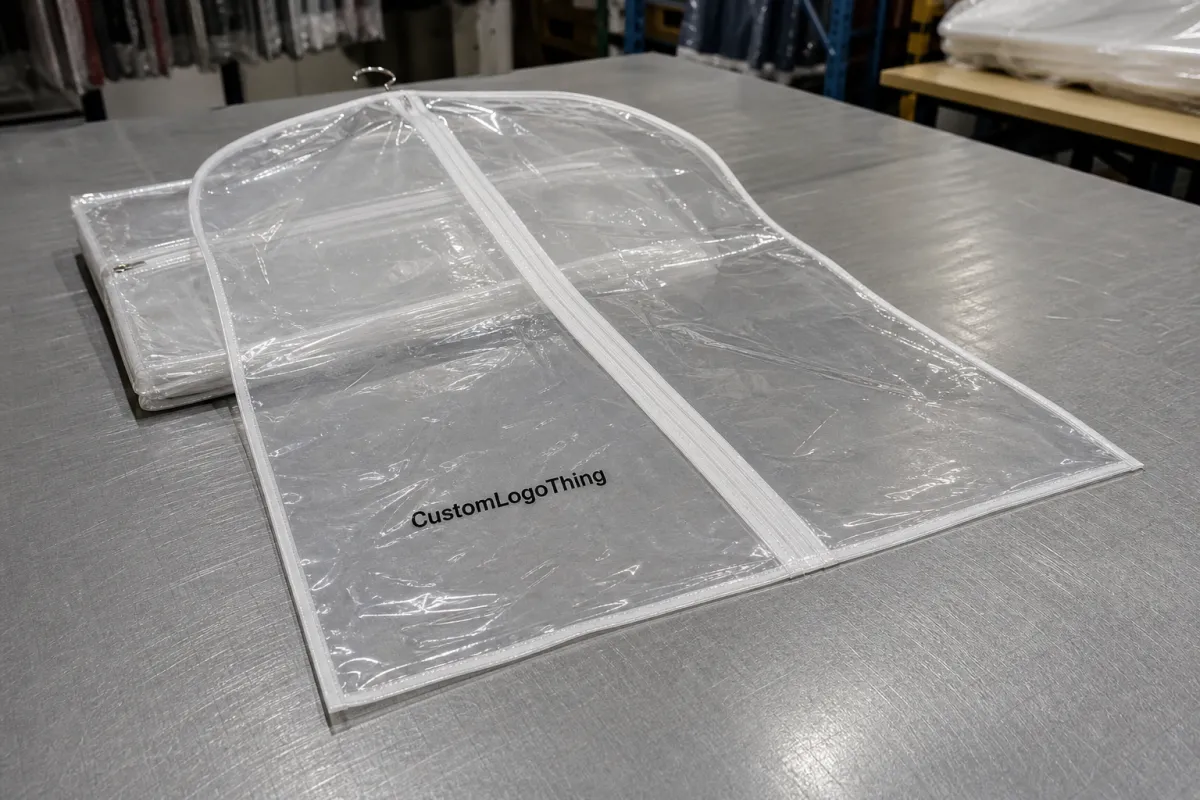
Clear Garment Bags save time because they reduce the number of decisions staff have to make. A receiving associate can see color, length, and shape without opening the package. A floor team can sort transfers faster. A manager can locate a specific size run without pulling half a rack apart.
That matters most during store opens, inventory turns, and seasonal changeovers, when merchandise is moving fast and staff are already stretched. A few seconds saved per piece can become real time across a shipment of hundreds or thousands of units. The bag is not just packaging; it is a tool for reducing touch points.
There is also a presentation benefit. Clear covers allow the garment to stay visible while still looking orderly on the rack. When the customer or sales associate can identify the item without removing it from the hanger, the brand looks more controlled and the selling environment stays cleaner.
One practical detail often gets overlooked: a bag that stays on the hanger can reduce abrasion during storage and transit. That is especially useful for garments with embellishment, delicate trims, or structured shoulders. Fewer handling steps usually mean fewer chances to create damage.
Which bag construction fits dresses, outerwear, and mixed assortments
Clear Garment Bags are not interchangeable. Dresses and light apparel usually work well in straight-hanging bags because the profile is simple and visibility stays high. Outerwear, layered sets, and bulkier silhouettes often need gusseted construction so the garment does not compress awkwardly inside the bag.
Closure style should match how the bag is handled. Zippers are useful when the item will be opened and closed repeatedly. Snap closures can be faster for teams moving quickly through backroom work. Open-top covers are cheaper, but they make less sense if the garment needs to stay fully enclosed for storage or transfer.
Film appearance matters more than most sample sheets reveal. Some clear films haze under fluorescent lighting. Others reflect so much glare that the garment is harder to inspect. Low-gloss or matte finishes can help, though they may slightly change the look of the bag. Venting may be useful for short-term storage, especially when garments are packed warm from pressing or finishing.
| Bag style | Best for | Typical thickness | Indicative unit price | Notes |
|---|---|---|---|---|
| Straight-hanging clear bag | Dresses, blouses, light sets | 1.5-2.0 mil | $0.18-$0.28 at 5,000 units | Lower cost, simpler construction |
| Gusseted clear bag | Coats, suits, fuller garments | 2.0-3.0 mil | $0.26-$0.42 at 5,000 units | More room, better drape |
| Zipper or snap-closure bag | Frequent access, premium retail use | 2.0-4.0 mil | $0.32-$0.58 at 5,000 units | Better access control, higher unit cost |
Exact dimensions matter. A bag that is too short exposes hems and looks unfinished. One that is too wide wastes material and can sag on the rack. Buyers managing house-brand programs or multi-store rollouts usually benefit from custom sizing rather than trying to force a stock size to fit everything.
Custom clear garment bags wholesale pricing: what drives your quote
Quotes move on a handful of variables. Size and film gauge usually matter most, because both change the amount of material used. Closure style comes next. Printing, label pockets, reinforced hangers, zippers, snap hardware, and special cutouts can all add cost.
MOQ also changes the math. Small test orders often land in the $0.40-$0.70 range per unit, depending on the exact spec. Larger runs can move closer to $0.18-$0.30. Those numbers are directional, not universal, but they show the pattern: the first production tier is usually the most expensive.
Freight changes the final answer more than many buyers expect. Carton count, pallet configuration, split shipments, and delivery speed can all add cost after the unit price is set. A quote that looks favorable on paper may not be favorable once it lands in the warehouse. Landed cost matters more than factory price.
The cheapest bag is not always the best buy. Thin seams, uneven seals, or poor zipper alignment may not show up in a single sample photo, but they tend to show up in production. When that happens, the retailer pays again in repacking time, waste, and complaint handling.
If the packaging program extends beyond garment covers, it helps to compare the bag against other items in the same procurement cycle. See Wholesale Programs for broader sourcing categories or Custom Packaging Products for related apparel packaging components. Keeping the cost basis consistent across categories makes the comparison more honest.
| Quote driver | Cost impact | What to confirm |
|---|---|---|
| Film thickness | High | Exact gauge or mil, plus whether clarity or toughness matters more |
| Bag size | High | Garment length, shoulder width, and gusset depth |
| Closure type | Medium to high | Zipper, snap, adhesive strip, or open-top hanger access |
| Print or label work | Medium | Logo placement, color count, and artwork readiness |
| MOQ and freight | High | Total pieces, ship-to location, and delivery deadline |
Specs to lock before you request samples or approve production
Before sampling, lock the basics: dimensions, thickness, closure style, hanger opening, gusset depth, vent placement, and any print or label requirements. If those are still moving, sample approval becomes guesswork and supplier quotes become harder to compare.
Samples should be tested in conditions that resemble actual use. Hang the bag on a real rack. Try it with the garment weight it will carry. Check the hem position, shoulder fit, and how the clear film behaves under store lighting.
Retail buyers should pay attention to clarity under the same lighting used in stores. LED lighting can create glare. Warm lighting can make haze more noticeable. If the bag is part of a premium retail packaging system, the material should support the garment rather than compete with it.
Consistency across cartons matters too. Ask for carton-by-carton uniformity, not just one ideal sample. Small differences in width or closure placement become more noticeable when a chain order lands at multiple stores. If the bags will move through distribution repeatedly, transit testing based on ISTA methods is a useful reference point. For any paper components used alongside the bag, chain-of-custody standards from FSC may still matter.
Order process and timeline from quote to delivery
A clean order flow is usually straightforward: inquiry, spec review, quote, sample or proof confirmation, production, quality check, packing, and shipment. Most delays happen because one of those steps was assumed rather than confirmed. Missing measurements, unclear artwork files, or a late freight decision can add days before production even begins.
For many wholesale orders, a practical production window is 12-15 business days after approval for simpler custom work and 18-25 business days for more complex specs or larger runs. Transit is separate. Domestic shipping may add a few days. Ocean freight adds much more.
This is the same pattern buyers see with custom printed boxes, hang tags, and other apparel packaging. The quote gets attention first, but approval is what sets the schedule. A three-day pause on artwork, measurements, or shipping confirmation can push the whole program out by a week or more.
- Garment dimensions are missing or approximate.
- The order needs multiple price tiers but only one quantity is provided.
- Closure preference is not decided before sampling.
- Freight destination changes after the quote is issued.
- Artwork or label files arrive in the wrong format.
Precision is the fastest way to protect lead time. A tighter spec sheet shortens the quote cycle, reduces back-and-forth, and makes the final landed cost easier to trust.
What a manufacturing partner should prove before you reorder
Sample quality can win a first order. Reorders depend on repeatability. Buyers should look for stable dimensions, consistent clarity, clean carton labeling, and pricing that does not change without explanation.
Direct factory sourcing can help when the same spec has to be held across many stores or multiple seasons. Fewer handoffs usually mean fewer opportunities for error, and even a small shift in width, closure placement, or seam quality can become visible once the order scales.
Quality control should be specific, not vague. Ask where seam checks happen, how zipper or snap failures are caught, and how cartons are labeled for DC sorting or store delivery. A supplier that can describe its checks clearly is usually easier to work with than one that only talks about low prices.
Seasonal demand is another test. Can the supplier hold the same specification when volume jumps? Can they protect the agreed pricing structure on reorder quantities? Can they keep the same bag shape when the order changes from 3,000 to 12,000 pieces?
The most useful proof is boring: one correct sample, one correct invoice, one correct shipment. That kind of consistency is what keeps retail operations moving.
The fastest way to get a comparable quote and place the order
If the goal is an accurate comparison, send the same information to every vendor: garment dimensions, target quantity, closure preference, film thickness, and ship-to location. Add logo artwork if printing is involved, plus any carton or labeling requirements. A complete request for quote leaves less room for assumptions and makes the numbers easier to compare.
Comparisons should also use the same sample basis. Clear bags need to be judged under similar lighting, on the same garment, with the same closure test. Otherwise, a cheaper offer can look better simply because the comparison was not controlled. Freight should be included as well, because landed cost can reverse the ranking between suppliers.
Retailers that buy across multiple packaging lines should keep the language consistent. If the team uses branded packaging, garment covers, and product packaging in the same program, the spec language should be aligned. That saves time for procurement, operations, and design, and it reduces the chance that a small detail gets lost during handoff.
For wholesale sourcing, the most useful phrase is still the one buyers use when they want a tailored response: Custom Clear Garment Bags wholesale pricing for fashion retailers. Pair that with a real spec sheet, and the quote is more likely to reflect the job rather than a generic catalog price.
In practice, the best bag is the one that cuts handling, protects presentation, and fits the retailer’s workflow without creating cleanup later. If it does that, the price usually makes sense. If it does not, the lowest quote can become the most expensive choice in the room.
What affects custom clear garment bags wholesale pricing the most?
Size, film thickness, and closure style usually drive the biggest price swings. MOQ and freight can change the landed cost more than the bag price itself. Printing, custom dimensions, and specialty features add cost, but they may also reduce handling time in the store or warehouse.
What is the typical MOQ for custom clear garment bags for fashion retailers?
MOQ depends on whether the bag is stocked, semi-custom, or fully custom. Smaller test runs usually cost more per unit, while larger orders reduce unit cost quickly. Ask for tiered quotes so you can compare pilot quantities against full-rollout pricing.
Can I get samples before placing a wholesale order?
Yes, and you should. Check fit on real garments, closure performance, and visual clarity under store lighting. Use the sample to confirm dimensions, not just appearance, before production starts.
How long does production usually take after approval?
Lead time depends on customization level, order size, and current factory capacity. A straightforward order may take about 12-15 business days after approval, while more complex runs can take 18-25 business days or longer. Transit should be added separately.
What should I send to get an accurate quote for custom clear garment bags wholesale pricing?
Send garment dimensions, target quantity, preferred closure, and desired film thickness. Include any custom print, labeling, or carton requirements so the quote covers the full job. Add the ship-to location and deadline because freight and timing can change the best option.

