Clear Garment Bags wholesale Pricing for Event merch teams usually looks simple on paper and messy in practice. One clear sleeve has to protect the apparel, hold shape under handling, and let staff identify size and color without opening every pack. If the bag slows the table, it is too flimsy. If it hides the product, it misses the point.
For pop-ups, sponsor activations, touring merch, and stadium retail, the bag is part packaging, part inventory tool, and part presentation. That is why buyers who start with the use case tend to make better decisions than buyers who chase the lowest unit price first. Our Wholesale Programs page is a practical starting point for comparing runs, and ISTA packaging test standards are useful if the order will travel through multiple handoffs before it reaches the floor.
A clear garment bag has to do three jobs at once: protect the item, speed identification, and keep the table looking ready for sale.
Why clear garment bags make event merch tables easier to sell and restock
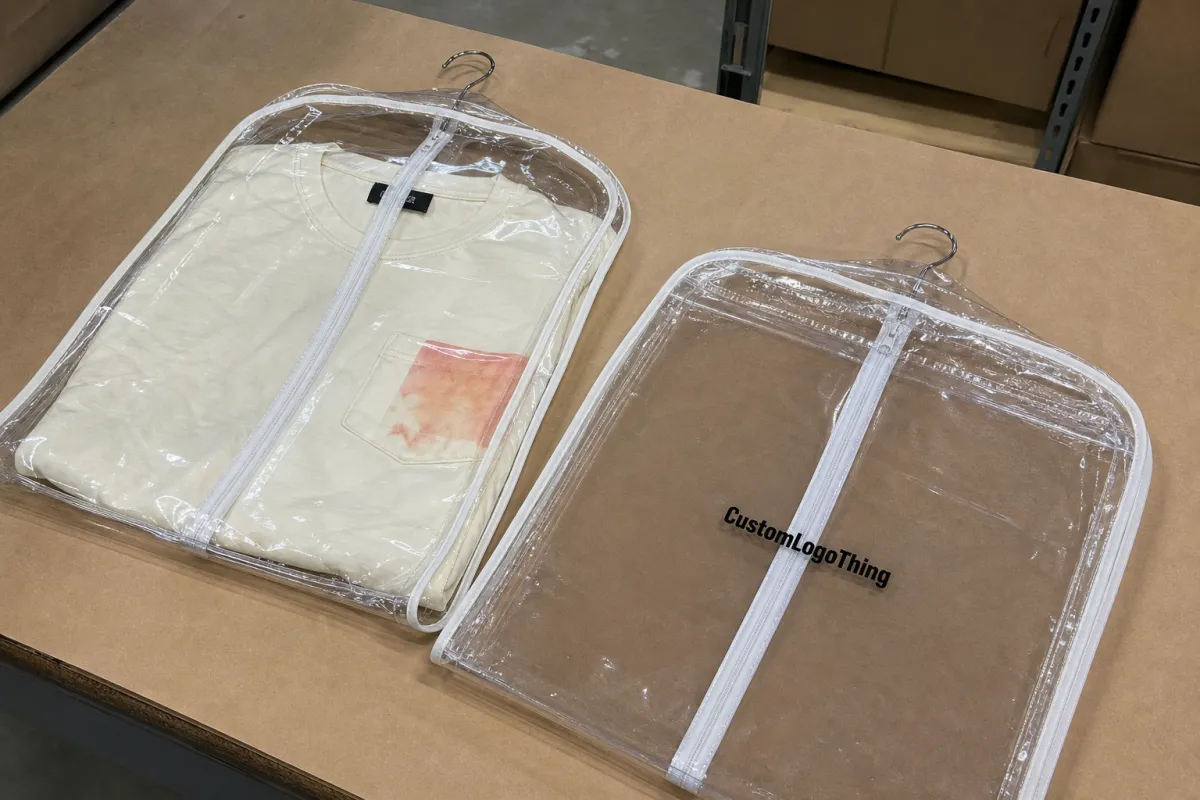
On a crowded merch table, visibility saves seconds. Staff can confirm the fold, size, and color at a glance, which matters when there are lines at the register and almost no room to open cartons or recheck labels. Clear sleeves reduce unnecessary touch points, and that alone cuts clutter during setup and restock.
The sales side matters too. A shirt in a neat transparent sleeve reads like retail inventory, not loose event stock. That visual order affects how quickly people trust the display. It is a small behavioral edge, but merch teams feel it immediately during busy windows when every interaction has to move.
Clear bags also help after the event closes. Reconciling sell-through, counting returns, and separating overstock becomes faster because crews can see what is inside each package. For recurring tours or festival weekends, that saves labor at both ends of the calendar.
In practice, the cleanest benefit is consistency. Every piece arrives in the same format, so the table stays square and the staff is not improvising with mixed packaging styles.
Material and construction details that affect durability
Not every Clear Garment Bag behaves the same. Film thickness, seam construction, closure style, and how the bag is cut all change durability. A thin sleeve might hold folded tees just fine, but it can collapse or crease badly once the product gets heavier.
- 2.0-2.5 mil - Works for folded tees and lightweight tops that will be handled a few times.
- 3.0-4.0 mil - Better for hoodies, crewnecks, and pieces that need more abrasion resistance.
- 4.0-6.0 mil - Better for jackets, bundled apparel, and bags that will move through heavier warehouse handling.
Closure choice changes the workflow. Zippers are useful if the bag may be reopened during staging, counted again after a move, or reused for a different setup. Adhesive flaps fit sealed presentation packs that stay closed until handoff. Open-top styles still have a place for hanging systems, especially on quick-turn table displays.
Material matters more than many buyers expect. High-clarity LDPE usually gives a cleaner retail look than softer, hazier film. Recycled content can be a smart sourcing choice, but it may reduce clarity and add a slight tint. That trade-off is worth discussing before approval, not after the bags are already in production.
For bulky apparel, ask about gussets, hang holes, and edge reinforcement. A jacket folded into a sleeve that is too narrow will wrinkle and stress the closure. An oversized sleeve solves that problem but can make the display look loose. The goal is not just fit; it is a package that stays square and still moves quickly through the table.
Clear garment bags wholesale pricing for event merch teams: what changes the quote
The quote usually comes down to six variables: bag size, film thickness, closure type, gusset depth, print or label needs, and whether the order is stock or custom. Two bags can look nearly identical in a photo and still land in different price bands because one needs a heavier film or a wider cut.
Order size matters as well. Larger runs spread setup, packing, and freight across more pieces, so the per-unit cost drops. Small rush orders often land higher because they are harder to schedule and more expensive to ship on a compressed timeline.
| Option | Typical use | MOQ | Typical unit price | Lead time |
|---|---|---|---|---|
| Stock clear bag, 2.0-3.0 mil | Tees, lightweight tops, quick restock | 1,000-2,500 | $0.10-$0.22 | 5-10 business days |
| Custom size, 3.0-4.0 mil | Hoodies, crewnecks, unusual folds | 3,000-5,000 | $0.17-$0.36 | 12-18 business days |
| Heavy-duty zipper bag, 4.0-6.0 mil | Jackets, bundles, premium presentation | 2,000-3,000 | $0.28-$0.60 | 15-25 business days |
The cleanest quote starts with folded dimensions, not the shirt tag. A medium tee folded with a card insert takes more room than the same shirt folded flat. Add a hang tag, barcode sticker, or price card, and the package changes again. That is where many first-round quotes fall short.
Freight and carton planning can move the landed cost just as much as the bag itself. Split shipments, special pallet counts, and destination rules all affect the final number. A strong quote should show unit price, pack configuration, and delivery cost together instead of hiding half the math.
If the merch team is comparing multiple events, a landed-price view is the most honest one. The cheapest sleeve is not always the cheapest program once storage, handling, and shipping are included.
MOQ, case packs, and unit-cost breakpoints to plan around
MOQ is not just a factory constraint. Case-pack multiples matter because they shape how the product is stored, picked, and shipped. A lower unit price is not a win if it leaves the warehouse with awkward leftovers that do not fit the next event or next inventory cycle.
Clear Garment Bags wholesale pricing for event merch teams tends to improve at familiar breakpoints, usually around 1,000, 3,000, and 5,000 pieces. The exact numbers vary by style and film weight, but the pattern is consistent: the more predictability in the order, the easier it is to price and schedule.
There is also a storage cost that buyers forget until the cartons arrive. Stock sizes can cost a little more per unit, yet they often prevent overbuying product that sits after the final show. For teams with uneven calendars, that trade-off is often smarter than pushing into a custom run just to save a few cents.
A practical way to forecast is by apparel family:
- Tees and light tops - Usually fit smaller case counts and lighter film.
- Hoodies and crewnecks - Need more attention to thickness and fold height.
- Jackets and bundled items - Benefit from wider sleeves and fewer assumptions about size.
Process, lead time, and turnaround from quote to delivery
The production path should be easy to follow: request the quote, confirm specs, approve sample or proof, move into production, then book freight or final delivery. If that sequence is unclear, the schedule usually becomes unclear later.
Lead time grows fastest when the spec is still moving. Custom dimensions, printed labels, and seasonal production pressure all add time. A stock sleeve may ship in 5-10 business days; custom work often needs 12-18 business days, and larger or more complex orders can stretch further if freight lanes are tight.
Build in a buffer before the event opens. That gives the team time to inspect cartons, check counts, and stage the table without rushing. A few extra days can prevent a problem that becomes very expensive once the merch stand is already live.
For event operations, timing matters as much as the quote. A lower unit cost is not useful if the bags arrive after the staff has already resorted to folding apparel by hand.
Size, fit, and folding specs for tees, hoodies, jackets, and bundles
The right fit starts with the folded garment, not the label size. A medium tee, a heavy crewneck, and a zip hoodie can each occupy very different dimensions once folded, sleeved, and stacked. That is why a quote based only on apparel size can be off by a surprising amount.
Measure three things: folded width, stack thickness, and room for inserts or hanger clearance. Tees often fit neatly in a standard transparent apparel sleeve. Hoodies and jackets need more depth so the closure does not compress the fabric into a hard crease.
Oversized sleeves make the display look loose, and undersized sleeves slow everyone down. The bag should hold the item square, protect the product, and still let the team pull, scan, or hand it off without fighting the package.
One detail that gets missed: if the package includes a barcode card or price insert, leave enough room so the insert does not buckle the front panel. That small bit of extra space can make the entire run look more polished.
Labeling, kitting, and warehouse workflow that saves event staff time
Clear bags pay off most when the warehouse process is disciplined. Size labels, barcodes, and color codes reduce sorting errors and help crews move from receiving to staging without opening every carton. Visibility cuts decision time, and decision time is what disappears fastest during event prep.
That matters for tours, conferences, and repeat brand activations that reuse the same apparel structure across multiple stops. A standard carton label, packing sheet, and sleeve size make reorders easier and keep the handoff from supplier to floor team clean.
If the merch table is also the sales floor, the workflow should behave like retail. Stackable cartons, readable labels, and grouped sizes make restocking faster. Clear sleeves matter here because they let staff confirm the item without destroying the pack order.
A simple system usually works best:
- One size label visible on every package.
- One carton code tied to the event or activation.
- One packing sheet that matches the table layout.
Standardized packing is not glamorous, but it is what keeps event merch teams from losing time in the first hour of a busy show.
Next steps to lock in your specs and request a quote
The fastest quote comes from sending the essentials in one message: item type, folded dimensions, quantity, ship-to zip code, and delivery date. If you already know whether the order needs stock bags, custom sizing, or printed labels, include that too. The fewer assumptions in the first email, the fewer surprises later.
Before approving production, confirm whether the merch mix includes bulky items like hoodies or jackets. A sample or spec sheet is worth the time if the fold is unusual. One quick check can prevent an entire run from being too tight, too loose, or awkward on the table.
Clear Garment Bags wholesale pricing for event merch teams makes the most sense when the order matches the actual event calendar, not just last month’s volume. The right spec keeps apparel protected, keeps the table moving, and keeps packaging spend tied to the work it is supposed to support.
Frequently Asked Questions
What affects clear garment bag wholesale pricing for event merch teams most?
Size, film thickness, closure style, and whether the bag is stock or custom are the biggest drivers. Printing, special finishes, and unusual carton or freight requirements can raise the landed cost. Larger runs usually lower the per-unit price, while rush orders usually raise it.
What MOQ should a merch team expect for wholesale clear garment bags?
MOQ depends on the style and whether the order is stock or custom sized. Case-pack multiples matter almost as much as the factory minimum because they affect shipping and storage. If a team has several events on the calendar, combining demand into one order can make the MOQ easier to justify.
Which thickness is best for event clear garment bags?
Use a lighter film for folded tees and lightweight apparel that will be handled only a few times. Choose a heavier gauge for hoodies, jackets, or bundled items that need more abrasion resistance and seam strength. If the fold includes inserts or price cards, size the sleeve to protect the front panel from buckling.
How fast can clear garment bags ship for an event deadline?
Stock sizes move faster because there is no custom tooling or print approval step. Custom sizes, labels, and larger volumes take longer because production, inspection, and freight all add time. The safest plan is to confirm specs early and leave room for receiving and kitting before doors open.
Should event merch teams choose zipper or adhesive closure bags?
Zippers work well when the bag may be opened and resealed during storage, staging, or re-kitting. Adhesive closures fit sealed presentation packs that stay closed until the item is handed to the customer. For high-touch event use, zippers often make more sense because the package may be handled multiple times.


