For coffee brands, Custom Hang Tags for coffee roasters wholesale pricing factors are not a side detail. They influence how quickly a bag reads on shelf, how clearly the coffee is explained, and how premium the pack feels before a customer opens it. A strong tag can carry origin, roast level, tasting notes, and brew guidance without forcing the buyer to hunt across the pouch.
The useful part is practical, not decorative. A hang tag sits at the point where package branding meets buying behavior. That makes it valuable in retail packaging, product packaging, and branded packaging programs where the pouch already has plenty to say. For roasters comparing Custom Labels & Tags with other Custom Packaging Products, the tag is often the quickest way to add traceability and improve shelf presence without reworking the whole bag.
Why hang tags can change the shelf read for coffee roasters
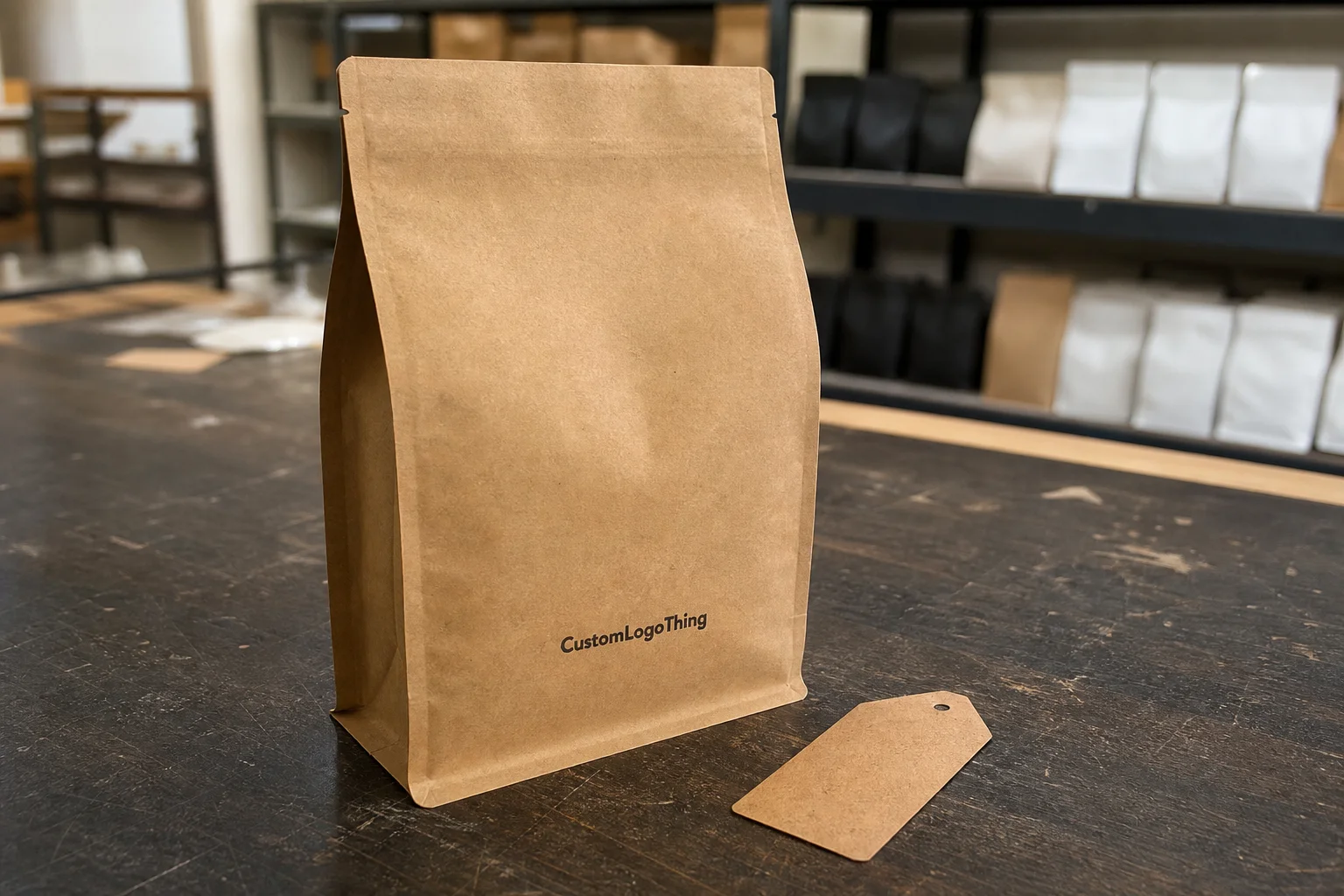
Coffee packaging has a short window to earn attention. Buyers usually scan roast level, origin, and price first. If those details are buried in small copy or pushed to the back panel, the pack feels less organized. A hang tag fixes that by moving the key information into a position that is hard to miss.
From a wholesale buyer’s perspective, the tag does four jobs at once. It signals quality, explains the coffee, separates one SKU from another, and makes the bag easier to compare against nearby products. That matters for single-origin releases, seasonal blends, and private-label programs where multiple coffees share the same pouch format but need distinct identities.
There is also a direct commercial reason to use one. A single insert can carry a roast story, a QR code, a lot number, and brewing notes without changing the primary pouch artwork. That keeps packaging design stable while still allowing the roaster to adjust messaging by lot size, region, or sales channel. For cafes and grocery accounts, that extra information can shorten the buying decision. For direct-to-consumer orders, it can point traffic toward subscriptions, recipe pages, or origin content.
From a packaging buyer’s standpoint, the strongest hang tag answers three questions fast: what is it, why is it different, and how should I brew it?
That is why the tag should be treated as a functional sales tool. If it does not help the customer understand the coffee faster, the spec is probably too elaborate or aimed at the wrong problem.
Materials, finishes, and print methods that hold up on coffee bags
Most roasters begin with paper stock because it balances cost, print quality, and handling. The right choice depends on the pouch finish beside it. A matte coffee bag usually pairs well with coated card or soft-touch stock. A kraft pouch often looks more coherent with uncoated or recycled board. Foil bags can support either, but a high-gloss tag next to a metallic pouch can feel disconnected unless that contrast is intentional.
Common stock choices include 18pt to 24pt coated card, uncoated white board, kraft board, and recycled FSC-certified stock. FSC sourcing is worth asking about if a retail account wants paper stewardship documentation. The standard is familiar to many buyers and easier to verify than vague sustainability language. For broader material context, packaging industry resources can help frame how a tag fits into a larger packaging system.
Finish selection changes both cost and tone. Matte lamination looks restrained and works well for minimalist coffee brands. Soft-touch adds a velvety surface that reads as premium, though it can increase cost and add some production time. Spot UV highlights a logo or origin mark, but only makes sense when the artwork has a clear focal point. Foil remains the most visible upgrade, yet on a small format it needs discipline. Too much foil and the tag starts to look crowded rather than refined.
Print method matters more than many buyers expect. Digital print is often the best fit for short runs, variable lots, and multi-SKU orders because setup is light and small type stays crisp. Offset becomes more attractive as volume rises, especially when the design needs tighter color control. If the tag includes a barcode, QR code, or tiny roast icons, request a prepress check before approving the run. Most preventable mistakes show up there, not on press.
Durability matters too. Coffee bags move through cafes, warehouses, and shipping cartons. Tags rub against cotton loops, shelf dividers, packing tape, and neighboring products. Humidity can be part of the environment as well. A suitable stock and finish combination should resist scuffing long enough to keep the tag looking deliberate, not worn after a few handling cycles.
| Spec choice | Typical wholesale impact | Best use case | Main tradeoff |
|---|---|---|---|
| 18pt coated card, one-sided print | Lower cost; often around $0.10-$0.22 per unit at larger runs | Core SKUs, standard retail packaging | Less tactile character than premium finishes |
| Uncoated or kraft board | Moderate cost; often around $0.12-$0.26 per unit | Natural, origin-forward, or farm-story branding | Color can look softer and less saturated |
| Soft-touch lamination | Higher cost; often around $0.18-$0.38 per unit | Premium roasts, gift sets, subscription boxes | More finish complexity and longer make-ready |
| Foil or spot UV accents | Highest cost tier; often around $0.24-$0.48 per unit | Flagship lines, holiday runs, retail display packaging | Better for emphasis than for dense copy |
For shipping-heavy programs, it also helps to think about tag durability the same way you think about transit testing. If a coffee line moves through subscription kits or bundle packs, light paper parts can fail when they are bent, rubbed, or snagged repeatedly. The tag is small, but it still has to survive the trip.
Sizes, shapes, and attachment specs that fit your packaging line
The best tag size is the one that fits the content, not the one that happened to be in a template library. If the tag needs origin, roast notes, brewing guidance, and a QR code, it needs enough room to stay legible at arm’s length. If it only needs a logo and a batch code, a compact format is usually smarter because it reduces paper use and assembly time.
Most roasters stay with rectangles, rounded rectangles, or bottle-style shapes because they stack well, print efficiently, and are easy for staff to attach. Custom die-cut forms can improve shelf presence, but they need to earn the added cost. A bean silhouette or farm outline might fit a flagship line. For a rotating wholesale program, it can become a production headache.
Attachment details affect line speed more than many buyers expect. Pre-punched holes are standard. Slot cuts help when a cleaner loop attachment is needed. String, cotton loop, elastic loop, or stapled application all work, but each one changes labor time. If tags are applied before bag sealing, the line has to be set up to avoid snagging. If they are added during final packing, the process may be slower but easier to control. If a fulfillment partner handles the insertion, consistency matters even more.
- Pre-punched hole: fast, low-cost, good for routine reorders.
- Slot cut: cleaner look, slightly more finishing cost.
- String or cotton loop: premium feel, slower hand application.
- Elastic loop: flexible for variable bag widths, but not always the best visual fit.
The small mistakes are the ones that create waste. Tiny type disappears quickly on a moving line. Poorly aligned holes make the tag hang crooked. Oversized tags can interfere with barcode placement, shelf stacking, or case packing. For coffee roasters managing multiple sizes, the cleanest path is usually a shared tag system with only the variable fields changing by SKU.
custom hang tags for coffee roasters wholesale pricing factors
The phrase sounds long because the cost stack is long. Custom Hang Tags for Coffee roasters wholesale pricing factors break down into a handful of controllable variables: stock, print coverage, finish, shape, attachment method, and timing. That is the real pricing map. Buyers who understand those levers usually get cleaner quotes and fewer surprises.
Volume matters most. A larger run spreads setup, proofing, and make-ready across more pieces, which is why unit pricing drops as quantity rises. Short runs are not a problem; they simply carry more overhead per tag. If a roaster needs 500 tags for a seasonal lot and 5,000 for core SKUs, the unit cost difference can be substantial even when the artwork looks nearly identical.
The most common wholesale pattern is straightforward: standard size, standard stock, and one- or two-color print deliver the best value. Add a custom die-cut, soft-touch finish, foil accents, or variable data and the quote rises. That does not mean the premium route is wrong. It means the buyer should know which choice is paying for shelf impact and which choice is adding production friction.
Typical wholesale ballparks for a standard coffee hang tag often look like this: 1,000 pieces may land around $0.28-$0.60 each, 5,000 pieces around $0.14-$0.28, and 10,000 pieces around $0.09-$0.18, depending on coverage and finish. That is a starting point, not a fixed promise. Complex tags with multi-step finishing or variable content can move outside those ranges quickly.
Variable data is a quiet cost driver. Batch numbers, roast dates, QR codes, or region-specific copy may require extra setup or imaging steps, especially when the data changes from one SKU to the next. In a multi-origin program, that is often worth paying for because it improves traceability. Still, it should be planned, not discovered at proof stage.
If a roaster wants the best wholesale value, the rule is simple: start with the spec that supports the brand position, then remove cost only from places customers will not notice. A slightly lighter board is often safer than stripping the tag so far that the brand looks cheap beside the pouch.
Production steps, proofing, and turnaround expectations
Most delays happen before the press starts. The path usually runs through quote, artwork review, proof, approval, print, finishing, and shipping. If any step is unclear, the job stalls. The fastest orders are the ones that arrive with complete information the first time.
Custom Hang Tags for coffee roasters wholesale pricing factors also shape production timing. A simple reprint on a standard board can move quickly. A tag with custom die cutting, foil, or multiple SKUs takes longer because each change adds setup. Proof approval matters just as much as manufacturing time. If the artwork changes late, the clock resets.
Proofing should be treated as a checkpoint, not a courtesy. A digital proof is usually enough for layout, copy, and line placement. A prepress review is necessary when bleeds, small type, barcode placement, or die lines matter. A sample run becomes useful if color matching or finish choice is central to the brand. That is especially true when the tag has to sit beside existing custom printed boxes or a tightly controlled pouch line.
For buyers, the best turnaround expectation is the one that separates approval time from manufacturing time. A typical simple tag order may take 12 to 15 business days after proof approval. More complex work can extend that range. Shipping adds another variable, particularly when stock availability or regional fulfillment enters the picture.
If you need a faster release date, these are the details that matter most:
- Final artwork, with fonts outlined and images embedded.
- Confirmed quantity by SKU.
- Hole location and attachment method.
- Clear stock and finish choice.
- One person responsible for signoff.
One more operational point: if the hang tags are part of a broader purchase, coordinate them with the rest of the packaging order. Bundling tags into a larger Wholesale Programs discussion can reduce duplicate setup and keep print standards aligned across the brand.
How roasters keep repeat orders consistent across multiple SKUs
Repeatability is where the supplier relationship proves itself. Coffee roasters rarely stay on one static SKU for long. They rotate single origins, blend names, seasonal offerings, and subscription exclusives. If every reprint starts from scratch, the process gets slower and more expensive. If the packaging partner keeps the right records, the next order becomes much cleaner.
Custom Hang Tags for coffee roasters wholesale pricing factors are easier to manage when the supplier stores the dieline, approved artwork, finish notes, quantity history, and prior proof versions. That archive prevents a surprising amount of rework. It also reduces the chance that hole placement shifts, the board stock changes, or a barcode gets resized incorrectly on a reorder.
Consistency has a real financial payoff. Stable color, identical hole placement, and predictable stock sourcing reduce scrap and shorten approval cycles. They also keep shelf presentation uniform across direct-to-consumer shipments and retail accounts. Inconsistent tags make a line look fragmented even when the coffee itself is excellent.
Strong repeat-order systems usually support three use cases well:
- Seasonal blends with a small text change.
- Single-origin lots with unique roast notes and QR codes.
- Subscription exclusives that need one base template and one variable field.
That is why many roasters stay with the same packaging partner after the first run. The value is not only price. It is fewer proof rounds, less rework, and better alignment with the rest of the package branding system. The tag becomes part of the operational memory of the brand.
What to send for an accurate quote and faster next order
If you want a quote that reflects the real job, send the production facts up front. Do not make the supplier infer the rest. Custom Hang Tags for coffee roasters wholesale pricing factors become easier to price when the request includes dimensions, stock preference, print sides, finish choice, quantity by SKU, attachment method, and delivery target.
The clearest requests also include the actual content. If the tag needs roast level, tasting notes, origin, and a QR code, the layout space has to be checked before pricing. If there are multiple roasts, list each SKU separately. That keeps the quote honest and shows where only the variable copy changes from one tag to the next.
Packaging constraints matter too. Bag size, loop or string method, retail display format, and whether the tag must match existing labels all affect the spec. If the hang tag needs to sit beside a matching label system or a broader set of Custom Packaging Products, that should be clear at the start so the look stays consistent across channels.
A practical next-step sequence looks like this:
- Gather specs and artwork.
- Confirm the proof owner.
- Request a sample if finish or color is uncertain.
- Lock the reorder structure for future runs.
That process saves time on the second order, which is usually where the real margin benefit appears. A clean quote today makes the next purchase easier to repeat, easier to compare, and easier to scale.
FAQ
What affects custom hang tags for coffee roasters wholesale pricing factors the most?
Stock weight, finish complexity, print coverage, and die-cut shape usually drive the biggest changes. MOQ also matters because lower quantities spread setup cost across fewer pieces. Variable data and rush timing can add cost if they require extra production steps.
What MOQ should coffee roasters expect for custom hang tags?
MOQ depends on the print method, stock, and finishing options rather than one fixed industry number. Standard shapes and standard stocks usually support lower minimums than custom die-cuts or specialty finishes. Ask for pricing at two or three quantity tiers so you can see where unit cost improves.
Which material is best for coffee bag hang tags?
Coated card is often best for clean color and sharp detail. Kraft or uncoated stocks work well when the brand wants a natural, tactile look. Choose the stock that matches the pouch finish and the brand position, then check barcode and QR readability.
How long does production usually take after proof approval?
Turnaround depends on quantity, finishing, and the current press schedule. Simple tags on standard stocks move faster than custom shapes with multiple finishes. Build in extra time if you need color matching, samples, or multiple proof rounds.
What do I need to request a quote for coffee roaster hang tags?
Send dimensions, stock preference, quantity, print sides, finish, attachment method, and delivery target. Include final artwork or a clear content draft so the proof reflects the real layout. If you have multiple roasts, list each SKU separately so pricing is accurate.
For roasters balancing shelf appeal with wholesale discipline, the smart move is to treat the tag as part of the system, not a last-minute accessory. Keep the spec clean, keep the artwork readable, and tie the order to a repeatable production file. That is how custom hang tags for coffee roasters wholesale pricing factors become a quoting process that is faster, clearer, and easier to scale the next time you reorder.


