How to Buy from a Custom Printed Poly Bags China Factory
A Custom Printed Poly Bags china factory is not a cheap-bag vending machine with a logo button. It controls film thickness, resin mix, bag sealing, ink adhesion, packing method, export cartons, and whether your bags arrive looking like branded packaging or like something rescued from a wet loading dock.
Small changes matter. A 40-micron LDPE garment bag is not the same product as a 60-micron frosted zip bag, even if both are “poly bags” in a quote email. Add a resealable strip, two-color printing, a gusset, or a suffocation warning, and the cost, timeline, tooling, and quality-control steps can change quickly.
What a Custom Printed Poly Bags China Factory Actually Does
A real Custom Printed Poly Bags china factory does more than print a logo on plastic. Depending on the setup, it may handle film extrusion, surface treatment, flexographic printing, bag cutting, heat sealing, hole punching, zipper application, inspection, bundling, carton packing, and export documentation. That is a lot of chances to get the bag right. Also a lot of chances to make a very annoying mistake.
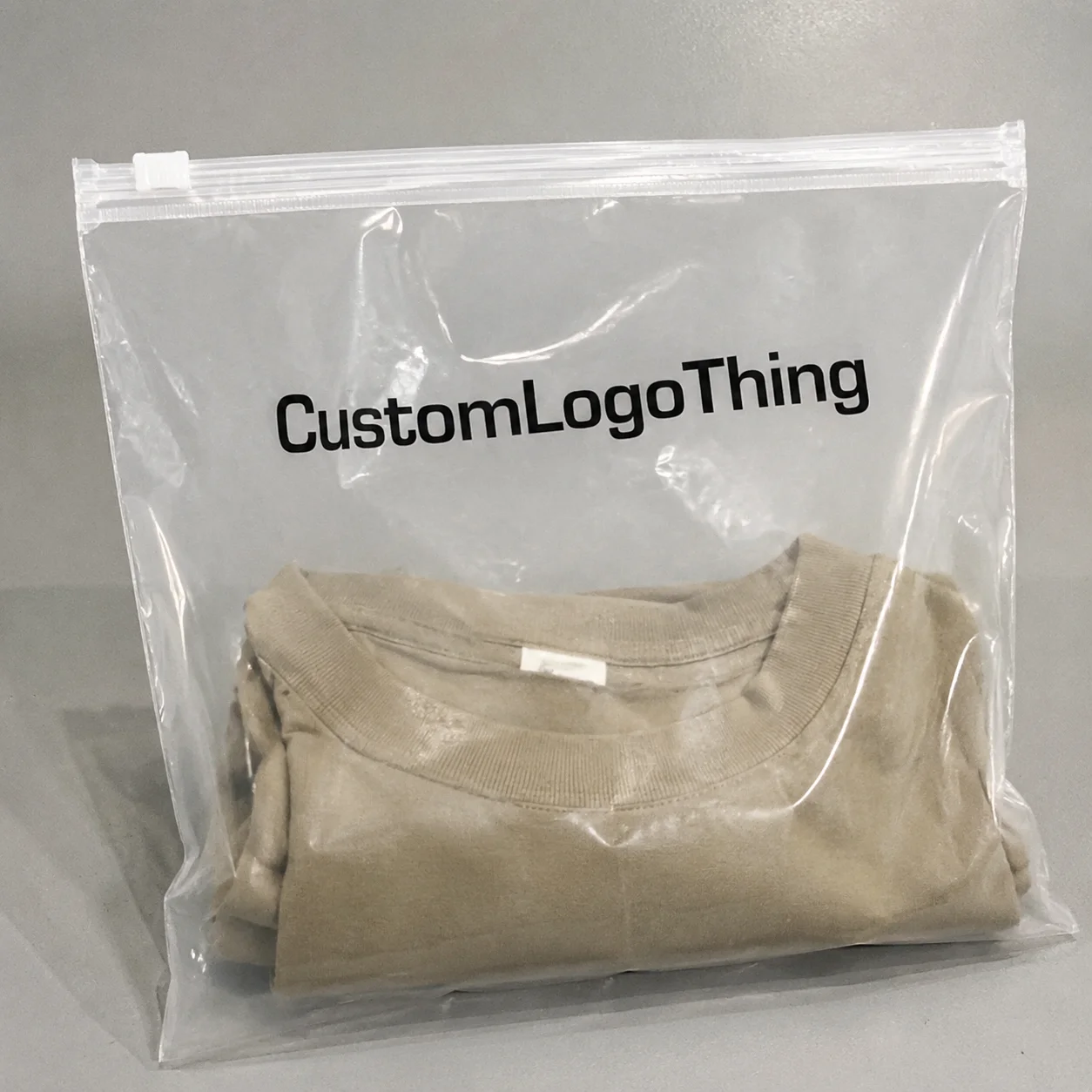
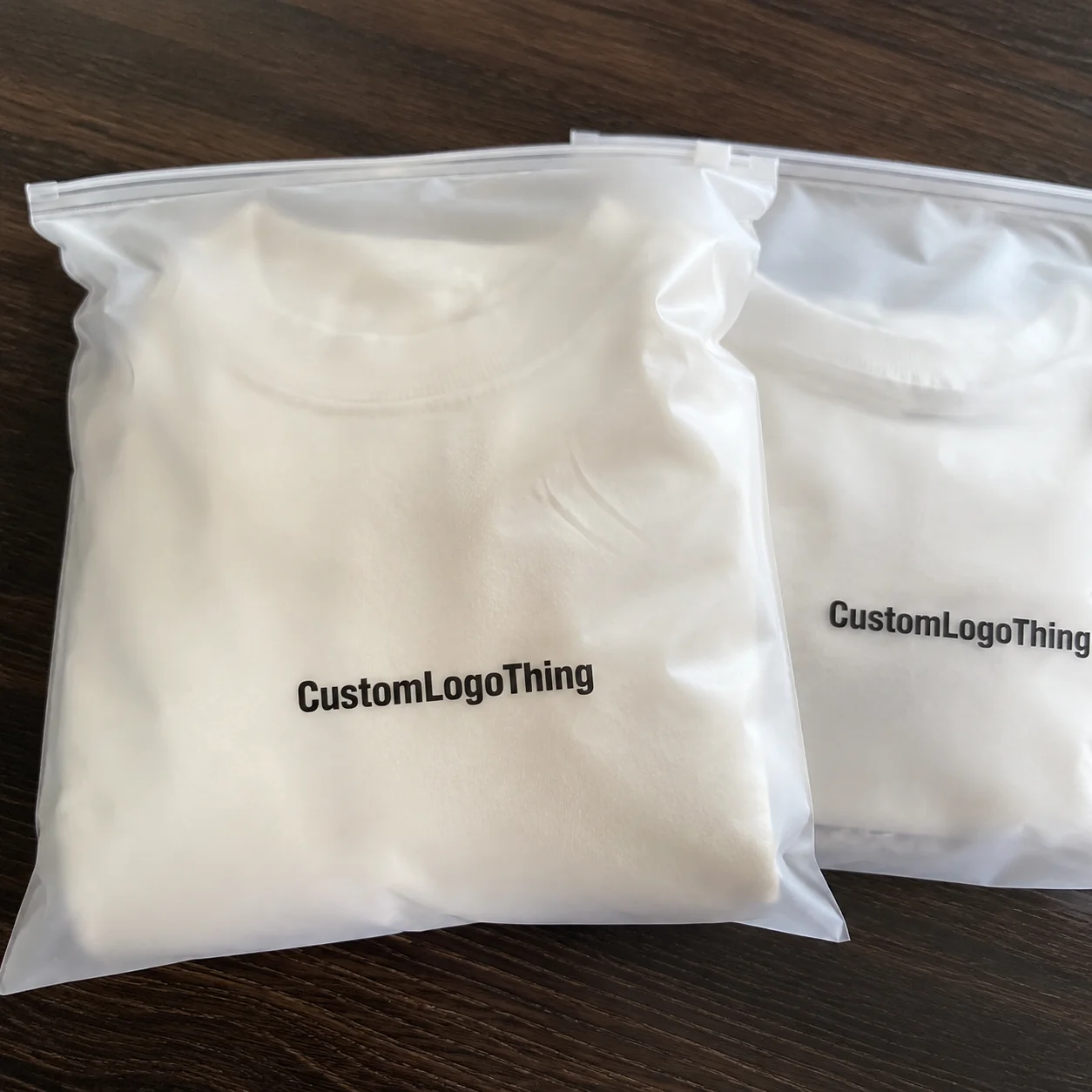
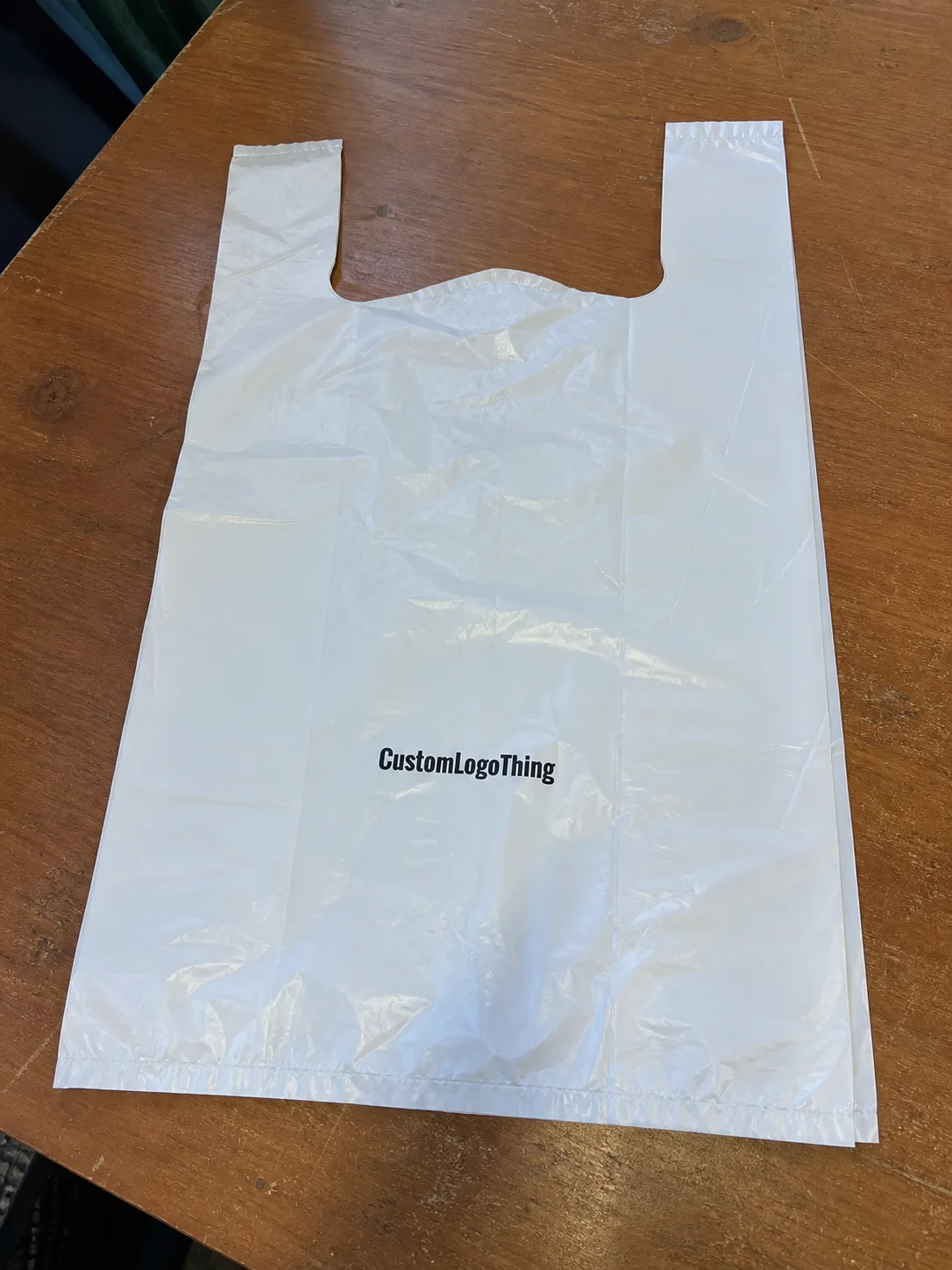
Poly bags cover a wide group of product packaging formats: LDPE bags, HDPE bags, garment bags, ziplock bags, drawstring bags, die-cut handle bags, courier bags, poly mailers, retail packaging bags, and clear inner packing bags used inside Custom Packaging Products. Some are built for presentation. Some are built for abuse. A courier bag needs tear resistance and adhesive security. A folded apparel bag needs clean clarity, smooth opening, and a tidy flap.
Brands source from China because the supplier base is broad. You can usually find more film options, lower unit costs at volume, more decoration methods, and factories familiar with export packing requirements. That does not mean every supplier is a factory. A trading company may coordinate production through multiple plants. A print broker may manage communication and markup. Neither is automatically bad, but do not pretend they own the machines unless they can show production capability, inspection process, and repeat-order controls.
Practical rule: if the supplier cannot explain film thickness, print method, packing count, and seal testing in plain language, the low quote deserves side-eye.
Set realistic expectations. You need accurate specs, artwork files, proof approval, sampling time, and a clear production schedule. “Normal size, good quality” is not a spec. It is a headache wearing a hat.
How Custom Poly Bag Production Works from Film to Finished Bag
Production usually starts with resin selection. LDPE feels softer, more flexible, and slightly premium for apparel or retail packaging. HDPE feels crisper and can be thinner while still feeling stiff. Co-extruded film can improve strength, opacity, puncture resistance, or color blocking. Recycled content can help sustainability goals, but it may affect clarity, color consistency, odor, and print finish. Not always. Often enough to test.
The basic path is simple on paper: choose resin, blow or source film, treat the surface, print, cure the ink, cut the roll, seal the bag, add holes or zippers, inspect, pack, and ship. In practice, every step has tolerances. Corona treatment affects ink adhesion. Heat-seal temperature affects edge strength. Film gauge variation affects how the bag feels in hand.
Printing method matters. Flexographic printing is common for bulk custom poly bags and works well for logos, line art, warning text, and one-to-four-color layouts. Gravure printing fits higher-volume runs with detailed graphics or full-coverage designs, though cylinder costs are higher. Digital printing can work for small tests or short runs if the supplier offers it, but it is not the default for most factory-scale poly bag orders.
Artwork should be clean. Send AI, EPS, or editable PDF files with vector logos, Pantone references, bleed, print position, bag orientation, barcode safety zones, and whether the artwork prints on one side or both sides. A barcode placed across a bottom gusset is a bad little surprise. Avoid it.
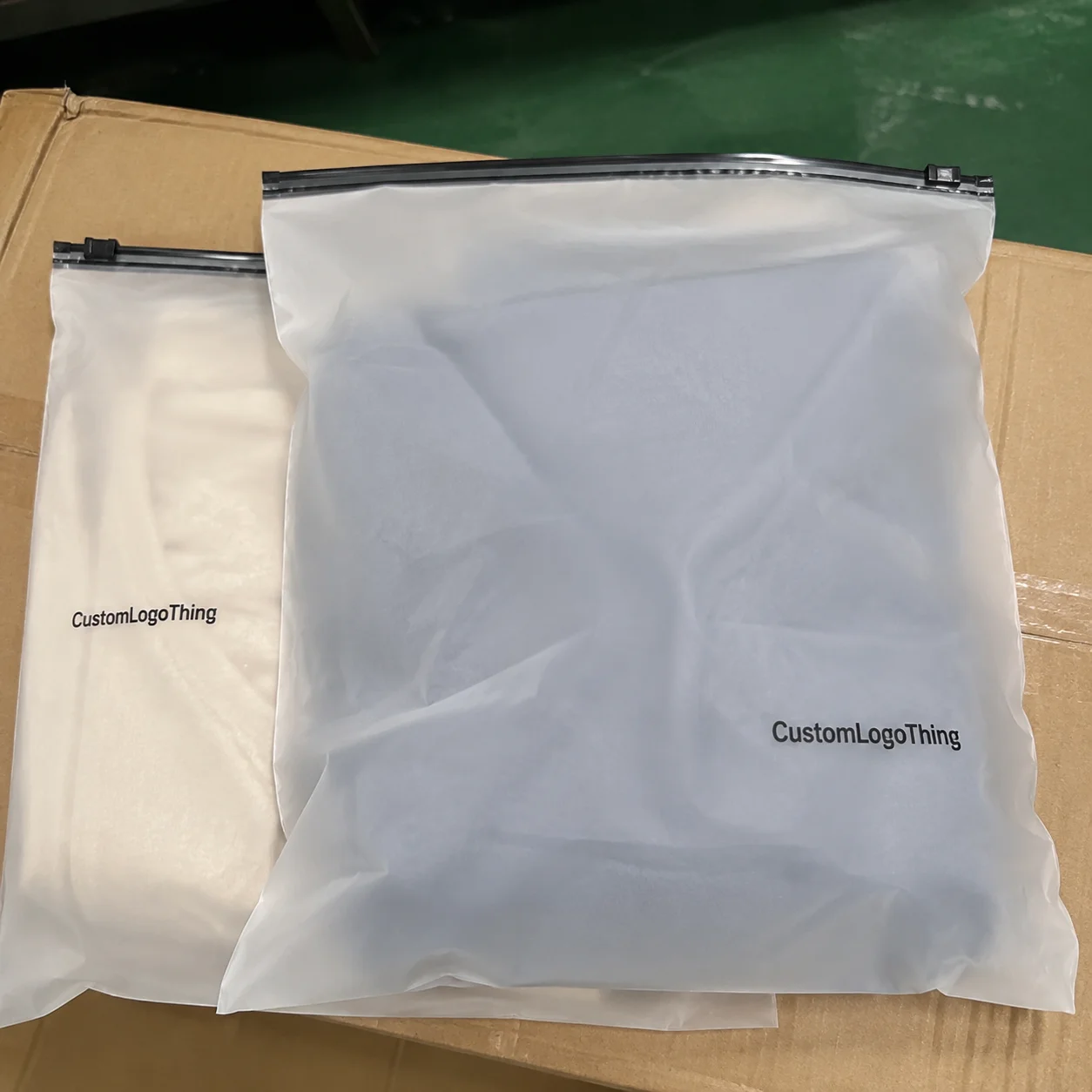
Finishing options include resealable adhesive strips, zip locks, hang holes, vent holes, suffocation warnings, bottom gussets, side gussets, matte finish, frosted finish, anti-static material, and tamper-evident courier closures. The factory can produce the bag you picture only if your spec sheet says what you mean.
Cost, Pricing, MOQ, and What Actually Changes the Quote
Pricing is not magic. It is material, printing, labor, waste, packing, tooling, and freight. The main levers are bag size, film thickness, material type, print coverage, number of print colors, quantity, closure type, gussets, handle style, packing method, carton size, and Incoterm.
For a simple printed LDPE apparel bag, MOQ may start around 5,000 to 10,000 pieces. For custom film color, zipper bags, heavy-duty mailers, multi-color artwork, or large-format retail bags, expect higher minimums. A Custom Printed Poly Bags china factory may quote 10,000 pieces as a starting point but show a much better unit cost at 30,000 or 50,000 pieces because setup waste gets spread across more bags.
| Bag Type | Typical MOQ | Common Thickness | Rough Unit Range | Best Use |
|---|---|---|---|---|
| Clear LDPE garment bag with one-color logo | 5,000-10,000 pcs | 35-50 microns | $0.04-$0.12 | Apparel, folded textiles, inner product packaging |
| Frosted ziplock retail bag | 10,000-20,000 pcs | 60-100 microns | $0.12-$0.35 | Retail packaging, accessories, samples |
| Custom poly mailer | 10,000-30,000 pcs | 50-80 microns | $0.08-$0.28 | Ecommerce shipping and package branding |
| Die-cut handle shopping bag | 10,000-50,000 pcs | 60-120 microns | $0.10-$0.45 | Retail stores, trade shows, promotional kits |
Those ranges are directional. Freight, resin markets, exchange rates, print coverage, and carton volume can move the final cost. If someone quotes half the market price, ask where the saving comes from. Thin film? Weak seals? Recycled resin sold as virgin? Sloppy registration? No export cartons? Beautiful.
Flexo plates are usually cheaper than gravure cylinders and make sense for repeat orders with stable artwork. Gravure cylinders cost more, but they can be sensible for very large runs or detailed full-coverage graphics. Ask for tooling cost separately, then ask whether plates or cylinders are stored for repeat production.
Compare quotes using the same spec sheet. Same size, same microns, same material, same print colors, same closure, same carton count, same shipping term. Otherwise, you are comparing apples to mystery plastic.
Process and Timeline: From Quote Request to Delivery
A clean quote can take 1 to 3 business days if your specs are complete. Artwork proofing often takes 3 to 7 days. Physical sampling may take 7 to 14 days, depending on film, print setup, and courier speed. Mass production commonly runs 15 to 30 days after sample approval and deposit. Freight adds another layer: air may take days; sea can take several weeks depending on port, route, customs, and final delivery location.
The normal workflow looks like this:
- Send bag style, size, thickness, material, artwork, quantity, destination country, and target delivery date.
- Receive quote with unit cost, tooling, sample cost, production time, carton details, and shipping term.
- Confirm material, print method, closure, warning labels, and packing method.
- Approve digital proof for layout and print placement.
- Approve physical sample for film feel, color, seal strength, and usability.
- Pay deposit, start bulk production, inspect goods, pay balance, and ship.
Projects slow down for boring reasons. Missing artwork. Vague dimensions. Color changes after proof approval. Late deposits. Custom material. Peak factory season. Shipping congestion. A small branded packaging order can lose two weeks because nobody confirmed whether the flap size was included in the total height.
Air freight is faster but expensive, especially because poly bags are bulky. Sea freight is slower but usually sane for high-volume orders. For smaller urgent runs, air can make sense if being late costs more than freight. For 30 cartons of Custom Poly Mailers, sea or consolidated freight often looks much better on the spreadsheet.
Inspection should happen before shipment. A pre-production sample matters, but final inspection catches seal failure, count shortage, ink rub-off, carton label errors, and crushed packing. Standards from groups such as ISTA can guide transit-test thinking, especially if your bags ship inside export cartons that get stacked, dropped, and generally treated like warehouse furniture.
Plan early. If bags are needed for a launch, do not order while your product is already waiting on the filling line. Plastic bags are simple until they are late.
Key Specs Buyers Should Confirm Before Paying a Deposit
Before paying a deposit, confirm the non-negotiables: bag width, bag height, flap size, gusset size, thickness in microns or mil, material type, film color, print colors, print location, closure type, barcode placement, warning text, and packing quantity per carton.
Thickness is one of the easiest places to get burned. Thinner bags reduce unit cost and freight weight, but they can tear, stretch, wrinkle, or feel cheap. Thicker bags improve strength and presentation but raise material cost and carton volume. A 30-micron clear inner bag may be fine for lightweight apparel. A 70-micron mailer feels much safer for ecommerce shipping. Sharp products may need stronger film, double layers, or a different packaging design entirely.
Compliance language deserves attention. Suffocation warnings may be required based on bag opening size and destination market. Recycling symbols need to match the material. Country-of-origin labeling may apply. Food-contact bags need appropriate material declarations. Prop 65 concerns may matter for goods sold in California. For broader packaging sustainability questions, the EPA recycling resources are a useful starting point, though local rules still vary.
Color matching is not paper printing. Pantone references help, but ink on transparent, frosted, white, or colored plastic behaves differently from ink on 350gsm C1S artboard or custom printed boxes. White ink underbase may be needed for opacity. Matte film can mute color. Black film can make weak ink coverage look sad. Approve a physical sample if color accuracy matters.
Seal strength should match the use case. Apparel bags need clean presentation and easy opening. Courier bags need tear resistance and adhesive security. Freezer bags may need low-temperature flexibility. Food bags may need certified materials. A Custom Printed Poly bags china factory should ask what the bag holds and how it will be handled. If they do not ask, volunteer the information.
Common Mistakes When Sourcing Printed Poly Bags Overseas
The first mistake is choosing only by lowest unit price. Low price often means thinner material, weak seals, loose QC, missing tooling, vague freight, or carton packing that damages bags before they reach your warehouse. Saving $0.015 per bag feels clever until returns, repacking, and brand damage show up.
The second mistake is approving only a digital proof. Digital proofs show layout. They do not show film feel, opacity, ink adhesion, seal strength, zipper function, or whether the bag opens like a normal bag instead of a cursed envelope. For first orders, get a physical sample. Yes, it takes time. So does fixing 20,000 bad bags.
The third mistake is unclear dimensions. Factories need to know inside versus outside measurements, whether the flap is included, whether gussets are measured flat or expanded, and how much clearance the product needs. A folded hoodie does not fit like a flat T-shirt. Obvious after the bag is too small. Less obvious during quoting.
The fourth mistake is forgetting carton packing. Overpacked cartons crease bags. Underpacked cartons waste freight. Retail-ready bags may need inner poly packs, labels, clean bundling, or dust protection. If your warehouse scans carton labels, specify label format before shipment.
The fifth mistake is ignoring Incoterms. EXW, FOB, CIF, DDP, and door-to-door quotes are not interchangeable. A cheap EXW quote can look heroic until you add inland pickup, export handling, documentation, freight, duty, customs clearance, and final delivery.
The sixth mistake is not checking repeat-order consistency. If the bag is part of your retail packaging, ask how the supplier controls film color, ink formula, plate storage, and approved samples. Repeat orders should not look like distant cousins.
Next Steps: Build a Factory-Ready Poly Bag Brief
A factory-ready brief does not need to be fancy. It needs to be clear. Build one page with bag style, material, thickness, size, gusset, closure, print colors, artwork file, quantity, target delivery date, shipping country, compliance needs, and carton requirements.
- Bag style: mailer, garment bag, ziplock, drawstring, die-cut handle, flat retail bag, or inner packing bag.
- Material: LDPE, HDPE, co-extruded film, recycled-content film, frosted film, anti-static film, or food-contact film.
- Thickness: list microns or mil, not “standard.” Standard according to whom? Exactly.
- Artwork: vector logo, Pantone colors, print size, print side, barcode zone, and warning labels.
- Commercial details: MOQ, target quantity, price-break quantity, tooling cost, sample cost, freight estimate, and Incoterm.
Collect reference samples if you can. Send photos, dimensions, and notes about what should match or improve. A real bag in hand beats a ten-message guessing game. If you already use custom printed boxes or paper retail packaging, share those brand colors too so the supplier understands the full package branding system.
Ask factories for three quote tiers: minimum order quantity, standard production quantity, and price-break quantity. For example, 10,000 pieces might be $0.18 each, 30,000 pieces $0.13 each, and 50,000 pieces $0.105 each, depending on bag size and print coverage. Higher volume is not always smarter. Cash tied up in packaging is still cash tied up.
Before deposit, request a digital proof, physical sample, production timeline, carton details, and shipping estimate. If the supplier dodges basic questions now, they will not become magically organized later. Keep one approved sample sealed and labeled. Use it to compare bulk goods when they arrive. It is the cheapest QC tool you will ever own.
When comparing a Custom Printed Poly bags china factory, judge the supplier by spec clarity, sample accuracy, communication speed, realistic pricing, and whether the finished bags protect your product without making your brand look cheap.
FAQ
What MOQ should I expect from a custom poly bag factory in China?
Basic printed poly bags often start around 5,000 to 10,000 pieces. Custom colors, zippers, gussets, heavy film, full-coverage print, or multi-color artwork can push MOQ higher. Ask for MOQ, recommended quantity, and the next price-break quantity so you can compare cash outlay against unit savings.
How long does a custom printed poly bag order from China usually take?
A realistic range is 3 to 7 days for proofing, 7 to 14 days for sampling, 15 to 30 days for production, plus freight time. Rush orders are possible for simple bags, but complicated artwork, custom material, and peak production periods can stretch the schedule.
How do I compare quotes from different printed poly bag suppliers?
Compare the same size, thickness, material, print colors, closure, quantity, packing method, tooling cost, and shipping term. Do not compare an EXW quote against a DDP quote and call one supplier cheaper. That is how budgets get ambushed.
Can a China factory match my exact logo color on plastic bags?
Factories can target Pantone colors, but ink changes depending on film color, opacity, finish, and surface treatment. Approve a physical sample if color accuracy matters, especially for transparent, frosted, black, or full-coverage printed bags.
What files should I send for custom printed poly bags?
Send vector artwork such as AI, EPS, or editable PDF, plus Pantone references, bag dimensions, print placement, and any barcode or warning-label requirements. Include photos or samples of similar bags if you care about feel, opening style, opacity, or seal strength.