Custom Twisted Handle Paper Bags for Tea Shop Retail
A tea purchase rarely leaves the counter alone. A loose-leaf tin, a sampler box, a tea scoop, a reusable infuser, maybe a wrapped biscuit set on the side - all of it needs to move out the door cleanly and still feel like part of one purchase. That is where custom twisted Handle Paper Bags for tea shop retail earn their place. They are not just carriers. They become the last visible piece of the shop’s presentation, and for many customers, they are the part that keeps walking around town.
Tea shops usually need packaging that does several jobs at once: hold weight, fit mixed products, print clearly, and look composed under counter lights. A bag that does one of those well but fails at the others can make even a good order feel less considered. The better approach is practical. Choose a bag that fits the real product mix, keeps its shape, and supports the store’s branding without turning every order into a special project.
The right bag feels sturdy in the hand, stays square when packed, and makes the counter look organized even on a busy afternoon.
What these bags really are
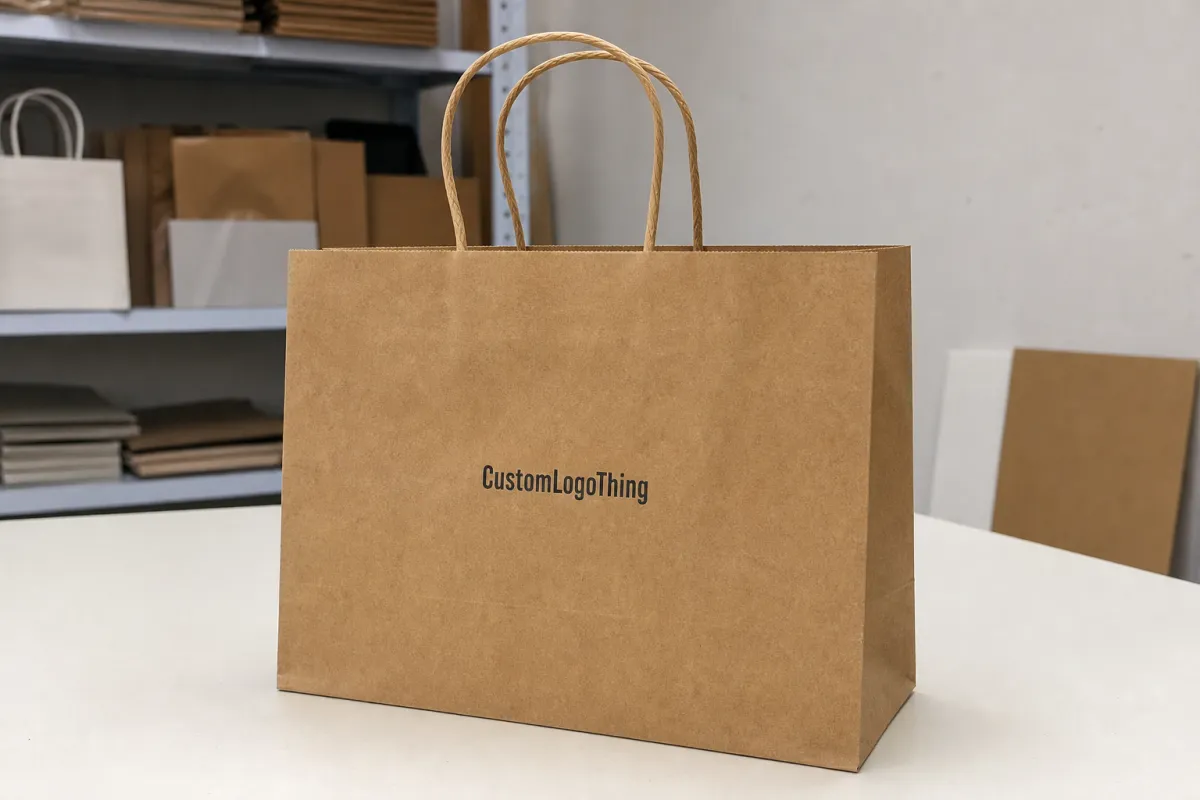
At a structural level, a twisted-handle paper bag is simple: a paper body, folded base, and paper cord handles glued through the upper wall. That simplicity is the reason it works so well in retail. The load transfers through the side panels and the base, not through a thin top edge, so the bag can carry small tins, gift packs, and accessory bundles with less drama than a plain paper sack.
For tea retail, that structure matters because the average basket is more varied than it looks. One customer buys a single tin. Another adds a teapot strainer, two sachet boxes, and a seasonal gift set. The bag has to handle all of those without sagging or pinching closed at the top. It also has to store flat in the back room and print in a way that still looks crisp when the customer carries it outside.
Material choice shapes the feel immediately. Kraft paper brings a natural, grounded look that fits many tea brands. White kraft reads cleaner and gives artwork more contrast. Coated stock can sharpen fine illustration, though it tends to feel less rustic and may show scuffs more readily if the shop handles large volumes. The right choice depends on how the brand wants to be seen and what the bag needs to carry.
For shops building a fuller packaging system, the bag should match the rest of the set - labels, sleeves, tissue, inserts, and Custom Packaging Products such as printed boxes or branded cards. Customers may not consciously compare each item, but they notice when the pieces look like they belong together.
- Paper body: kraft, white kraft, or coated paper depending on print and brand style.
- Twisted handles: paper-cord handles that feel familiar at retail checkout.
- Bottom build: folded and glued to help the bag stand and carry weight.
- Best fit: tea tins, sample packs, small jars, and mixed gift bundles.
How the bag works in daily tea retail operations
In day-to-day use, the most important question is not how the bag looks on a proof. It is how it behaves once a customer has a real product inside it. Paper weight, side-wall strength, handle insertion, and bottom reinforcement do the actual work. If any one of them is underspecified, the bag can feel soft, warp under load, or tilt as soon as it leaves the counter.
Gusset depth is one of those details that seems small until it becomes a problem. A deeper gusset gives more room for square tins, boxed tea, and small bundles wrapped together. Too narrow, and the bag starts pinching at the top or bulging at the sides. The bag may still “fit” on paper, but in practice it becomes awkward to pack and less comfortable to carry.
Surface finish also affects how the bag reads in store. Matte paper usually feels calmer and more artisanal. Gloss or a coated finish can make artwork pop under bright lighting, especially when the logo has fine lines or botanical detail. Neither option is automatically better. The right answer depends on the brand story and how the shop wants the bag to perform under its actual lighting conditions.
Humidity and storage deserve more attention than they get. Tea shops often keep packaging near counters, prep areas, or shipping tables, where temperature changes and moisture can soften paper over time. That does not make paper bags fragile, but it does mean stock should stay off damp floors, away from steam, and protected from compression. A neat bag can still arrive warped if it has been stored badly.
Pricing, MOQ, and unit cost drivers
Pricing for custom Retail Paper Bags usually comes down to five variables: paper grade, board weight, bag size, handle style, and print complexity. A one-color logo on kraft stock will generally cost less than full-color art on coated stock with specialty finishing. Add foil, spot UV, soft-touch lamination, or heavy ink coverage, and the price moves up fast. That is not always a bad thing, but it should be tied to a clear commercial reason, not just aesthetics.
MOQ changes the equation as well. Smaller quantities usually carry a higher unit cost because setup, printing, cutting, folding, and handle insertion do not scale down neatly. For a tea shop testing a seasonal blend or updating its brand look, a smaller run can still be the smarter buy. For an everyday inventory item, a slightly larger order often lowers the per-bag cost enough to matter over a full season.
| Spec choice | Typical MOQ | Estimated unit cost | Best use |
|---|---|---|---|
| Basic kraft, one-color logo | 1,000-3,000 pcs | $0.18-$0.32 | Everyday counter sales and repeat carry-out use |
| White kraft, two-color print | 2,000-5,000 pcs | $0.24-$0.42 | Cleaner branding and stronger shelf visibility |
| Coated stock, full-color art | 3,000-5,000 pcs | $0.32-$0.58 | Gift sets, seasonal launches, and premium packaging |
| Special finish with spot treatment | 5,000+ pcs | $0.45-$0.80 | High-impact campaigns and higher-ticket branded orders |
Always compare quotes on the same specification. A low quote can hide lighter paper, a smaller usable interior size, or a cheaper handle build that does not hold up in daily use. Freight, proofing, and rush charges also belong in the landed cost, because that is the number that affects margin. If a quote is unclear, ask whether it covers one-side print, two-side print, or wrap coverage before comparing it with another supplier’s number.
Production steps and timeline from proof to delivery
The production flow is straightforward, but it still depends on clean input. It usually starts with dieline selection and artwork placement, then moves to proof approval, printing, die-cutting, handle insertion, gluing, packing, and shipment. When the artwork is ready and the bag size is already settled, the process is usually predictable. When the files are messy, the schedule slows down early and stays slow.
- Dieline and sizing: confirm dimensions against the actual tea products, not only a catalog image.
- Artwork check: verify logo files, fonts, bleed, and safe margins before proofing.
- Proof approval: review print placement, handle position, and any copy on the sides or bottom.
- Production: print, cut, fold, glue, and assemble the finished bags.
- Packing and shipment: carton pack, book freight, and send to store or warehouse.
Most delays happen before full production begins. Missing font files, slow approvals, and last-minute artwork changes are the usual culprits. Lead time also shifts with paper availability, print coverage, quantity, and shipping method. A simple order may move in about 12-15 business days after proof approval, while more complex work with special finishes often needs more time. If the bags are tied to a holiday promotion or a seasonal tea launch, build that lead time in early so the delivery does not collide with the sales window.
For shipping gift kits, the bag itself does not usually need a formal transport test, but the full carton should still be packed and checked for movement, crush risk, and corner damage. If the brand wants to claim responsible sourcing, look for actual paper certification rather than vague eco language. FSC documentation is a practical place to start: FSC.
Specs that matter for tea shop branding and carry comfort
Bag size should follow what sells most often, not the largest product in the catalog. If the shop mostly moves 50g tins, small jars, or two-item gift packs, sizing around those items gives a better carry feel and keeps waste down. Oversizing looks untidy at checkout, uses more material than necessary, and can make a modest purchase feel lost inside the carrier.
Paper choice sends a clear signal. Kraft suggests a natural, earthy tea experience. Bleached white creates a cleaner canvas for color and illustration. Coated stock supports sharper graphics and is useful when the artwork depends on detail rather than texture. The handle color can either blend quietly into the design or stand out as part of the identity, so it should be selected with the whole package in mind.
Comfort is not a minor point. Handle glue placement, knot consistency, and bottom reinforcement all affect how the bag feels once it carries a real load. A good twisted handle should sit evenly and not pull the bag off-center. If the shop regularly sells heavier bundles, ask for a stronger base and enough headroom above the product so the top edge does not crush against the handles. Those adjustments cost less than replacing a weak bag spec later.
If the store uses a wider packaging system, keep the bag aligned with labels, sleeves, and Custom Packaging Products already in use. The customer remembers the whole experience more than a single printed surface. When the bag matches the shelf display, the counter presentation, and the brand colors, the order feels deliberate instead of assembled from loose parts.
- Kraft: warm, natural, and often easier to position as recyclable or low-impact.
- Bleached white: bright, clean, and useful for illustration-heavy branding.
- Coated stock: best for high-contrast art and premium gift presentation.
- Handle feel: should stay comfortable even when the bag carries tins and boxed sets.
Common mistakes when ordering retail paper bags
Undersizing is the most common mistake. A bag can look correct on a spec sheet and still fail in use once tins, jars, and boxes are stacked inside it. When the top edge crushes or the handles strain, the weakness shows immediately. If the shop sells bundled items, leave room for easy packing and enough structure for the bag to stay upright after it leaves the counter.
Over-designing the print is another problem. A crowded front panel can fight with the logo, seasonal stickers, or the product itself. Tea packaging usually benefits from restraint. Clear brand marks, a controlled color palette, and enough empty space often look more premium than a busy layout trying to explain everything at once.
Storage is easy to overlook and hard to fix later. Paper bags kept in damp stockrooms, stacked under heavy cartons, or handled roughly can arrive flattened or slightly warped. Handle lines can lose their shape if cartons are abused in back-of-house. Those issues may not show on a sample, but they become obvious once staff starts filling orders all day.
The safest habit is to test with real products. A sample should be checked with the exact tins, jars, sample packs, and gift boxes the shop actually sells. A product may fit on paper and still feel awkward when a customer lifts it. That is why sample validation matters more than a pretty mockup. It tells you whether the bag is ready for daily use or still needs a size or material change.
If the sample is not tested with the heaviest common order, the final run is mostly a guess with printing on it.
Expert tips for buying smarter and selling better
Ask for a sample pack or swatch set before placing a larger order. Under the same lighting used in the shop, paper tone, handle feel, and print contrast can look different from a screen proof. That matters in tea retail, where warm lamps, wood shelving, and glass displays change how packaging reads at the point of sale. A sample in hand is usually the quickest way to see whether the color is too dull, too bright, or simply off for the brand.
It also helps to keep one evergreen design and one seasonal version. The evergreen bag handles routine sales, while the seasonal version can carry holiday blends, spring releases, or limited gift sets. That keeps the packaging system consistent without locking the store into one look forever. For smaller teams, it is often the cleanest balance between operational simplicity and visual freshness.
Reorder timing should follow usage, not panic. If the shop burns through bags every six to eight weeks, the reorder trigger should be set before the last carton is opened. That leaves space for proofing, production, transit, and the occasional correction. Rush orders can work, but they usually narrow the material options and raise the cost. Planning a little earlier is cheaper than replacing a packaging gap with a last-minute compromise.
There is also a quiet selling opportunity inside the bag. A short tea-care note, a social handle, or a simple thank-you line can extend the customer experience beyond the checkout. That space should not be overloaded. One thoughtful line is usually enough. It supports brand recall without crowding the front panel or turning the carrier into a flyer.
- Sample under store lighting: check tone and contrast where the bags are actually sold.
- One evergreen, one seasonal: keep the base spec stable and rotate artwork when needed.
- Reorder from usage: set the trigger by inventory turns, not by shortage.
- Use the inside space: add a tea care note or social handle if it suits the brand.
Next steps for choosing the right bag spec
Before requesting a quote for Custom Twisted Handle Paper Bags for tea shop retail, gather three things: product dimensions, target quantity, and the logo or artwork file. Those details cut out most of the guesswork and help the quote match the real use case instead of a generic paper bag spec. If the shop carries several product types, note the one that sells most often and the heaviest typical order.
Then decide what the bag has to do first. Daily carry-out, gift sets, and launch events do not need the same paper weight or print style. A shop focused on repeat retail sales may want a simple, durable carrier with a clean logo. A shop pushing premium bundles may prefer a richer finish or stronger color contrast. Both can work. The useful part is matching the bag to the way the store actually sells.
Before production is released, test the final sample with real products inside it. Check fit, handle comfort, top-edge strength, and color accuracy together. Once the spec is locked and the sample passes, reordering becomes much easier because the team already knows the size, look, and feel that work at the counter.
For tea retailers, the bag is part of the selling system, not a separate accessory. It carries the purchase, supports the display, and reinforces the brand every time a customer walks out the door. When the carrier is treated as part of the packaging plan, the result is usually cleaner presentation, fewer packing problems, and a more consistent retail experience.
FAQ
Are custom twisted handle paper bags for tea shop retail strong enough for tins and gift sets?
Yes, if the paper weight, base construction, and handle reinforcement match the load. The best test is the heaviest everyday mix the shop sells, not a light sample item. For boxed sets or multi-item orders, a slightly larger gusset and a stronger bottom build usually make the bag feel safer in hand.
What size should I order for tea shop paper bags with twisted handles?
Start with the dimensions of your best-selling tins, jars, and bundled gifts, then add enough clearance for easy packing. The top edge should not crush when the bag is carried or stacked. If the shop sells several product types, choose the most common retail order and validate it with a sample before committing.
How does print coverage affect pricing on custom tea retail bags?
More print colors, larger coverage areas, and specialty finishes usually raise setup and production costs. A simple logo placement is often more economical for evergreen inventory, while seasonal runs can justify a more detailed design. Ask whether the quote includes one-side print, two-side print, or full-wrap coverage before comparing suppliers.
How long is the usual production timeline for branded tea shop paper bags?
Timeline depends on artwork readiness, proof approval speed, material availability, and shipping method. Rush orders can shorten the schedule, but they often limit paper choice or special finishes. It is smart to build extra time before holiday tea promotions, since demand and production schedules both tighten during those periods.
What should I send for an accurate quote on tea shop retail bags?
Send bag dimensions, estimated quantity, print colors, handle preference, and any finishing requests. Include a logo file or artwork reference so the quote reflects the real design complexity. If possible, mention the products the bags will carry, because that helps confirm the right stock weight and gusset size.

