Custom Twisted Handle Paper Bags for cosmetics popups sit in a useful middle ground: sturdy enough to carry boxed skincare, samples, and gift-with-purchase sets, yet polished enough to keep the brand looking considered once the customer leaves the table. In a popup, that matters more than it first appears. The bag is not just a carrier. It is part of the event's visible footprint, and it keeps working after the display is packed away.
Beauty teams tend to notice this quickly. A bag that feels light but not flimsy, prints cleanly, and holds its shape after a few handoffs gives the whole purchase a more finished feel. A bag that is undersized, soft at the handle, or poorly matched to the product weight does the opposite. The difference is usually not dramatic on a spec sheet, but it is obvious in the room, in photos, and in the customer's hand.
For that reason, the best results come from treating the bag as a packaging decision rather than a last-minute print item. Size, paper weight, finish, and handle build all need to line up with the product mix, the event schedule, and the amount of wear the bag will see before the customer gets home. If the popup also uses cartons, inserts, or retail-ready presentation boxes, it helps to align those pieces early through the rest of the Custom Packaging Products range so the look and budget stay consistent.
Why these bags stand out
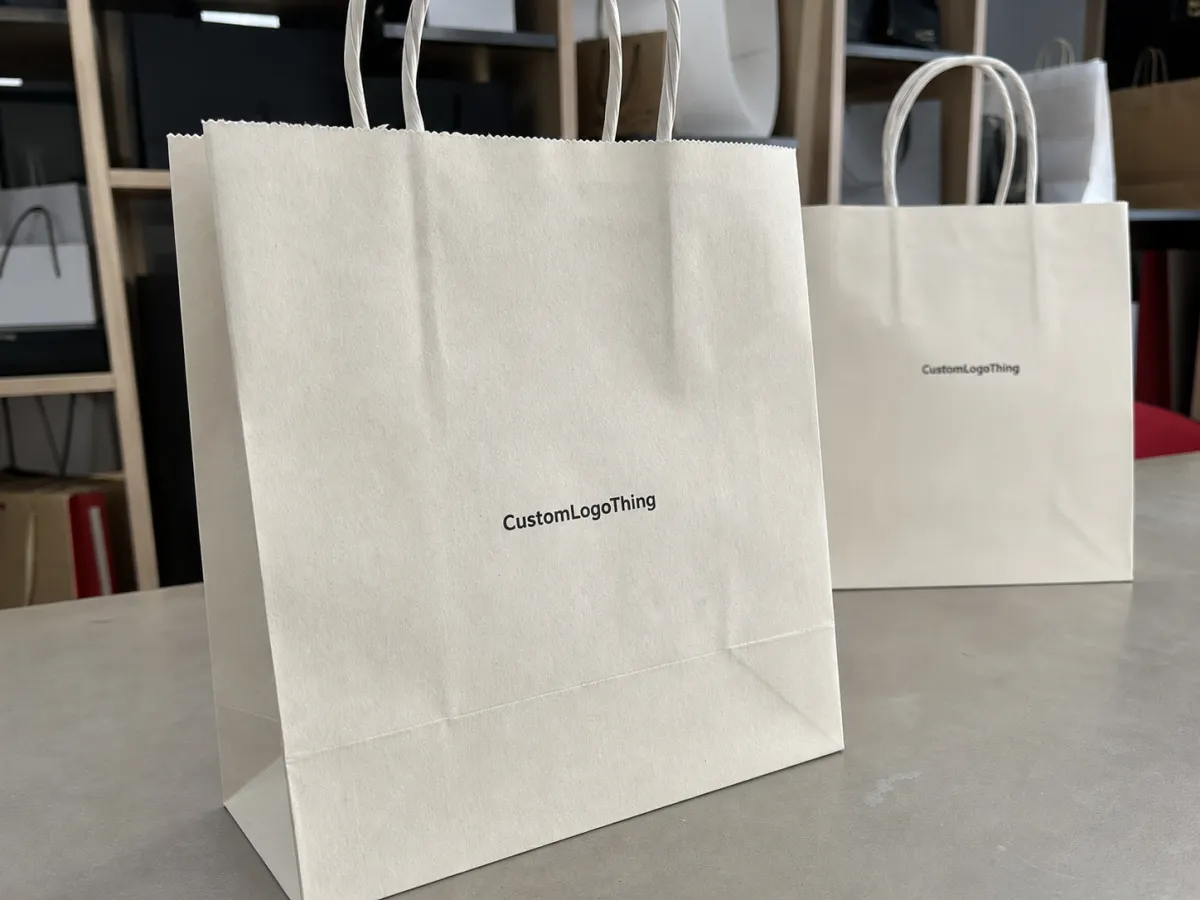
At a cosmetics popup, the bag often travels farther than the display itself. It shows up in ride-shares, hotel lobbies, office corridors, and social photos, which means it becomes one of the most repeated brand surfaces from the event. That kind of visibility is useful because it is natural; the logo is seen in motion, not only under lights on a sales table.
Twisted handles help because they feel familiar, easy to carry, and compatible with a wide range of retail uses. They sit between a plain paper sack and a more formal boutique bag, which makes them a good fit for beauty launches that need to look neat without feeling overly ornate. They also handle mixed contents better than buyers expect. A small serum box, a compact, a sample set, and a folded insert can all sit together in a bag that has the right gusset and board strength.
The best popup bag does three quiet jobs at once: it carries the order safely, supports the brand story, and still looks composed after being handled a few times on a busy floor. If any one of those slips, the package feels less deliberate.
There is also a practical reason these bags work so well in beauty retail. Popup purchases rarely consist of one identical item. The order might include a boxed cleanser, a lipstick, a sample card, tissue, or a small gift bundle. A twisted-handle paper bag gives enough flexibility for those mixed shapes without the bulk of a rigid box, while still presenting the purchase as a gift rather than a carryout item. That visual shift is valuable. Customers read it as care.
The bag also helps set the pace of the event. A tester table can feel temporary if the carry packaging looks generic or improvised. A well-made bag anchors the interaction. It tells the customer the brand planned beyond the table surface and thought through the handoff as part of the experience.
Size, paper stock, and finish choices for custom twisted handle paper bags for cosmetics popups
Size should be the first decision, because it shapes everything else. The opening needs to clear the tallest carton or bundle without bowing at the top, and the gusset has to give the contents enough room to sit flat. If the bag is too narrow, products press into the sides and the handles take unnecessary stress. If it is too wide, the contents can slide and the package starts to feel loose. For most cosmetic popup orders, the useful range sits in small-to-medium retail sizes, but the correct dimension depends on the tallest item, the widest set, and whether tissue or inserts are included.
Paper weight comes next. A lighter stock can work for sample-only bags or modest mini sets, especially when the contents are low in weight and the customer is carrying them only a short distance. Midweight and heavier papers are better for boxed skincare, bundled gift sets, and anything expected to hold up through repeated handling. Buyers usually notice the difference by touch before they notice it visually. Too light feels soft and unstable. Too heavy can make the bag more expensive than the contents justify.
A practical sweet spot for many beauty popups is a midrange kraft or coated board that balances structure, print clarity, and cost. Common options include 157gsm for lighter bags, 200gsm to 210gsm for midweight retail use, and 250gsm or above for a more substantial feel. Those numbers are not rules, but they are useful starting points. The right choice depends on how much the bag carries, whether the handles are anchored into reinforced tops, and how much visual polish the brand wants from the surface.
Finish has a bigger effect on tone than many buyers expect. Matte surfaces usually read as softer and more controlled. Gloss finish gives more reflectivity and a brighter retail look. Uncoated paper feels natural and tactile, which can suit clean beauty or spa-leaning branding. Soft-touch lamination, foil accents, and spot UV can all work, but each one changes both cost and production complexity. The strongest choice is the one that fits the rest of the packaging system rather than competing with it.
Handle attachment deserves equal attention. Twisted paper handles should sit evenly, resist twisting under load, and be attached cleanly so the bag hangs straight. If the bag will carry more than a few pounds, ask about reinforcement at the mouth and handle base. A small patch of added board can make a noticeable difference in how the bag behaves after a few handoffs. That detail is easy to miss in a quote and easy to feel in use.
Color choice matters too. A warm white, a natural kraft, and a deep black bag all send very different signals once they sit beside the products, the counter signage, and any tissue or insert. If the event uses custom printed boxes or sample cartons, matching undertones across those pieces often does more for the overall presentation than adding more decoration to the bag itself.
Production process and turnaround for popup bags
The production sequence is fairly standard, but each stage can affect the final result. The supplier confirms size and quantity, reviews the artwork, prepares proofs, prints the paper, converts the sheets into bags, attaches the handles, and packs the finished order for shipment. If the spec is clear at the start, the process moves with less back-and-forth. If it is vague, the schedule tends to slip in small ways that add up.
Artwork quality is one of the biggest timing variables. Clean vector files, solid typography, and a simple print layout are faster to approve than files that need rebuilding. A one- or two-color print on standard stock is usually quicker than a bag that combines heavy coverage, specialty coating, foil, or a custom handle color. Custom dimensions also take longer than standard sizes because the converting setup has to be adjusted. For planning purposes, simple runs often finish in about 10 to 15 business days after proof approval, while more complex builds can run closer to 15 to 25 business days. Freight is separate, and it should be treated as its own clock.
That separation matters. A bag can leave production on time and still miss the popup if the shipping window is tight or the receiving rules are unclear. Buyers who work backwards from the event date usually get better outcomes. Proof approval, production, transit, and a small cushion for delay should all be built into the schedule before the order is released.
It also helps to be realistic about what can and cannot be rushed. Small quantity orders with simple artwork are easier to compress. Large runs with full coverage print, lamination, or specialty finishes are not. A faster turnaround is possible, but only if the layout is clean, the materials are in stock, and the buyer is prepared to approve proofs quickly.
For sourcing questions tied to paper origin or transport durability, third-party standards can keep the conversation practical. FSC is a useful reference point for paper sourcing claims, and ISTA test methods are worth reviewing if the finished bags will travel through distribution or be packed in cartons for longer freight moves. Those references are available at FSC and ISTA.
Cost, pricing, and MOQ factors buyers should compare
Price is shaped by a small set of variables that add up quickly: quantity, paper weight, print colors, finish, handle style, and whether the bag needs a custom size or added reinforcement. MOQ matters because setup cost is spread across the order. A short run is useful for testing a popup concept, but the unit price will almost always be higher than a larger production run with the same build.
It is better to compare landed cost than to focus on the first number in a quote. Freight, proof charges, artwork corrections, palletizing, and shipment packaging can shift the final amount more than buyers expect. Two quotes that look close on paper can diverge once those extras are added. If a supplier cannot break the number down clearly, that is a sign to ask for more detail before committing.
| Build | Best for | Indicative unit cost at 5,000 | Notes |
|---|---|---|---|
| 157gsm kraft, 1-color print, twisted handles | Sample sets and lighter minis | $0.18-$0.28 | Good value when the load stays modest and the graphic stays simple. |
| 210gsm white kraft, 1-2 colors, no coating | Midweight retail sets | $0.24-$0.38 | A balanced option for most day-of-popup retail packaging needs. |
| 250gsm art paper, matte lamination, 1-2 colors | Giftable launch bundles | $0.42-$0.78 | Cleaner surface and stronger presentation, but extra converting steps raise the price. |
| Short run 500-1,000, custom size, special finish | Test events or boutique launches | $0.55-$1.10 | Useful for smaller programs, though setup cost has to be spread across fewer bags. |
Those figures are planning ranges, not fixed pricing. Paper markets move, coating options vary, and print complexity changes the cost structure. Still, they give buyers a realistic way to compare bids before asking for a formal quote. The cheapest number is not always the best value. A slightly stronger bag can save money if it reduces damage, replacement, or awkward presentation on the floor.
Buyers should also think about reuse. A popup bag that still looks good after the event has more life than a cheaper carrier that collapses or scuffs immediately. For beauty brands, that second use is often where the packaging earns its keep.
Step-by-step specs checklist before you request a quote
Start with the products, not the graphics. List the tallest carton, the widest bundle, the heaviest set, and anything extra that needs to go inside, such as tissue, a sample card, or a folded event insert. That single exercise prevents undersizing, which is one of the quickest ways to make a polished purchase look cramped.
Next, decide how the artwork should behave on the bag. Some brands need only a logo on one side. Others want launch text, a seasonal mark, or a short product message. Strong packaging design usually leaves enough breathing room around the logo and keeps the layout away from the fold lines and top edge. A bag does not need to be crowded to look complete.
Then lock the structure: width, height, gusset depth, handle color, print sides, and finish. If the bag needs to coordinate with a seasonal palette, say that early rather than after proofing starts. If you want an insert, note its size. If there will be both purchase bags and sample handout bags, split them into separate specs instead of forcing one format to do both jobs. That usually protects both the budget and the presentation.
Timing should be part of the spec sheet too. Include the event date, the latest acceptable delivery date, whether spare units are needed for VIP use or breakage, and whether a reorder is likely. A short, organized brief makes quoting faster and reduces the chance of missing a detail that matters later.
For popup programs that also feed retail after the event, say so. A bag designed only for a one-day handoff may not need the same board strength as one intended for repeat use across stores and events. The intended life of the bag should shape the spec from the start.
Common mistakes that weaken the bag or slow the order
Undersizing is the first and most common problem. If the bag is too small, the top edge bows, the handle area takes extra strain, and the products look crammed inside. In beauty packaging, that reads as an avoidable compromise. The bag may still function, but it no longer supports the premium impression the brand is trying to build.
Artwork issues come next. Thin type, low-resolution files, and layouts that ignore the bag's folds can look acceptable on a screen and awkward on the finished carrier. A twisted-handle bag has fixed geometry. The safe area around the mouth, side gussets, and handle placement has to be respected or the logo can feel crowded once the bag is assembled.
Paper choice can fail in both directions. Too light, and the bag feels soft or weak near the handle. Too heavy, and the bag may cost more than the products justify. Buyers asking for custom twisted Handle Paper Bags for cosmetics popups should always specify the expected fill weight and whether the contents are samples, boxed products, or gift bundles. That one detail usually narrows the material choice quickly.
Timeline mistakes are just as damaging. Waiting until the event is near before asking for proofs, samples, or a production quote leaves very little room for corrections. That is especially risky if the bag has to coordinate with custom printed boxes, shelf displays, or event inserts. A little lead time is not waste. It is the margin that keeps the order calm.
Another frequent issue is overdesign. Heavy decoration can make a bag look expensive in a file and busy in hand. In a popup setting, restraint usually reads better than clutter. One clear message, one controlled color system, and a well-chosen finish often outperforms a crowded panel with too many elements competing for attention.
Expert tips for a more premium look without overbuilding
The most convincing premium bags are often the simplest. One strong logo, a controlled palette, and enough negative space can look more deliberate than a bag filled with multiple slogans or layered effects. In cosmetics, restraint usually feels confident. It gives the product room to lead.
Match the bag to the display instead of treating it as a separate object. Warm neutral counters pair well with creams, kraft tones, and muted inks. Sharper launch graphics can handle stronger contrast and cleaner white space. When the bag, tissue, inserts, and tester station share the same visual language, the popup feels composed rather than assembled from parts.
Material selection helps, especially in a busy environment. Bags are stacked, shifted, photographed, and carried many times in a single day. A surface that resists scuffing is often worth more than a showier finish that marks too easily. Soft-touch lamination can feel luxurious, but it is not always the best choice if the bag will be handled roughly or stored in tight stacks. A cleaner matte surface may age better over the course of the event.
Small additions can raise the experience without turning the order into a custom construction project. Tissue paper, a simple insert, or a seasonal tag adds a little ceremony and gives the customer a more complete handoff. The key is to keep the structure disciplined. The bag should carry the moment, not fight with it.
A useful check is to imagine the bag after it has been carried for twenty minutes. Does the print still look sharp? Do the handles still sit square? Does the bottom hold its shape? If the answer is yes, the structure is probably doing its job.
Next steps to move from concept to approved order
Build a one-page spec sheet before requesting pricing. Include the bag dimensions, quantity, product list, artwork notes, finish preference, event date, delivery window, and any spare quantity you want on hand. That gives suppliers a clean basis for quoting and makes it easier to compare responses without guessing what each one includes.
Ask for a proof or mockup early, then review it like a buyer, not like a designer. Can the logo be read at arm's length? Do the actual cosmetic items sit flat inside? Does the handle feel comfortable enough for a few blocks of carry? Those checks take only minutes and catch the kinds of problems that are expensive once production has started.
For event work, build in a small approval buffer. Freight can slip, artwork may need one more adjustment, and paper substitutions sometimes require a quick decision. If the popup date is fixed, schedule around those realities instead of assuming every handoff will land perfectly.
Keep the final approved spec for the next run. That way, the next order of Custom Twisted Handle Paper Bags for cosmetics popups matches the first in size, feel, and print presentation instead of drifting over time. If those bags also need to coordinate with retail cartons or other packaging pieces later, store those details beside the bag spec so the full packaging plan stays easy to repeat.
Frequently Asked Questions
What size custom twisted handle paper bags work best for cosmetics popups?
Choose a size that clears the tallest carton or bundled set without forcing the top edge to bow. Leave enough gusset depth for tissue, samples, or a card insert so the contents sit naturally. If you offer more than one purchase tier, size the main bag for the larger kit and use inserts for smaller sets.
How long do custom twisted handle paper bags for cosmetics popups usually take to make?
Lead time depends on quantity, print complexity, stock availability, and how quickly the artwork is approved. Simple bags on standard stock can move faster than custom dimensions or specialty finishes. Shipping should be counted separately from production so the event date is planned around both.
What paper weight is best for cosmetic gift bags with twisted handles?
Midweight to heavier stock usually gives the best balance of feel and strength for boxed beauty products. Lighter stock can work for sample-only orders if the load stays modest and the handle attachment is well reinforced. The right choice depends on product weight, bag size, and how much reuse you want.
What pricing factors change the unit cost of popup paper bags?
Unit cost is driven by quantity, paper weight, print colors, finish, and any custom structural requirements. Shorter runs usually cost more per bag because setup is spread across fewer units. Freight, proofs, and art changes should be counted when comparing quotes.
How do I make custom twisted handle paper bags for cosmetics popups look more upscale?
Use controlled color, clean typography, and enough negative space so the design feels intentional. Choose a finish that suits the brand, such as matte for a softer look or gloss for brighter retail impact. Coordinate the bag with the display, tissue, and inserts so the event feels designed as one system.
For a cosmetics popup, the strongest packaging decisions are usually the practical ones made early: the right size, a paper weight matched to the load, a finish that fits the brand, and a schedule with enough room for proofing and freight. Done that way, custom twisted Handle Paper Bags for cosmetics popups do more than carry a purchase. They extend the brand long after the table is packed away.

