Embroidered Baseball Caps Quote Guide for Buyers
The Embroidered Baseball Caps quote checklist is a practical filter, not a marketing phrase. It keeps buyers from comparing three numbers that look similar while hiding very different cap bodies, embroidery setups, and freight assumptions. A quote for a 6-panel cotton twill cap with a simple front mark should not be treated like a quote for a foam trucker with a dense multi-color logo. The totals may be close. The products are not.
A clean quote starts with the cap itself. Structured fronts, low-profile crowns, curved bills, five-panel builds, snapbacks, strapbacks, and fitted styles each change how embroidery sits and how long the job takes. One supplier may price in extra stabilizer, a wider sew area, or a more expensive blank. Another may not. That is why a headline total, by itself, tells you almost nothing.
For buyers trying to compare options quickly, the goal is simple: pin down the blank, the decoration, the production method, and the shipping terms before anyone starts talking about price. If those inputs are loose, the quote will be loose too. That is usually where the surprise charges begin.
Why a simple cap quote can be off by 30 percent or more
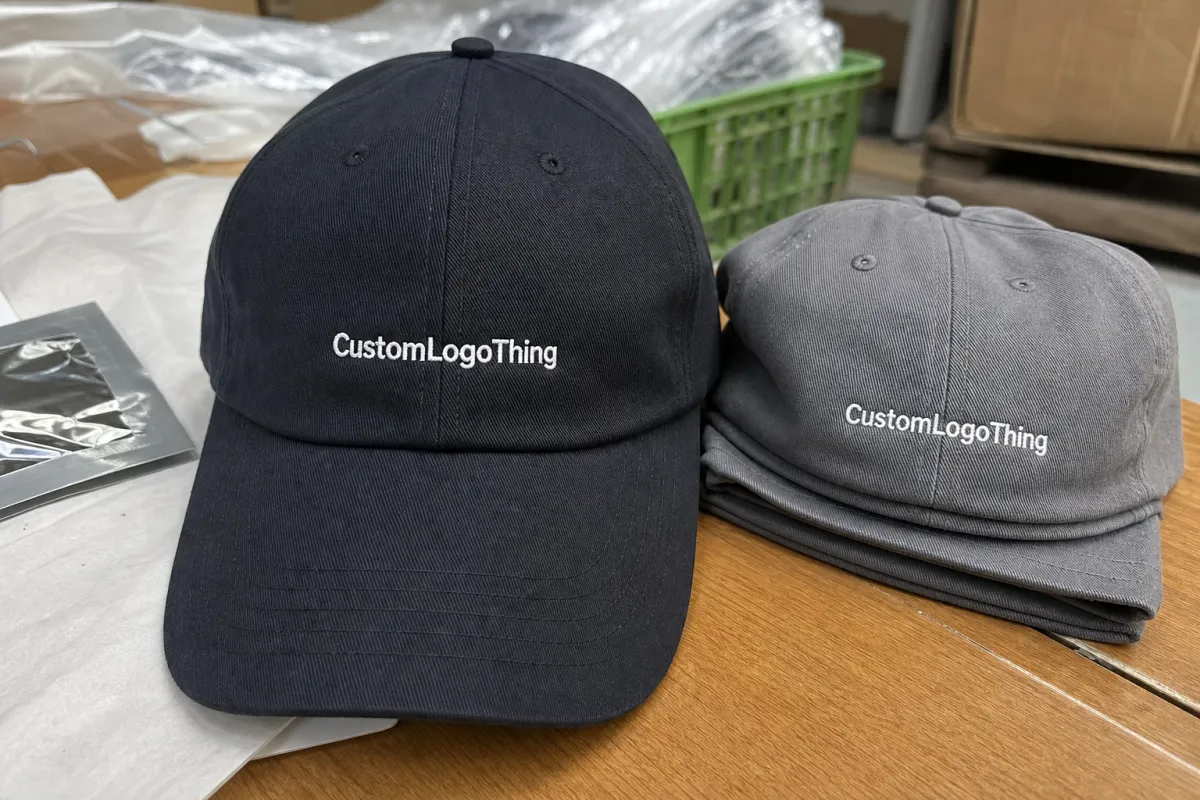
Embroidery is priced through a chain of variables, and each one can move the total. The cap body is the first variable. A brushed cotton dad cap, a structured performance cap, and a foam-front trucker do not sew the same way. The second variable is artwork complexity. Clean block lettering is faster than small script, thin outlines, or a logo that changes thread color every few millimeters. The third is placement. Front-only decoration is standard; add a side hit or back mark and the labor changes again.
That is why a quote can look 20 to 30 percent apart even before shipping is added. In many programs, the actual difference is not the embroidery fee alone. It is the combination of blank quality, stitch density, digitizing, proofing, and whether the supplier padded the price to protect against uncertainty. A quote that seems expensive may simply be more complete.
A low number that leaves out digitizing, sampling, or freight is not a bargain. It is a future invoice waiting for a buyer to approve it.
The most common mistake is comparing totals before matching the spec. A buyer asks for “300 embroidered caps,” gets three prices, and assumes the cheapest supplier is leaner. Sometimes that is true. Often it is just a different cap, a simpler file, or a quote that assumes bulk sea freight while the others assume air. The only fair comparison is apples to apples, and that takes more detail than many RFQs include.
Strong quoting discipline matters because cap programs are easy to misread. The item looks simple. It is not. Even a small shift in stitch count can change machine time enough to move the unit price, especially on dense logos or multi-location embroidery. That is why the Embroidered Baseball Caps quote checklist should be the first document a buyer uses, not the last one after the numbers look wrong.
Pick the right baseball cap build before you compare prices
Cap construction affects both appearance and sewing behavior. A structured cap has a firmer front panel, which helps the logo sit flatter and keeps the silhouette consistent from one piece to the next. That is why structured styles are common in retail programs and branded uniforms. A unstructured cap feels softer and more relaxed, but the front panel can collapse under a dense stitch fill. If the logo is heavy, puckering becomes more likely unless the fabric and backing are chosen carefully.
Panel count matters as well. Six-panel caps are still the most predictable for embroidery because the front area is familiar and the crown shape is easy to quote. Five-panel caps, common in trucker and lifestyle styles, give a wider front panel, but the shape can force the design closer to seam lines. That changes setup and sometimes limits how large the artwork can be before it looks crowded.
Closure type affects the quote too. Snapbacks are usually straightforward. Strapbacks and Velcro closures can add small assembly differences. Fitted caps reduce flexibility in sizing, which means a supplier may need more size splits or tighter size forecasting. That is one of those quiet costs buyers miss until late in the order cycle.
The right cap body depends on the use case:
- Promotional giveaways: lower-cost cotton twill, foam, or basic trucker styles can work if the artwork is simple and the target is volume.
- Retail merch: structured crowns, better fabric hand feel, and cleaner finishing usually justify a higher unit cost.
- Team gear: durability, repeat color consistency, and stable sizing matter more than chasing the cheapest blank.
- Premium resale: crown shape, stitch finish, and thread quality matter enough that a small cost increase can be worth it.
Crown height and bill shape also change the way the logo reads. A high crown can make the mark feel larger and more aggressive. A low crown feels calmer and more modern. Curved bills still dominate everyday wear because they are easier to wear immediately. Flat bills lean streetwear and retail. None of those choices are cosmetic only. They influence how the embroidery appears once the cap is on a head, which is the only view that really matters.
Lock in embroidery specs that actually change the result
This is the section that saves time and money. A supplier cannot quote accurately without the logo size, placement, thread count, and decoration method. Front-only embroidery is the baseline. A side panel hit, back embroidery, or wraparound placement adds labor because the hooping and alignment become more delicate. If the design crosses seams, that should be disclosed immediately. Seam-crossing embroidery is one of the fastest ways to turn a clean logo into a production headache.
Always give a maximum size, not a vague direction. “About 3 inches wide” is usable. “Make it visible” is not. For most caps, front logos often land somewhere between 2.25 and 4 inches wide, but that range is not a rule. A dense icon may need more room to breathe. Small text may need to be simplified. Very thin strokes can disappear once the machine pulls the thread into the fabric. A good digitizer will flatten, space, or thicken the art so it sews cleanly. That process is design work, not clerical work.
Thread color needs the same discipline. If the brand expects a close match to a Pantone reference, say so. If a stock thread match is acceptable, say that instead. Those are different asks, and they produce different pricing. Exact color matching can require extra review or sampling, while standard thread libraries are easier to quote. A six-color logo will also cost more than a two-color logo even if the total stitched area is small, because each thread change slows the run.
Method matters as much as color. Direct embroidery is not the only route. Patches, appliqué, and mixed decoration methods can work better for detailed artwork, textured branding, or heritage-style looks. A patch may actually preserve more detail than a tiny direct-embroidered logo, but it should be priced and approved as its own process. Too many quotes fail because the buyer asks for one method and the supplier quietly substitutes another.
Artwork files deserve a hard rule: vector whenever possible. AI, EPS, and editable PDF files reduce avoidable back-and-forth because the digitizer can read paths and proportions cleanly. A PNG can be used for quoting, but it is not a production-ready embroidery file. If the art is low resolution, the supplier spends time cleaning edges, rebuilding text, and guessing at spacing. That time shows up somewhere in the quote.
For packaging and carton requirements, specificity matters too. If caps are going into retail distribution, warehouse handling, or mixed-color cartons, ask for the packing standard in writing. Transit testing standards from ISTA are useful when cartons will move through more than one handling point. If paper inserts or hang tags are part of the order, FSC-certified paper options are easier to defend than loose environmental claims.
Pricing, MOQ, and unit cost: what should be on the quote
A useful quote breaks the order into parts. Buyers need to see the cap body, decoration cost, digitizing, sample or pre-production approval, packing, freight, and any rush charge as separate lines. A lump sum hides too much. It prevents fair comparison and makes it harder to understand which part of the order is driving the price. If one supplier looks 12 percent cheaper, the reason may simply be that the freight is not included.
| Quote Item | Typical Range | What Moves It | Buyer Risk |
|---|---|---|---|
| Blank cap body | $1.50-$6.50 each | Fabric, structure, closure, and brand tier | Low-cost blanks may distort under dense embroidery |
| Embroidery decoration | $0.80-$3.50 each | Stitch count, placement, and thread changes | Small designs are not always cheaper if they are highly detailed |
| Digitizing | $25-$75 one time | Artwork cleanup and stitch path complexity | Ask whether revisions are included |
| Sample or proof | $0-$40+ | Digital mockup vs sewn approval | Worth paying for on new art or premium caps |
| Freight and packing | Varies by order size | Box count, destination, and timeline | Never compare quotes without matching shipping terms |
MOQ changes the math fast. Many factories prefer 50 to 100 pieces per design, though some can go lower if the decoration is straightforward and the cap body is already in stock. At 24 pieces, the unit cost often rises because setup time is spread across fewer hats. That does not mean the supplier is overcharging. It means the fixed work has fewer units to absorb it.
Repeat orders should be less expensive on setup if the digitized file is already stored and usable. A one-time digitizing fee should not appear on every reorder unless the art changes or the supplier charges separately for file ownership and revision management. Buyers should ask directly. Vague language around file storage usually means the cost will return later.
Fair comparison depends on matching the same inputs. Same cap body. Same logo size. Same decoration location. Same packaging. Same freight assumption. Otherwise the cheapest quote may simply be the least complete. That is a common trap in embroidered cap sourcing, and the fix is boring: insist on a line-by-line comparison before anyone awards the job.
Process and timeline: from artwork file to shipped cartons
The order flow should be visible before the buyer asks for speed. A typical program moves through RFQ, artwork review, quote, proof, sample or mockup, approval, bulk production, inspection, packing, and shipment. If a supplier cannot explain those steps in plain language, they usually cannot control the schedule either. That matters more than a polished sales deck.
Lead time depends on the cap, the art, and the season. A simple reorder with stored tooling may finish bulk production in about 10 to 15 business days after approval. A new design, multiple embroidery locations, or a sewn pre-production sample can push that to 15 to 20 business days or more. Busy seasons extend everything. A July order for a back-to-school deadline does not behave like a January reorder.
The slowdowns are usually predictable. Missing vector art. Unclear thread matching. Late changes to artwork size. A buyer who sends a “final” file and then asks for another revision is creating a production delay, even if the delay feels minor at the desk. One more change after sample approval can push the order into the next machine slot. In a factory schedule, that is often the difference between on-time and late.
Use checkpoints, not assumptions. The artwork proof should be approved before sampling. The stitched sample or approved mockup should be signed off before bulk begins. Packing details should be confirmed before freight booking. If the supplier treats those steps as optional, the buyer is taking on the risk instead of the factory.
For larger programs, carton handling matters almost as much as embroidery quality. Outer cartons should be labeled with the correct SKU, quantity, color split, and any carton limits needed by the receiving warehouse. A mixed-color order without clear box labeling turns into receiving delays later, even if the caps themselves are perfect. Production and logistics are connected. A good quote reflects that connection instead of pretending the cap ends when the thread stops.
Proofing, sampling, and quality checks that stop bad runs
A proof should show more than art placement on a blank shape. It should show the logo size, color references, and the exact cap style if possible. A sewn sample adds the information that matters most: stitch density, tension, pull on the fabric, and how the embroidery behaves near seams or front panels. Screen proofs do not catch puckering. Sewn samples do.
The most common defects are unglamorous. Off-center placement. Loose thread tails. Broken stitches. Poor seam alignment. A logo that looked balanced on a flat mockup can appear too high once it sits on a curved crown. That is why buyers who approve only a digital image are often the first to complain later. The image was never the problem. The sewing was.
A sewn sample is worth the cost when the design is new, the cap is premium, or the embroidery touches multiple panels. It is also useful when the logo includes fine text below about 0.20 inch stroke width, because that is where many designs begin to lose clarity. Small type can work, but not every font survives the transition from vector art to thread. Some need to be simplified. Others need to be enlarged. A buyer who expects the sample process to reveal those issues is asking the right question at the right time.
Inspection should have a real standard. In practice, buyers should ask what gets checked before packing: logo placement tolerance, thread trimming, cap measurement, color split counts, and whether the finished goods are inspected by piece or by carton. Many factories use a version of AQL inspection, often around 2.5 or 4.0 depending on the program and defect class. The exact number is less important than whether someone actually looks for the defects that matter in a cap order.
Carton labeling is another quiet control point. If the order has multiple colors or size splits, the outer box should make that obvious. Mixed packing without clear labels creates receiving confusion, and receiving confusion becomes a chargeback or a delay. The embroidered cap itself may be perfect while the shipment still fails the buyer’s logistics requirements. That is why the checklist has to cover both sewing and shipping.
The Embroidered Baseball Caps quote checklist is strongest when it includes proofing rules. Ask whether the supplier will send a digital proof, a stitched approval sample, or both. Ask whether sample changes are included in the quoted price or billed separately. Ask what gets inspected before cartons are closed. Those questions sound dull. They save money.
What a reliable cap supplier should prove before you order
A reliable supplier shows how the order is built. They identify the cap body, the decoration method, the digitizing charge, the packing assumptions, and the shipping terms without making the buyer drag the details out one by one. Transparency matters because the buyer cannot compare quotes fairly if each supplier uses a different baseline. The first job is not to find the cheapest number. It is to make the numbers comparable.
Repeat orders test a supplier more than first-time orders do. A stable file library, thread records, and a known cap source prevent small drift from run to run. One batch should not feel like another brand because the supplier switched blanks or changed thread sheen. Buyers notice that immediately, especially on retail programs or team reorders where consistency is visible in a pile of hats, not just on a single sample.
Communication speed also says a lot. If revisions take days to answer, the approval cycle will feel just as slow later. If the supplier can explain why a stitch count needs to be reduced or why a certain cap body will buckle under dense embroidery, that is a good sign. Fast answers matter less than correct ones, but the best suppliers usually manage both.
A practical buyer should expect five things before placing the order:
- Line-item pricing that separates the blank, decoration, digitizing, packing, and freight.
- Artwork review that flags size, stitch, and placement issues before production begins.
- File retention so repeat orders do not start from zero.
- Clear approval steps so the buyer knows what gets signed off and when.
- Inspection discipline so placement, thread trim, and color splits are checked consistently.
That is the standard that keeps a cap order from becoming a moving target. The supplier does not need to be theatrical. They need to be precise.
Next steps to send the right inputs and get a clean quote
The fastest path to a usable price is also the least glamorous. Send the exact cap style, quantity by color, logo file, embroidery size, placement, target ship date, and delivery ZIP. If there is a reference photo or an existing cap the buyer wants to match, include that too. Reference images reduce the back-and-forth that usually bloats both time and cost.
Before approving production, confirm these five points:
- Cap body and closure type are locked.
- Embroidery size, location, and thread colors are approved.
- Proof or sample has been reviewed, not just the price.
- Lead time and shipping terms are written down.
- Carton labels, quantity splits, and packing method match the order.
Only then does the quote mean anything. A lower number without the same cap body, same stitch design, and same freight term is not a better deal. It is a different deal.
For retail drops, team programs, and branded giveaways, the Embroidered Baseball Caps quote checklist helps buyers ask better questions and avoid the most common sourcing mistakes. The work is in the details: cap build, embroidery spec, sample approval, and shipping clarity. Those are the pieces that turn a rough idea into a clean order.
FAQ
What do I need for an embroidered baseball caps quote?
Send the logo file, cap style, quantity, thread colors, logo size, placement, target ship date, and delivery ZIP. A reference photo helps if you want the cap to match a specific shape or finish. Without those inputs, the quote is usually only a rough estimate.
What is the usual MOQ for embroidered baseball caps?
Many factories prefer 50 to 100 pieces per design. Some can produce fewer, but the unit price usually rises because setup is spread across fewer hats. If the order has multiple colorways, ask whether each color counts toward the minimum separately.
Is digitizing included in a cap quote?
Often it is not. Digitizing is usually a one-time fee for converting artwork into stitch instructions, and it may be billed separately from the cap and decoration. Buyers should ask whether revisions are included and whether the file will be stored for reorders.
How long does production take after I approve the proof?
Simple bulk runs may finish in about 10 to 15 business days after approval. New designs, complex placements, or sewn samples can extend that to 15 to 20 business days or more. Shipping time sits on top of that, so the in-hand date should be confirmed early.
How do I compare two embroidered baseball caps quotes fairly?
Match the same cap body, decoration size, placement, and packaging first. Check whether digitizing, sampling, freight, and rush charges are included. If one quote is missing a line item, it is not automatically cheaper. It may just be incomplete.
What embroidery details most often cause price changes?
Stitch count, thread changes, placement on multiple panels, and small lettering usually have the biggest effect. Cap structure matters too because a soft front panel may need more support to keep the stitch result clean. Dense designs on inexpensive blanks often cost more than buyers expect because the setup is harder to control.


