Buy Event Merch Twisted Handle Paper Bags: Material Guide
See how a material sample reveals strength, print quality, handle behavior, and cost drivers before you approve a bulk run of event merch Twisted Handle Paper Bags.
A material sample is the fastest way to find out whether event merch Twisted Handle Paper Bags are actually ready for production. The artwork may look polished on a screen, but event use is a harsher test: the bags get loaded unevenly, lifted repeatedly, stacked in storage, and passed through crowded hands all day. That combination exposes weak handles, poor glue coverage, and paper that looks heavier than it performs.
The gap between a retail bag and an event merch bag is easy to underestimate. Retail loads are often consistent. Event loads are not. One guest leaves with a thin notebook, another with a hoodie, bottle, and catalog, and someone else stuffs in a folded banner or boxed giveaway. Those swings in weight matter. A sample should tell you whether the bag keeps its shape, whether the handle remains comfortable, and whether the finish still looks clean after handling.
That is why the sample is more than a formality. It is the quickest filter between a spec that sounds good and a spec that survives the floor.
What the sample proves
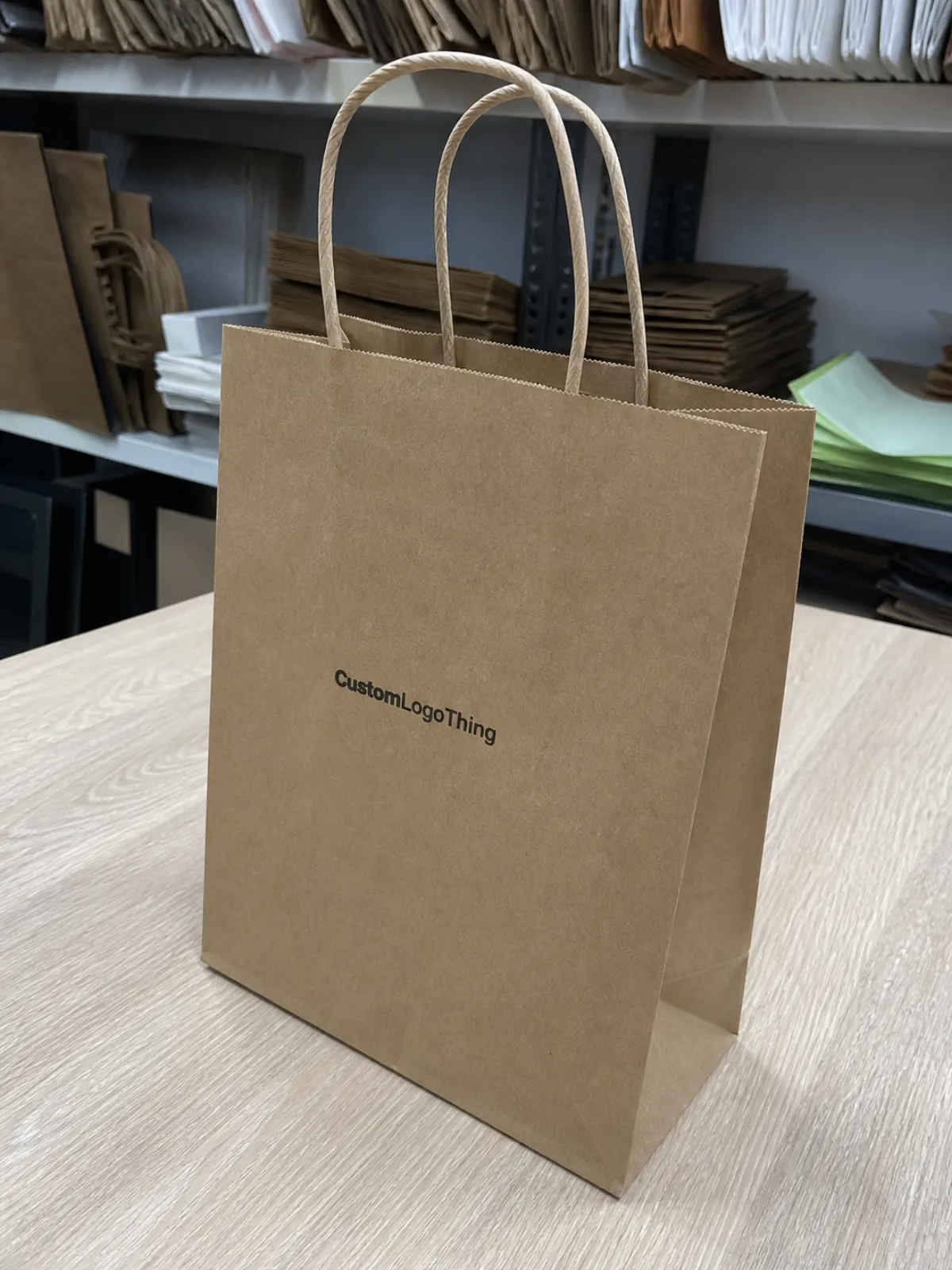
The sample should answer structural questions before anyone starts judging graphics. Does the body board feel stiff enough? Is the twisted handle glued deep enough into the top panel? Does the bottom hold a flat profile once the bag is filled? Those details determine whether the bag supports the merch or becomes part of the problem.
A useful sample includes the paper stock, the handle construction, the adhesive behavior, the bottom reinforcement, and the chosen finish in one physical object. A digital mockup cannot show you whether a coated surface will scuff in transit or whether a handle twist will dig into the hand after a five-minute walk. The physical sample can. That is its value.
There is also a practical reason to avoid judging by appearance alone. A bag can feel premium on first touch and still fail at the handle seam after repeated lifts. The weak point is often not the visible paper face but the area where force concentrates: insertion depth, glue spread, and the geometry of the twist. A 160 gsm body with poor handle attachment can underperform a cleaner 140 gsm build.
The sample is there to expose the weak point before the bulk order is locked.
For event merch, that matters even more because the bag is carrying a brand experience, not just a product. If the sample stands up to realistic loading and still looks composed after transit, it is telling you something useful about the production run.
How the sample process and turnaround usually work
The process should be simple enough for procurement, marketing, and operations to follow without translation. First, gather the requirements: dimensions, target load, artwork, preferred paper grade, finish, and any sustainability needs. Then the supplier creates a proof or a physical sample. After review, you either approve it or request revisions. Clear inputs reduce the chance of multiple proof cycles.
Each stage reveals a different risk. The paper grade affects stiffness and crease memory. The handle construction shows whether repeated carrying will deform the top edge. The gusset controls how easily the bag opens and whether it collapses around boxed merch. Print quality matters too, but only after the structure proves itself. A crisp logo means little if the bag bows when set down.
Turnaround depends on how far the spec sits from stock. A plain kraft sample may be ready in 2-4 business days. Add custom dimensions, special coating, foil, or a heavier board, and the lead time often moves to 7-12 business days before freight. Revisions can reset that clock, especially if artwork and structure change together. That is where projects slow down.
For proofing, treat the sample like a real buyer would. Fill it with the actual event merch. Lift it several times. Check handle comfort, swing, and whether the bottom stays flat after being set down. If the handle presses into the palm or the gusset buckles, the sample is doing its job by telling you the design needs work.
Shipping condition matters too. A sample that arrives in good shape is more persuasive than one that only looks right before transit. Inspect the corners, the print face, and the handle laydown. Event shipments do not always get gentle treatment, so the sample should survive that part of the trip as well.
Key paper, handle, and finish factors to compare
Paper weight is only part of the story. Buyers often ask for a thicker sheet when what they really need is better construction. A heavy paper can still fold badly if the coating is slick or the glue line is uneven. For event bags, caliper, fiber feel, and crease behavior matter as much as GSM.
Twisted handle bags have a few details worth checking closely. The twist should feel firm but not abrasive. Handle width affects comfort more than many teams expect, especially when guests carry the bag for a long stretch. Insertion depth should spread the force across the top panel instead of concentrating stress at one point. If the handle pulls the bag inward, the structure is too light for the intended load.
The glue pattern deserves the same scrutiny. Even coverage is better than a patchy bond, and the attachment should not show dry gaps or bleed-through. A clean sample will usually reveal that immediately when the bag is flexed. If the handle shifts under load, that is a sign the build is under-engineered, no matter how good the print looks.
Finish choices affect both appearance and durability. Matte coatings reduce glare and often make graphics easier to read under strong venue lighting. Gloss can make colors pop, but it may show scuffs sooner. Soft-touch lamination creates a premium hand feel, though it can complicate recycling and may be more vulnerable to visible marks during handling. Spot accents and foil can lift a design, then scratch during packing if the run is handled roughly.
The right comparison is not just aesthetic. Ask what each finish does to print clarity, scuff resistance, and end-of-life recovery. If the bag is meant to support a sustainability claim, then the paper body, ink system, and coating all need to be reviewed together. Recycled materials, including post-consumer waste content, can work well, but the coating choice can change the recycling path. The same is true for lamination. Paper may be recyclable in theory, but local infrastructure decides what happens next.
For documentation, FSC certified fiber remains one of the clearest sourcing markers. The standard is available at fsc.org. For handling and transit references, ISTA test methods are useful when you want a packaging benchmark that goes beyond appearance: ista.org.
| Sample option | Typical cost | Lead time | Best use |
|---|---|---|---|
| Stock kraft sample | $25-$60 | 2-4 business days | Quick check of size, handle feel, and carry comfort |
| Custom printed physical proof | $75-$180 | 5-12 business days | Reviewing artwork, finish, and structural behavior together |
| Reworked sample after revisions | $40-$120 | 3-10 business days | Confirming changes to paper, handle build, or finish |
The goal is not to chase the heaviest board or the most expensive finish. The point is to find the spec that balances appearance, comfort, and event durability. In many cases, a clean kraft build with better glue control performs better than a fancier bag with weak attachment points. That is the kind of result a sample should uncover.
Cost, MOQ, and quote drivers for sample orders
Sample pricing and production pricing should be treated separately. Some suppliers charge for the sample and later credit that amount against the bulk order. Others price a proof as a standalone line item. Larger orders may absorb part of the setup cost, but there is no universal pattern. Written quotes matter more than assumptions.
The main quote drivers are predictable: stock type, print coverage, handle style, finish complexity, and any special assembly. Paper grade changes the base cost. Custom dimensions raise setup work. Reinforced bottoms or nonstandard handle attachments can add labor even when the bag still looks ordinary from the outside. The more the build moves away from stock, the more the price tends to rise.
MOQ follows the same logic. Common kraft sizes usually support lower minimums. Once the bag moves into special dimensions, upgraded finishes, or highly customized construction, the minimum order often rises. For many event projects, a realistic starting point is 500-1,000 units for a standard build and 1,000-3,000 units for more custom specs. That range is broad because suppliers, equipment, and region all affect it.
Hidden costs are where budgets often get distorted. Freight for physical samples can add $15-$40. Rush proofing fees show up when the event date is close. Revisions cost time even when they do not always cost money. If the supplier needs protective corrugated cardboard for transit, that packaging may appear as a separate charge. None of these are unusual. They just need to be visible early.
Sustainability claims can change pricing in both directions. Recycled materials and FSC certified fiber may add documentation work, but they can also prevent expensive rework later if a brand partner requires proof of sourcing. Biodegradable packaging is another area where the label can be more optimistic than the reality. Paper breaks down differently depending on coating, inks, and disposal conditions. The sample is a good time to ask those questions, not after the order ships.
A clean quote separates the sample fee, tooling, unit price, freight, and revision charges. That makes vendor comparisons meaningful. A single lump sum does not.
Sample request process, lead time, and turnaround checkpoints
Send complete information before asking for a sample. That means dimensions, target merch weight, artwork files, paper preference, finish preference, and any brand requirements that cannot move. If the event date is fixed, say so. Timelines get tighter when the supplier has to infer the deadline.
The approval path usually works best in three stages. The first is the digital proof, which checks layout, text, and artwork placement. The second is the physical sample, which confirms structure, carry feel, print finish, and fold behavior. The third is final sign-off, where the approved spec is locked before production begins. Skipping one of those steps raises the odds of a costly mismatch later.
Lead time is not only a manufacturing issue. Stock samples can move quickly, while custom art and structural changes add time for setup and assembly. Freight adds more. Revisions add the most if the team keeps changing the spec after the first review. A week can disappear surprisingly fast when no one has defined the pass/fail criteria for the sample.
That is why a buffer matters. For event orders, a review deadline 10-14 business days before the internal print cutoff is usually safer than cutting it close. It leaves room for a second sample, a color correction, or a transit delay. If the project is rushed, it becomes easier to approve something that looks fine on a monitor and fails in the hand.
Keep the approved sample, the spec sheet, and the revision notes together. That record becomes the baseline for the bulk run and for future reorders. It also prevents confusion when a different team member inherits the project months later. The sample should not disappear into a cabinet once it is approved.
Common mistakes that make sample reviews misleading
The most common mistake is judging by appearance alone. A bag can look elegant under office lighting and still fail once humidity, stacking pressure, and repeated handling enter the picture. Paper fibers react to moisture. Coatings react to scuffing. Handles react to load. The visual check matters, but it is only one part of the review.
Another mistake is testing with the wrong weight. If the final kit includes apparel, a notebook, and a bottle, do not test with a few folded flyers. That creates a false pass. Match the sample load to the actual event load as closely as you can. A 1 kg test and a 3 kg test are not the same case.
Color drift can also mislead the review. A sample on a bright desk may look sharper than the same bag under soft venue lighting. Matte finishes can deepen color. Gloss can raise contrast and make minor imperfections easier to see. If the brand has a strict color target, compare the sample against the approved proof under consistent light.
Storage and transit behavior are easy to ignore until they matter. Corners crush. Handles flatten. Side panels scuff. A sample that survives shipping and still holds shape gives you a better sense of the final product than one that only looks good before packaging. If the bags will sit in storage or travel between events, ask how they are packed and what the outer carton is made from.
Do not overlook smell, opening resistance, and hand feel. Those details sound small, but attendees notice them immediately. A bag that opens cleanly and feels balanced reads as deliberate. One that sticks, creases badly, or feels awkward reads as unfinished.
Expert tips and next steps for approving the right bag
A simple scorecard helps keep the decision honest. Rate each sample on strength, comfort, print clarity, brand fit, cost, and turnaround. Keep the scale practical. A beautiful bag with weak handles should not outrank a plainer option that survives the real load. That sounds obvious, but it is where many approvals go wrong.
If the budget allows, request two or three close alternatives. Small changes in paper weight, handle density, or coating can produce meaningful differences in the hand. Comparing a 120 gsm kraft option against a 150 gsm version often shows whether the extra stiffness is necessary or only feels safer on paper. The same applies to matte versus gloss, or to a denser twist versus a softer handle.
Put the acceptance criteria in plain language. Include exact dimensions, target load, print tolerance, finish type, and any must-pass carry test. If the bag has to hold 3 kg without handle slip or bottom collapse, say that. If the event requires recyclable materials and FSC certified fiber, say that too. Specificity reduces the chance of later disagreement.
The approved sample should be documented, not just stored. Save the spec sheet, color notes, and any revision history alongside it. That package becomes the reference for reorders and future events. It also gives the next team a clear answer when they ask why one bag was approved over another. The right paper bag is a small object, but it carries a lot of brand weight.
For buyers moving quickly, the event merch Twisted Handle Paper Bags material sample guide works best as a decision tool before any bulk approval. If the sample passes structure, comfort, Print, and Shipping checks, the final order has a far better chance of arriving cleanly and performing as expected on event day.
What should I check first in an event merch twisted-handle paper bag sample?
Start with the handle attachment and bottom seam, because those usually fail before the outer paper does. Load the sample with the actual merch weight, then test carry comfort and swing. Check whether the bag opens cleanly, stands upright, and keeps its shape after a few lifts.
How do twisted handles affect bag strength and comfort?
Twisted handles spread force better than a thin flat handle, but only if the glue and insertion depth are consistent. A denser twist usually feels sturdier, while a softer twist can be more comfortable during longer event walks. The best sample does both: comfortable in the hand and stable at the attachment point.
What sample cost and MOQ should I expect for custom orders?
Sample pricing often depends on whether the supplier is sending stock, producing a custom proof, or crediting the fee against the final order. MOQ rises when you add custom dimensions, specialty paper, a premium finish, or nonstandard handle construction. Ask for the quote in writing so sample fees, setup costs, and unit price stay separate.
How long does turnaround usually take for a bag material sample?
Simple stock samples can move quickly, while custom art or structural changes add time for proofing and assembly. Build in extra time for revisions, freight, and final approval, especially if the event date is fixed. If the sample is urgent, ask which stage is the bottleneck before you set a deadline internally.
Can I use one sample to judge print, color, and finish before production?
Yes, but only if you review it under the same light and with the same artwork scale you plan to use in production. Treat the sample as a baseline, then confirm color, coating, and print sharpness against the approved proof. If the finish or paper stock changes, request a second reference sample.


