A fragrance bag does more than carry a bottle; it frames the purchase before the scent is even opened. For home fragrance twisted handle paper bags Bulk Order Planning, the first real question is not finish or foil. It is whether the bag can hold a single bottle, a boxed duo, or a gift set without collapsing at the base or distorting at the top. That decision shapes the paper grade, the handle build, the carton pack, and the landed cost long before artwork is finalized.
Buyers sometimes treat the bag as a side item. Retail shelves disagree. Customers see the carrier first, then the product inside. A crisp bag suggests the fragrance line has structure behind it. A bag that creases, sags, or feels underbuilt makes even a good product look less considered.
Practical rule: if the bag cannot survive a handoff at checkout, a short car ride, and one more use at home, it is not strong enough for premium fragrance packaging.
Twisted handles matter for more than appearance. Grip comfort affects carry feel, handle anchoring affects load performance, and the glue area around the top fold affects how the whole bag behaves under weight. A bag that looks polished but fails in the hand is a bad trade. In bulk planning, structure has to come before decoration.
Start from the contents: bottle size, set count, whether the product ships boxed or unboxed, and how much extra room is needed for tissue, inserts, or dividers. That sequence keeps home fragrance twisted handle paper bags Bulk Order Planning tied to the product, not to guesswork.
Home Fragrance Twisted Handle Paper Bags Bulk Order Planning Basics
Load should lead the conversation. A 250 ml reed diffuser in a rigid carton behaves differently from two glass candle jars wrapped in tissue. The right bag for one may be wrong for the other even if the external dimensions look similar on paper. For most fragrance programs, confirm the widest point, the tallest point, and the finished weight before requesting a quote. Those three numbers usually expose the real packaging problem.
Retail buyers also judge the bag as part of the line architecture. The carrier leaves the store in the customer’s hand before the scent is used, so print sharpness, color consistency, and handle finish all contribute to perceived value. Kraft with restrained ink coverage can read natural and artisanal. Bright white board with a sharper image can feel more polished and gift-ready. Neither is automatically better. The right choice depends on whether the line is positioned as everyday, seasonal, or premium gifting.
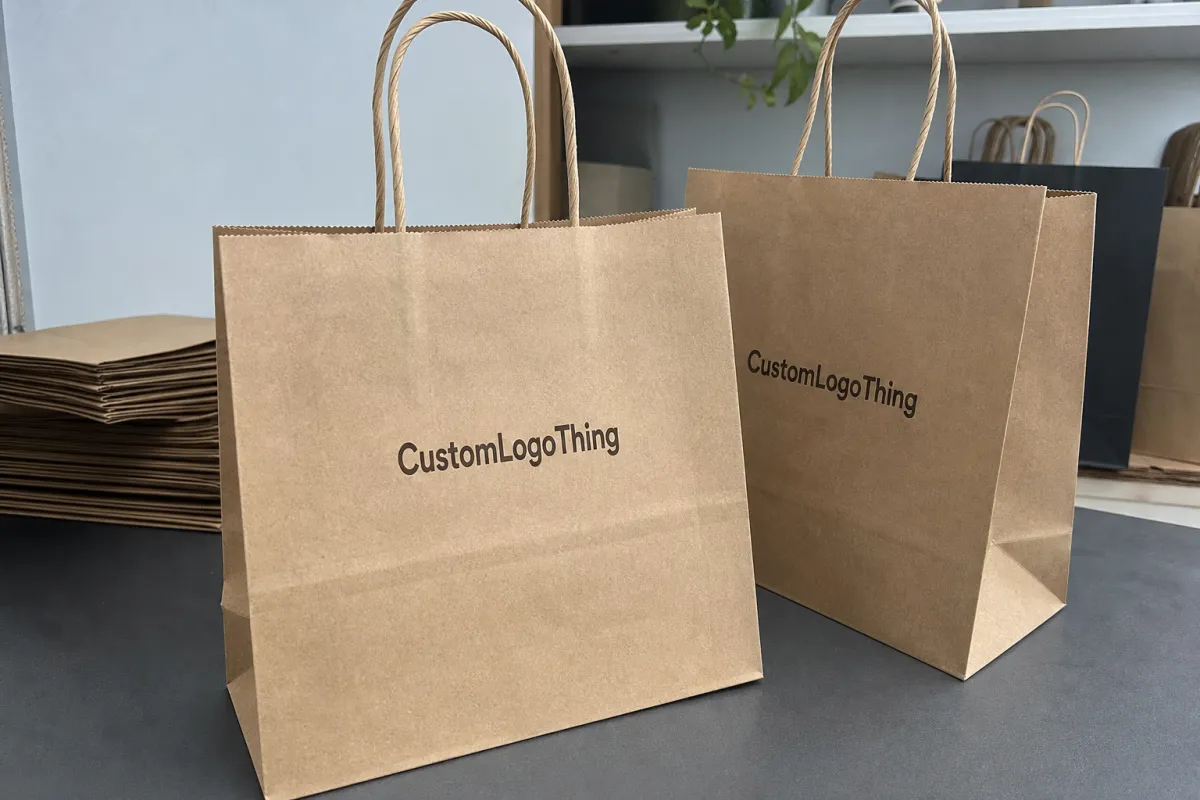
Twisted Handle Paper Bags are popular because they stack well, are easy to carry, and are simpler to produce in bulk than many rope-handle gift bags. They also scale more predictably across reorder programs. Even so, the handle attachment must be checked closely. If the board is too light or the glue patch is too small, the bag can look fine on a sample table and fail once it is loaded. That is the hidden risk in a lot of packaging decisions: the bag appears sturdy until real weight enters the picture.
For practical planning, I usually ask four questions first: what is being carried, where will it be used, how premium must it feel, and how many units are needed to cover the launch window. The answers determine far more than the bag size. They affect paper grade, reinforcement, finish, and even the carton count.
Common fragrance packaging scenarios include:
- One bottle with tissue for a boutique purchase bag.
- A boxed diffuser and candle set for gifting.
- Refill packs or seasonal bundles that need a deeper gusset.
- Display-ready bags that must stack cleanly in stockrooms and at POS.
The best bulk orders are the ones where the bag looks effortless because the buyer solved the hard parts early. That is rarely about aesthetics alone. It is usually about fit, load, and handling.
Paperboard, Kraft, and Handle Builds That Match Fragrance Weight
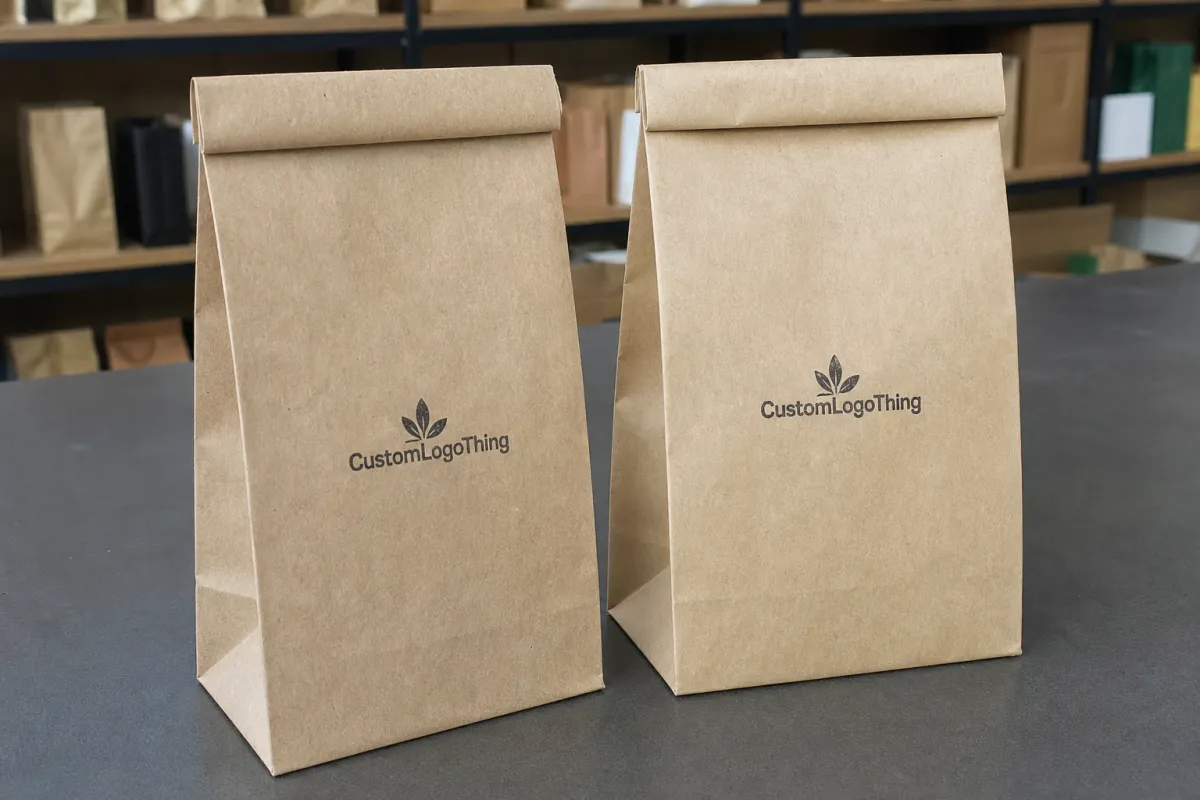
Material choice should track both weight and brand posture. Kraft paper suits natural, refill-focused, and lower-gloss fragrance lines. It pairs well with black, brown, or muted spot colors and tends to signal restraint. White board provides a cleaner print field and stronger contrast, which helps if the logo or pattern is part of the product sell. Coated paper sits between those two. It prints cleanly and accepts premium finishes better, but it can cost more and may show scuffs if the coating is too soft.
Paper weight matters just as much as the surface. For lighter candle or reed diffuser programs, 210gsm to 250gsm can be sufficient. For heavier sets or larger carrier bags, 250gsm to 350gsm is more common. That is not a decorative preference. It is a structural choice. Heavier stock gives the sidewalls more resistance and keeps the base from folding inward when the bag is picked up after checkout.
Bottom reinforcement deserves attention early. A reinforced insert or properly formed board base can prevent bowing and reduce the risk of product tilt. That matters more than many buyers expect, especially for glass containers. A bottle that leans during transport can chip the inside edge of the carton or create an awkward visual once the bag is opened.
Handle construction is part of the load path. Twisted paper handles are usually glued and anchored into the top fold, and the adhesion area, paper twist density, and handle length all influence performance. For heavier fragrance sets, a slightly wider handle patch and a stronger board are often worth the added cost. The handle is not accessory work. It is a functional component.
Finishes change the final impression, but they also change how the bag behaves in production and use. Matte lamination gives a softer look and reduces glare under store lights. Gloss increases shine and can make saturated colors stand out, though it can reveal fingerprints more quickly. Aqueous coating is often the practical middle path when buyers want a cleaner surface without the heavier feel of full lamination.
If the line depends on a sustainability claim, the paper spec has to support it. Recycled stock, unbleached kraft, or certified fiber can help tell that story, but the claim should match the actual material in production. For chain-of-custody guidance, review the standards from FSC before the spec is locked. That keeps the paper choice aligned with the language on pack.
Size, Print Coverage, and Finishing Details to Approve Early
The easiest way to avoid rework is to finalize dimensions early. Measure the widest bottle or box in the set, then add room for tissue, inserts, and a little hand clearance. Too tight, and the paper wrinkles or the product feels forced in. Too loose, and the bag loses its shape before it reaches the customer. Good fit is visible. It reads as intention, not luck.
Gusset depth is one of the most overlooked variables in home fragrance twisted handle paper bags Bulk Order Planning. A deeper gusset stabilizes a boxy candle set, while a narrower gusset keeps a slim bottle bag elegant and upright. Handle drop matters too. A longer drop makes the bag easier to carry over the wrist or with a coat sleeve, but it also changes how the bag hangs on a display hook. Top fold allowance should be confirmed at the same time because it affects total height, handle placement, and the printable area.
Print coverage should be defined before quoting. Is the logo on one face or both? Is there a full-bleed background or just a centered mark? How many colors are in the artwork file? Buyers often think they are ordering a simple one-color bag and then discover that gradients, tiny type, or a strict Pantone match introduce another layer of production risk. The cleaner the artwork review, the fewer surprises later.
Premium finishing should only be added after the basic structure is fixed. Hot foil, embossing, debossing, and spot UV can strengthen shelf impact, but each one changes tooling, registration, and cost. A fragrance line shipping in volume often performs better with clean print on strong board than with a crowded finish stack that slows production and complicates reorders. Decor should support the package, not fight it.
Carton packing belongs in the design conversation too. If the bags will move through a warehouse, a store back room, or a gift-set assembly line, the master carton needs to stack without bending the handles. For long-distance retail movement or parcel-heavy distribution, it is worth asking whether the outer pack can be tested against an ISTA transit profile. That gives the buyer a better read on how the package will behave outside the sample room.
Before approval, confirm these points:
- Finished dimensions with product inside, not just the empty bag size.
- Gusset depth, handle drop, and fold allowance.
- One-sided or two-sided print coverage.
- Finish choice and whether it affects color accuracy.
- Master carton count and pallet stack height.
Pricing, MOQ, and Unit Cost Drivers for Bulk Orders
MOQ usually rises or falls with bag size, print complexity, and construction. Simple kraft bags with a single-color logo can support lower minimums than laminated gift bags with foil or embossing. Custom dies and special handle constructions also move the minimum upward because they add setup work and line changeover. For bulk planning, it helps to ask for tiered pricing early so the price curve is visible instead of hidden behind a single number.
Unit cost is driven by a small group of real factors: paper weight, print count, coating, premium finishes, reinforcement, and packing format. Freight and duty can matter just as much as the factory price, especially if the order is time-sensitive or split across locations. A bag that looks inexpensive at the source can become costly once it is landed, stored, and distributed. Lowest quote and best value are not the same thing.
| Bag Build | Typical Use | Approx. Unit Price at 5,000 pcs | Notes |
|---|---|---|---|
| Kraft, single-color print | Simple candle or diffuser purchase bag | $0.18-$0.30 | Good for natural branding and tighter budgets |
| White board, two-color print | Giftable retail bag for boxed sets | $0.24-$0.40 | Cleaner color contrast and a brighter shelf look |
| Laminated board with foil or embossing | Premium line or seasonal collection | $0.45-$0.85 | Better presentation, but higher setup and finishing cost |
| Heavy-duty reinforced build | Larger sets or multi-item bundles | $0.35-$0.60 | Structure often matters more than decoration here |
Those ranges are planning references, not promises. Final cost depends on exact dimensions, stock availability, print coverage, finish, and whether shipping goes to one destination or several. Quantity steps matter too. A move from 3,000 to 5,000 units can lower unit cost enough to justify extra inventory. In other cases, storage cost erases the savings, and the smaller run is the smarter choice.
Value should be measured beyond the invoice. A bag that crushes at the base, prints off-color, or arrives with handle issues can reduce retail confidence quickly. In fragrance, presentation is part of perceived product value. A slightly more expensive bag may end up being the cheaper option once repacking, complaints, and brand damage are included.
For buyers comparing production paths, the Wholesale Programs page can help frame the options before a final quote is requested.
Production Process and Lead Time From Proof to Shipment
Lead time is where planning saves the most stress. A clean run usually starts with artwork review and dieline confirmation, then moves through prepress checks, proof approval, material confirmation, printing, cutting, gluing, handle attachment, inspection, packing, and palletization. In home fragrance twisted handle paper bags Bulk Order Planning, fewer surprises in prepress usually means fewer delays everywhere else.
Standard builds often take about 12-18 business days after proof approval. More complex structures or premium finishes can stretch to 18-25 business days or longer. That range depends on workload, paper sourcing, and how quickly the buyer approves the proof. Seasonal congestion can add time too, especially before gifting periods or large launch windows.
Factory turnaround is only one part of the schedule. Ocean freight, ground freight, customs, and warehouse receiving all still have to happen. If the launch date is fixed, build backward from delivery, not forward from order placement. That simple habit prevents a lot of rushed approvals and avoidable air freight charges.
Proofing deserves close attention. A small shift in Pantone, handle color, or logo position can change the balance of the bag more than a buyer expects. Corrections caught at proof stage are cheap. The same corrections caught after production starts are not. Clean source files, exact measurements, and fast approval cycles reduce delay without cutting control.
The usual sequence looks like this:
- Send dimensions, artwork, quantity, and delivery location.
- Review the dieline and structural recommendation.
- Approve the proof or sample.
- Confirm board, finish, and carton pack.
- Start production and inspection.
- Ship, receive, and record the spec for reorder use.
There is a simple reason this sequence matters. Each step removes a category of risk. Miss the structural review and the bag may not fit. Skip the proof and the color may drift. Rush the pack plan and freight damage becomes more likely. Packaging failures are rarely dramatic; they accumulate in small, predictable ways.
If the buyer is still sorting order details, the FAQ can answer common questions before the quote stage.
What a Dependable Packaging Partner Checks Before Repeat Production
Repeat orders reveal whether the first run was properly documented. A dependable supplier keeps the approved spec organized so later runs do not drift in size, color, handle length, board weight, or carton count. That matters because fragrance programs often reorder under tight promotion calendars, and a small deviation can become obvious on shelf.
Reorder packing needs to be checked again, not assumed. Carton count, carton strength, pallet height, and stacking pattern all influence freight damage and receiving speed. If the bag line is used in store fulfillment or gift-set assembly, the packing format has to fit the workflow rather than just the box dimensions on the spec sheet.
Reserve material planning is worth discussing as well. When a fragrance line spans several seasons, matched paper grades and stable ink standards help the bag keep the same look across reprints. That consistency matters for core items that stay in market for years. A reorder should look like the same product, not a close cousin.
Photo proofs, lot tracking, and clear communication help isolate issues quickly. If a problem appears on one carton or one pallet, a traceable record makes the correction far easier. That kind of process discipline does not sound glamorous, but it is what protects launch timing and retail trust. A packaging partner that handles the small things carefully usually handles the larger ones better too.
From a buyer’s perspective, the real win is not only getting the first order made. It is making the second and third order match the first without drama. That stability keeps the fragrance line looking consistent across stores, seasons, and replenishment cycles.
Next Steps for a Clean Quote and Faster Buying Decision
If the goal is a quick, accurate quote, send the essentials in one message. Include dimensions, target quantity, artwork files, preferred finish, destination, and the delivery date that matters. For home fragrance twisted handle paper bags bulk order planning, the clearer the input, the fewer revision cycles later.
Photos help more than many buyers expect. A bottle, jar, or boxed set image gives the supplier a better read on fit, carry weight, and shelf presence. If the bag has to support a gift set, a photo of the set layout is even better. It helps the packaging team judge whether the bag should be square, tall, or built with extra gusset depth.
Ask for a quote that separates the moving parts. Unit price, MOQ tiers, sampling, premium finishes, freight assumptions, and carton counts should be visible on their own lines. That makes comparison easier, especially if the buyer is balancing budget against presentation. A transparent quote also shows whether the supplier understands the job or is only pricing the most obvious part of it.
Before approving the production slot, confirm these points:
- Exact dimensions and product fit.
- Paper stock, board weight, and reinforcement.
- Print method, color count, and finish.
- Carton pack, pallet plan, and shipping destination.
- Reorder expectations for the next run.
That is the clearest path through the process. If the spec is solid, the quote will be easier to compare, the sample stage will move faster, and the final bag will do its job without surprises. For fragrance launches, that kind of discipline often matters more than a flashy finish. It keeps the presentation credible, the logistics manageable, and the next production run easier to repeat. That is the real point of home fragrance twisted handle paper bags bulk order planning.
What size works best for home fragrance twisted handle paper bags?
Start with the widest bottle or box in the set, then add room for tissue, inserts, and a clean retail presentation. A little extra gusset depth helps the bag stand upright instead of bowing at the base. Check the fit with exact dimensions or product photos before placing a bulk order.
What MOQ should I expect for twisted handle paper bags in bulk?
MOQ usually depends on paper type, print colors, finish, and whether the bag uses custom sizing or special construction. Simpler kraft or single-color builds generally support lower MOQs than foil, embossing, or high-color artwork. Tiered pricing helps show whether a larger run is worth the storage tradeoff.
How long does production usually take after artwork approval?
Lead time includes proofing, sample approval if needed, production, inspection, packing, and shipping transit. Standard builds often fall around 12-18 business days after approval, while more complex finishes can take longer. Separate factory turnaround from delivery time so the launch date reflects the full schedule.
Which materials are best for fragrance packaging bags?
Sturdy kraft or white board works well when the bag needs to feel premium and hold bottle weight cleanly. Aqueous coating or lamination helps reduce scuffs from store handling and freight movement. Reinforced bottoms and secure twisted handles matter more than decorative effects when the set is heavy.
What should I send to get an accurate quote fast?
Send dimensions, quantity, artwork files, finish preference, destination, and the date you need delivery. Include product photos or a sample spec if the bag must carry a bottle, jar, or boxed set. Ask for MOQ tiers and freight assumptions so the quote is easy to compare across suppliers.