Knit Hats with Logo print method comparison sounds like a procurement question, but the real decision is visual and practical: what still reads cleanly after a beanie stretches, folds, gets tugged on, and spends all winter in rotation? A logo that looks perfect on a flat mockup can turn muddy on rib knit, especially if the artwork is small or the hat has a chunky texture.
For team gear, retail merchandise, staff uniforms, and event giveaways, the useful question is not simply which method is cheapest. It is which method gives the best mix of legibility, comfort, durability, and order efficiency. That is the lens that makes sense for Knit Hats With Logo print method comparison projects, because the decoration choice affects how the hat feels in hand and how it holds up after repeated wear.
There is also a presentation side to this. A beanie that arrives in a retail carton, gift box, or folded polybag needs the decoration to survive handling before the customer even tries it on. If the surface finish cracks, puckers, or looks overbuilt for the hat style, the whole product feels less considered. The decoration method should support the item, not fight it.
What knit hats with logo print actually means
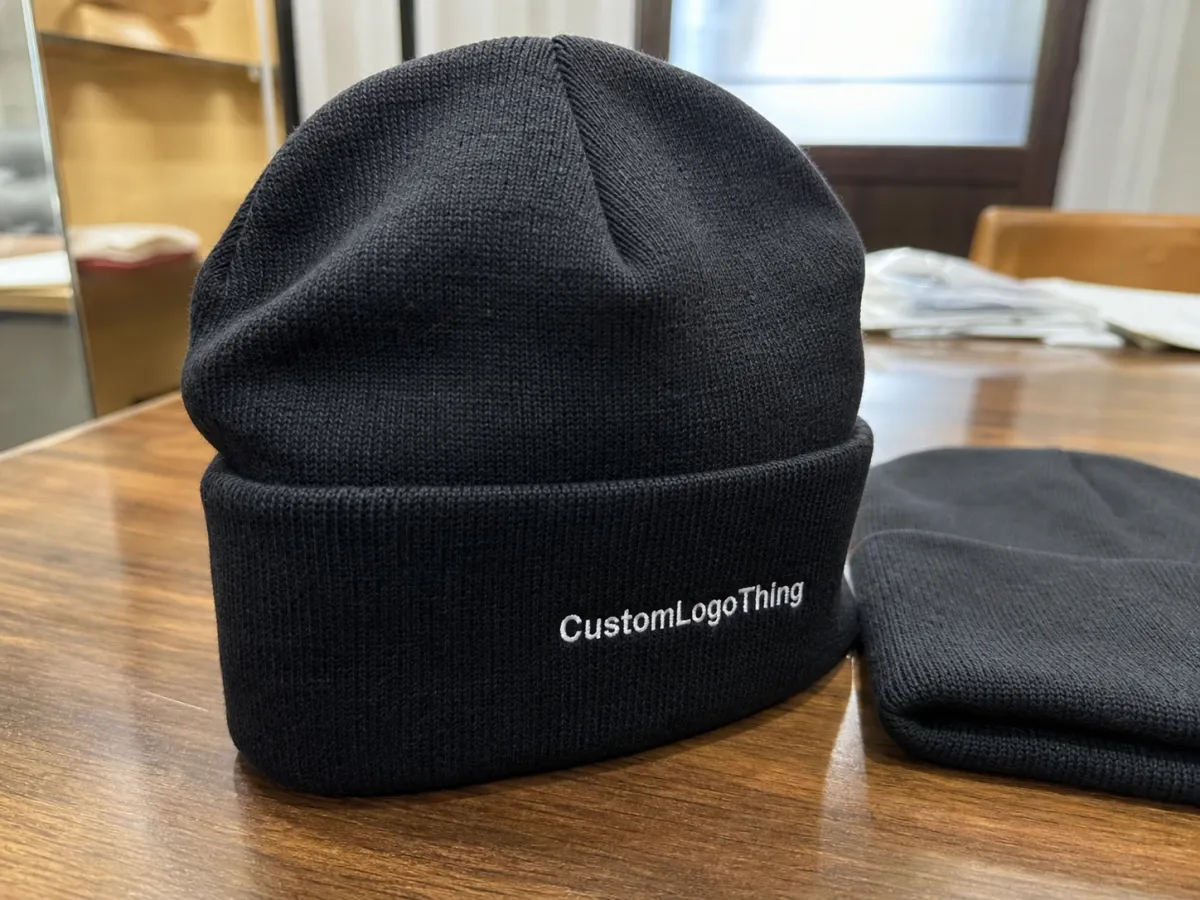
On knit fabric, “print” is broader than most buyers expect. The surface is textured, flexible, and often interrupted by cuff folds, crown seams, or a thick rib band, so the decoration never behaves like it would on paper or a smooth woven panel. Even a clean vector logo can shift once it is placed on a beanie and stretched over a head.
That is why the starting point is the hat, not the artwork file. Gauge, yarn thickness, rib depth, and cuff structure all influence how visible a logo will be at normal viewing distance. A small emblem that looks balanced in a digital proof can become cramped on a coarse knit, while a larger mark can feel heavy if the hat is already visually busy.
Most buyers compare three families of decoration: embroidery, woven or sewn patches, and print-based transfer methods. Embroidery becomes part of the knit surface. Patches sit above it. Transfers and printed graphics rely on a bonded layer that needs to move with the hat instead of resisting it.
A beanie is not a flat panel. The best decoration method respects stretch, texture, and fold lines from the first proof.
That simple fact changes the evaluation. A logo can be technically correct and still be the wrong choice if it loses clarity once the cuff is worn down or if the knit texture eats the fine detail. A good production decision balances brand presence with the way the product will actually be used.
Knit hats with logo print method comparison
Embroidery is still the most familiar choice for knit hats. It gives a stitched, premium look and usually handles daily wear well. It also reads as durable because the design is physically built into the surface. The limitation is detail. Very small lettering, thin outlines, and tiny spacing can collapse on rib knit, especially when the stitch count gets dense or the logo sits on a textured cuff.
For a simple wordmark, an icon, or a clean emblem, embroidery often gives the best balance of cost and appearance. Thread sheen can add depth that flat decoration cannot match. The drawback is that embroidery creates a firmer hand-feel than printing, and on lightweight beanies it can pull slightly on the surrounding knit if the area is too small or too packed with stitches.
Woven patches and similar sew-on or heat-applied badges are useful when the logo has fine detail. Because the patch is constructed separately, the artwork can hold smaller text and sharper edges than direct embroidery usually allows. That makes patches a strong fit for crest-style logos, complex marks, or multi-line branding that would otherwise turn fuzzy.
Patch-backed beanies also photograph well. The outline stays readable in product images, which helps on e-commerce pages and line sheets. The tradeoff is structure: a patch adds a visible layer, and some buyers like that badge effect while others want the decoration to disappear into the hat. Adhesive or backing choice matters here, since a stiff patch can feel out of place on a soft knit.
Print-based options are worth considering when the art depends on color accuracy, gradients, or a lighter surface feel. Certain transfer methods handle multicolor logos better than stitching, and they can be the cleaner answer for simple artwork that does not need much texture. The weak point is stretch performance. If the method is not matched to the knit, the edges can lift, the image can crack, or the print can wrinkle after repeated wear.
Here is the practical short version:
- Embroidery: best for a classic stitched look, strong durability, and simple logos with solid shapes.
- Woven patch: best for fine detail, small text, and logos that need sharper edges than stitches can give.
- Print or transfer: best for color fidelity, gradients, and lighter decoration, with more attention needed for stretch and wash life.
The method also changes how the hat feels on the cuff. Embroidery sits into the knit and feels integrated. A patch sits on top and adds a little architecture. A transfer tries to act like a thin skin on the fabric, which can work well on a smooth, stable knit but becomes less forgiving if the hat is very stretchy or if the user will wear it hard.
That is why buyers should not compare methods only by line item price. A slightly more expensive option can make the logo clearer, reduce rejects, and give the finished hat a more believable retail feel. In many Knit Hats with Logo print method comparison projects, the right answer is the method that keeps the brand readable after the hat has been worn, packed, and handled a few times.
Packaging can matter here too. If the order includes hang tags, belly bands, or retail cartons, those items should feel like part of the same product system. Print finishing on the packaging, from color balance to board stock, should support the hat rather than distract from it. A polished beanie with a sloppy insert still feels unfinished.
One useful observation from production is that patches usually hold up better in photography, while embroidery often looks richer in person because of the thread texture and shadow. That difference matters if the first customer touchpoint is a product page thumbnail instead of a warehouse table. The same decoration can look more premium in hand or on screen depending on the method, so the order should be judged in both contexts.
What to compare before you pick a logo method
Start with the artwork itself. Thin strokes, tiny lettering, multiple colors, and gradients all push the decision in different directions. A bold icon or a short wordmark can work well in embroidery, but logos with fine serif type or narrow internal gaps usually benefit from a woven patch or a transfer method that can hold the detail more faithfully. A good test is to ask what the smallest readable element is supposed to be.
Then look at the hat construction. A tight rib knit with a firm cuff behaves differently from a slouchy, loose-gauge beanie. Chunkier yarns create more texture, which can hide small details. Stretch also matters. If the logo sits where the cuff gets pulled often, distortion becomes more likely no matter which method is chosen.
Use case is just as important as aesthetics. A premium retail beanie can justify more decoration work than a fast giveaway. Staff gear needs durability and repeat wear. A seasonal gift item may prioritize clean presentation over maximum abrasion resistance. A useful knit hats with logo print method comparison should include how often the hat will be worn, washed, packed, and resold.
A simple decision filter keeps the conversation grounded:
- Detail needed: If the logo has fine text or multiple layers, patches or print-based methods usually hold the art better.
- Softness needed: If the hat needs to stay flexible and light, avoid overly dense embroidery or stiff patch backings.
- Budget ceiling: If the quantity is small, setup costs matter more; if the quantity is larger, unit price matters more.
- Wear cycle: If the hats will be worn and washed often, choose the decoration with the best long-term stability.
Material specifics deserve a quick check too. Acrylic beanies are common for budget programs because they hold shape and keep cost under control. Acrylic-wool blends usually feel a little more substantial and can support retail positioning better. Fleece-lined or double-layer hats need more care around decoration placement because the extra bulk can change how the front panel sits. The wrong method on the wrong fabric often looks fine in a mockup and awkward in real life.
For buyers that care about shipping and packaging standards, the outer carton and insert materials can be part of the quality plan. FSC-certified board can make sense for retail packaging, and ISTA-style thinking helps when orders will move through several handling points. More about those standards is available at ISTA and FSC. The decoration choice and the shipping plan should be considered together, not separately.
Production steps and turnaround for knit hat orders
The workflow is usually straightforward, but the delays tend to happen at the handoff points. It begins with artwork review. Clean vector files make the process easier, while low-resolution logos often trigger redraws or digitizing fixes. After that comes proofing, where placement, size, thread colors or print colors, and cuff position are confirmed. Many orders need one more approval step if the supplier is preparing a sample or a production mockup.
Turnaround depends heavily on approval speed. If the logo file is clean, brand colors are settled, and the proof comes back quickly, the order can move without much friction. If the artwork keeps changing or the logo is too detailed for the chosen method, production slows down fast. A two-week schedule can quietly become a four-week schedule if the proof cycle drags on.
The method itself also affects timing. Embroidery needs digitizing, which turns the artwork into a stitch file and often adds one to two days, sometimes more for complicated logos. Woven patches require patch production plus a plan for application. Print-based methods can move quickly on the design side, but they still need material checks to make sure the ink or adhesive behaves on knit fabric.
For most buyers, the real question is lead time, not just production time. A realistic planning window is often 12 to 20 business days after final proof approval, though small rush jobs and custom details can stretch that longer. When timing is tight, decoration choices narrow quickly. Rush orders may limit the number of colors, the complexity of the logo, or the amount of sampling a supplier can do.
If speed matters, lock the artwork first. Production cannot run ahead of a moving proof.
Shipping can create issues too, even though the hats are light. Packed too tightly, cuffs can crease and patches can press into nearby pieces. Cartons that are too soft can crush the product’s shape, especially on thicker beanies or hats with structured patches. Packing should protect the decorated surface and keep the pieces looking consistent when they arrive.
Cost, pricing, MOQ, and quote drivers
Pricing changes quickly once the decoration method is fixed. Embroidery often has a modest digitizing fee, then a per-unit cost tied to stitch count and logo size. For a mid-size order of 300 to 500 pieces, a rough working range might be $1.10-$2.75 per unit for simple embroidery, with $35-$85 for digitizing. More complex logos, heavier stitch density, or larger placements can raise that.
Woven patches shift some of the cost into the patch itself and the attachment step. On a similar quantity, that can land around $1.40-$3.25 per unit, depending on patch size, backing, and whether the patch is sewn on or heat-applied. Print-based methods can look lower on the quote, sometimes around $0.90-$2.40 per unit, but the real value depends on adhesion quality, artwork complexity, and how much wear the hat will see.
MOQ, or minimum order quantity, usually reflects setup time. Thread selection, digitizing, patch building, printing setup, and proofing all take time whether the order is 50 pieces or 500. Larger runs spread that work across more units, which is why the unit price tends to improve as quantity rises. Small orders often pay more per hat because the same setup work has to be absorbed by fewer pieces.
If you want a quote that is actually useful, include the details that affect the production path:
- Hat style: cuffed, slouch, rib knit, fleece-lined, or pom style.
- Hat color: contrast changes how the logo reads and which thread colors will work best.
- Logo size and placement: front cuff, side panel, centered, or patch location.
- Decoration method: ask for separate pricing if you are comparing more than one option.
- Quantity and delivery date: these drive production slotting and freight planning.
- Artwork files: vector art is preferred, plus any brand color references.
Here is a plain comparison that buyers can use during review:
| Method | Typical Strength | Typical Tradeoff | Quote Drivers |
|---|---|---|---|
| Embroidery | Premium stitched look, strong durability, classic beanie appearance | Can lose fine detail and feel dense on small logos | Stitch count, digitizing, thread colors, logo size |
| Woven patch | Best for small text and detailed artwork | Adds structure and another production step | Patch size, backing, attachment method, quantity |
| Print/transfer | Good for color fidelity, gradients, and lighter decoration | More sensitive to stretch, wash care, and adhesion | Artwork complexity, transfer type, placement, durability target |
Value is not the same as the lowest price. A slightly higher unit cost can be the smarter purchase if it keeps the logo legible, reduces rejects, or gives the hat a more retail-ready appearance. That becomes especially true in knit hats with logo print method comparison projects where the artwork is small and the surface area is limited.
Common mistakes that make logo hats look cheap
The biggest mistake is trying to fit too much detail into too little space. Fine lines, tiny text, and crowded emblems get swallowed by knit texture faster than most buyers expect. If the logo only works at a size that looks oversized on the cuff, the design probably needs to be simplified before it reaches production.
Stretch is the next common problem. A logo placed across a highly mobile area can warp every time the hat is pulled down, adjusted, or folded. Even if the decoration itself is stable, the distortion reads as poor quality. A flatter front cuff area usually gives the cleanest result because it moves less than the rest of the beanie.
Mockups can hide a lot. A render may look polished while the real product shows thread sheen, patch stiffness, edge lift, or weaker contrast than expected. If the order matters, ask for a sample or a close production proof. That extra step often prevents a more expensive mistake later.
Care instructions matter more than buyers sometimes expect. A decoration that looks excellent on delivery may age badly if it is not matched to the washing reality. If the hats will be washed often, packed and unpacked repeatedly, or stored through a long season, the chosen method should be able to handle that routine. A knit hats with logo print method comparison should include what happens after the first wear, not only what happens in the box.
Packaging finish can also drag down the result. A well-made hat can still feel cheap if the carton crushes the cuff, the insert curls, or the presentation pieces are printed poorly. The decoration and the packaging should both look intentional. If one part is carefully made and the other feels rushed, the buyer notices immediately.
Expert tips and next steps before you order
The safest way to Choose a Decoration Method is to match it to the priority. Embroidery is usually the best fit for a stitched, classic, premium feel. Woven patches are stronger when the logo needs sharper detail or smaller text. Print-based methods make the most sense when color fidelity or a lighter hand-feel matters more than texture. That is a better starting point than defaulting to whatever was used on the last order.
Ask for two mockup directions if the logo could work more than one way. Seeing embroidery beside a patch version often makes the tradeoff obvious. Buyers are frequently surprised by how much cleaner a patch can look on a chunky knit, especially when the artwork includes fine lines that would disappear under stitches.
Before requesting pricing, gather the information that changes the production path. Send the final artwork, the target quantity, the hat color, the preferred decoration method if you already have one, the budget range, and the delivery window. If you are still deciding, ask for each method to be quoted separately so the differences stay visible instead of being buried inside one blended number.
From a sourcing standpoint, the best order is the one that matches real use. A staff beanie that will be worn every week should be judged on comfort and wear resistance. A retail piece should be judged on presentation and perceived value. An event giveaway should be judged on visibility and cost control. That is the real heart of a useful knit hats with logo print method comparison: the right answer changes with the job.
One final practical tip: look at the logo at actual wear size, not only on the art board. Check how the knit texture affects the edges. Decide whether the brand needs texture, detail, or color fidelity most. Then pick the method that supports that priority cleanly. The result will look deliberate instead of improvised, and the order will be easier to approve internally.
After that, move quickly into proofing and sample approval. The sooner the artwork is locked, the sooner production can start, and the fewer surprises show up in the final run. That is the most reliable way to buy decorated beanies with confidence and avoid the usual production friction.
Which method works best for knit hats with logo print when the artwork has tiny text?
Woven patches or similar off-hat constructions usually hold small text better than dense embroidery on rib knit. If the logo has to stay directly on the hat, simplify the lettering and keep the smallest details larger than you would on flat apparel. A sample or close proof helps confirm legibility at actual wear size.
How much do knit hats with logo print usually cost?
Pricing depends on the decoration method, logo complexity, quantity, and setup work. Embroidery often has a lower material feel cost but may include digitizing and stitch-density charges. Patches and print-based methods can raise upfront setup while improving detail or presentation.
What is the typical turnaround for decorated knit beanies?
Turnaround varies by method, approval speed, and order size, but proofing and sample review are common timeline drivers. Fast artwork approval can shorten the schedule more than almost any other step. Rush orders are possible in some cases, but they usually narrow decoration choices and increase price.
Can knit hats handle printed logos without cracking?
They can, but the method has to suit the amount of stretch and the surface of the knit. A process designed for flexible fabric is less likely to crack or lift. Care instructions matter too, since washing and repeated stretching affect longevity.
What should I send when requesting a quote for knit hats with logo print?
Send the logo file, quantity, desired hat color, preferred decoration method if you have one, and the delivery deadline. Include any size or placement preferences so the supplier can price the correct production path. If you are comparing options, ask for separate quotes by method so the tradeoffs are easy to review.


